
The Neuroscience of Grappling: How Brazilian Jiu-Jitsu Rewires the Brain for Resilience and Longevity
Emerging research shows that complex martial arts like Brazilian Jiu-Jitsu and Judo act as powerful neurological interventions, improving stress resilience, boosting neuroplasticity, and protecting against age-related cognitive decline.
By Factlen Editorial Team
- Neuroscientists & Researchers
- Focus on the structural changes in the brain, emphasizing neuroplasticity, BDNF production, and cognitive reserve.
- Clinical Psychologists
- View grappling as a somatic tool for emotional regulation, stress management, and trauma recovery.
- Sports Scientists
- Analyze the measurable psychological traits—like grit and resilience—developed through long-term martial arts practice.
What's not represented
- · Traditional gym-goers
- · Physical therapists
Why this matters
As rates of chronic anxiety and age-related cognitive decline rise, finding sustainable ways to protect brain health is critical. Understanding how complex, unpredictable movement rewires the nervous system offers a blueprint for maintaining mental sharpness and emotional resilience well into old age.
Key points
- Grappling arts like BJJ require complex, unpredictable movements that actively build new neural pathways.
- Training increases BDNF, a protein essential for memory consolidation and preventing cognitive decline.
- Sparring acts as a 'stress laboratory,' teaching the nervous system to stay calm under intense pressure.
- Studies show BJJ significantly reduces PTSD symptoms in veterans and first responders.
- Older adults engaging in complex physical activities maintain better memory and processing speed.
- The shared adversity of martial arts training fosters deep social connections, combating isolation.
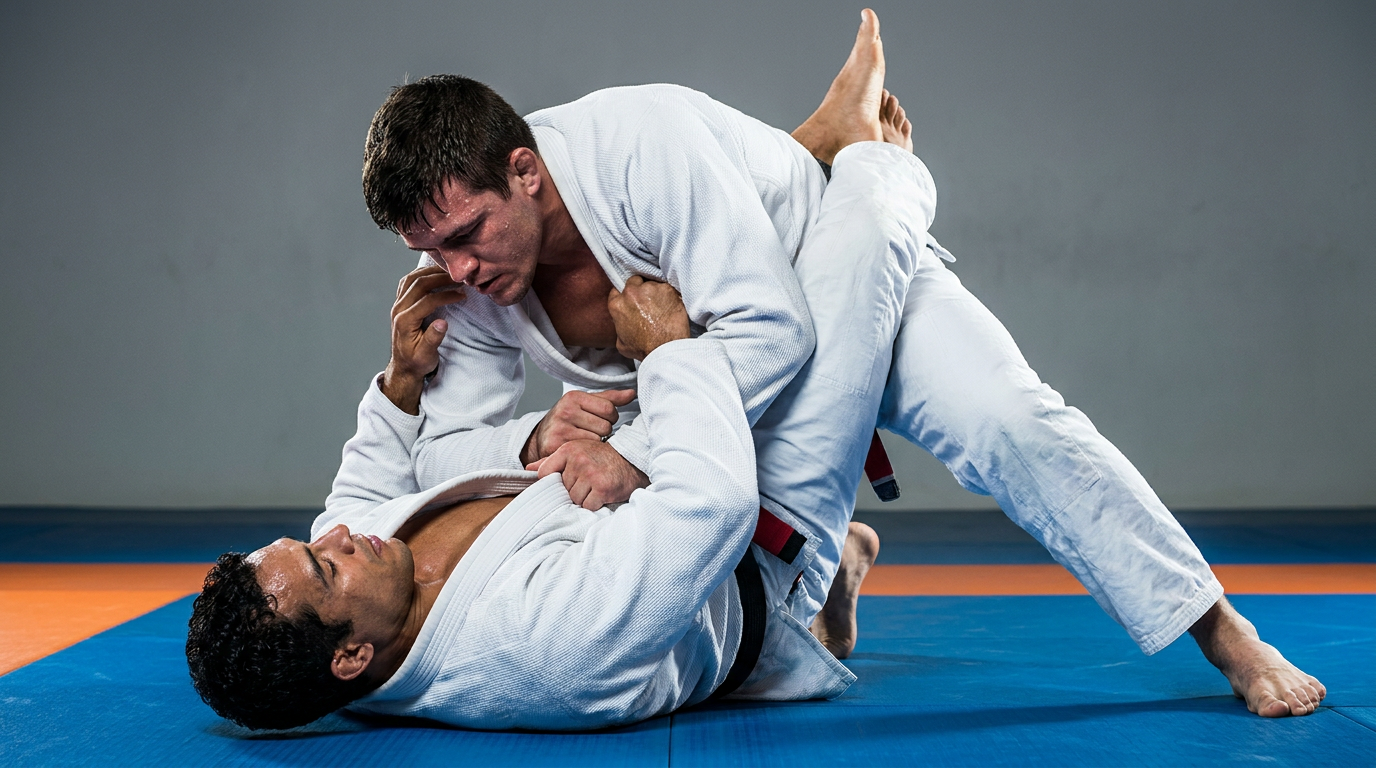
When most people envision Brazilian Jiu-Jitsu (BJJ) or Judo, they picture intense physical combat—sweat, leverage, and submissions. But beneath the surface of this physical struggle, a profound neurological transformation is taking place. Grappling arts are increasingly being recognized by neuroscientists and psychologists not just as fitness regimens, but as powerful interventions for brain health, stress resilience, and cognitive longevity.[7]
The contrast with traditional exercise is stark. Running on a treadmill or lifting weights provides undeniable cardiovascular and muscular benefits, but these activities are highly predictable. Grappling is inherently chaotic. It requires the brain to constantly process unpredictable variables, adapt to an opponent's weight and momentum, and solve complex spatial puzzles in real time. This unpredictability is exactly what the brain needs to build resilience and stave off cognitive decline.[1]
Every time a practitioner learns a new sweep, defends a choke, or adapts to a shifting center of gravity, the brain forms new neural pathways. This process, known as neuroplasticity, is driven by Brain-Derived Neurotrophic Factor (BDNF), a protein often described by researchers as "Miracle-Gro for the brain."[1][7]
Research published in Frontiers in Psychology highlights that martial arts training significantly increases BDNF expression. This protein supports synaptic plasticity, neurogenesis, and memory consolidation—critical neurological functions that naturally decline as we age. By forcing the brain to constantly learn and adapt, grappling keeps these neural networks robust and active.[1]

This cognitive demand heavily engages the prefrontal cortex, the brain's executive control center. Grappling is frequently compared to physical chess; it requires real-time problem-solving, spatial awareness, and strict impulse control. Practitioners must plan several moves ahead while simultaneously reacting to immediate physical threats, a dual-processing task that strengthens executive function.[7]
Beyond structural brain changes, BJJ acts as a unique "stress laboratory" for the nervous system. Step onto the mats for a live sparring session—known as "rolling"—and the body's fight-or-flight system immediately activates. Heart rate spikes, adrenaline floods the bloodstream, and the sympathetic nervous system takes over.[5]
However, the art of grappling lies in learning to remain calm within that chaos. Over time, practitioners learn to control their breathing and think methodically while under immense physical pressure. This toggles the nervous system from a sympathetic (fight-or-flight) state to a parasympathetic (rest-and-digest) state, improving vagal tone and heart rate variability (HRV).[5]
However, the art of grappling lies in learning to remain calm within that chaos.
This forced adaptation provides a profound biochemical shift. The intense physical demands redirect blood flow away from the brain's worry centers, providing a "neural vacation" from chronic anxiety and rumination. Simultaneously, the exertion triggers the release of dopamine, serotonin, and endorphins, counteracting cortisol and creating a lasting neurochemical balance.[6]

Because BJJ provides controlled exposure to physical stress, it is increasingly being utilized as a form of somatic exposure therapy. For individuals dealing with trauma, the practice teaches the brain that physical pressure, confinement, and elevated heart rates do not inevitably lead to danger.[2]
A scoping review in The Sport Journal examining veterans and first responders found that BJJ training significantly reduces symptoms of Post-Traumatic Stress Disorder (PTSD). The combination of physical exertion, required mental focus, and the supportive community environment helps recalibrate a hyperactive stress response, allowing practitioners to process trauma through movement.[2]
The psychological adaptations are measurable across a practitioner's lifespan. A study published by the National Institutes of Health compared the psychological profiles of BJJ athletes across different belt ranks. The data revealed that black belts exhibited significantly higher levels of mental strength, resilience, grit, and self-control than white belts, alongside lower rates of mental health disorders.[3]
These neurological and psychological benefits become especially critical as practitioners age. While the brain's processing speed and short-term memory naturally slow down over decades, engaging in complex, unpredictable motor skills can halt or significantly delay this cognitive slide.[4]

Research from Texas A&M University demonstrates that older adults who engage in high levels of cognitively stimulating, complex activities maintain significantly better memory, attention, and processing speed than those who engage in passive or repetitive tasks. Grappling, which combines intense physical exertion with continuous cognitive problem-solving, perfectly fits this protective criteria.[4]
Finally, the neurobiological benefits are amplified by the social environment. The shared adversity of the training room builds deep trust and camaraderie. This social integration triggers the release of oxytocin, reducing feelings of isolation and loneliness that frequently accompany aging, and rounding out martial arts as a comprehensive biopsychosocial intervention.[1]
Ultimately, Brazilian Jiu-Jitsu and Judo offer far more than self-defense or physical conditioning. They are sophisticated tools for nervous system regulation and cognitive preservation. By repeatedly exposing the brain to controlled chaos, practitioners are not just learning how to fight—they are actively rewiring their minds for focus, resilience, and lifelong mental acuity.[7]
Viewpoints in depth
Neuroscientists & Researchers
Focus on the structural changes in the brain, emphasizing neuroplasticity, BDNF production, and cognitive reserve.
From a neurobiological perspective, the value of martial arts lies in its unpredictability. Researchers point out that while repetitive aerobic exercise increases blood flow to the brain, it does not challenge the brain's spatial and problem-solving networks to the same degree. By forcing practitioners to constantly adapt to a resisting opponent, grappling triggers the release of Brain-Derived Neurotrophic Factor (BDNF), which actively builds and repairs neural pathways, offering a robust defense against age-related cognitive decline.
Clinical Psychologists
View grappling as a somatic tool for emotional regulation, stress management, and trauma recovery.
Therapists and psychologists increasingly view BJJ through the lens of Polyvagal Theory and somatic exposure therapy. For individuals with PTSD or chronic anxiety, the body's alarm system is often stuck in the 'on' position. Grappling provides a safe, controlled environment to experience high heart rates, physical confinement, and adrenaline. By learning to breathe and problem-solve through these physiological triggers, practitioners slowly recalibrate their nervous systems to realize that pressure does not always equal danger.
Sports Scientists
Analyze the measurable psychological traits—like grit and resilience—developed through long-term martial arts practice.
Sports scientists focus on the longitudinal psychological adaptations of martial artists. Studies comparing different belt ranks consistently show that long-term practitioners develop significantly higher levels of grit, self-efficacy, and emotional control. This resilience is forged through years of facing failure, tapping out, and returning to the mats, creating a psychological robustness that translates directly into professional and personal challenges off the mat.
What we don't know
- The exact minimum dosage (hours per week) of martial arts training required to trigger measurable neuroplastic changes.
- How the cognitive benefits of grappling precisely compare to other complex motor skills like advanced dance choreography or gymnastics.
Key terms
- Neuroplasticity
- The brain's ability to reorganize itself by forming new neural connections in response to learning, experience, or injury.
- BDNF (Brain-Derived Neurotrophic Factor)
- A protein that promotes the survival of nerve cells and encourages the growth of new neurons and synapses, crucial for memory and learning.
- Polyvagal Theory
- A neurobiological framework explaining how the autonomic nervous system regulates our state of arousal, moving between safe/social, fight-or-flight, and freeze states.
- Vagal Tone
- An indicator of the health of the vagus nerve, reflecting the body's ability to successfully regulate stress and return to a calm state after a challenging event.
Frequently asked
Is Brazilian Jiu-Jitsu safe for older adults?
Yes, when practiced with the right training partners and a focus on technique over explosive power. Many academies offer classes specifically tailored for older adults to minimize injury risk while maximizing mobility and cognitive benefits.
How does grappling differ from running for brain health?
While running is excellent for cardiovascular health, it is highly predictable. Grappling requires real-time problem-solving and spatial awareness, which stimulates different areas of the brain and is more effective at building cognitive reserve.
Can martial arts help with PTSD?
Research indicates that BJJ can significantly reduce PTSD symptoms. It acts as a form of somatic exposure therapy, teaching the nervous system to remain calm and process trauma while under controlled physical pressure.
Do I need to spar to get the cognitive benefits?
While live sparring (rolling) provides the highest level of unpredictable cognitive demand, simply learning and drilling the complex movements of martial arts still promotes neuroplasticity and increases BDNF levels.
Sources
Source coverage
7 outlets
3 viewpoints surfaced







[1]Frontiers in PsychologyNeuroscientists & Researchers
Neural, psychological, and social mechanisms of martial arts benefits in older adults
Read on Frontiers in Psychology →[2]The Sport JournalClinical Psychologists
An examination of studies related to Brazilian jiu-jitsu in enhancing mental and physical health among veterans and first responders: A scoping review
Read on The Sport Journal →[3]National Institutes of HealthSports Scientists
Psychological Profile of Brazilian Jiu-Jitsu Athletes
Read on National Institutes of Health →[4]Texas A&M UniversityNeuroscientists & Researchers
High levels of complex activities protect against cognitive decline
Read on Texas A&M University →[5]TapFlowClinical Psychologists
BJJ nervous system training: from chaos to calm
Read on TapFlow →[6]Vilanova BJJClinical Psychologists
The Neuroscience of BJJ and Stress Management
Read on Vilanova BJJ →[7]Factlen Editorial TeamSports Scientists
Synthesis by Factlen editorial team
Read on Factlen Editorial Team →



Every angle. Every day.
Get fitness stories with full source coverage and perspective breakdowns delivered to your inbox.