
The Net-Zero Remodel: How Whole-Home Electrification is Transforming Existing Houses
Homeowners are increasingly ditching fossil fuels for smart electrical panels, heat pumps, and induction stoves, turning aging properties into highly efficient, climate-resilient homes.
By Factlen Editorial Team
- Energy Equity & Policy Advocates
- Argues that electrification must prioritize low-income households to maximize societal benefits and prevent a gap in clean energy access.
- Smart Electrification Industry
- Focuses on the technological advancements in load management, battery storage, and smart panels that make retrofits feasible without massive grid upgrades.
- Building Performance Specialists
- Emphasizes a 'fabric-first' approach, arguing that improving the building envelope through standards like EnerPHit is the critical first step before adding new energy systems.
What's not represented
- · Utility Grid Operators
- · Traditional Gas Appliance Manufacturers
Why this matters
As energy costs fluctuate and climate regulations tighten, transitioning to an all-electric home can save families thousands of dollars annually while drastically improving indoor air quality and long-term property value.
Key points
- Whole-home electrification replaces fossil-fuel appliances with highly efficient electric alternatives like heat pumps and induction stoves.
- Smart electrical panels act as the brain of the home, managing power loads to often avoid the need for expensive 200-amp utility upgrades.
- The EnerPHit standard provides a rigorous framework for deep energy retrofits, reducing heating and cooling demand in older homes by up to 93%.
- Equitable electrification policies are required to ensure low-income households aren't left paying for the maintenance of aging gas infrastructure.
The era of the superficial 'flip' is giving way to the deep energy retrofit. Instead of merely updating countertops, applying a fresh coat of paint, and installing new flooring, homeowners in 2026 are increasingly looking at the fundamental bones of their houses. They are prioritizing resilience, energy independence, and climate impact over purely cosmetic changes. The real estate market is seeing a distinct shift away from these surface-level renovations toward structural overhauls that fundamentally alter how a property operates, consumes resources, and protects its occupants from extreme weather events.[1]
At the center of this architectural and mechanical shift is 'whole-home electrification'—the systematic removal of fossil-fuel combustion appliances in favor of highly efficient electric alternatives. This transition represents a fundamental rethinking of how residential spaces consume and manage power, moving away from the legacy gas infrastructure that has dominated housing for over a century. By capping the gas line and upgrading to electric systems, homeowners are effectively transforming their properties into self-contained energy hubs capable of integrating with rooftop solar arrays and home battery storage systems.[2]
The stakes for this transition are massive on a national scale. Household energy use accounts for roughly 20% of greenhouse gas emissions in the United States. Historically, almost two-thirds of households relied heavily on combustion devices like natural gas furnaces, boilers, and water heaters to survive the winter, locking millions of homes into decades of fossil fuel dependence. Reversing this trend is widely considered one of the most critical steps in meeting global climate targets and reducing the carbon footprint of the built environment.[4]
Transitioning these systems to electricity is no longer just an environmental crusade; it is a major economic upgrade for the average family. Estimates show that fully electrifying a household can save families between $1,050 and $2,600 annually on energy and healthcare costs. By severing ties with the gas grid, homeowners insulate themselves from the extreme price volatility of global fossil fuel markets, locking in predictable energy costs that can be further stabilized by generating their own power through residential solar installations.[4]

The absolute workhorse of the modern electrified home is the air-source heat pump. Unlike traditional furnaces that burn natural gas or heating oil to create heat, heat pumps simply move ambient heat from the outside air into the home. In the summer, the system seamlessly reverses the process, extracting heat from indoors and dumping it outside to act as a highly efficient air conditioner. This dual functionality eliminates the need for separate heating and cooling systems, streamlining the home's mechanical footprint.[2]
Because they transfer heat rather than generate it from scratch, heat pumps offer massive efficiency gains over traditional gas appliances, often delivering three to four times more energy than they consume. When paired with heat pump water heaters, which operate on the exact same thermodynamic principles to heat domestic water, the baseline energy demand of a home plummets. This drastic reduction in energy consumption is the foundational step that makes achieving a net-zero energy bill a realistic possibility for existing homes.[2]
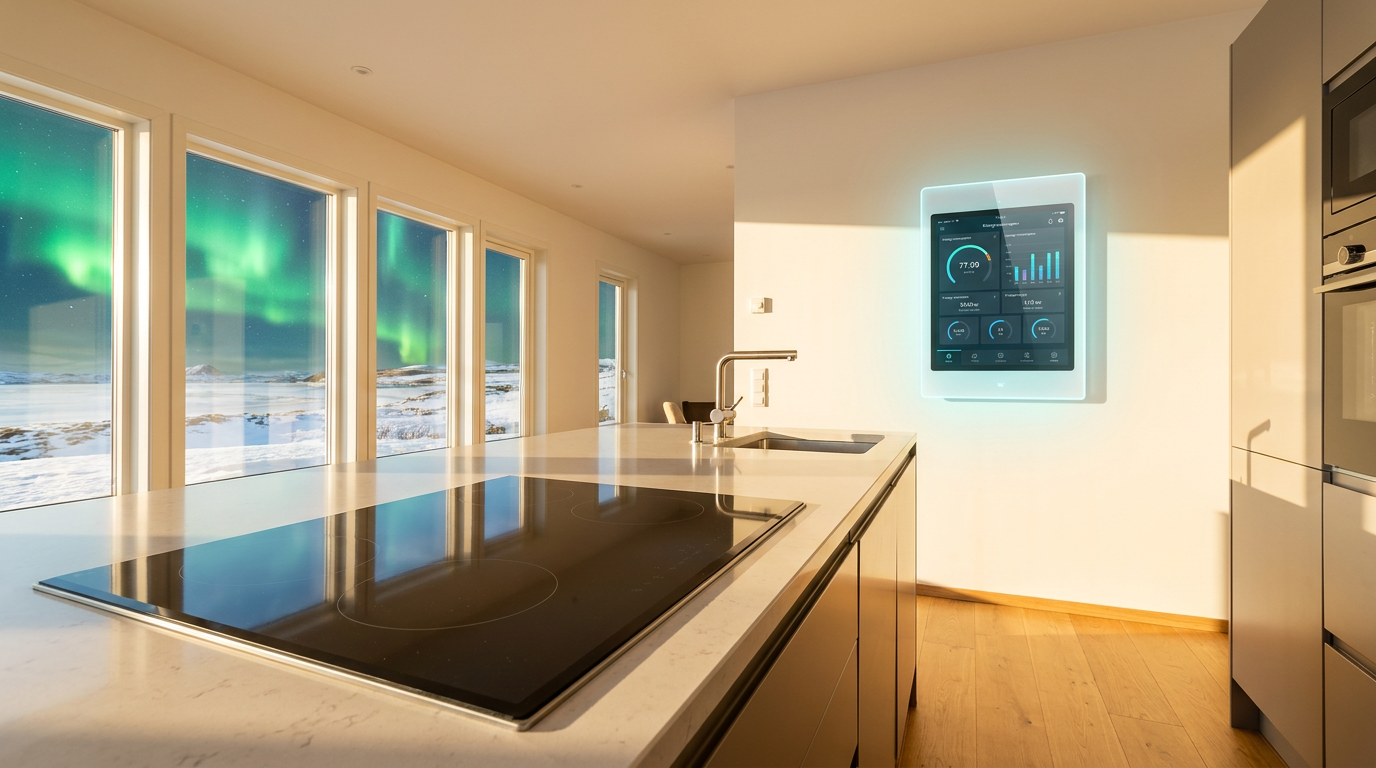
But swapping out appliances is only half the battle in a deep retrofit. The other half is managing the electrical load, which is where the smart electrical panel comes into play. As homes add induction stoves, heat pumps, and electric vehicle chargers, the electrical demands on the property change dramatically. Managing these new, high-powered devices requires a level of intelligence and coordination that traditional electrical infrastructure simply was not designed to handle.[6]
But swapping out appliances is only half the battle in a deep retrofit.
Traditional breaker boxes are passive, analog distributors of power, hidden away in a garage or basement with absolutely no insight into how energy is being used. Smart panels, however, act as the central nervous system of a high-tech home. They integrate advanced software and internet connectivity to monitor real-time energy use circuit by circuit, giving homeowners unprecedented control over their power consumption through intuitive mobile applications and automated energy profiles.[8]
This technology solves a major bottleneck in home retrofits: the dreaded panel upgrade. Adding multiple high-draw electric appliances often exceeds the capacity of an older 100-amp or 150-amp service panel. Smart panels use load management firmware to automatically throttle or sequence these appliances—like pausing the EV charger for twenty minutes while the electric oven is preheating. This dynamic balancing often defers the need for a costly, time-consuming utility service upgrade, saving homeowners thousands of dollars.[6][8]

Beyond the appliances and the electrical panel, building scientists emphasize the critical importance of the home's 'envelope.' The most advanced framework for this is the EnerPHit standard, developed by the Passive House Institute specifically for deep energy retrofits. It applies the rigorous physics of Passive House design—which revolutionized new construction—to existing structures, ensuring that the home retains the energy it produces rather than leaking it through drafty walls and poorly sealed windows.[7]
Existing buildings face rigid constraints—fixed foundations, shared walls, and historic preservation rules—that make achieving full Passive House certification nearly impossible. EnerPHit adapts these rigorous principles for older, leakier structures, providing a realistic pathway to world-class energy efficiency without requiring a complete teardown of the property. It offers a phased, component-based approach that allows homeowners to upgrade their insulation and windows over time while still working toward a certified standard of excellence.[7]
By focusing on superior thermal insulation, eliminating thermal bridges, and installing mechanical ventilation with heat recovery (MVHR), an EnerPHit retrofit can reduce a home's heating and cooling demand by an astonishing 75% to 93%. This 'fabric-first' approach ensures that the home requires very little energy to begin with, meaning the new heat pumps and solar arrays can be significantly smaller, cheaper, and less taxing on the local utility grid.[7]

The health benefits of these deep retrofits are equally profound and often overlooked in discussions about climate change. Gas burners and furnaces generate dangerous indoor pollutants, including nitrogen dioxide, carbon monoxide, particulate matter, and formaldehyde. Fully electrifying a household eliminates indoor combustion entirely, drastically improving indoor air quality and preventing thousands of respiratory hospitalizations and house fires every year. For families with children or elderly members suffering from asthma, removing the gas stove and furnace is frequently cited as the single most impactful health intervention they can make in their living environment.[4]
However, the upfront costs remain a significant hurdle for widespread adoption across all demographics. A full electrification retrofit—which typically includes a new heat pump HVAC system, a smart electrical panel upgrade, new induction appliances, rooftop solar panels, and home battery storage—can easily range from $10,000 to over $40,000 before applying any federal tax credits and local utility rebates. While the long-term operational savings are mathematically clear, this initial capital requirement creates a steep economic barrier that threatens to leave many low-income families behind in the clean energy transition.[5]
To prevent a societal divide where only wealthy homeowners reap the benefits of clean energy, policy experts stress the absolute necessity of equitable electrification programs. Prioritizing low- and moderate-income (LMI) households for subsidized retrofits is crucial to ensuring that historically disinvested communities are not left behind. By directing targeted grants and zero-interest financing toward these specific neighborhoods, local and federal governments can simultaneously reduce carbon emissions and alleviate the crushing monthly energy burden faced by families living in older, highly inefficient housing stock.[3]
The financial risks of an inequitable transition are severe and systemic. If LMI households are actively supported in electrifying, it could produce an estimated $120 billion in utility bill savings nationwide. If they are left behind, their energy burdens will spike dramatically. As wealthier households disconnect from the gas grid, the soaring fixed costs of maintaining aging gas pipelines will fall entirely on a shrinking pool of remaining gas customers—a devastating economic phenomenon often referred to by economists as the gas death spiral.[2][3]

Ultimately, the 2026 home remodel is about comprehensive future-proofing against both climate extremes and economic volatility. By combining intelligent load management, rigorous envelope improvements through standards like EnerPHit, and highly efficient electric appliances, homeowners are successfully turning aging properties into resilient, net-zero sanctuaries. The future of residential housing is undeniably electric, and the technological tools required to achieve that reality are already available, proven, and ready to be deployed at scale across the country, fundamentally changing how we live.[1][5]
How we got here
1990
The Passive House standard is developed in Germany, setting rigorous energy efficiency benchmarks for new construction.
2010
The Passive House Institute introduces the EnerPHit standard, adapting the principles specifically for retrofitting existing buildings.
2022
The US passes major climate legislation, injecting billions into tax credits and rebates for residential heat pumps and electrical upgrades.
2026
Smart electrical panels and whole-home electrification become standard features in major home remodeling projects.
Viewpoints in depth
Building Scientists & Energy Modelers
Advocates for a 'fabric-first' approach to retrofitting.
This camp argues that simply swapping a gas furnace for a heat pump is an incomplete solution if the home remains drafty and poorly insulated. By adhering to rigorous standards like EnerPHit, they emphasize reducing the home's baseline energy demand by up to 93% through superior insulation, airtightness, and mechanical ventilation. They point out that a highly efficient envelope allows homeowners to install much smaller, less expensive HVAC systems and solar arrays, ultimately providing better thermal comfort and resilience during extreme weather events.
Smart Home Technologists
Focuses on intelligent load management as the key to scaling electrification.
Technologists and hardware manufacturers argue that the biggest bottleneck to the clean energy transition is the aging electrical grid and the limited capacity of residential breaker boxes. Instead of waiting months and paying thousands of dollars for utility companies to upgrade a home's service line to 200 amps, this camp champions the smart electrical panel. By using software to dynamically sequence high-draw appliances—like pausing an EV charger while the induction stove is on—they argue that homes can fully electrify today on existing infrastructure.
Energy Equity Advocates
Warns against leaving low-income households behind in the clean energy transition.
Policy researchers and equity advocates highlight the economic dangers of an uneven transition. As wealthier homeowners electrify and disconnect from the gas grid, the fixed costs of maintaining aging gas pipelines will fall on a shrinking, increasingly lower-income customer base—a phenomenon known as the 'gas death spiral.' This camp cites data showing that prioritizing low- and moderate-income households for subsidized retrofits not only prevents energy poverty but maximizes overall societal benefits and public health improvements.
What we don't know
- How quickly local utility grids will upgrade their neighborhood-level transformers to handle entire blocks charging EVs and running heat pumps simultaneously.
- Whether the upfront costs of smart panels and battery storage will drop fast enough to reach mass-market adoption without heavy government subsidies.
- How the resale value premium for fully electrified, EnerPHit-certified homes will stabilize across different regional real estate markets.
Key terms
- Heat Pump
- An efficient electric device that provides both heating and cooling by moving heat between the indoors and outdoors, rather than generating it.
- Smart Electrical Panel
- An internet-connected breaker box that monitors real-time energy use and automatically manages power loads across different circuits.
- EnerPHit
- A rigorous building certification standard developed specifically for deep energy retrofits of existing buildings.
- Thermal Bridging
- An area of a building envelope that has significantly higher heat transfer than the surrounding materials, leading to energy loss.
- Load Management
- The process of balancing the supply of electricity on a network with the electrical load by controlling the timing and power draw of appliances.
Frequently asked
What is whole-home electrification?
It is the process of replacing all fossil-fuel-burning appliances in a home (like gas furnaces and stoves) with highly efficient electric alternatives.
Do I need a 200-amp service upgrade to electrify my home?
Not necessarily. Installing a smart electrical panel can automatically manage the power draw of high-energy appliances, often allowing homes to fully electrify on a 100-amp or 150-amp service.
What is the difference between Passive House and EnerPHit?
Passive House is a rigorous energy standard primarily for new construction, while EnerPHit is an adapted version of the standard designed specifically for the constraints of retrofitting existing buildings.
Will electrifying my home save me money?
Yes, while upfront costs can be high, fully electrified homes typically save between $1,050 and $2,600 annually on energy bills, and avoid the rising costs of gas infrastructure.
Sources
Source coverage
8 outlets
3 viewpoints surfaced







[1]Factlen Editorial TeamBuilding Performance Specialists
Synthesis by Factlen editorial team
Read on Factlen Editorial Team →[2]RMIEnergy Equity & Policy Advocates
The Economics of Electrifying Buildings
Read on RMI →[3]ACEEEEnergy Equity & Policy Advocates
Prioritizing Equitable Building Electrification
Read on ACEEE →[4]U.S. SenateEnergy Equity & Policy Advocates
How Electrifying Homes Will Reduce Energy Costs for Families
Read on U.S. Senate →[5]EcoFlowSmart Electrification Industry
The Cost of Home Electrification: A Realistic Breakdown
Read on EcoFlow →[6]MyElectricHomeSmart Electrification Industry
What is a SPAN Smart Panel?
Read on MyElectricHome →[7]NeutralXBuilding Performance Specialists
Passive House Retrofit: The EnerPHit Standard and Deep Energy Upgrades
Read on NeutralX →[8]QmeritSmart Electrification Industry
Smart Electrical Panels: The Brain of the Electrified Home
Read on Qmerit →

Every angle. Every day.
Get home stories with full source coverage and perspective breakdowns delivered to your inbox.