
The Legacy and Stakes of the 2027 ICC Cricket World Cup
As South Africa, Zimbabwe, and Namibia prepare to host the 2027 ICC Men's Cricket World Cup, the tournament's storied history and the shadow of Australia's 2023 triumph set the stage for a monumental event.
By Factlen Editorial Team
- Host Nation Organizers
- Focused on delivering a world-class tournament that drives local infrastructure and economic growth.
- Cricket Historians
- Emphasize the statistical milestones and the legacy of past champions like Australia and India.
- Global Cricket Fans
- Anticipate the drama of the expanded format and the potential for new stars to emerge.
What's not represented
- · Players from associate nations fighting for the final qualification spots.
- · Local businesses in host cities preparing for the influx of international tourism.
Why this matters
The Cricket World Cup is the pinnacle of the One Day International format, shaping the legacies of the sport's greatest players. The 2027 edition's return to Africa promises to accelerate regional sports development while expanding the global competitive field.
Key points
- The 2027 ICC Men's Cricket World Cup will be co-hosted by South Africa, Zimbabwe, and Namibia.
- The tournament returns to an expanded 14-team format, last used during the 2003 edition.
- Australia enters the next cycle as defending champions, having secured a record sixth title in 2023.
- Sachin Tendulkar and Ricky Ponting remain the all-time leading run-scorers in World Cup history.
- South Africa is utilizing the event to fund major stadium upgrades and drive grassroots sports development.
In October 2027, the ICC Men's Cricket World Cup will return to the African continent for the first time in nearly a quarter of a century. Co-hosted by South Africa, Zimbabwe, and Namibia, the 14th edition of cricket's premier One Day International (ODI) tournament is already being framed as a generational milestone. For South Africa and Zimbabwe, it marks a return to hosting duties after the historic 2003 edition, while Namibia will make its debut as a host nation. The 2027 tournament will feature an expanded 14-team format, a nod to the structure utilized in 2003, ensuring a broader representation of the global game. While South Africa and Zimbabwe have secured automatic qualification as full-member hosts, Namibia must navigate the standard competitive pathway to secure its spot on home soil.[5][7]
The upcoming tournament will unfold in the shadow of the 2023 World Cup, an event that reaffirmed Australia's status as the undisputed titans of the ODI format. In a final played before a staggering crowd of over 92,000 at the Narendra Modi Stadium in Ahmedabad, Pat Cummins' Australian side orchestrated a masterful heist against a heavily favored, undefeated Indian team. The victory secured Australia's record-extending sixth World Cup title, a testament to a cricketing culture that seems to inherently peak on the grandest stages. The match was defined by Travis Head, who recovered from a fractured hand earlier in the tournament to deliver a breathtaking 137 off 120 balls, dismantling the Indian bowling attack and silencing the host nation.[1][2]
The 2023 final carried distinct historical echoes of the last time the World Cup was held in southern Africa. Back in 2003, Australia and India also met in the championship match in Johannesburg, with Ricky Ponting's "Invincibles" securing a dominant victory. In both tournaments, the parallels were striking: one team entered the final undefeated, while the other had suffered early group-stage setbacks before embarking on an unstoppable winning streak. In 2003, Australia won ten consecutive matches to claim the trophy, while India had bounced back from an early loss. Two decades later, the roles were reversed in the buildup, with India winning ten straight before the final, only for Australia to peak at the perfect moment after dropping their first two matches of the campaign.[1][7]
To understand the prestige of the World Cup is to look at the individual statistical monuments erected over the past five decades. At the summit of the run-scoring charts sits India's Sachin Tendulkar, whose dominance across six tournaments remains unparalleled. Tendulkar amassed 2,278 runs in 45 World Cup matches at an average of 56.95, a record that has stood the test of time. He also holds the record for the most fifty-plus scores in the competition's history, with 21. For Tendulkar, the World Cup was a career-long obsession that culminated in a fairy-tale victory on his home ground in Mumbai in 2011, providing one of the most iconic images in the sport's history as he was carried on the shoulders of his teammates.[3][7]

To understand the prestige of the World Cup is to look at the individual statistical monuments erected over the past five decades.
Right behind Tendulkar in the pantheon of World Cup greats is Australia's Ricky Ponting. The uncompromising Tasmanian compiled 1,743 runs at an average of 45.86, but his legacy is defined as much by his leadership as his batting. Ponting was a central figure in three World Cup-winning squads, captaining the side during their unbeaten campaigns in 2003 and 2007. His blistering 140 not out against India in the 2003 final remains one of the most devastating innings ever played in a knockout match. Ponting's ability to dictate the tempo of a tournament and his relentless pursuit of excellence set the modern blueprint for Australian dominance in the ODI format.[3][4]
While Tendulkar and Ponting defined an era, the 2023 tournament proved that the ceiling for individual brilliance continues to rise. Virat Kohli shattered Tendulkar's long-standing record for the most runs in a single World Cup edition, accumulating an astonishing 765 runs in 11 innings. Kohli's consistency, anchored by three centuries and six half-centuries, earned him the Player of the Tournament award, even as the ultimate prize eluded his team. On the bowling side, the historical benchmark remains firmly in the grasp of Australian seamer Glenn McGrath, whose 71 World Cup wickets at an average of 18.19 represent a masterclass in line, length, and big-match temperament.[1][7]

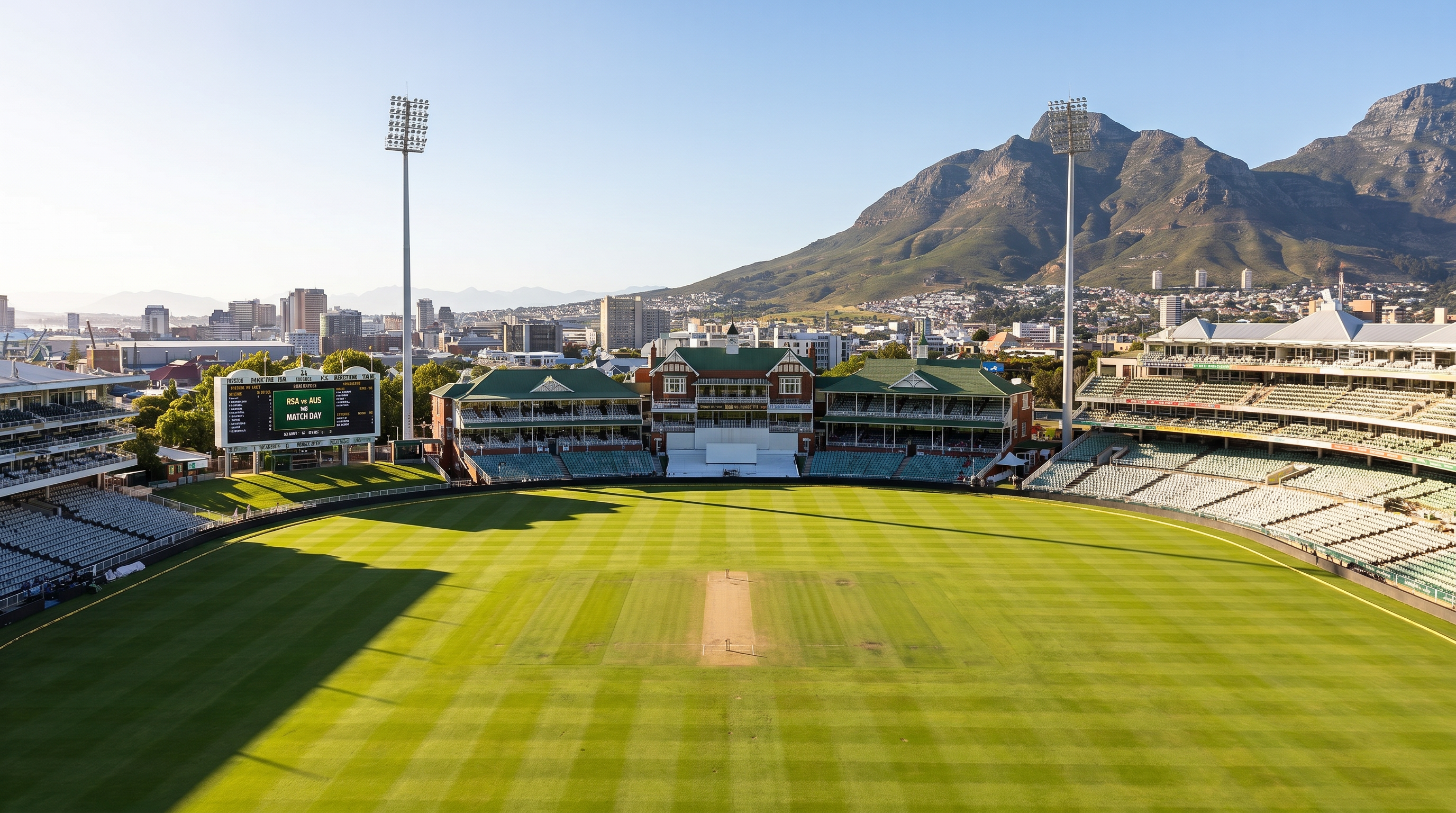
As the focus shifts to 2027, the host nations are treating the tournament as far more than a routine logistical assignment. In South Africa, the government has officially designated the World Cup as a "national project." Infrastructure upgrades are already underway at iconic venues like the Wanderers in Johannesburg, Newlands in Cape Town, and Kingsmead in Durban. The South African Ministry of Sport has emphasized that the tournament will be leveraged to accelerate transformation within the sport and establish a genuine developmental legacy in townships and rural communities, ensuring the economic and social benefits extend far beyond the boundary ropes.[5]
For the global cricketing community, the return to Africa offers a chance to celebrate the sport's expanding footprint. The 2003 edition left an indelible mark, featuring Kenya's historic run to the semi-finals—the best performance by a non-full-member nation in World Cup history. With the 2027 tournament expanding to 14 teams, the door is once again open for emerging cricketing nations to test themselves against the established elite. As the qualification cycle intensifies, the blend of storied history, individual rivalries, and the promise of new African venues sets the stage for a World Cup that will honor the legends of the past while forging the heroes of the future.[6][7]
How we got here
1999–2007
Australia wins three consecutive World Cups, establishing an era of unprecedented dominance.
2003
South Africa and Zimbabwe host the World Cup for the first time, with Australia defeating India in the final.
2011
Sachin Tendulkar wins his first World Cup in his sixth attempt as India triumphs on home soil.
Nov 2023
Australia secures its sixth title by defeating an unbeaten Indian side in Ahmedabad.
Oct 2027
The 14th edition of the tournament is scheduled to begin across southern Africa.
Viewpoints in depth
Host Nations' Ambition
South Africa views the tournament as a catalyst for domestic development.
For the South African government and Cricket South Africa, the 2027 World Cup is not merely a sporting event but a 'national project.' Officials are prioritizing infrastructure upgrades at major venues while emphasizing that the tournament must leave a tangible legacy in marginalized communities. By leveraging the global spotlight, they aim to accelerate transformation in the sport and boost regional tourism across southern Africa.
The Australian Standard
Australia's historical dominance sets the benchmark for all competitors.
Within the cricketing ecosystem, Australia is viewed as the ultimate tournament team. Their ability to peak during knockout stages—evidenced by their six titles and unbeaten runs in 2003 and 2007—creates a psychological hurdle for opponents. Analysts frequently point to their aggressive fielding, deep batting lineups, and big-match temperament as the gold standard that teams like India and England are constantly attempting to replicate.
Emerging Nations' Opportunity
Associate teams view the expanded format as a crucial growth platform.
For nations outside the traditional full-member elite, the return to a 14-team format is a massive victory. It provides associate nations with a rare opportunity to secure vital broadcast revenue, gain high-level match experience, and generate domestic interest. Namibia's inclusion as a co-host, despite needing to qualify, highlights the ongoing push to globalize the sport beyond its traditional strongholds.
What we don't know
- Which four teams will secure the final qualification spots through the 2026 global qualifier pathway.
- Whether Namibia will successfully qualify to play matches as a host nation.
- The exact distribution of the 54 matches across the three host countries.
Key terms
- One Day International (ODI)
- A form of limited-overs cricket played between two international teams, with each side facing a maximum of 50 overs.
- Associate Member
- Countries where cricket is firmly established and organized, but which do not qualify for full Test-match status.
- Super Six
- A tournament phase where the top teams from the initial group stage advance to play each other for a spot in the semi-finals.
Frequently asked
Where is the 2027 Cricket World Cup being held?
The tournament will be co-hosted by South Africa, Zimbabwe, and Namibia.
How many teams will compete in 2027?
The 2027 edition will feature an expanded format with 14 teams, up from the 10 teams that competed in 2019 and 2023.
Who holds the record for the most World Cup runs?
India's Sachin Tendulkar holds the all-time record with 2,278 runs across six tournaments.
Do all host nations automatically qualify?
South Africa and Zimbabwe qualify automatically as full ICC members, but Namibia must earn its spot through the standard qualification pathway.
Sources
Source coverage
7 outlets
3 viewpoints surfaced







[1]WisdenCricket Historians
Australia beat India to seal sixth men's World Cup title | CWC 2023
Read on Wisden →[2]The GuardianGlobal Cricket Fans
Australia earn Cricket World Cup glory as Travis Head ton spoils India's party
Read on The Guardian →[3]NewsBytesCricket Historians
Sachin Tendulkar vs Ricky Ponting: Their ODI World Cup stats
Read on NewsBytes →[4]ICCCricket Historians
Ricky Ponting - ICC Hall of Famers
Read on ICC →[5]Parliamentary Monitoring GroupHost Nation Organizers
Minister of Sport, Arts and Culture Budget Speech
Read on Parliamentary Monitoring Group →[6]ESPNcricinfoCricket Historians
2015 ICC Cricket World Cup: Most Successful Tournament in ESPNcricinfo History
Read on ESPNcricinfo →[7]Factlen Editorial TeamGlobal Cricket Fans
Synthesis by Factlen editorial team
Read on Factlen Editorial Team →

More in sports
See all 398 stories →Women's Sports
How Women's Wrestling Became the Fastest-Growing Collegiate Sport in America
8 sources

Engine Regulations
The 2026 Formula 1 Engine Revolution: How Sustainable Fuel and a 50/50 Hybrid Split Are Changing the Sport
8 sources

MLB Milestones
Brewers' Jacob Misiorowski Throws Historic 15-Strikeout, One-Hit Shutout
7 sources

Pitching Milestone
Jacob Misiorowski Throws Historic 15-Strikeout, One-Hit Complete Game in Brewers Win
7 sources

Every angle. Every day.
Get sports stories with full source coverage and perspective breakdowns delivered to your inbox.