
The Cold-Climate Heat Pump Revolution: What to Know Before Retrofitting Your Home
Modern heat pumps have evolved to handle bitter northern winters, offering significant energy savings and carbon reductions for existing homes.
By Factlen Editorial Team
- Pragmatic Contractors
- Prioritize home comfort, upfront costs, and reliable performance, often favoring dual-fuel setups for extreme climates.
- Electrification Advocates
- Focus on the urgent need to transition homes away from fossil fuels to meet climate goals and reduce emissions.
- Fossil Fuel Industry
- Highlight the limitations of heat pumps in extreme cold and push back against government mandates that restrict consumer choice.
What's not represented
- · Electric Utility Operators
- · Low-Income Renters
Why this matters
Heating and cooling account for the largest portion of a home's energy use. Upgrading to a cold-climate heat pump can significantly reduce monthly utility bills and carbon emissions, but navigating the upfront costs and shifting 2026 federal incentives requires strategic planning.
Key points
- Heat pumps have outsold gas furnaces in the U.S. for four consecutive years.
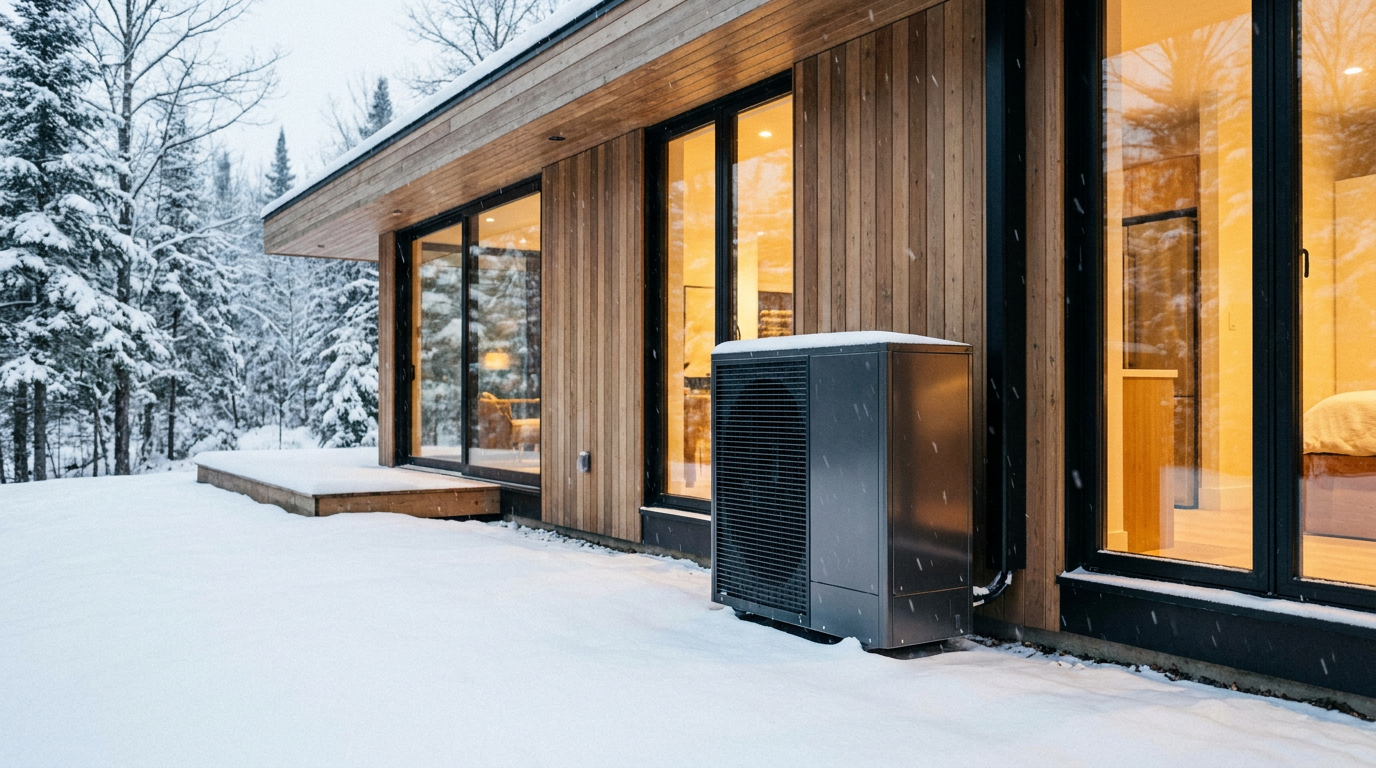
- Modern cold-climate models can operate efficiently even at temperatures as low as -20°F.
- Homes switching from oil, propane, or electric resistance see the highest annual savings.
- The IRA Section 25C tax credit provides up to $2,000 annually for qualifying installations through 2032.
- Dual-fuel systems pair a heat pump with an existing furnace for reliable backup in extreme cold.
For four consecutive years, Americans have bought more heat pumps than gas furnaces. What was once a niche appliance reserved for the mild winters of the Sunbelt has quietly become the dominant force in residential heating and cooling.[3]
The shift is being driven by a technological leap: the cold-climate air source heat pump (ccASHP). Engineered specifically for northern winters, these systems are fundamentally changing the math of home renovations and decarbonization.[6]
But retrofitting an existing home is vastly more complex than installing a system in a new build. Homeowners must navigate a maze of equipment specifications, fluctuating federal incentives, and the physical realities of aging ductwork.[6]
To understand the boom, you have to understand the mechanism. Traditional furnaces generate heat by burning fossil fuels—natural gas, oil, or propane. Even the most efficient gas furnace maxes out at around 98 percent efficiency, meaning 98 units of heat are created for every 100 units of energy consumed.[6]
Heat pumps, by contrast, do not generate heat; they move it. In the winter, they extract ambient thermal energy from the outside air, compress it to raise its temperature, and transfer it indoors. In the summer, the cycle reverses, acting exactly like a standard air conditioner.[6]

Because moving heat requires significantly less energy than creating it, a modern heat pump can achieve a Coefficient of Performance (COP) of 3.0 or higher. That means for every unit of electricity it consumes, it delivers three units of heat into the home—an efficiency rate of 300 percent.[2]
The historical vulnerability of heat pumps was extreme cold. Older models struggled to extract heat when temperatures dropped below freezing, forcing reliance on expensive, energy-hogging electric resistance backup strips.[2]
Modern cold-climate models solve this with inverter-driven, variable-speed compressors. Unlike traditional single-speed compressors that blast on at full power and shut off, variable-speed units modulate their output continuously. They can ramp up to extract heat even when the outside air is well below zero.[2]
Modern cold-climate models solve this with inverter-driven, variable-speed compressors.
A multi-year field validation study by the National Renewable Energy Laboratory (NREL) put these claims to the test. Monitoring centrally ducted systems in cold climates like Colorado and Montana, researchers found that the technology holds up under pressure.[2]
At mild winter temperatures, the units vastly outperformed traditional heating. Even at a punishing -20°F at high altitudes, the tested heat pumps remained operational and were still more efficient than standard electric resistance heaters, though their efficiency advantage narrowed significantly.[2]

Because of this performance drop at extreme extremes, many northern retrofitters are adopting a "dual-fuel" strategy. Rather than ripping out a functioning gas furnace, contractors install a heat pump to handle the heating load for 90 percent of the winter. The gas furnace is left in place to act solely as a backup for the coldest days of the year.[6]
The financial return on a heat pump retrofit depends heavily on what it is replacing. According to NREL researchers, households switching from delivered fuels—like heating oil or propane—or from traditional electric baseboards stand to gain the most.[1][2]
For these homes, upgrading to a high-efficiency heat pump results in median annual energy bill savings of $300 to $650. Over the 15-year lifespan of a system, those savings can easily offset the premium price of the equipment.[1]

However, for homes currently heated by cheap natural gas, the immediate monthly savings are less guaranteed. In these scenarios, the primary financial driver for upgrading is often the need to replace a dying air conditioning unit, since a heat pump provides both heating and cooling in one package for roughly the same installation cost.[1]
To bridge the upfront cost gap, the federal government heavily subsidizes the transition. Under Section 25C of the Inflation Reduction Act, homeowners can claim a tax credit of 30 percent of the installation cost, up to $2,000, for qualifying high-efficiency models.[4]
Unlike previous one-time credits, the Section 25C credit resets annually through 2032. This allows homeowners to strategically phase their upgrades—installing a heat pump one year, and adding a heat pump water heater or new insulation the next, claiming the maximum credit each time.[4]
But the policy landscape is shifting in 2026. While the tax credits remain intact, the $8.8 billion state rebate program has faced new federal directives. The Department of Energy recently mandated that states prioritize weatherization—like air sealing and insulation—before granting equipment rebates, and restricted funds from being used to directly incentivize switching away from fossil fuels.[5]

This evolving regulatory environment underscores a fundamental truth of home performance: the equipment matters, but the building envelope matters just as much. A state-of-the-art heat pump installed in a drafty, poorly insulated house will struggle to maintain comfort and efficiency.[5][6]
Ultimately, the cold-climate heat pump represents the most significant upgrade a homeowner can make to their property's energy profile. By pairing the right technology with thoughtful design and strategic use of tax credits, retrofitting for electrification is no longer a futuristic ideal—it is the new standard for the American home.[6]
How we got here
2022
The Inflation Reduction Act passes, creating the Section 25C tax credits for energy-efficient home upgrades.
2023
Heat pumps outsell gas furnaces in the United States for the second consecutive year.
Feb 2024
NREL publishes a study confirming heat pumps lower energy bills for the majority of U.S. homes.
Jan 2026
The Department of Energy issues new rules requiring weatherization before states can issue IRA equipment rebates.
Viewpoints in depth
Electrification Advocates
Focus on the urgent need to transition homes away from fossil fuels to meet climate goals.
This camp argues that the technology is already mature enough to completely replace fossil fuel heating in the vast majority of American homes. They point to NREL data showing that heat pumps reduce greenhouse gas emissions across all U.S. regions, regardless of the local grid's current energy mix. For advocates, the priority is maximizing adoption through aggressive rebates and phasing out the installation of new gas infrastructure entirely.
Pragmatic Contractors
Prioritize home comfort, upfront costs, and reliable performance over total decarbonization.
HVAC professionals and pragmatic homeowners often favor a measured approach, particularly in older homes with poor insulation. They frequently recommend 'dual-fuel' systems that utilize a heat pump for mild winter days but retain a gas furnace for extreme cold snaps. This camp emphasizes that while heat pumps are highly efficient, improper sizing or lack of weatherization can lead to comfort issues and higher-than-expected electric bills.
Fossil Fuel Industry
Highlight the limitations of heat pumps in extreme cold and push back against government mandates.
Representatives from the heating oil, propane, and natural gas industries argue that forced electrification strains the electrical grid and removes consumer choice. They frequently point to the high upfront costs of heat pump retrofits and the drop in efficiency at sub-zero temperatures as evidence that liquid and gas fuels remain essential for reliable winter heating in northern climates.
What we don't know
- How the evolving 2026 federal rules regarding the $8.8 billion state rebate program will impact low-income adoption rates.
- Whether local electrical grids in older neighborhoods will require significant upgrades to handle the increased winter load of mass electrification.
Key terms
- Cold-Climate Air Source Heat Pump (ccASHP)
- A heating and cooling system engineered with advanced compressors to extract heat from outside air even in sub-zero temperatures.
- Coefficient of Performance (COP)
- A metric used to measure heat pump efficiency, representing the ratio of heat output to electrical energy input.
- Inverter-Driven Compressor
- A variable-speed motor that allows a heat pump to continuously adjust its output rather than simply turning on and off.
- Section 25C Tax Credit
- A federal incentive providing homeowners up to $2,000 annually for installing qualifying energy-efficient home improvements.
Frequently asked
Do heat pumps work in freezing weather?
Yes. Modern cold-climate heat pumps use variable-speed compressors to extract heat from the air even when temperatures drop to -20°F.
What is a dual-fuel system?
A setup that pairs an electric heat pump with a traditional gas furnace. The heat pump handles the heating for most of the winter, and the furnace kicks in only during extreme cold snaps.
Did the IRA heat pump tax credits expire?
No. The Section 25C tax credit, which provides up to $2,000 for qualifying heat pumps, is active through 2032 and resets annually.
Do I need to replace my ductwork?
Not necessarily. If your existing ductwork is in good condition and properly sized, a central heat pump can often utilize the same distribution system as your old furnace.
Sources
Source coverage
6 outlets
3 viewpoints surfaced






[1]Smart Cities DiveElectrification Advocates
Heat pumps would cut energy bills for majority of US homes: NREL research
Read on Smart Cities Dive →[2]National Renewable Energy LaboratoryPragmatic Contractors
NREL Field Validation of Air-Source Heat Pumps for Cold Climates
Read on National Renewable Energy Laboratory →[3]The Switch Is OnElectrification Advocates
Heat pumps are now outselling gas furnaces nationwide
Read on The Switch Is On →[4]AC DirectPragmatic Contractors
Did the IRA tax credits expire? The 2026 Guide
Read on AC Direct →[5]NEFIFossil Fuel Industry
DOE Tells States: IRA Rebates Cannot Be Used for Heat Pump Conversions
Read on NEFI →[6]Factlen Editorial TeamPragmatic Contractors
Synthesis by Factlen editorial team
Read on Factlen Editorial Team →

Every angle. Every day.
Get home stories with full source coverage and perspective breakdowns delivered to your inbox.