
Why the World's Biggest Donors Are Giving Away Billions With 'No Strings Attached'
A growing ethical movement called 'trust-based philanthropy' is urging wealthy donors to abandon strict oversight and hand unrestricted power directly to non-profits.
By Factlen Editorial Team
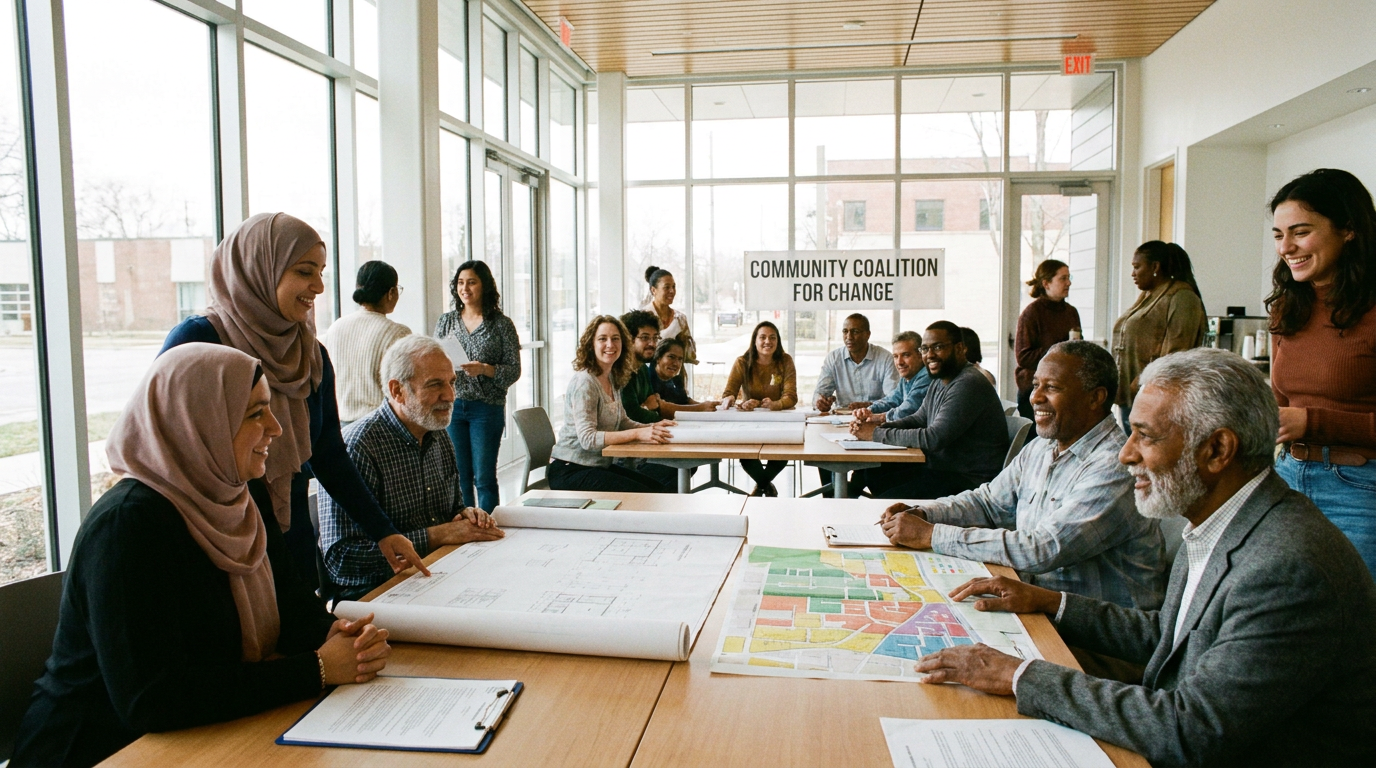
- Trust-Based Advocates
- Argue that unrestricted funding and power-sharing are essential for equity and maximizing actual community impact.
- Pragmatic Reformers
- Support the shift toward trust but emphasize that trust must be actively built through transparent processes, not just by writing blank checks.
- Traditional Philanthropy Defenders
- Argue that rigorous donor oversight, metrics, and restricted grants are necessary to ensure accountability and strategic results.
What's not represented
- · Grassroots Non-Profit Staff
- · Beneficiaries of Charitable Programs
Why this matters
As billions of dollars flow into the charitable sector annually, the shift toward trust-based philanthropy fundamentally changes how that money reaches communities. For anyone who donates to, works for, or benefits from a non-profit, this ethical evolution dictates whether local leaders are empowered to solve their own problems or forced to navigate endless bureaucratic red tape.
Key points
- Trust-based philanthropy shifts power from wealthy donors to the non-profits actively doing the work.
- The model relies on multi-year, unrestricted funding rather than project-specific grants.
- MacKenzie Scott popularized the approach by giving away billions with 'no strings attached.'
- Advocates argue the model promotes racial equity by removing bureaucratic barriers that hinder grassroots groups.
- Critics warn that abandoning strict metrics and donor oversight could lead to inefficiency and lack of accountability.
- Experts caution that funders must actively build 'process-based trust' to avoid simply funding their existing privileged networks.
For decades, the gold standard of charitable giving was "strategic philanthropy." Wealthy donors and massive foundations operated much like investment banks, demanding rigorous metrics, quarterly reports, and strict oversight to ensure their money was generating a measurable return on social impact.[6]
But a quiet revolution is rewriting the ethical framework of how money flows to those in need. It is called "trust-based philanthropy," and it asks a fundamentally different moral question: What if the people experiencing a crisis know how to solve it better than the billionaires funding the solution?[1][6]
At its core, trust-based philanthropy is about redistributing power. It operates on the premise that advancing tangible social impact requires funders to listen to those closest to the issues, rather than dictating terms from a distant boardroom.[1]
The movement advocates for a distinct set of practices, most notably the shift toward multi-year, unrestricted funding. Instead of giving a non-profit a grant that can only be used for a specific new program, trust-based funders write a check and allow the organization to spend it on whatever they need—including keeping the lights on, paying staff, or pivoting during an unexpected emergency.[1][5]

This approach gained global visibility through the unprecedented giving of MacKenzie Scott. Following her divorce from Amazon founder Jeff Bezos, Scott began dispersing her fortune at a staggering pace, donating over $14 billion to more than 1,600 charitable organizations in just a few years.[4]
What shocked the philanthropic establishment was not just the sheer volume of Scott's giving, but her methodology. She conducts rigorous data-driven research behind the scenes, selects high-potential organizations, and then hands over massive sums with zero strings attached and no reporting requirements.[4]
Scott’s philosophy sends a clear signal: her influence ends with the decision of who to fund. By stepping back, she allows non-profits to channel their energy into operational work rather than spending countless hours generating reports to appease a donor.[4]

Advocates argue this shift is a necessary ethical correction. Traditional grant reporting has often devolved into a bureaucratic exercise that reinforces power asymmetries and extracts the "life force" from the very people foundations intend to help.[1][5]
Advocates argue this shift is a necessary ethical correction.
There is also a deep racial equity component to the movement. Traditional philanthropy's demand for polished grant applications and specific administrative structures has historically disadvantaged grassroots organizations and leaders of color, who may lack the overhead to hire dedicated fundraising staff.[5]
By moving the onus of due diligence from the non-profit to the funder, trust-based philanthropy attempts to dismantle these systemic barriers. It treats the grant as a partnership rather than a transaction.[1][5]
However, the movement has faced significant pushback from traditional philanthropic circles. Critics argue that dispensing money without demanding benchmarks for success or performing ongoing due diligence is a dereliction of a donor's duty.[2]
Skeptics warn that blurring the lines between donors and recipients, and treating unrestricted grants as a form of "philanthropic reparations," risks turning charitable giving into an unstrategic endeavor that lacks accountability.[2]
Some conservative commentators have characterized the movement as prioritizing social justice optics over actual, measurable results, arguing that donors must maintain the ability to monitor closely and demand evidence of impact.[2]
Proponents of the trust-based model counter that trust and rigorous evaluation are not mutually exclusive. They argue that accountability should be mutual, fostering a dialogue where non-profits can be honest about their failures without fear of losing their funding.[1]

Philanthropic advisory groups like The Bridgespan Group offer a nuanced middle ground. They note that while letting go of rigid control is vital, the natural dynamics of "trust" can also be problematic if left unexamined.[3]
Bridgespan warns of "characteristic-based trust," where predominantly white, affluent funders instinctively trust leaders who look and sound like them. If trust is treated as a simple "on-off switch," it could inadvertently reinforce the very exclusionary networks the movement seeks to dismantle.[3]
Instead, experts advocate for "process-based trust"—trust that is generated through recurrent, thoughtful exchanges that mutually benefit both parties over time.[3]

Ultimately, the rise of trust-based philanthropy represents a profound cultural shift in the ethics of wealth and giving. It challenges the assumption that capital inherently bestows wisdom.[6]
How we got here
2011
The Whitman Institute adopts a 'spend-down' model, pioneering the early concepts of relationship-focused, trust-based grantmaking.
2014
The term 'trust-based philanthropy' is officially coined to describe this emerging ethical framework.
Jan 2020
The Trust-Based Philanthropy Project is launched as a five-year initiative to transform the charitable sector.
July 2020
MacKenzie Scott announces her first major wave of unrestricted giving, bringing unprecedented scale to the trust-based model.
2023-2024
The movement sparks widespread debate, with traditionalists defending donor oversight while advocates push for deeper systemic equity.
Viewpoints in depth
The Empowerment View
Advocates believe that those closest to the problem are best equipped to solve it.
Organizations like the Trust-Based Philanthropy Project argue that traditional grantmaking is rooted in an inherent power imbalance. By forcing non-profits to jump through bureaucratic hoops and restricting how funds can be used, donors inadvertently stifle innovation and drain resources. They argue that providing multi-year, unrestricted funding is not just more efficient, but a moral imperative that treats community leaders as equal partners rather than subordinates.
The Accountability View
Critics worry that removing donor oversight invites inefficiency and a lack of strategic focus.
Skeptics of the trust-based model argue that philanthropy requires rigorous due diligence. From this perspective, demanding benchmarks for success is not about hoarding power, but about ensuring that charitable dollars actually solve the problems they target. They warn that treating unrestricted grants as a form of 'reparations' or abandoning metrics altogether risks turning philanthropy into an unstructured endeavor where failure goes unnoticed and uncorrected.
The Process-Driven View
Advisors caution that 'trust' must be actively cultivated to avoid reinforcing existing biases.
Groups like The Bridgespan Group point out a critical flaw in simply 'trusting your gut': funders tend to trust people who look, sound, and operate like them. If trust is characteristic-based, unrestricted funding will disproportionately flow to already-privileged networks. Therefore, they advocate for 'process-based trust'—a framework where funders actively do the homework to discover marginalized groups and build mutual accountability over time, rather than just writing a check and walking away.
What we don't know
- Whether the long-term systemic impact of unrestricted funding will measurably outperform traditional strategic philanthropy.
- How smaller, everyday donors might adapt these trust-based principles, which are currently championed mostly by billionaires and large foundations.
- If the philanthropic sector will permanently adopt these changes, or revert to strict oversight during future economic downturns.
Key terms
- Trust-Based Philanthropy
- A charitable framework focused on redistributing power from donors to non-profits through unrestricted funding and mutual accountability.
- Strategic Philanthropy
- A traditional model of giving that relies heavily on donor-directed goals, strict metrics, and rigorous oversight to measure social return on investment.
- Unrestricted Funding
- Grant money given to an organization without specific conditions on how it must be spent, allowing for flexible operational use.
- Capacity Paradox
- The cycle where non-profits with limited resources struggle to secure funding because they lack the administrative capacity to complete complex grant applications.
- Process-Based Trust
- Trust that is actively built over time through transparent, mutual collaboration, rather than relying on initial assumptions or shared backgrounds.
Frequently asked
What is trust-based philanthropy?
It is an approach to charitable giving that seeks to redistribute power by providing non-profits with multi-year, unrestricted funding and reducing burdensome reporting requirements.
What does 'unrestricted funding' mean?
Unrestricted funding means the donor gives money without dictating exactly how it must be spent, allowing the non-profit to use it for operational costs, salaries, or emergencies.
Why do some critics oppose this model?
Critics argue that without strict metrics and donor oversight, it is difficult to measure a charity's impact and ensure that funds are being used efficiently.
How did MacKenzie Scott influence this movement?
Scott brought global attention to the model by donating over $14 billion in unrestricted funds to more than 1,600 organizations, proving the approach could be executed at a massive scale.
Sources
Source coverage
6 outlets
3 viewpoints surfaced



[1]Trust-Based Philanthropy ProjectTrust-Based Advocates
What is Trust-Based Philanthropy?
Read on Trust-Based Philanthropy Project →[2]City JournalTraditional Philanthropy Defenders
Just Trust Us: A new philanthropic movement suggests that social justice is more important than donor due diligence.
Read on City Journal →[3]The Bridgespan GroupPragmatic Reformers
Is Trust About Letting Go of Control?
Read on The Bridgespan Group →[4]Philanthropy TalksPragmatic Reformers
MacKenzie Scott: Trust-based philanthropy as a new way forward
Read on Philanthropy Talks →[5]Nonprofit QuarterlyTrust-Based Advocates
A Reparative Framework for Philanthropy
Read on Nonprofit Quarterly →[6]Factlen Editorial TeamPragmatic Reformers
Synthesis by Factlen editorial team
Read on Factlen Editorial Team →
Every angle. Every day.
Get culture stories with full source coverage and perspective breakdowns delivered to your inbox.