
The Science of Space: How Neuroaesthetic Interior Design Rewires Your Brain
Emerging research in neuroaesthetics reveals that interior design choices—from lighting to room shape—trigger measurable biological responses that can lower stress and boost cognitive function.
By Factlen Editorial Team
- Biophilic Architects
- Advocates for integrating natural elements into the built environment to satisfy evolutionary needs.
- Neuroaesthetic Researchers
- Focuses on the empirical, biological data showing how the brain responds to spatial stimuli.
- Environmental Psychologists
- Examines how spatial layouts, geometry, and sensory inputs influence human behavior and mood.
What's not represented
- · Renters with limited ability to alter their architectural environments
- · Low-income households facing barriers to high-end wellness design
Why this matters
As we spend an increasing majority of our lives indoors, understanding how our homes biologically affect our nervous systems allows us to design spaces that actively reduce stress and improve cognitive health. Applying these scientific principles transforms interior design from a purely visual luxury into a vital tool for preventive mental healthcare.
Key points
- Neuroaesthetics is the scientific study of how the brain and nervous system respond to interior design and architecture.
- Thoughtfully designed spaces can lower stress hormones by up to 20 percent and reduce blood pressure.
- Biophilic design incorporates natural elements like wood grain and sunlight to trigger evolutionary relaxation responses.
- Cooler colors activate the body's parasympathetic 'rest and digest' system, while warmer colors stimulate alertness.
- Room geometry, including ceiling height and spatial flow, significantly impacts cognitive function and emotional comfort.
For decades, interior design has been treated primarily as a visual discipline—a matter of matching color palettes, selecting furniture, and arranging decor to suit personal tastes. But a quiet revolution is reshaping how architects and designers approach the spaces we inhabit. Driven by advances in neuroscience, the focus is shifting from how a room looks to how it biologically makes us feel.[6]
This emerging field, known as neuroaesthetics, studies the profound ways in which our built environments interact with our brains and nervous systems. It turns out that our bodies are constantly processing architectural cues, triggering measurable physiological responses before we even consciously register them.[1][6]
Armed with functional magnetic resonance imaging (fMRI) and PET scans, researchers are now able to document the exact biological mechanisms at play when we enter a beautifully designed space. The results prove that aesthetics are not merely subjective preferences; they are powerful environmental stimuli that can alter our brain chemistry.[1]
When individuals are placed in thoughtfully designed, harmonious environments, cardiovascular systems respond almost immediately. Heart rates decrease, blood pressure lowers, and the brain releases a surge of serotonin and dopamine. Simultaneously, environments optimized for human well-being can reduce the production of stress hormones like cortisol by 15 to 20 percent.[1][3]

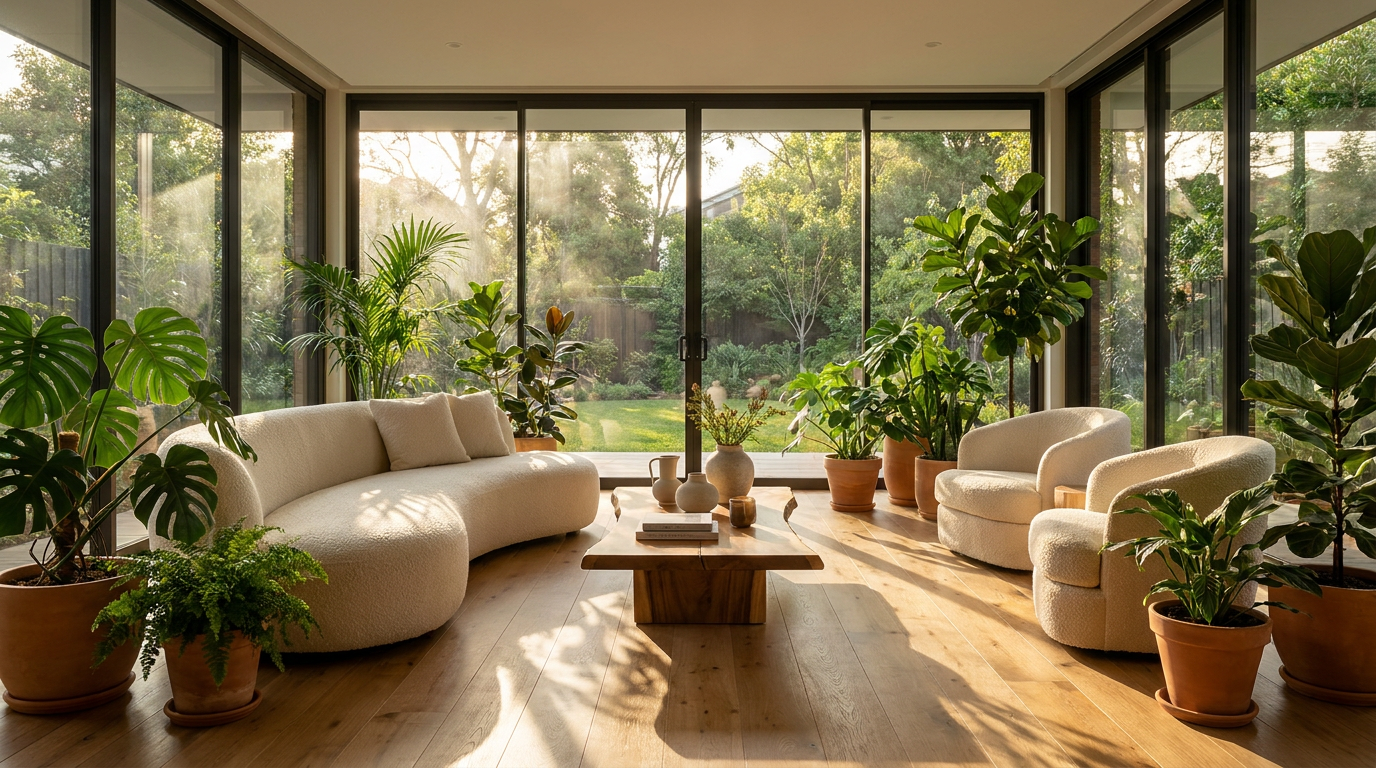
A major pillar of this neuroaesthetic revolution is biophilic design, an approach rooted in the evolutionary theory that humans possess an innate, biological affinity for the natural world. For the vast majority of human history, our nervous systems evolved outdoors, meaning our brains are hardwired to seek out natural patterns, textures, and light.[3][5]
Modern research has validated this evolutionary intuition with striking precision. Studies have shown that simply viewing natural wood grain—whether real or accurately mimicked—can reduce a person's blood pressure by an average of five beats per minute.[1][3]
The integration of indoor greenery further amplifies these restorative effects. Visual access to plants and natural landscapes has been shown to lower anxiety, improve working memory, and boost cognitive performance. In commercial settings, the introduction of biophilic elements has even been linked to a 15 percent increase in productivity, a metric that residential designers are now applying to home offices.[2][4]
The integration of indoor greenery further amplifies these restorative effects.
Beyond materials and greenery, light serves as the master conductor of our biological rhythms. Natural daylight is the primary cue for the body's circadian clock, regulating the sleep-wake cycle, energy levels, and mood.[3][5]

Environments that maximize natural light—through strategic window placement, skylights, and reflective surfaces—help synchronize these internal rhythms. When architectural constraints limit natural sunlight, designers are increasingly turning to dynamic circadian lighting systems that mimic the shifting color temperature of the sun, moving from cool, energizing blues in the morning to warm, relaxing ambers in the evening.[5]
Color psychology, long a staple of design theory, is also being redefined through the lens of neuroscience. When light enters the eye, it does more than facilitate vision; it stimulates direct neural pathways to the brain regions responsible for managing mood and stress responses.[1][4]
Cooler hues, such as muted blues and greens, actively stimulate the parasympathetic nervous system. This is the body's "rest and digest" network, which slows the heart rate and promotes deep relaxation. Conversely, warmer hues like reds and oranges activate the sympathetic nervous system, increasing alertness, vitality, and energy.[1]

The physical geometry of a room also plays a crucial role in spatial psychology. Environmental psychologists often point to the concept of "prospect and refuge"—the idea that humans feel most comfortable in spaces that offer a clear view of their surroundings (prospect) while providing a secure, enclosed area at their back (refuge).[3]
Ceiling height is another geometric factor that dramatically influences cognition. High ceilings tend to encourage abstract thinking, creativity, and a sense of freedom, making them ideal for living rooms and creative workspaces. Lower ceilings, on the other hand, foster a sense of intimacy, safety, and focus, which is why they are often preferred in bedrooms or cozy reading nooks.[4]
Acoustics, an often-overlooked element of residential design, significantly impacts our subconscious stress levels. Hard, reflective surfaces that create echoes can make a space feel cold and chaotic, leading to auditory fatigue. Integrating sound-absorbing materials like heavy drapery, upholstered furniture, and acoustic panels helps create a tranquil auditory environment that supports mental clarity.[5]

The tactile experience of a home is equally vital. The brain's somatosensory cortex, which processes touch, responds highly favorably to natural, organic textures. Woven fabrics, raw stone, and unvarnished wood provide sensory variability that sterile, manufactured surfaces simply cannot replicate, grounding the occupant in their physical environment.[1][6]
For homeowners, applying these neuroaesthetic principles does not necessarily require a massive architectural overhaul. Small, intentional changes—such as layering lighting, introducing potted plants, prioritizing natural textures, and organizing layouts to improve flow—can yield significant improvements in daily well-being.[6]
Ultimately, the convergence of neuroscience and interior design represents a fundamental shift in how we view our homes. They are no longer just shelters or status symbols; they are active participants in our physical and mental health. By designing for the brain, we can transform our living spaces into powerful tools for preventive healthcare and daily restoration.[2][6]
How we got here
1984
Biologist Edward O. Wilson popularizes the term 'biophilia,' describing humanity's innate connection to nature.
1984
A landmark study in Science reveals that hospital patients with nature views recover faster and require less pain medication.
2000s
Environmental psychology gains traction, linking indoor environmental quality to cognitive function and workplace productivity.
2015
Studies utilizing fMRI and EEG technology begin mapping exactly how the brain's pleasure centers respond to curvilinear architecture.
2026
Neuroaesthetics becomes a foundational pillar in residential interior design, shifting the focus from visual trends to biological well-being.
Viewpoints in depth
Neuroaesthetic Researchers
Focuses on the empirical, biological data showing how the brain responds to spatial stimuli.
This camp relies on advanced neuroimaging, such as fMRI and PET scans, to move interior design from a subjective art to an objective science. They emphasize that aesthetic experiences trigger measurable biological responses, such as the release of serotonin and dopamine, and the reduction of cortisol. For these researchers, the built environment is a medical variable that can either exacerbate stress or serve as a form of preventive healthcare.
Biophilic Architects
Advocates for integrating natural elements into the built environment to satisfy evolutionary needs.
Biophilic designers argue that because human biology evolved in the natural world, our nervous systems are fundamentally mismatched with sterile, artificial indoor environments. They prioritize maximizing natural daylight, incorporating organic materials like wood and stone, and introducing indoor greenery. Their focus is on creating sensory-rich environments that mimic nature's complexity, which they argue is essential for cognitive restoration and emotional balance.
Environmental Psychologists
Examines how spatial layouts, geometry, and sensory inputs influence human behavior and mood.
This perspective looks at the intersection of architecture and human behavior. Environmental psychologists study how factors like ceiling height, room flow, and acoustics dictate social interaction and personal comfort. They champion concepts like 'prospect and refuge'—the idea that spaces should offer both expansive views and cozy, secure enclosures—to create homes that feel psychologically safe and emotionally resonant.
What we don't know
- How long-term exposure to highly optimized neuroaesthetic environments affects baseline brain chemistry over decades.
- The exact threshold at which artificial biophilic elements (like fake plants or synthetic wood grain) lose their biological efficacy compared to natural materials.
- How individual neurodivergence alters the baseline biological responses to specific spatial and color stimuli.
Key terms
- Neuroaesthetics
- The study of how the brain and nervous system respond to beauty, art, and spatial design.
- Biophilic Design
- An architectural approach that connects occupants to nature by incorporating natural light, vegetation, and organic materials.
- Parasympathetic Nervous System
- The part of the autonomic nervous system responsible for the body's 'rest and digest' state, promoting relaxation.
- Circadian Lighting
- Lighting systems designed to mimic the natural progression of sunlight throughout the day to support healthy sleep-wake cycles.
- Prospect and Refuge
- A spatial psychology theory suggesting humans prefer environments that offer a broad view (prospect) while providing a sense of enclosure and safety (refuge).
- Somatosensory Cortex
- The brain region that processes tactile feedback, which is stimulated by natural textures like wood and woven fabrics.
Frequently asked
What is neuroaesthetics in interior design?
It is the scientific study of how the brain responds to aesthetic experiences and spatial environments, using tools like fMRI to measure biological reactions to design choices.
How does biophilic design reduce stress?
By incorporating natural elements like wood grain, plants, and sunlight, biophilic design triggers evolutionary relaxation responses, lowering cortisol levels and blood pressure.
Can room shape affect my mood?
Yes. High ceilings tend to promote abstract thinking and inspiration, while lower ceilings create a sense of intimacy and safety, often referred to as 'refuge.'
What colors are best for a calming environment?
Cooler hues like muted blues and greens activate the parasympathetic nervous system, which slows the heart rate and promotes deep relaxation.
Sources
Source coverage
6 outlets
3 viewpoints surfaced






[1]Science in DesignNeuroaesthetic Researchers
The Power of Spatial Design for the Unconscious Mind
Read on Science in Design →[2]National Institutes of HealthNeuroaesthetic Researchers
Integrating digital health and biophilic design
Read on National Institutes of Health →[3]Biophilic InnovationsBiophilic Architects
Health benefits of biophilic design
Read on Biophilic Innovations →[4]ArchDailyEnvironmental Psychologists
Psychology of Space: How Interiors Impact our Behavior
Read on ArchDaily →[5]The Architect's DiaryBiophilic Architects
The Science Behind Space and Behaviour
Read on The Architect's Diary →[6]Factlen Editorial TeamEnvironmental Psychologists
Synthesis by Factlen editorial team
Read on Factlen Editorial Team →
Every angle. Every day.
Get home stories with full source coverage and perspective breakdowns delivered to your inbox.