
SpaceX Acquires AI Coding Startup Cursor in $60 Billion All-Stock Deal
SpaceX has agreed to acquire Anysphere, the parent company of AI coding assistant Cursor, for $60 billion just days after its record-breaking IPO.
By Factlen Editorial Team
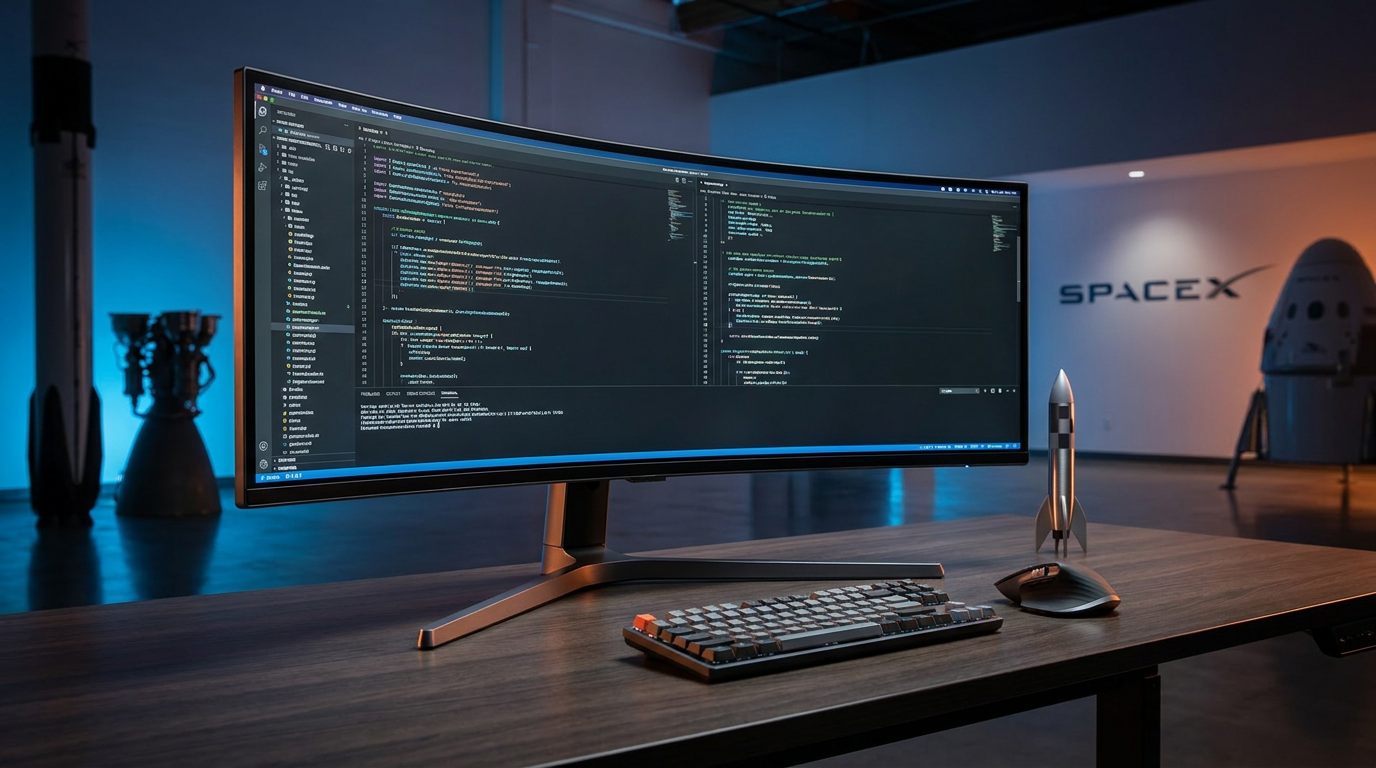
- SpaceX & Industry Analysts
- See the deal as a strategic masterstroke that instantly makes SpaceX a dominant player in enterprise developer tools.
- Cursor Leadership & Investors
- View the acquisition as a necessary evolution to secure the massive compute power required to build frontier AI models.
- Independent Developers
- Express concern that the acquisition will lead to model lock-in, stripping away the flexibility to use competing AI models.
What's not represented
- · Antitrust Regulators
- · Competing AI Labs (OpenAI/Anthropic)
Why this matters
This $60 billion acquisition marks the largest deal in the history of developer tools, signaling that AI coding assistants are now the most valuable real estate in tech. For developers, it promises unprecedented AI capabilities backed by SpaceX's massive supercomputers, but also raises concerns about losing the flexibility to choose competing models.
Key points
- SpaceX has agreed to acquire AI coding startup Cursor in an all-stock deal valued at $60 billion.
- The acquisition follows a strategic partnership in April that gave SpaceX the option to buy the company or pay a $10 billion breakup fee.
- Cursor's annualized revenue surged to $4 billion in June, helping it fend off intense competition from Anthropic's Claude Code.
- The deal provides Cursor with access to SpaceX's Colossus supercomputer to train its next-generation coding models.
- Developers have expressed concern that the acquisition could lead to 'model lock-in,' forcing users toward SpaceX's Grok AI.
SpaceX has agreed to acquire Anysphere, the parent company of the popular AI coding assistant Cursor, in a massive $60 billion all-stock transaction. The deal, arriving just days after Elon Musk's aerospace and AI conglomerate executed a record-breaking initial public offering, marks the largest acquisition in the history of developer tooling. By absorbing the fastest-growing software environment in the industry, SpaceX is fundamentally reshaping the competitive landscape of enterprise artificial intelligence and signaling a new era of consolidation.[2][4]
The acquisition serves as a dramatic vindication for Cursor, a startup that spent the early months of 2026 fighting off premature obituaries. When Anthropic released its highly capable, terminal-based Claude Code agent, a significant wave of developers migrated away from Cursor's integrated development environment. The sudden shift in developer loyalty prompted viral social media posts declaring the platform 'dead' and forced Cursor's leadership to call an emergency all-hands meeting to address what appeared to be an existential threat to their core product.[1][6]
Faced with intense pressure, Cursor's leadership initiated a 'wartime' footing that ultimately saved the company. They doubled down on their proprietary agentic coding model, known as Composer, and focused heavily on securing lucrative enterprise sales contracts. The aggressive strategy paid off spectacularly. By early June, Cursor's annualized revenue had surged to roughly $4 billion, up from $2 billion in February, proving that the platform could not only survive the onslaught of new AI tools but actively expand its market share among professional engineering teams.[2][3]

Despite the revenue surge, Cursor faced a hard technological ceiling: compute power. Training frontier-level coding models requires massive infrastructure, and the startup found itself severely bottlenecked by a lack of available GPUs. Enter Elon Musk's sprawling empire. In April, Cursor secured a strategic partnership with SpaceX—which had recently absorbed the xAI division and its Grok models—to utilize the massive Colossus supercomputer cluster in Memphis, Tennessee, providing the startup with the raw computational muscle needed to train its next-generation systems.[3][5]
That April partnership included a highly unusual financial option: SpaceX secured the right to either acquire Cursor outright for $60 billion later in the year, or pay a massive $10 billion breakup fee to compensate for the joint development work. Following SpaceX's blockbuster Nasdaq debut in early June, which valued the combined aerospace and AI behemoth at over $2 trillion and flooded the company with fresh capital, executives chose to exercise the acquisition route, bringing the Cursor team and its massive user base entirely in-house.[2][7]
For SpaceX, the strategic rationale behind the $60 billion price tag is abundantly clear. While the company's xAI division and its Grok models have gained significant traction in consumer applications and social media integrations, the company has historically lagged behind Microsoft-backed OpenAI and Amazon-backed Anthropic in the highly lucrative enterprise developer market. Acquiring Cursor provides SpaceX with an immediate, massive footprint in professional software engineering, instantly transforming them into a dominant player in the business-to-business AI sector and giving them a direct pipeline to the world's top software engineers.[2][4]

For SpaceX, the strategic rationale behind the $60 billion price tag is abundantly clear.
The financial windfall for Cursor's founding team is staggering, cementing one of the fastest wealth-creation events in Silicon Valley history. The all-stock deal is expected to double the net worth of the company's four co-founders—Michael Truell, Aman Sanger, Sualeh Asif, and Arvid Lunnemark, all of whom are in their mid-twenties. Industry estimates now place their individual fortunes at approximately $2.7 billion each, a remarkable outcome for a company that was founded just four years ago in a college dorm room.[3]
Within the broader software development community, however, the acquisition has sparked intense debate and apprehension. Cursor originally won its massive developer loyalty by remaining fiercely model-agnostic. The platform allowed users to seamlessly toggle between OpenAI's GPT-4o, Anthropic's Claude, and Google's Gemini, letting engineers choose the specific AI model that best fit the coding task at hand. That flexibility was widely considered Cursor's defining feature, allowing it to act as a neutral layer above the fiercely competitive foundational model wars.[6][7]
Independent developers and industry analysts are now openly questioning whether that cherished flexibility will survive the merger. The prevailing fear across developer forums is 'model lock-in'—the risk that SpaceX will gradually transform Cursor into an exclusive frontend for its own Grok models. Critics point out that when an AI lab acquires a tooling company, the historical precedent is to restrict access to competing models, forcing developers into a single ecosystem and using the tool as a distribution channel for the parent company's proprietary technology.[6][7]

SpaceX and Cursor leadership have pushed back against these concerns, emphasizing that their joint focus is simply on building the 'world's best coding and knowledge work AI.' By leveraging the immense power of the Colossus supercomputer, the two companies aim to release a jointly trained model that vastly outperforms existing alternatives. If the native SpaceX-Cursor model proves to be objectively superior for software development, executives believe the debate over model lock-in will largely become moot, as developers will naturally gravitate toward the most capable tool.[3][5]
The broader implications for the global technology industry are profound. The $60 billion price tag signals that AI coding assistants are no longer viewed as mere productivity features or optional IDE plugins. Instead, they are now recognized as the primary interface through which enterprise artificial intelligence will be distributed, utilized, and monetized. The company that controls the developer's environment ultimately controls the future of software creation, making tools like Cursor the most valuable real estate in the modern tech economy.[1][2]
As the monumental deal moves toward an expected close in the third quarter of 2026, the artificial intelligence arms race has clearly entered a new and highly consolidated phase. The battle among tech giants is no longer just about building the smartest foundational model in a vacuum; it is about owning the exact tools and workflows where developers spend their entire working day. With Cursor now backed by SpaceX's infinite compute and capital, the pressure on rivals like Microsoft and Anthropic has never been higher.[2][7]
How we got here
Late 2022
Cursor is founded by four MIT alumni to build an AI-native code editor.
January 2026
Cursor faces intense pressure from Anthropic's Claude Code, prompting an emergency all-hands meeting.
April 2026
Cursor and SpaceX sign a partnership giving SpaceX the option to acquire the startup.
Early June 2026
Cursor hits $4 billion in annualized revenue, proving its resilience in the market.
June 12, 2026
SpaceX launches a record-breaking IPO, valuing the company at over $2 trillion.
June 16, 2026
SpaceX exercises its option, acquiring Cursor for $60 billion in stock.
Viewpoints in depth
Cursor's Leadership
The acquisition provides the massive compute power needed to build frontier AI models.
For Cursor's founders, the deal was born out of necessity. Despite reaching $4 billion in annualized revenue, the company was severely bottlenecked by a lack of GPU compute required to train its next-generation 'Composer' models. By joining SpaceX, Cursor gains unfettered access to the Colossus supercomputer, allowing them to scale their reinforcement learning and compete directly with the foundational models built by OpenAI and Anthropic.
SpaceX's Strategy
Acquiring Cursor instantly makes SpaceX a dominant player in enterprise developer tools.
SpaceX's absorption of xAI gave the company a powerful consumer chatbot in Grok, but it lacked a distribution channel for professional software engineers. By acquiring the most popular AI coding environment on the market, SpaceX instantly bridges that gap. Analysts view the $60 billion price tag as a strategic land grab, ensuring that SpaceX controls the primary interface where enterprise software is actually written, directly challenging Microsoft's GitHub Copilot.
Independent Developers
Many users fear the acquisition will lead to model lock-in and reduced flexibility.
The developer community's reaction has been highly mixed. Cursor built its massive user base by acting as a neutral platform, allowing engineers to route different tasks to Claude, GPT-4o, or Gemini depending on which model performed best. Developers fear that under SpaceX's ownership, Cursor will eventually be forced to prioritize Grok models, stripping away the flexibility that made the tool so valuable in the first place.
What we don't know
- Whether SpaceX will eventually restrict Cursor to only use Grok models, cutting off access to OpenAI and Anthropic.
- How antitrust regulators will view the acquisition, given the massive consolidation of AI power.
- The exact timeline for when the jointly trained SpaceX-Cursor AI model will be released to the public.
Key terms
- Agentic coding model
- An AI system that doesn't just autocomplete code, but can autonomously plan, write, and debug entire software features across multiple files.
- Colossus
- SpaceX's massive supercomputer cluster, originally built by xAI, which provides the immense computational power needed to train advanced AI models.
- Model lock-in
- A scenario where a software tool restricts users to a single underlying AI model, preventing them from choosing competing alternatives.
Frequently asked
Why did SpaceX buy Cursor?
SpaceX acquired Cursor to gain a massive foothold in the enterprise AI market, allowing its xAI division to compete directly with Microsoft and Anthropic in developer tooling.
Will Cursor still support Claude and OpenAI models?
While Cursor currently supports multiple models, developers have expressed concern that SpaceX may eventually prioritize its own Grok models, though no official changes have been announced.
How much is Cursor worth?
The all-stock acquisition values Cursor at $60 billion, a massive leap from its $29.3 billion valuation in late 2025.
Sources
Source coverage
7 outlets
3 viewpoints surfaced







[1]MarketWatchCursor Leadership & Investors
Social media declared Cursor dead. Then SpaceX handed the AI startup a $60 billion lifeline.
Read on MarketWatch →[2]ReutersSpaceX & Industry Analysts
SpaceX to acquire AI coding startup Cursor for $60 billion
Read on Reuters →[3]ForbesCursor Leadership & Investors
SpaceX To Acquire AI Coding Startup Cursor For $60 Billion
Read on Forbes →[4]QuartzSpaceX & Industry Analysts
SpaceX is buying AI coding startup Cursor for $60 billion just days after a massive IPO
Read on Quartz →[5]CursorCursor Leadership & Investors
Cursor partners with SpaceX on model training
Read on Cursor →[6]Reddit CommunityIndependent Developers
SpaceX buying Cursor for $60B might be the wildest AI coding move so far
Read on Reddit Community →[7]Kilo BlogIndependent Developers
Cursor reportedly just sold for $60 billion. To SpaceX.
Read on Kilo Blog →

More in finance
See all 5 stories →

Every angle. Every day.
Get finance stories with full source coverage and perspective breakdowns delivered to your inbox.