
Matter 1.6 Released: How the Smart Home Standard is Finally Breaking Down Walled Gardens
The latest update to the Matter smart home protocol introduces tap-to-pair NFC setup and seamless multi-ecosystem sharing, bringing the industry closer to a truly unified smart home.
By Factlen Editorial Team
- Interoperability Advocates
- Proponents of open standards who view Matter as the necessary end to ecosystem lock-in.
- Major Platform Ecosystems
- The tech giants who support the standard while striving to maintain their unique platform advantages.
- Hardware Manufacturers
- Device makers who benefit from streamlined development but face the challenge of legacy hardware.
What's not represented
- · Cybersecurity researchers evaluating local network vulnerabilities
- · Legacy smart home users with non-upgradable hardware
Why this matters
For years, consumers have been locked into specific smart home ecosystems like Apple Home or Amazon Alexa, forcing households to buy brand-specific hardware. The Matter 1.6 update removes the final friction points of cross-platform compatibility, meaning you can buy the best device for your needs without worrying about whether it will work with your phone.
Key points
- The Connectivity Standards Alliance released Matter 1.6, the latest update to the universal smart home protocol.
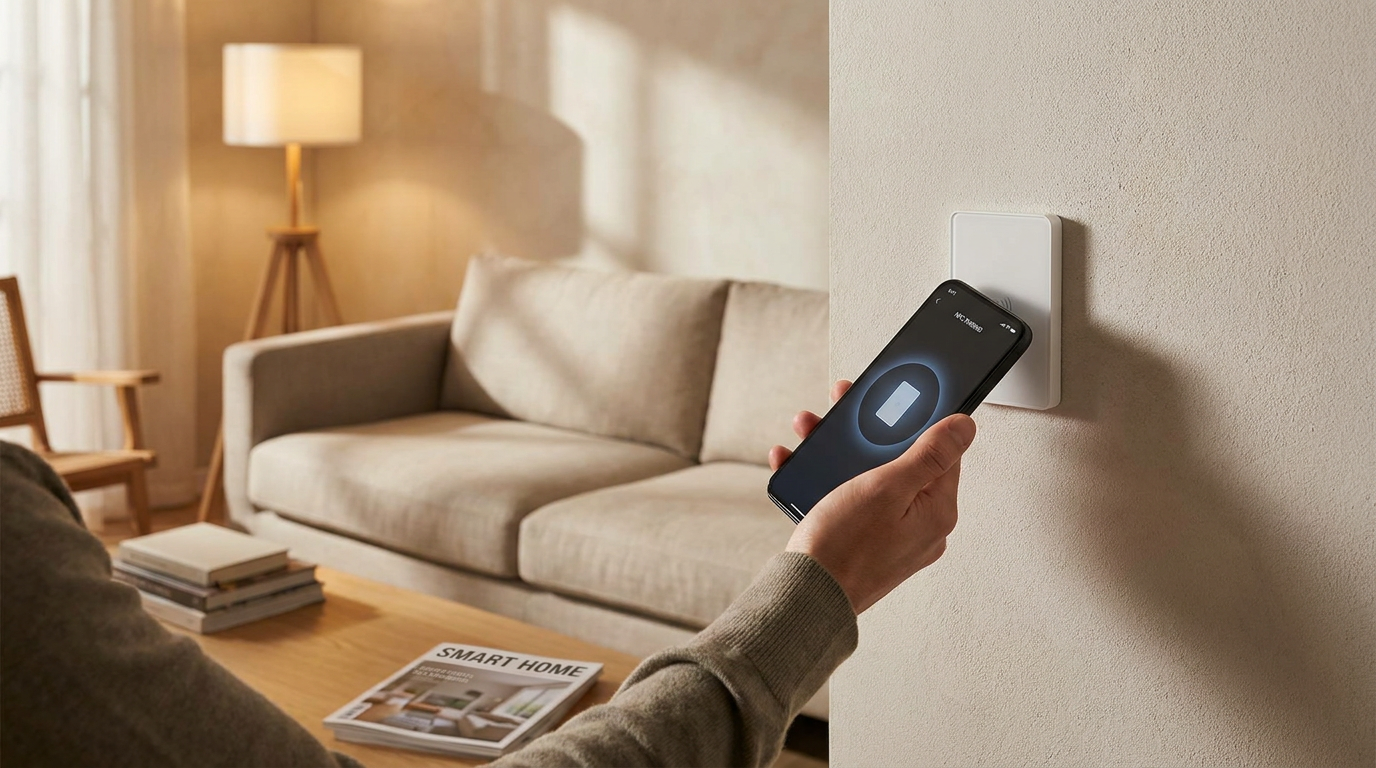
- The update introduces NFC-based commissioning, allowing users to set up hardwired devices by tapping them with a smartphone.
- A new 'Joint Fabric' feature enables multiple smart home platforms to seamlessly co-administer the same network of devices.
- 'Thermostat Suggestions' provide a framework to prevent different apps and automations from fighting over temperature controls.
- While the standard is now available to developers, consumer access depends on how quickly major platforms like Apple and Google implement the updates.
For years, building a smart home meant choosing a walled garden: Apple Home, Google Assistant, Amazon Alexa, or Samsung SmartThings. Mixing brands often led to fragmented apps, broken automations, and the frustrating realization that a newly purchased smart bulb could not communicate with the motion sensor in the exact same room. Consumers were forced to check compatibility labels meticulously before every purchase, and households with both iPhone and Android users frequently found themselves unable to share control of their own living spaces without relying on clunky third-party workarounds. [6] That fragmentation is precisely what the Matter standard was built to dismantle. Backed by the Connectivity Standards Alliance (CSA)—a massive industry consortium that includes the very tech giants responsible for those walled gardens—Matter serves as a universal, open-source translator for connected devices. [5, 6] If a smart plug, lock, or thermostat is Matter-certified, it is guaranteed to work across any participating ecosystem right out of the box. This fundamentally shifts the smart home landscape from proprietary, locked-down silos to a unified, interoperable network where the hardware you buy is no longer dictated by the smartphone in your pocket. [6][5][6]
On June 17, 2026, the CSA officially released Matter 1.6, a significant update aimed at smoothing out the remaining friction points in smart home management. [1, 2, 3] While previous updates over the last two years focused heavily on adding entirely new appliance categories—like robotic vacuums, ovens, and advanced energy management tools—version 1.6 takes a different approach. It specifically targets the underlying infrastructure of the protocol, focusing on how devices are physically set up, how they handle conflicting commands, and how they are shared across complex, multi-user households. [2, 3] The most prominent architectural shift in the 1.6 release is the introduction of a feature called "Joint Fabric." [2, 3] In earlier iterations of the standard, sharing a device between multiple ecosystems required a process known as Multi-Admin. While functional, it was often a clunky and repetitive experience. It required users to manually generate temporary pairing codes and grant separate, isolated permissions for each individual platform to access the exact same lightbulb or smart lock, creating a tangled web of backend connections. [3][1][2][3]

Joint Fabric solves this administrative headache by allowing multiple user-authorized controllers to co-administer a single, shared Matter network. [2, 3] Any device added to this unified fabric is instantly accessible to all participating controllers without requiring redundant setup steps. This means an Android user relying on Google Home and an iOS user relying on Apple Home living in the exact same house can seamlessly control the shared network of Matter-enabled devices, effectively ending the ecosystem turf wars within a single household. [2, 3] Another major friction point addressed in Matter 1.6 is the physical setup process itself. Historically, pairing a new Matter device to a network required the user to scan a unique QR code printed on the product or its packaging using their smartphone camera. [3] While this is a simple task for a smart plug sitting on a desk, it proved intensely frustrating for hardwired devices like ceiling lights, in-wall light switches, or outdoor security sensors, where the QR code might be hidden inside an electrical back-box or left at the bottom of a ladder. [3][2][3]
To resolve this physical setup hurdle, Matter 1.6 introduces native NFC-based commissioning. [1, 2, 3] Building on foundational work introduced in earlier minor updates, users can now initiate the secure device pairing process simply by tapping or holding their smartphone near a compatible product. [1, 3] Crucially, this Near-Field Communication setup can be performed even before the device is fully wired into the wall and powered on, serving as a highly reliable, foolproof alternative to traditional Bluetooth-based onboarding that often suffers from wireless interference. [2, 3] The update also tackles the increasingly common problem of automation conflicts with a new behavioral framework called "Thermostat Suggestions." [1, 2, 3] In a mature, highly automated smart home, a single thermostat might be receiving conflicting inputs from multiple sources simultaneously. A daily schedule might tell it to warm up the house, a geofencing automation might detect the user leaving and tell it to cool down, and a utility company's demand-response program might try to raise the temperature to save energy during peak grid hours. [2, 3][1][2][3]

To resolve this physical setup hurdle, Matter 1.6 introduces native NFC-based commissioning.
When these disparate systems issue direct override commands simultaneously, they fight for control, leading to erratic temperatures, wasted energy, and user frustration. [3] Matter 1.6 changes this dynamic entirely by allowing controllers to submit time-bound "suggestions" rather than absolute, overriding commands. [2, 3] The smart thermostat then evaluates these incoming inputs against the user's established baseline preferences, humidity settings, and current environmental conditions before deciding whether to actually make the adjustment, acting as an intelligent gatekeeper. [2, 3] To understand why these updates are so impactful, it helps to look at the standard's underlying technical mechanism. Matter operates entirely over Internet Protocol (IP), utilizing standard Wi-Fi, Ethernet, and a low-power wireless mesh networking technology called Thread. [5, 6] Thread is specifically designed for the unique demands of smart home devices, allowing them to pass signals directly to one another to extend the network's range and reliability without draining the batteries of small sensors and locks. [5][2][3][5][6]
Unlike older smart home protocols that required proprietary, brand-specific hubs to translate signals and bounce them to a remote cloud server for processing, Matter devices communicate locally. [5, 6] This local control architecture enables blazing-fast, sub-200-millisecond response times, meaning a smart light turns on the exact instant a wireless button is pressed. [6] More importantly from a privacy and reliability standpoint, it ensures that core smart home automations remain completely functional even if the home's external internet connection goes down. [5, 6] The 1.6 release builds directly upon the foundational expansions of Matter 1.4, which rolled out to the industry in late 2024. [4, 5] That pivotal update introduced critical energy management features to the protocol, allowing devices to report their real-time power consumption and coordinate intelligent load balancing. [4] It enabled smart homes to automatically optimize the charging of electric vehicles or the operation of heavy appliances like water heaters based on real-time grid conditions and local solar panel output. [4][4][5][6]

Matter 1.4 also standardized the concept of Home Routers and Access Points (HRAP) within the ecosystem. [4] This crucial development allowed standard Wi-Fi routers, mesh networking nodes, and set-top boxes to be officially certified as Thread Border Routers. By effectively baking the necessary smart home infrastructure directly into the networking equipment consumers already own and use every day, the standard further reduced the need for users to purchase and plug in standalone smart hubs. [4] Despite the undeniable technical triumphs of the specification, the reality of the Matter rollout remains somewhat uneven for the average consumer. The Connectivity Standards Alliance publishes the standard and provides the framework, but it is entirely up to individual software platforms and hardware manufacturers to actually implement the new features. [1, 3] Adoption timelines vary wildly across the industry, and a feature existing on paper in the Matter specification does not mean it is immediately available in a consumer's living room. [1][1][3][4]
For instance, while the groundbreaking Matter 1.4 update was announced in late 2024, major platforms like Apple Home took several months to fully integrate its features, such as advanced Thread credential sharing, into their consumer-facing operating systems. [2] Consequently, everyday users may have to wait several months—or wait for a completely new generation of hardware to hit retail shelves—before the NFC commissioning and Joint Fabric features of 1.6 become widely usable in their own homes. [1, 3] Furthermore, legacy smart home devices that rely on older, non-IP wireless protocols like Zigbee or Z-Wave cannot natively run the Matter protocol. [6] To bring these older, perfectly functional products into a modern Matter network, users must rely on a "Matter Bridge"—a dedicated hub that translates the older radio signals into the new universal standard. [6] This means early adopters and smart home veterans still have to manage some level of hardware clutter as the industry slowly transitions. [6][1][2][3][6]

Nevertheless, the long-term trajectory of the smart home industry is clear, and the days of ecosystem lock-in are rapidly coming to an end. With over 4,200 certified devices expected to be actively on the market by the end of the year, the protocol has undeniably achieved critical mass, moving past early growing pains. [6] Matter is steadily transitioning from an ambitious, theoretical industry promise into the default, invisible operating system of the modern home. By solving the unglamorous but essential problems of multi-user administration and physical setup friction, the 1.6 update proves that even the fiercest tech rivals can successfully collaborate when the consumer demands a fundamentally better, more unified experience. [5, 6][5][6]
How we got here
Oct 2022
Matter 1.0 launches, establishing the baseline for cross-platform smart home interoperability.
May 2024
Matter 1.3 adds support for major appliances, EV chargers, and water management systems.
Nov 2024
Matter 1.4 introduces advanced energy management and enhanced multi-admin features.
Jun 2026
Matter 1.6 is released, bringing NFC tap-to-pair and Joint Fabric for seamless multi-ecosystem homes.
Viewpoints in depth
Interoperability Advocates
Proponents of open standards who view Matter as the necessary end to ecosystem lock-in.
This camp, which includes open-source developers and smart home enthusiasts, argues that consumers should never have to check a box for 'Works with Alexa' or 'Works with Apple Home' before buying a lightbulb. They champion Matter's reliance on local control and Thread networking, emphasizing that smart homes should not break when the internet goes down. For these advocates, features like Joint Fabric are critical victories that force massive tech companies to share the living room rather than monopolizing it.
Major Platform Ecosystems
The tech giants who support the standard while striving to maintain their unique platform advantages.
Companies like Apple, Google, and Amazon are in a delicate position. While they co-authored the Matter standard to reduce their own developer support burdens, they still want users to prefer their specific voice assistants and dashboard apps. Consequently, their adoption of new Matter features is often strategic and staggered. They argue that implementing updates like NFC commissioning or advanced energy reporting takes time because they must ensure the new protocols meet their stringent internal security and user-experience benchmarks before rolling them out to millions of users.
Hardware Manufacturers
Device makers who benefit from streamlined development but face the challenge of legacy hardware.
For companies that manufacture smart plugs, locks, and sensors, Matter is a massive cost-saver. Instead of writing and maintaining separate software integrations for half a dozen different smart home platforms, they can build to a single standard. However, these manufacturers also face the financial and technical burden of supporting their existing customer base. They must decide whether to issue complex firmware updates for older products or require users to purchase 'Matter Bridges' to bring legacy Zigbee and Z-Wave devices into the new ecosystem.
What we don't know
- Exactly when major platforms like Apple Home, Google Home, and Amazon Alexa will fully integrate the Matter 1.6 feature set into their consumer apps.
- How seamlessly the new 'Joint Fabric' multi-admin sharing will work in practice across heavily customized household networks.
- Whether manufacturers will retroactively apply Matter 1.6 capabilities to existing devices via firmware updates, or reserve them for new hardware.
Key terms
- Matter
- An open-source connectivity standard designed to make smart home devices interoperable across different brands and platforms.
- Thread
- A low-power, wireless mesh networking protocol designed specifically for smart home devices to communicate locally without draining battery life.
- Joint Fabric
- A Matter 1.6 feature allowing multiple smart home platforms to co-administer the same network of devices seamlessly without redundant setup steps.
- NFC Commissioning
- A setup method using Near-Field Communication, allowing users to pair devices simply by tapping their smartphone against them.
- Border Router
- A device that connects a local Thread network to a standard Wi-Fi network, allowing Thread devices to communicate with the broader internet and smartphone apps.
Frequently asked
Do I need to buy a new hub for Matter?
Not necessarily. Many existing hubs, like newer Apple TVs, Amazon Echos, and Google Nest Hubs, have been updated via software to act as Matter controllers and Thread border routers.
Will my older smart devices work with Matter?
It depends. Some older devices can receive firmware updates over the air, while others require a 'Matter Bridge' (like the Philips Hue Hub) to translate their signals into the new standard.
Does Matter require an internet connection to work?
No. One of Matter's core benefits is local control. Devices communicate directly over your home network via Wi-Fi or Thread, meaning your automations still work if your internet goes down.
Sources
Source coverage
6 outlets
3 viewpoints surfaced






[1]CNETMajor Platform Ecosystems
Matter 1.6 brings easier control options for the smart home
Read on CNET →[2]MacRumorsMajor Platform Ecosystems
Apple-Backed Matter 1.6 Standard Focuses on Improved Setup and Device Management
Read on MacRumors →[3]ForbesInteroperability Advocates
Matter 1.6 Smart Home Update Adds NFC Tapping To The Mix
Read on Forbes →[4]Connectivity Standards AllianceHardware Manufacturers
Matter 1.4 Specification announced, enabling energy reporting and new major appliances
Read on Connectivity Standards Alliance →[5]WikipediaHardware Manufacturers
Matter (standard)
Read on Wikipedia →[6]Your Matter HomeInteroperability Advocates
What Is Matter and Why Does It Matter for Your Smart Home?
Read on Your Matter Home →
Every angle. Every day.
Get home stories with full source coverage and perspective breakdowns delivered to your inbox.