
How Félix Lebrun's Unique Penhold Grip is Rewriting Table Tennis Mechanics
The French teenager has rocketed to the top of global table tennis by mutating a traditional Asian grip into a hyper-fast, biomechanical advantage.
By Factlen Editorial Team
- Technical Analysts
- Focuses on the biomechanics of the grip and the evolution of the sport's tactical meta.
- Global Sports Media
- Highlights the cultural phenomenon, the Olympic impact, and the uplifting sibling narrative.
- Editorial Synthesis
- Bridges the technical mechanics with the broader geopolitical stakes of challenging Chinese dominance.
What's not represented
- · Chinese National Team coaches adapting to the new grip
- · Traditional single-sided penhold purists
Why this matters
For decades, European table tennis has struggled to break China's absolute dominance of the sport. The Lebrun brothers' biomechanical innovations and rapid ascent prove that technical evolution can still level the playing field, inspiring a new generation of players.
Key points
- Félix Lebrun has reached the top 5 in world rankings using a highly unusual penhold grip.
- His 'curled finger' technique creates a massive sweet spot on the back of the paddle.
- The grip grants extreme wrist flexibility, allowing for lightning-fast backhand attacks.
- Together with his brother Alexis, Félix is leading a European resurgence in table tennis.
For decades, the highest echelons of international table tennis have been governed by a strict orthodoxy: the shakehand grip, wielded with devastating efficiency by the Chinese national team.[1][6]
But a quiet revolution born in a basement in Montpellier, France, has violently disrupted that status quo.[1]
Enter Félix Lebrun, a French teenager who has rocketed into the top five of the world rankings, becoming the highest-ranked non-Chinese player on the globe.[1][5]
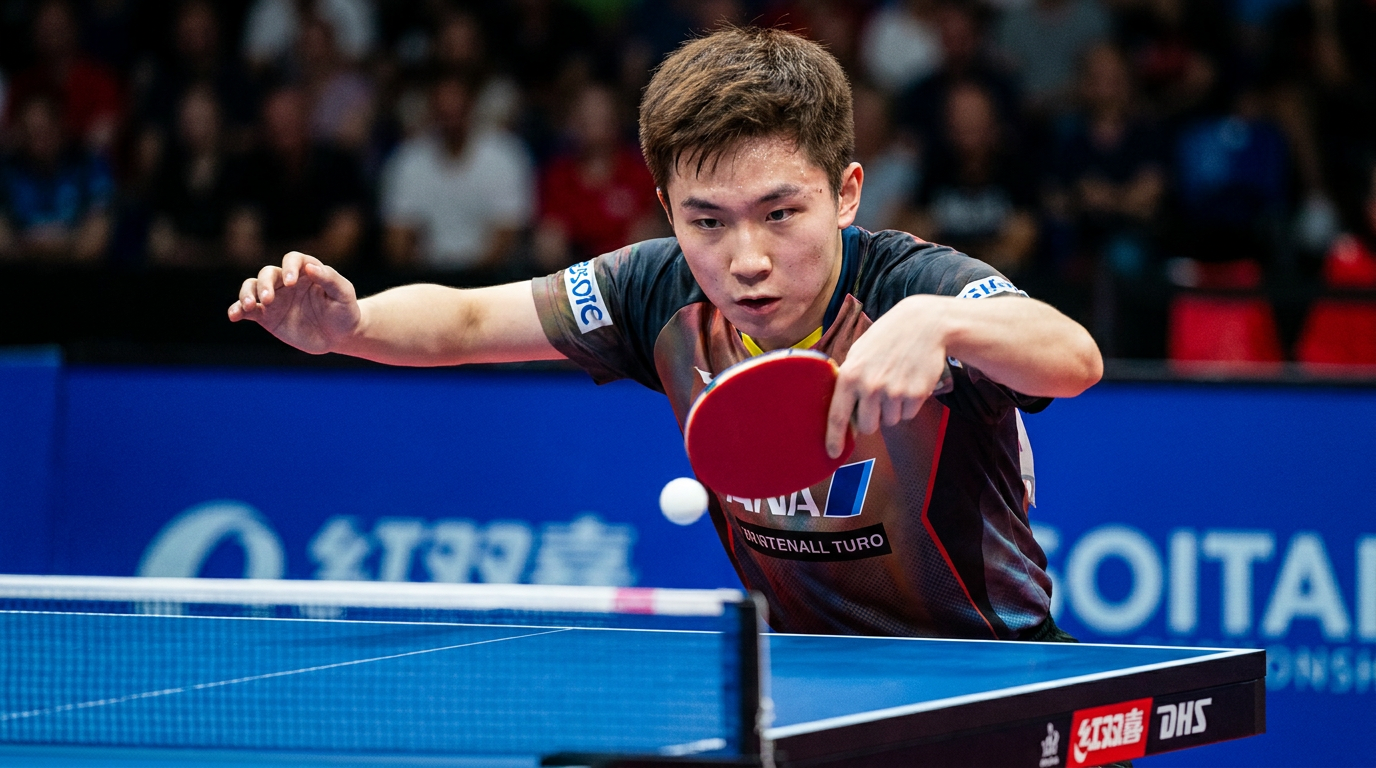
What makes Félix’s ascent so extraordinary is not just his youth or his nationality, but his weapon of choice: the penhold grip.[3]
To understand the anomaly, one must understand the mechanics of the sport. The vast majority of European players use the shakehand grip, holding the paddle exactly as the name implies, which provides balanced power on both sides of the body.[2]

The penhold grip, traditionally favored in Asia, pinches the handle between the thumb and index finger, leaving the racket head pointing downwards like a writing instrument.[2]
Historically, penhold offered devastating forehand power and highly deceptive serves, but it suffered from a glaring structural weakness: a cramped, awkward backhand block that required contorting the arm and pushing the ball rather than spinning it.[4]
To survive the modern era of hyper-aggressive topspin, penhold players adopted the Reverse Penhold Backhand (RPB), a technique pioneered by Chinese legends that uses the back side of the blade to attack.[3][4]
Félix Lebrun has taken the RPB and mutated it into something entirely his own, optimizing it for a blistering European style of play.[3]
Félix Lebrun has taken the RPB and mutated it into something entirely his own, optimizing it for a blistering European style of play.
While traditional penholders extend two or three fingers across the back of the blade for stability, Félix curls his fingers tightly against the handle, almost hiding them from view.[3]

This extreme "curled finger" grip removes the fingers from the hitting surface entirely, creating a massive, unobstructed sweet spot on the backhand side of the racket.[3][6]
More importantly, relaxing the fingers in this curled position disengages the forearm flexors, granting Félix an almost supernatural degree of wrist flexibility.[3]
This biomechanical quirk allows him to execute lightning-fast backhand swings right off the bounce, playing at a relentless, suffocating tempo that robs opponents of crucial reaction time.[3][4]
There is a calculated trade-off to this innovation: the lack of finger support on the back of the blade sacrifices raw forehand power when pushed far away from the table.[3]

Yet, Félix mitigates this vulnerability by refusing to step back, hugging the table and turning matches into rapid-fire, close-quarters combat where his reflexes reign supreme.[3][6]
He is not alone in this crusade; his older brother Alexis, who plays with a traditional shakehand grip, has matched his meteoric rise, creating a formidable sibling dynasty that pushes both to new heights.[1][5]

Together, the Lebrun brothers have reinvigorated French table tennis, transforming the sport from a niche pursuit into a national obsession that packed arenas with flag-waving fans during the Paris Olympics.[5]
How we got here
2003 & 2006
Alexis and Félix Lebrun are born in Montpellier, France, into a family deeply involved in table tennis.
Late 2010s
Félix adopts the penhold grip, highly unusual for a European player, while Alexis plays shakehand.
2023
The brothers rapidly ascend the world rankings, both breaking into the global elite.
Summer 2024
The Lebrun brothers become national heroes at the Paris Olympics, drawing massive crowds to the sport.
Early 2026
Félix cements his position in the top 5 of the world rankings, directly challenging Chinese dominance.
Viewpoints in depth
Technical Analysts' view
Focuses on how the curled-finger RPB maximizes wrist flexibility and creates a larger sweet spot.
Biomechanics experts and table tennis coaches view Félix's grip as a necessary evolution of the penhold style. By curling the fingers tightly against the handle, he removes the physical barrier that traditionally limited the Reverse Penhold Backhand (RPB). This not only creates a larger, more forgiving hitting area but also disengages the forearm flexors, allowing the wrist to snap with unprecedented speed. Analysts argue this is the only way a penhold player can survive the hyper-fast, topspin-heavy modern game.
Global Sports Media's view
Highlights the Lebrun brothers as a cultural phenomenon that is revitalizing table tennis in France.
For sports journalists and global media, the technical details of the grip are secondary to the narrative of the Lebrun brothers themselves. They are viewed as a charismatic, homegrown dynasty that has single-handedly made table tennis a marquee event in Europe. The contrasting styles of the two brothers—one traditional, one highly unorthodox—provide a compelling storyline that has drawn millions of new fans to the sport, culminating in sold-out arenas during the Paris Olympics.
Editorial Synthesis
Argues that Félix's grip is a necessary biomechanical evolution required to challenge entrenched Chinese dominance.
The significance of Félix Lebrun's grip extends beyond mere technical novelty; it represents a structural challenge to decades of Chinese table tennis hegemony. For years, European players attempting to beat China at their own shakehand game have largely failed. Félix's success suggests that the path to victory lies in asymmetric warfare—adopting an Asian grip, mutating it to eliminate its traditional weaknesses, and playing at a tempo that disrupts the established rhythm of the world's best players.
What we don't know
- Whether Félix's extreme grip will cause long-term wrist or finger strain over a decade-long career.
- If the 'curled finger' penhold will be adopted by the next generation of Chinese players, or remain a uniquely European phenomenon.
- Whether the Lebrun brothers can consistently defeat the absolute top tier of the Chinese national team in major World Championship finals.
Key terms
- Shakehand Grip
- The most common way to hold a table tennis racket, resembling a handshake, which provides balanced power on both the forehand and backhand sides.
- Penhold Grip
- A grip where the handle is held between the thumb and index finger, similar to holding a writing pen, historically favored in Asia for its wrist flexibility.
- Reverse Penhold Backhand (RPB)
- A modern technique where a penhold player uses the back side of the racket to hit backhand strokes, allowing for aggressive topspin.
- Blade
- The wooden core of the table tennis racket, excluding the rubber sheets glued to its surfaces.
- Sweet Spot
- The central area of the racket's rubber that provides the most optimal power, spin, and control when striking the ball.
Frequently asked
What is the difference between shakehand and penhold?
The shakehand grip involves wrapping the hand around the handle like a handshake, offering balanced power. The penhold grip pinches the handle between the thumb and index finger, allowing for greater wrist flexibility.
Why is Félix Lebrun's grip so unique?
Unlike traditional penholders who extend their fingers across the back of the blade, Félix curls his fingers tightly against the handle. This frees up the entire back surface of the racket and maximizes wrist mobility.
What is the Reverse Penhold Backhand (RPB)?
It is a modern technique where a penhold player uses the back side of the racket to hit backhand strokes, eliminating the traditional weakness of the penhold block.
Do both Lebrun brothers use the penhold grip?
No. Félix uses the penhold grip, while his older brother Alexis uses the traditional European shakehand grip.
Sources
Source coverage
6 outlets
3 viewpoints surfaced






[1]Olympics.comGlobal Sports Media
Félix and Alexis Lebrun: The teenage French brothers ready to conquer the table tennis world
Read on Olympics.com →[2]PingSkillsTechnical Analysts
Mastering Table Tennis Grips: Shakehand vs. Penhold
Read on PingSkills →[3]TableTennis-LabTechnical Analysts
Felix Lebrun Grip Analysis: The Modern Penhold Sensation
Read on TableTennis-Lab →[4]Butterfly Table TennisTechnical Analysts
The Modern Penhold Drive Textbook
Read on Butterfly Table Tennis →[5]The Straits TimesGlobal Sports Media
French fans find new heroes in table tennis brothers Felix and Alexis Lebrun
Read on The Straits Times →[6]Factlen Editorial TeamEditorial Synthesis
Synthesis by Factlen editorial team
Read on Factlen Editorial Team →
More in sports
See all 397 stories →Women's Sports
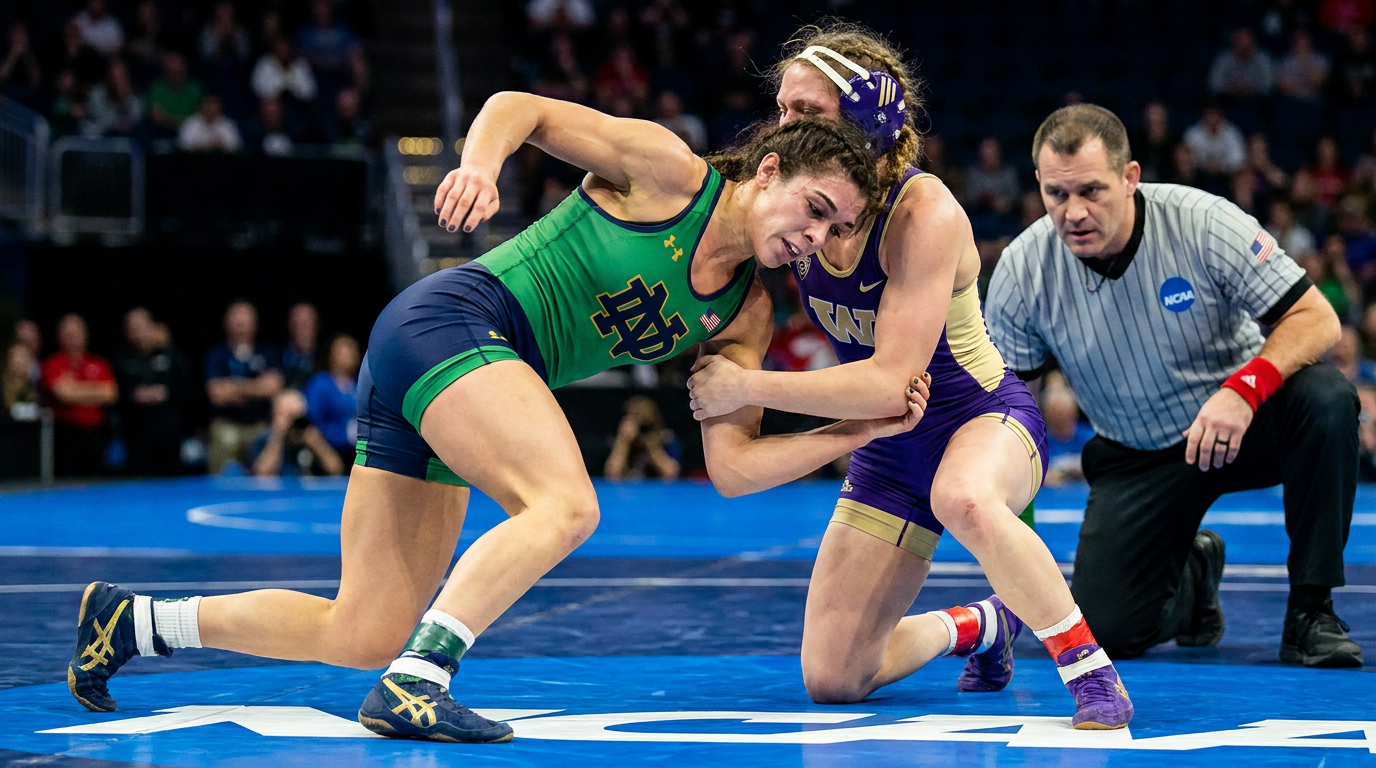
How Women's Wrestling Became the Fastest-Growing Collegiate Sport in America
8 sources
Engine Regulations
The 2026 Formula 1 Engine Revolution: How Sustainable Fuel and a 50/50 Hybrid Split Are Changing the Sport
8 sources

MLB Milestones
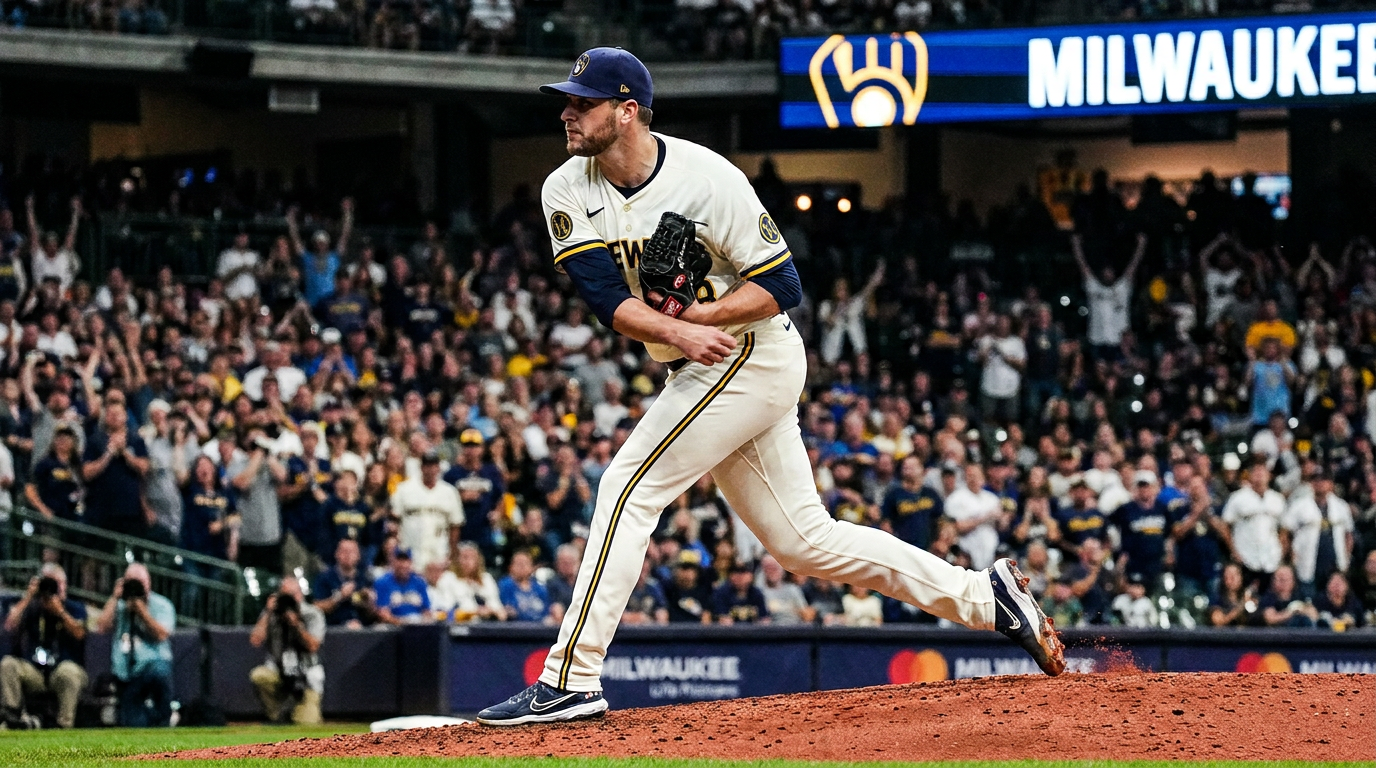
Brewers' Jacob Misiorowski Throws Historic 15-Strikeout, One-Hit Shutout
7 sources
Pitching Milestone
Jacob Misiorowski Throws Historic 15-Strikeout, One-Hit Complete Game in Brewers Win
7 sources

Every angle. Every day.
Get sports stories with full source coverage and perspective breakdowns delivered to your inbox.