
How 'Debt-for-Nature' Swaps Are Rewriting the Rules of Sovereign Finance
A once-niche financial instrument is going mainstream, allowing developing nations to trade crippling national debt for binding environmental conservation commitments.
By Factlen Editorial Team
- Conservation Finance Advocates
- Environmental NGOs and green finance experts who view swaps as a vital tool to unlock billions for climate action.
- Sovereign Debt Markets
- Investment banks and bondholders who see these instruments as a way to recover value on distressed debt while meeting ESG mandates.
- Structural Reform Skeptics
- Economists who warn that high transaction costs and complex terms distract from the need for outright debt cancellation.
What's not represented
- · Local indigenous communities whose coastal waters are regulated by international swap agreements
Why this matters
For decades, developing nations have faced a brutal choice: pay international creditors or fund domestic environmental protection. This financial mechanism breaks that cycle, offering a blueprint to simultaneously alleviate sovereign debt crises and fund global climate goals.
Key points
- Debt-for-nature swaps allow developing nations to refinance expensive debt in exchange for environmental commitments.
- The mechanism relies on buying distressed sovereign bonds at a discount on the secondary market.
- Ecuador's $1.6 billion Galapagos deal proved the model can work at a massive macroeconomic scale.
- Wall Street is increasingly adopting these bonds to satisfy institutional ESG investment mandates.
- Critics warn that high transaction costs and legal complexities limit the speed and efficiency of these deals.
The global financial system has long harbored a destructive paradox: the countries richest in biodiversity are often the most burdened by sovereign debt. When a developing nation owes billions to foreign bondholders, domestic budgets are squeezed, leaving little room for environmental protection. Worse, governments are frequently forced to accelerate the extraction of natural resources—logging rainforests, overfishing coastal waters, or expanding mining operations—simply to generate the foreign currency needed to service their debt.[2][6]
This dynamic has historically pitted economic survival against ecological preservation. However, a financial instrument known as the 'debt-for-nature swap' is rapidly moving from the fringes of conservation finance to the center of Wall Street and multilateral banking. By fundamentally restructuring how a country owes money, these swaps allow nations to reduce their debt burdens in direct exchange for binding, long-term commitments to protect their ecosystems.[1][3]
The mechanism relies on a few key realities of the sovereign debt market. When a country is in financial distress, its national bonds often trade on the secondary market at a steep discount—sometimes for pennies on the dollar. Investors sell these bonds cheaply because they fear the country might default. A debt-for-nature swap capitalizes on this pessimism by buying up that discounted debt and replacing it with a new, more favorable loan.[1][7]
Here is how the modern iteration typically works: A conservation organization, such as The Nature Conservancy, partners with the indebted government and a major multilateral institution like the Inter-American Development Bank. Together, they secure a 'credit enhancement'—essentially a powerful financial guarantee that lowers the risk of the new loan. Using this freshly secured capital, they buy back the country's old, expensive debt at its discounted market price.[3][6]

The country is then issued a new bond, often called a 'Blue Bond' if it targets marine conservation, or a 'Green Bond' for terrestrial projects. Because of the credit guarantees, this new bond carries a much lower interest rate and a longer repayment period. The magic of the swap lies in the spread: the millions of dollars the country saves in debt service are legally ring-fenced and channeled directly into a local conservation trust fund.[1][3]
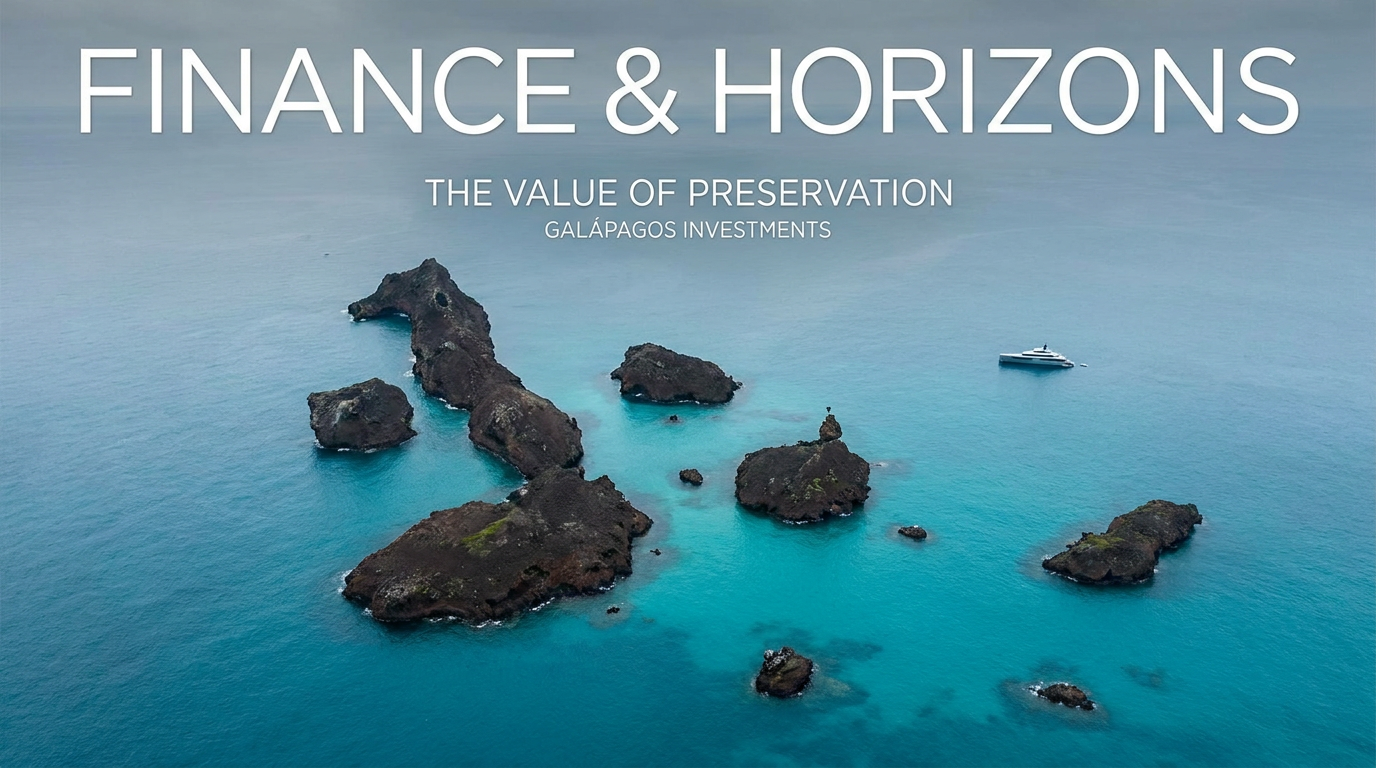
The most famous and transformative example of this mechanism occurred in Ecuador. Facing mounting fiscal pressures, the Ecuadorian government executed a historic transaction to protect the Galapagos Islands, one of the most biodiverse marine ecosystems on the planet. The deal was unprecedented in its scale and complexity, proving that conservation finance could handle massive macroeconomic burdens.[5]
In the Galapagos deal, Ecuador converted roughly $1.6 billion of its existing commercial debt into a new $656 million loan. The transaction was backed by an $85 million guarantee from the Inter-American Development Bank and political risk insurance from the U.S. International Development Finance Corporation. By wiping out nearly a billion dollars of debt, Ecuador freed up massive fiscal space.[4][5]
In the Galapagos deal, Ecuador converted roughly $1.6 billion of its existing commercial debt into a new $656 million loan.
In exchange for this financial relief, Ecuador committed to spending $18 million annually for the next two decades on marine conservation, plus an additional endowment to fund protections in perpetuity. The funds are strictly monitored and used to enforce a massive new marine reserve, combat illegal fishing fleets, and support local sustainable fisheries. It transformed a financial liability into an ecological fortress.[3][5]
Ecuador's success did not happen in a vacuum; it built upon the pioneering work of nations like Belize and Barbados. Belize's 2021 Blue Bond restructured its entire sovereign debt, reducing its debt-to-GDP ratio by 12 percent almost overnight. In return, Belize committed to protecting 30 percent of its ocean territory, a goal it achieved years ahead of schedule. These early victories signaled to the broader market that the model was viable.[3][7]

Wall Street has taken notice. Major investment banks, initially skeptical of the complex legal structuring required for these deals, are now actively building out conservation finance desks. For institutional investors, these bonds offer a highly attractive proposition: a reliable yield backed by multilateral guarantees, combined with rigorous, measurable Environmental, Social, and Governance (ESG) outcomes that satisfy increasingly strict institutional mandates.[4]
Despite the optimism, the mechanism is not without its critics. Traditional economists and structural reform advocates point out that debt-for-nature swaps are incredibly complex to negotiate. The legal fees, underwriting costs, and administrative overhead can consume a significant portion of the financial benefits. Furthermore, these deals take years to structure, making them too slow to serve as emergency relief for countries facing imminent default.[2][7]
There is also a philosophical debate regarding sovereignty and 'greenwashing.' Some debt-relief purists argue that wealthy nations and private creditors should simply cancel the unpayable debts of the Global South, rather than attaching complex environmental strings that dictate how developing nations manage their own territories. They warn that swaps, while helpful, do not solve the root causes of systemic global inequality.[1][2]

To address these concerns, multilateral institutions like the World Bank and the IMF are working to standardize the swap process. By creating templated legal frameworks and pre-approved environmental monitoring standards, they hope to drastically reduce the transaction costs and time required to execute a deal. The goal is to move from bespoke, one-off mega-deals to a streamlined market standard.[2][6]
The potential for scale is staggering. Analysts estimate that hundreds of billions of dollars in emerging market sovereign debt are currently trading at distressed levels. If even a fraction of this debt can be restructured through nature swaps, it could unlock the largest wave of conservation funding in human history, precisely at the moment the global climate crisis demands it.[4][7]

Ultimately, debt-for-nature swaps represent a rare alignment of incentives in global finance. They offer creditors a reliable recovery on distressed assets, provide developing nations with vital fiscal breathing room, and secure binding protections for the world's most critical ecosystems. While they are not a silver bullet for the global debt crisis, they are proving that financial engineering can be harnessed to heal the planet rather than deplete it.[1][3]
How we got here
1987
The first small-scale debt-for-nature swap is executed in Bolivia by Conservation International.
2021
Belize finalizes a landmark Blue Bond, restructuring its entire sovereign debt to protect its barrier reef.
2023
Ecuador completes a record $1.6 billion swap to fund perpetual conservation of the Galapagos Islands.
2025
Multilateral banks introduce standardized legal frameworks to reduce the transaction costs of future swaps.
Viewpoints in depth
Conservation Finance Advocates
Environmental NGOs and green finance experts who view swaps as a vital tool to unlock billions for climate action.
For conservation organizations, the traditional model of relying on philanthropic donations and volatile government grants is insufficient to meet the scale of the global biodiversity crisis. They argue that debt-for-nature swaps are the most effective way to permanently align a developing nation's economic incentives with ecological preservation. By legally binding debt relief to environmental milestones, these advocates believe they can secure decades of guaranteed funding for marine reserves and rainforests that would otherwise be exploited for short-term cash.
Sovereign Debt Markets
Investment banks and bondholders who see these instruments as a way to recover value on distressed debt while meeting ESG mandates.
Institutional investors and Wall Street banks approach these swaps through the lens of risk management and yield. When a sovereign nation is teetering on default, bondholders face the prospect of severe losses. A swap offers a structured exit: investors can sell their high-risk bonds and reinvest in newly issued, lower-yield bonds that are heavily de-risked by multilateral guarantees. Furthermore, the strict environmental covenants attached to these bonds perfectly satisfy the growing demand from pension funds and endowments for verifiable Environmental, Social, and Governance (ESG) assets.
Structural Reform Skeptics
Economists who warn that high transaction costs and complex terms distract from the need for outright debt cancellation.
A vocal contingent of macroeconomists and debt-relief advocates argue that swaps are an overly engineered band-aid for a systemic wound. They point out that the legal and underwriting fees for these bespoke deals can run into the tens of millions of dollars, enriching Western financial institutions while providing only marginal relief to the debtor nation. Furthermore, skeptics argue that forcing developing nations to accept strict environmental dictates from foreign NGOs in order to escape unpayable debt is a form of financial coercion, suggesting that outright debt cancellation would be a more equitable solution.
What we don't know
- Whether multilateral institutions can successfully standardize these deals to eliminate the massive legal and underwriting fees currently required.
- How strictly the environmental commitments will be enforced if a sovereign nation faces a severe, unforeseen economic crisis a decade from now.
Key terms
- Sovereign Debt
- Money borrowed by a national government, usually by issuing bonds to international investors, to finance public spending.
- Credit Enhancement
- A financial guarantee provided by a strong institution (like a multilateral bank) that lowers the risk of a loan, thereby reducing the interest rate the borrower has to pay.
- Secondary Market Discount
- When investors believe a country might default, they sell its bonds to other investors for less than their original face value.
- Blue Bond
- A debt instrument issued specifically to raise capital for projects that protect marine ecosystems and promote sustainable fisheries.
- Greenwashing
- The practice of making misleading claims about the environmental benefits of a financial product or policy to make it appear more eco-friendly than it is.
Frequently asked
What is a debt-for-nature swap?
It is a financial transaction where a portion of a developing nation's foreign debt is forgiven or refinanced at a lower cost, in exchange for the country's binding commitment to invest the savings in environmental conservation.
Who actually pays for the debt?
The debt is usually bought at a steep discount on the secondary market using funds raised by a new, lower-interest bond. This new bond is backed by guarantees from multilateral banks or development agencies, making it cheaper for the country to pay off.
What happens if a country fails to protect the environment?
Modern swaps include strict legal covenants. If a country fails to meet its conservation targets, it can face financial penalties, increased interest rates, or a loss of the credit guarantees that keep the loan affordable.
Does this solve a country's debt crisis?
No. While swaps provide valuable fiscal breathing room and fund critical environmental work, they usually only restructure a fraction of a nation's total debt and are not a substitute for comprehensive macroeconomic reform.
Sources
Source coverage
7 outlets
3 viewpoints surfaced







[1]Factlen Editorial TeamConservation Finance Advocates
Synthesis by Factlen editorial team
Read on Factlen Editorial Team →[2]International Monetary FundStructural Reform Skeptics
Macroeconomic Implications of Debt-for-Nature Swaps
Read on International Monetary Fund →[3]The Nature ConservancyConservation Finance Advocates
Nature Bonds: Debt Conversions for Marine Conservation
Read on The Nature Conservancy →[4]BloombergSovereign Debt Markets
Wall Street Embraces Debt-for-Nature Swaps as ESG Matures
Read on Bloomberg →[5]ReutersSovereign Debt Markets
Ecuador seals record debt-for-nature swap to protect Galapagos
Read on Reuters →[6]World BankStructural Reform Skeptics
Understanding Sovereign Debt and Climate Finance
Read on World Bank →[7]Financial TimesSovereign Debt Markets
The scaling up of debt-for-nature swaps in emerging markets
Read on Financial Times →

More in finance
See all 6 stories →Cross-Border Payments
Mastercard Integrates Stablecoin Settlement as 24/7 Cross-Border Payments Go Mainstream
7 sources

Digital Dollars
Stablecoins Cross the Mainstream Threshold as Mastercard and Neobanks Launch Zero-Fee Global Settlements
6 sources

Market Mechanics
Luck, Skill, and Your Savings: The Science of Why Most Professional Investors Underperform the Market
6 sources

Withdrawal Strategies
The Evidence for the 'Retirement Smile': Why You May Need Less Than the 4% Rule Suggests
6 sources

Every angle. Every day.
Get finance stories with full source coverage and perspective breakdowns delivered to your inbox.