
How Breakthrough Boot Designs and Global Research Are Finally Tackling Women's Football's ACL Epidemic
Following years of devastating knee injuries, a combination of female-specific boot engineering and a global research initiative is beginning to turn the tide on the ACL crisis in women's football.
By Factlen Editorial Team
- Sports Scientists & Medical Experts
- Focusing on biomechanics and the need for female-specific research.
- Equipment Manufacturers
- Innovating product design to prioritize player safety and comfort.
- Player Unions & Advocates
- Demanding better working conditions, workload management, and medical support.
- Grassroots & Equality Campaigners
- Fighting for equal access to safe equipment for amateur and youth players.
What's not represented
- · Grassroots coaches managing amateur players without access to elite gear
- · Turf and pitch manufacturers responsible for playing surfaces
Why this matters
For decades, female athletes were forced to wear scaled-down men's boots, contributing to a severe injury crisis. The shift toward female-specific biomechanical design and holistic research is not only protecting current stars but ensuring the next generation of girls can play safely.
Key points
- Female footballers are two to six times more likely to suffer an ACL injury than male players.
- For decades, women played in scaled-down men's boots, which created dangerous rotational traction on the pitch.
- New boot designs feature circular stud patterns and lower cuffs specifically engineered for female biomechanics.
- The global 'Project ACL' initiative is tracking player workload, travel, and environmental factors to establish new safety standards.
- Top clubs are already reporting a measurable decrease in knee injuries after adopting new equipment and tailored strength programs.
For years, the rapid global rise of women's football has been shadowed by a devastating epidemic: the anterior cruciate ligament (ACL) tear. High-profile stars have routinely been sidelined for entire seasons, missing World Cups and Olympic games at the peaks of their careers.[5]
Historically, the sports world shrugged off the crisis, attributing the injury rates—which are two to six times higher in women than in men—to vague notions of "female biology" and hormonal fluctuations. But players and advocates have long argued that this fatalistic approach ignored a glaring environmental factor: the equipment they were forced to wear.[1][6][8]
For decades, female footballers played in "shrink it and pink it" boots—footwear designed entirely around the biomechanics, weight, and movement patterns of male athletes, simply sized down for women. A recent industry report revealed that a staggering 82 percent of female professional players experienced discomfort while wearing traditional boots.[3][5]
The core safety issue lies in traction. Men's boots feature long, aggressive studs designed to grip the pitch under heavier body weights. When lighter female athletes wear these boots, the cleats can stick too firmly to the turf during split-second pivots. This excessive rotational traction forces the knee to absorb the torque, frequently resulting in non-contact ACL tears.[2][4]

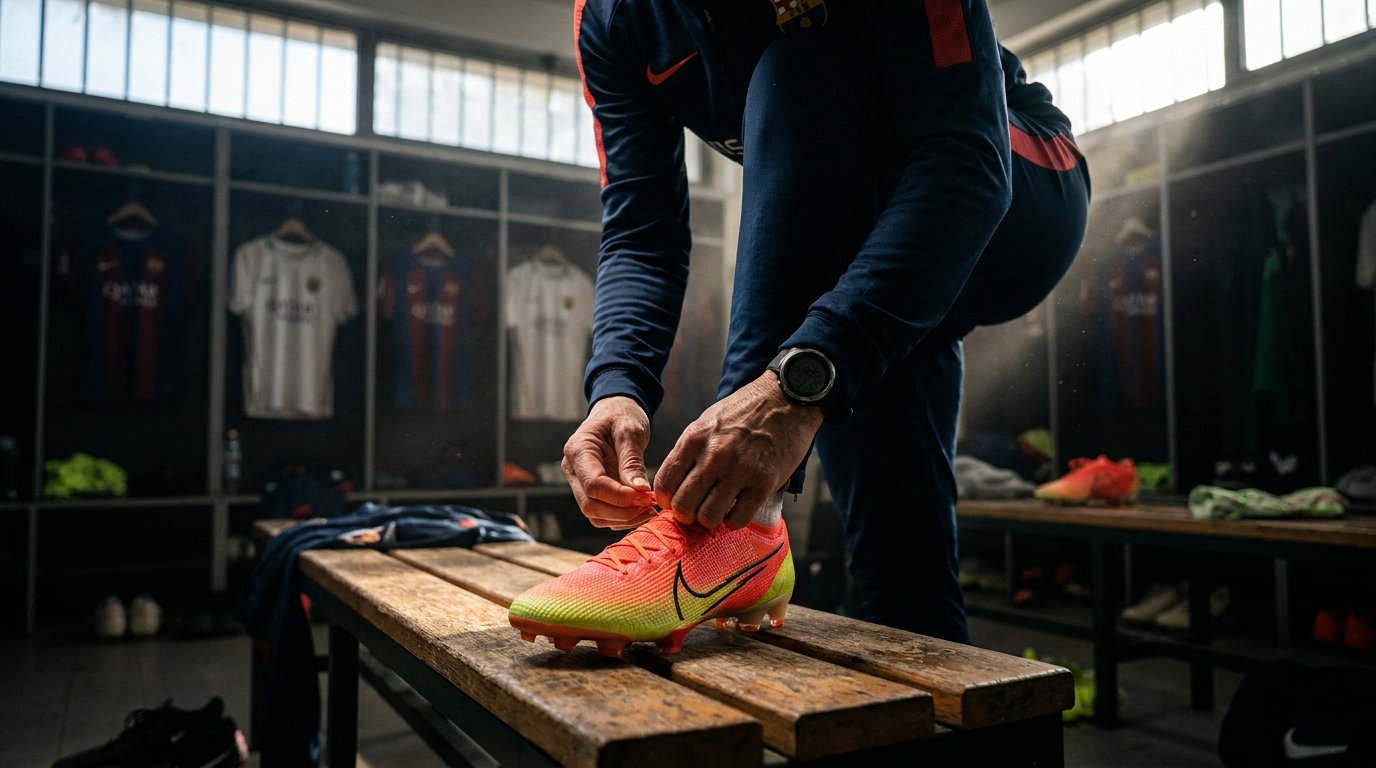
The industry is finally responding with a wave of female-first engineering. Nike's Phantom Luna boot, developed over two years of intensive research, introduced the "Cyclone 360" circular stud pattern near the toes. This breakthrough design specifically reduces rotational traction, allowing players to pivot and push off without their cleats locking dangerously into the grass.[2][4]
The industry is finally responding with a wave of female-first engineering.
Other major manufacturers have joined the shift. Puma has rolled out women-specific fits across its primary boot silos, accommodating the anatomical differences of the female foot, such as a lower instep and reduced midfoot volume. Independent brands like IDA Sports have also gained traction by designing footwear exclusively around female biomechanics.[7][8]
But equipment is only one piece of the puzzle. To address the crisis holistically, a global coalition comprising FIFPRO, the Professional Footballers Association (PFA), Nike, and Leeds Beckett University launched "Project ACL." The three-year initiative aims to move past singular biological excuses and examine the broader working environments of female athletes.[1][6]
In 2026, Project ACL expanded its reach beyond England's Women's Super League, officially partnering with the National Women's Soccer League (NWSL) in the United States. The project tracks real-time player workload, travel demands, and the frequency of matches played in the "critical zone"—back-to-back games with fewer than five days of rest.[1][6]
Researchers point out that a shocking lack of data has hindered progress; historically, as little as six percent of sports science research has focused exclusively on female athletes. By mapping out the multidisciplinary support and pitch conditions at top clubs, Project ACL aims to establish evidence-based minimum standards for the women's game.[1][6][8]

The political sphere has also taken notice. In the UK, the Parliament's Women and Equalities Committee issued a powerful report criticizing the sports sector's slow evolution, demanding that female-specific boots become widely available at high street retailers, not just for elite professionals but for grassroots youth players.[3]
Early indicators suggest these combined efforts are working. Following the implementation of tailored strength and conditioning programs focusing on knee stability, alongside the adoption of new boot technologies, top-tier clubs like FC Barcelona Femení and Manchester City Women have reported a measurable decrease in ACL injuries.[5]

As the sports science community and equipment manufacturers finally treat female athletes as the default in their own sport, the narrative is shifting. The focus is no longer on fixing women's bodies, but on fixing the gear and the environment they play in—paving the way for a safer, healthier future for the next generation of footballers.[1][7]
How we got here
June 2023
Nike releases the Phantom Luna, featuring a breakthrough circular stud pattern designed for female athletes.
March 2024
The UK Parliament issues a report demanding better access to female-specific football boots.
April 2024
FIFPRO, the PFA, and brand partners launch the three-year 'Project ACL' study in the English Women's Super League.
August 2024
Top European clubs report early decreases in ACL injuries following the adoption of new equipment and tailored strength protocols.
April 2026
Project ACL expands globally, partnering with the US-based National Women's Soccer League (NWSL).
Viewpoints in depth
Sports Scientists & Medical Experts
Focusing on biomechanics and the need for female-specific research.
For years, the medical community defaulted to blaming female biology and hormones for the high rate of knee injuries. Today, leading sports scientists argue that this perspective was a cop-out that ignored glaring environmental factors. Researchers emphasize that because women generally have different landing mechanics and lower body mass than men, they require equipment engineered specifically for their bodies. They are pushing for a massive increase in female-exclusive sports science studies to close the historical data gap.
Equipment Manufacturers
Innovating product design to prioritize player safety and comfort.
Major brands like Nike and Puma, along with specialized startups, view the ACL crisis as an engineering challenge. By analyzing how female feet interact with turf, they have completely redesigned the soleplates of their boots. Their focus is on optimizing traction—providing enough grip for explosive sprints while allowing the foot to release smoothly during sharp pivots. These companies are now investing heavily in R&D to ensure their women's lines are no longer just scaled-down men's models.
Player Unions & Advocates
Demanding better working conditions, workload management, and medical support.
Organizations like FIFPRO and the PFA argue that while better boots are crucial, they cannot solve the problem alone. Player unions highlight the grueling schedules, increased match congestion, and frequent international travel that leave players fatigued and vulnerable to injury. They are using initiatives like Project ACL to track workload and demand that clubs provide elite-level medical staffs, high-quality pitch surfaces, and adequate recovery time between fixtures.
What we don't know
- Whether high street retailers will make female-specific boots widely available and affordable for grassroots youth players.
- The exact degree to which match congestion and international travel contribute to injury rates compared to equipment factors.
- How quickly smaller leagues without elite medical budgets can adopt the new safety standards being developed by Project ACL.
Key terms
- Anterior Cruciate Ligament (ACL)
- A key stabilizing ligament in the knee, highly susceptible to tearing during sudden stops or changes in direction.
- Rotational Traction
- The amount of grip a shoe has when a player twists or pivots; too much traction can cause the foot to stick while the knee turns, leading to injury.
- Femtech
- Technology, products, and services that focus specifically on women's health and physiological needs.
- Biomechanics
- The study of the mechanical laws relating to the movement or structure of living organisms, crucial for designing safe sports equipment.
Frequently asked
Why are female players more prone to ACL injuries?
While anatomical differences play a role, experts now point to environmental factors like playing in boots designed for men, inadequate pitch surfaces, and a lack of female-specific sports science research.
What makes a football boot 'female-specific'?
They feature circular stud patterns to reduce rotational traction, lower cuffs to accommodate female ankles, and adjusted arch and midfoot volumes tailored to female foot anatomy.
What is Project ACL?
It is a global research initiative launched by FIFPRO, player unions, and brands to study player workload, travel, and environmental factors to reduce injury rates in women's football.
Sources
Source coverage
8 outlets
4 viewpoints surfaced








[1]FIFPROPlayer Unions & Advocates
NWSLPA and NWSL join Project ACL to support women's football injury research
Read on FIFPRO →[2]NikeEquipment Manufacturers
Nike introduces Phantom Luna, a new women-focused football boot
Read on Nike →[3]The GuardianGrassroots & Equality Campaigners
Sport 'must do better' on football boots for women amid ACL injuries, MPs warn
Read on The Guardian →[4]Sky SportsGrassroots & Equality Campaigners
Women's led football boot unveiled before World Cup
Read on Sky Sports →[5]SoccerBiblePlayer Unions & Advocates
The 2024 Paris Olympics showcased the successes and issues for female footballers
Read on SoccerBible →[6]The PFASports Scientists & Medical Experts
Project ACL: Research on ACL Injuries in Women's Football
Read on The PFA →[7]PUMAEquipment Manufacturers
PUMA's commitment to women's football takes centre stage
Read on PUMA →[8]ReevaldoSports Scientists & Medical Experts
Could femtech be the answer to the ACL epidemic?
Read on Reevaldo →

Every angle. Every day.
Get sports stories with full source coverage and perspective breakdowns delivered to your inbox.