
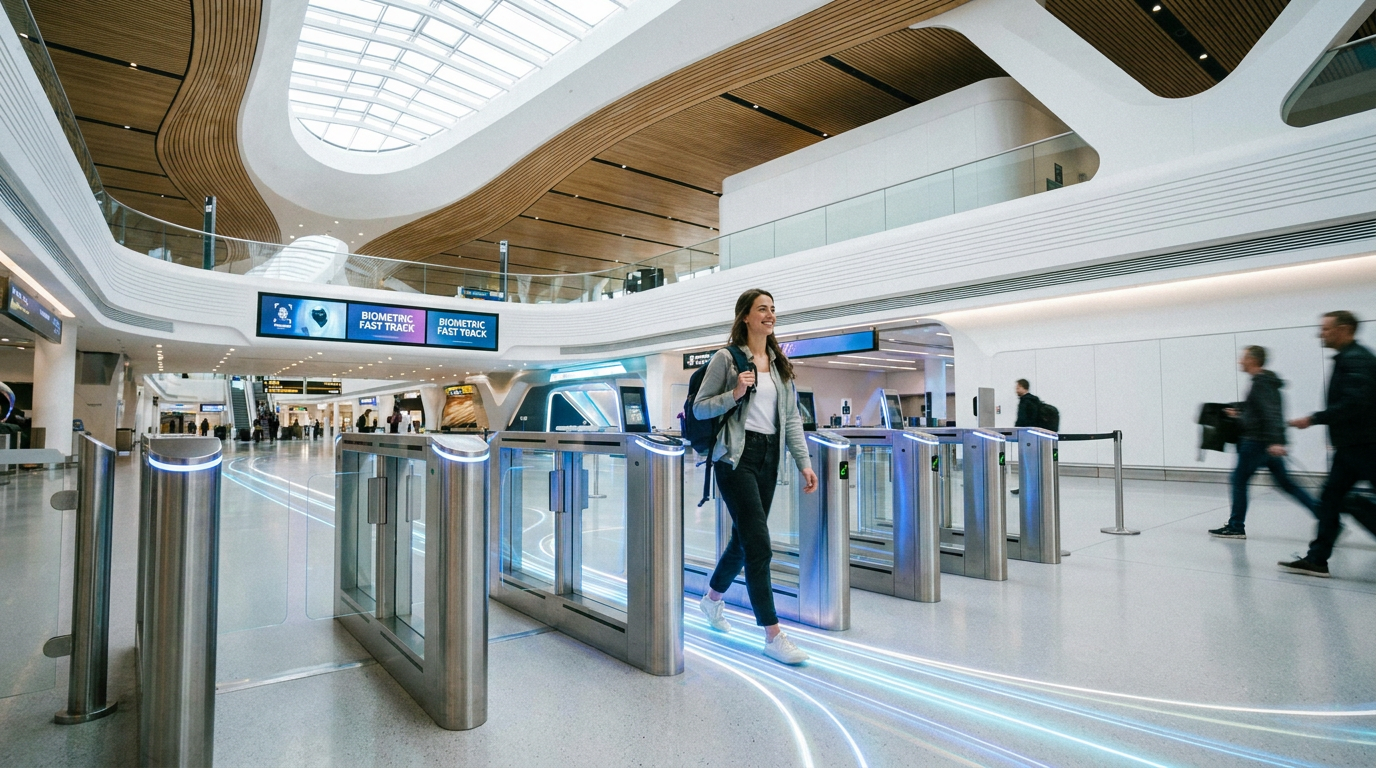
How Biometric Airport Security Actually Works (and Protects Your Data)
As airports worldwide roll out facial recognition and e-gates in 2026, understanding the technology can help travelers navigate terminals faster and with less anxiety.
By Factlen Editorial Team
Aviation Security Experts 40%Privacy Advocates 30%Frequent Travelers 30%
- Aviation Security Experts
- Prioritize the speed, accuracy, and enhanced threat detection that automated systems provide.
- Privacy Advocates
- Demand strict data retention limits and transparent opt-out policies to prevent surveillance overreach.
- Frequent Travelers
- Embrace the technology for its ability to eliminate friction and reduce airport anxiety.
What's not represented
- · Civil liberties organizations focused specifically on algorithmic bias in facial recognition.
- · Frontline airport workers whose daily roles are shifting from document checking to behavioral monitoring.
Why this matters
Navigating airport security is traditionally the most stressful part of travel. Understanding how biometric systems process your identity allows you to move through terminals faster while knowing exactly how your personal data is handled.

More in travel
See all 36 stories →Flight Hacks
The Free Stopover Hack: How to Turn Layovers into Multi-Destination Trips
9 sources
Sustainable Travel
The Definitive Guide to Kyoto's 'Hands-Free Travel' and Sustainable Tourism Rules in 2026
7 sources

Astrotourism
The Global Rise of Astrotourism: How Dark Sky Sanctuaries are Redefining Remote Travel
6 sources

Astrotourism
The Rise of Astrotourism: How the Search for Dark Skies is Reshaping Travel
7 sources

Stay informed
Every angle. Every day.
Get travel stories with full source coverage and perspective breakdowns delivered to your inbox.