
Global Swimming Transactions: Major Coaching Hires and Transfer Portal Moves Reshape the 2026 Offseason
From international federation appointments to a bustling NCAA transfer portal, the competitive aquatics landscape is undergoing a massive structural realignment ahead of the 2026-2027 season.
By Factlen Editorial Team
- Collegiate Athletic Departments
- Universities are prioritizing coaches with elite competitive backgrounds to build championship cultures.
- International Federations
- National governing bodies are aggressively recruiting technical experts to secure World Championship medals.
- Athletes & Recruits
- Swimmers and divers are treating the transfer portal as a free-agency market to optimize their careers.
What's not represented
- · Athletes who entered the transfer portal but were unable to secure a roster spot or scholarship at a new program.
Why this matters
The aggressive movement of elite coaches and athletes across collegiate and international borders highlights a rapidly professionalizing sport. For fans and athletes alike, these transactions dictate which programs will dominate the podiums at upcoming World Championships and NCAA finals.
Key points
- Former American record holder Maddy Banic has been hired as the associate head coach for Nevada Swimming & Diving.
- The University of Michigan added former Illinois assistant Kyle Patnode to its coaching staff.
- Utah head coach Jonas Persson signed a contract extension keeping him with the Utes through the 2031 season.
- Portugal and USA Artistic Swimming announced major international coaching appointments to bolster their national teams.
- The NCAA transfer portal saw significant movement in June, with dozens of Division I divers and swimmers changing programs.
The global swimming and aquatics landscape is undergoing a massive structural realignment as the 2026 offseason accelerates. From international federations locking in their national team directors to a frenetic NCAA transfer portal acting as a de facto free-agency market, programs are aggressively jockeying for leadership and talent ahead of the 2026-2027 season. This wave of transactions highlights a sport that is rapidly professionalizing, where the margins between a podium finish and missing the finals are razor-thin. Consequently, athletic departments and national governing bodies are leaving no stone unturned in their pursuit of optimal coaching staffs and elite athletic rosters.[9]
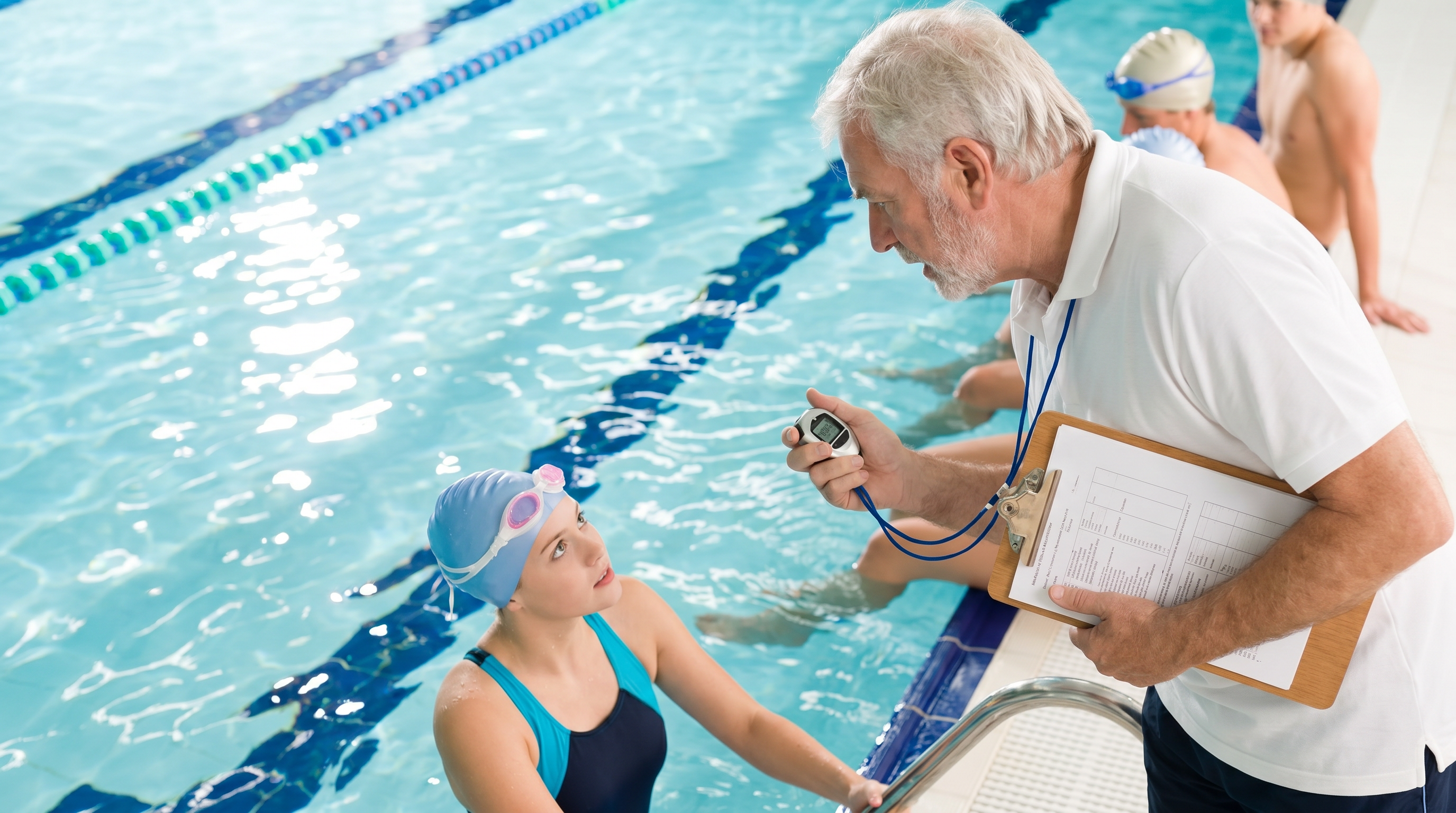
At the collegiate level, the coaching carousel has seen significant movement, with athletic departments prioritizing leaders who possess both elite competitive pedigrees and proven recruiting acumen. The University of Nevada made a major splash by hiring former American record holder and NCAA champion Maddy Banic as their new associate head coach. Banic, who broke the American record in the 50-meter butterfly during the 2020 International Swimming League season, transitions to Reno after a successful three-year stint helping guide Missouri's athletes to the NCAA Championships. Her hire represents a growing trend of programs tapping recently retired elite athletes who can instantly command respect on the pool deck.[4]
Meanwhile, the University of Michigan bolstered its staff by bringing on Kyle Patnode as an assistant coach. Patnode arrives in Ann Arbor following four years at Illinois, where he helped engineer multiple school records and top-ten program times. Michigan head coach Matt Bowe emphasized Patnode’s dual background in swim coaching and strength conditioning as a critical asset for the Wolverines' championship ambitions. By integrating specialized strength training directly into the technical coaching staff, Michigan aims to streamline athlete development and gain a physical edge in the highly competitive Big Ten Conference.[5]

In the Midwest, Illinois State University handed the reins of its swimming and diving program to Ryan Evans. Evans, formerly an assistant at Kansas and New Mexico, brings extensive Division I experience and a relationship-centered leadership style to the Redbirds. His mandate is to elevate the program within the Missouri Valley Conference by building a sustainable recruiting pipeline and fostering a championship culture. The hiring underscores how mid-major programs are increasingly targeting seasoned assistants from power conferences to inject new tactical approaches into their rosters.[6]
While new hires dominate the headlines, continuity is also proving to be a highly valued commodity in the coaching market. The University of Utah secured head coach Jonas Persson with a contract extension running through the 2031 season. Persson successfully navigated the Utes' transition into the Big 12 Conference, overseeing 27 program records and developing international-caliber talent like Team USA representative Josephine Palmer. By locking down their leadership for the next half-decade, Utah provides crucial stability that appeals heavily to prospective recruits navigating an otherwise turbulent collegiate landscape.[7]
While new hires dominate the headlines, continuity is also proving to be a highly valued commodity in the coaching market.
The transactional frenzy extends far beyond the pool deck and into the water itself, driven by the relentless churn of the NCAA transfer portal. The portal has fundamentally altered how collegiate rosters are constructed, functioning similarly to professional sports' free agency by allowing athletes to switch schools without sitting out a season. In May and June alone, dozens of high-profile swimmers and divers announced their new destinations, reshaping the balance of power across multiple conferences as athletes seek out better training environments and financial opportunities.[1]

Notable moves in the diving well include ASUN platform diving champion Trevor Kuhn transferring from Florida Atlantic to Pitt, and SEC scorer Rin Drudge moving from Alabama to Georgia. The portal's mechanics are increasingly influenced by Name, Image, and Likeness (NIL) valuations and scholarship availability. Athletes are now forced to carefully weigh their financial prospects against their competitive goals when choosing a new training environment. For programs with deep NIL collectives, the portal offers a rapid mechanism to plug roster holes with proven collegiate scorers rather than relying solely on freshman development.[1]
On the international stage, national federations are making strategic leadership acquisitions to prepare for the upcoming World Aquatics Championships and the 2028 Olympic cycle. The Portugal Swimming Federation announced the hiring of Maura Xavier as their new national coach for both junior and senior categories. Xavier, who previously directed the Brazilian and Peruvian national teams, brings decades of South American developmental expertise to Europe. Her appointment signals Portugal's intent to overhaul its high-performance infrastructure by integrating proven international methodologies into its domestic training programs.[2]
USA Artistic Swimming has also finalized its developmental leadership, appointing Ludivine Stsepaniuk and Olympic medalist Ou Liu to head the 2026 Junior National Team. Stsepaniuk has a proven track record, having guided USA youth teams to 12 World Championship medals since 2022. The addition of Liu, alongside flexibility expert Inga Gillyer, signals a heavy investment in technical precision and mobility as the United States looks to dominate the junior international circuit. These specialized coaching staffs are essential in a sport where judging criteria have become increasingly stringent and technically demanding.[3]

Beyond direct coaching hires and collegiate transfers, global talent distribution is being actively shaped by the 2026-2027 World Aquatics Scholarship Programme. The initiative targets 100 swimmers, 20 open water swimmers, and 20 divers from developing federations, placing them in high-performance training centers across the globe. This program acts as an international transfer system of its own, providing athletes who lack specialized coaching in their home countries with the resources needed to reach elite status. By subsidizing access to world-class facilities, World Aquatics is attempting to level the playing field for smaller nations.[8]
The convergence of the NCAA transfer portal, aggressive collegiate coaching acquisitions, and international federation restructuring highlights a sport that is increasingly fluid. Athletes and coaches are no longer tethered to single institutions for their entire careers; instead, they are actively navigating a dynamic global market to find the best competitive, financial, and developmental fits. As the 2026-2027 season approaches, the programs that successfully integrate these new acquisitions will be the ones standing on the podiums when the championship banners are raised.[9]
How we got here
May 2026
The NCAA transfer portal sees a surge of activity as the initial entry windows close, with dozens of athletes announcing their new destinations.
May 12, 2026
Illinois State University announces the hiring of Ryan Evans as the new head coach for their swimming and diving program.
May 13, 2026
The University of Utah signs head coach Jonas Persson to a contract extension through the 2031 season.
June 1, 2026
The University of Michigan bolsters its staff by hiring Kyle Patnode as an assistant coach.
June 5, 2026
Nevada Athletics makes a splash by hiring former American record holder Maddy Banic as associate head coach.
Viewpoints in depth
Collegiate Athletic Departments
Universities are prioritizing coaches with elite competitive backgrounds to build championship cultures.
For collegiate athletic directors, the arms race in the pool requires hiring leaders who not only understand the technical nuances of the sport but also possess the pedigree to attract top-tier recruits. Hires like Maddy Banic at Nevada and Kyle Patnode at Michigan reflect a strategy of bringing in coaches who have recently competed at the highest levels or have proven track records in power conferences. These departments view coaching continuity and elite experience as the primary engines for navigating the complexities of the modern NCAA, where the transfer portal and NIL deals demand constant roster management.
International Federations
National governing bodies are aggressively recruiting technical experts to secure World Championship medals.
On the global stage, federations like Portugal and USA Artistic Swimming are looking beyond their borders to find the technical expertise necessary to reach the podium. By appointing coaches with diverse international backgrounds—such as Maura Xavier's South American developmental experience or Olympic medalist Ou Liu's technical precision—these organizations are attempting to hybridize their training methodologies. The focus is heavily placed on youth and junior development, ensuring a sustainable pipeline of talent for future Olympic cycles.
Athletes & Recruits
Swimmers and divers are treating the transfer portal as a free-agency market to optimize their careers.
For the athletes themselves, the sport's landscape has never offered more mobility. The NCAA transfer portal allows swimmers to leave programs that lack sufficient NIL funding or scholarship opportunities in search of better financial and competitive environments. Athletes are increasingly making business decisions about their training, prioritizing programs that offer the best combination of elite coaching, state-of-the-art facilities, and long-term developmental support.
What we don't know
- It remains to be seen how the influx of NIL money will permanently alter the competitive balance of power in collegiate swimming.
- The long-term impact of international coaching cross-pollination on the medal tables at the 2027 World Aquatics Championships is still unknown.
Key terms
- NCAA Transfer Portal
- An online database that allows collegiate student-athletes to declare their intent to transfer and be recruited by other universities without needing permission from their current school.
- World Aquatics
- The international governing body for aquatic sports, formerly known as FINA, responsible for organizing major global competitions and development programs.
- Artistic Swimming
- A highly technical aquatic sport, formerly known as synchronized swimming, that combines elements of swimming, dance, and gymnastics.
- NIL (Name, Image, and Likeness)
- The policy allowing NCAA student-athletes to receive financial compensation through endorsements, sponsorships, and personal appearances.
Frequently asked
Why are so many collegiate swimmers transferring?
The NCAA transfer portal allows athletes to seek better competitive environments, more playing time, and improved financial opportunities through scholarships and NIL deals.
Who did USA Artistic Swimming hire for their junior team?
USA Artistic Swimming appointed Ludivine Stsepaniuk as head coach and Olympic medalist Ou Liu as assistant coach for the 2026 Junior National Team.
What is the World Aquatics Scholarship Programme?
It is a developmental initiative that places talented athletes from developing nations into elite high-performance training centers around the world.
Sources
Source coverage
9 outlets
3 viewpoints surfaced





[1]SwimSwamAthletes & Recruits
2026 NCAA Diving Transfer Roundup: June Edition
Read on SwimSwam →[2]Inside SynchroInternational Federations
Sync Up: March 1, 2026 - Coaching Carousel
Read on Inside Synchro →[3]USA Artistic SwimmingInternational Federations
USA Artistic Swimming Announces 2026 Junior & Youth National Team Coaching Staff
Read on USA Artistic Swimming →[4]Nevada Wolf Pack AthleticsCollegiate Athletic Departments
Nevada Swimming & Diving announce new Associate Head Coach
Read on Nevada Wolf Pack Athletics →[5]Michigan AthleticsCollegiate Athletic Departments
Wolverines Announce Addition of Patnode as Assistant Coach
Read on Michigan Athletics →[6]Illinois State AthleticsCollegiate Athletic Departments
Ryan Evans Hired To Lead Illinois State Swimming & Diving Program
Read on Illinois State Athletics →[7]Utah AthleticsCollegiate Athletic Departments
Utah Swim and Dive Head Coach Jonas Persson Signs Contract Extension
Read on Utah Athletics →[8]World AquaticsInternational Federations
World Aquatics Scholarship Programme 2026-2027
Read on World Aquatics →[9]Factlen Editorial TeamAthletes & Recruits
Synthesis by Factlen editorial team
Read on Factlen Editorial Team →
More in sports
See all 398 stories →Women's Sports
How Women's Wrestling Became the Fastest-Growing Collegiate Sport in America
8 sources
Engine Regulations
The 2026 Formula 1 Engine Revolution: How Sustainable Fuel and a 50/50 Hybrid Split Are Changing the Sport
8 sources

MLB Milestones
Brewers' Jacob Misiorowski Throws Historic 15-Strikeout, One-Hit Shutout
7 sources
Pitching Milestone
Jacob Misiorowski Throws Historic 15-Strikeout, One-Hit Complete Game in Brewers Win
7 sources
Every angle. Every day.
Get sports stories with full source coverage and perspective breakdowns delivered to your inbox.