
From Chamonix to the French Alps: The Storied Legacy Driving the 2030 Winter Olympics
As the Olympic flame prepares to return to the French Alps in 2030, a century of Winter Games history highlights France's foundational role in winter sports and the record-breaking athletes who have defined the competition.
By Factlen Editorial Team
- Olympic Historians
- Emphasizes the cultural symmetry of returning to France, viewing the nation as the spiritual home of the Winter Games.
- High-Performance Athletes
- Focuses on the evolution of human limits, celebrating the record-breaking achievements of modern competitors.
- Sustainability Advocates
- Highlights the shift toward decentralized hosting models and the reuse of existing infrastructure to reduce environmental impact.
What's not represented
- · Local residents of the French Alps impacted by the influx of tourism and infrastructure use.
- · Climate scientists monitoring the long-term viability of snow sports in the European Alps.
Why this matters
Understanding the century-long evolution of the Winter Games reveals how the 2030 French Alps Olympics will blend a deep athletic heritage with a modern, sustainable regional model, setting the blueprint for the future of global snow sports.
Key points
- The 2030 Winter Olympics will be hosted in the French Alps, marking a return to the nation that birthed the Games in 1924.
- France has previously hosted the Winter Games three times: Chamonix (1924), Grenoble (1968), and Albertville (1992).
- Norwegian cross-country skier Johannes Høsflot Klæbo recently broke the all-time record with 11 career Olympic gold medals.
- The 2030 Games will use a decentralized model spread across four regional clusters, including indoor events in Nice.
- Organizers project that 93 percent of the venues used in 2030 will be preexisting or temporary, heavily utilizing 1992 legacy sites.
The handover is complete. With the Milano Cortina 2026 Winter Olympics in the rearview mirror, the winter sports world turns its collective gaze to the French Alps for 2030. The upcoming Games mark a profound homecoming for the Winter Olympics, returning the flame to the nation that birthed the international competition over a century ago.[7]
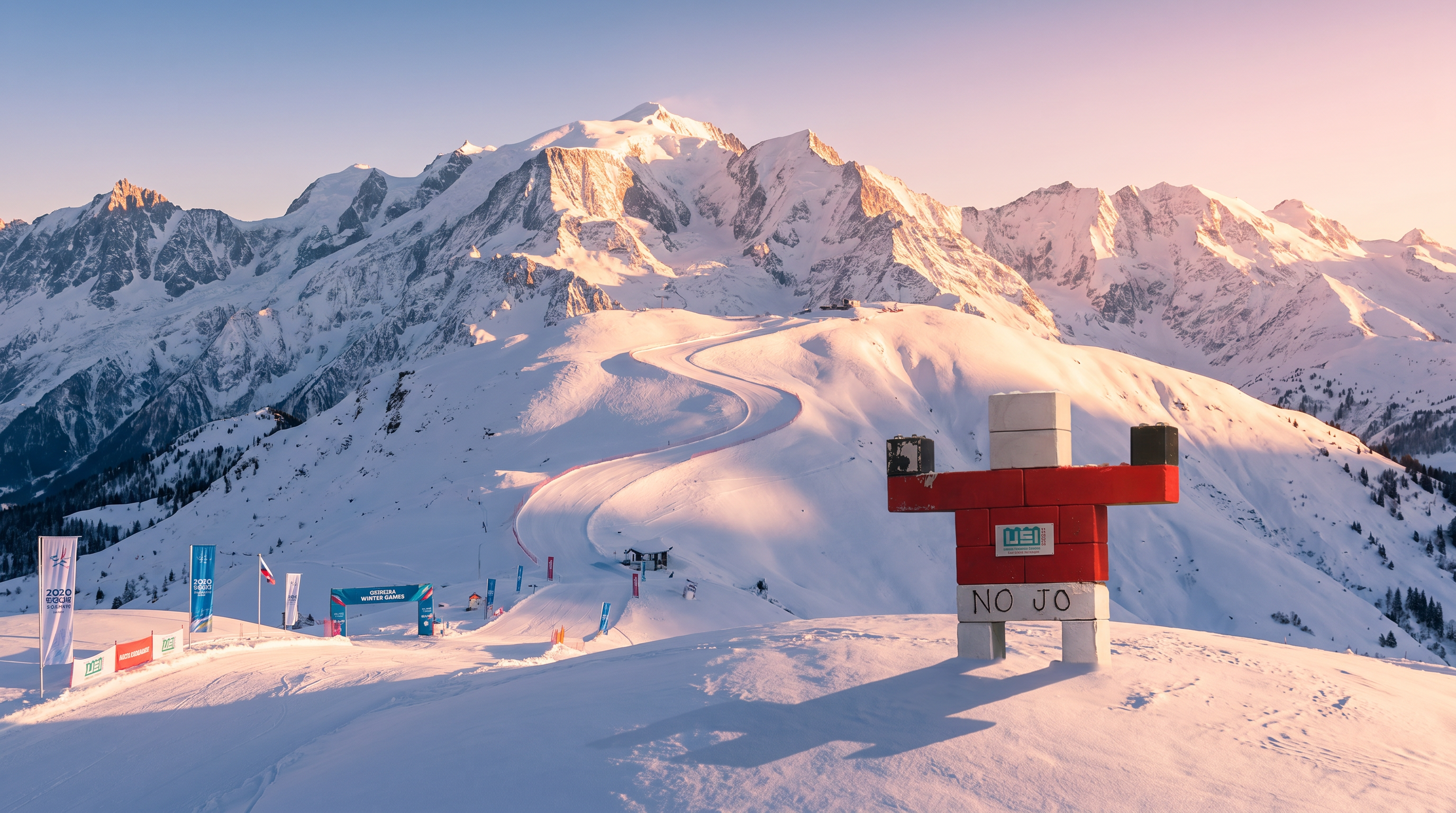
France's relationship with the Winter Games is entirely foundational. In 1924, the International Olympic Committee organized an "International Winter Sports Week" in the alpine resort town of Chamonix, nestled at the foot of Mont Blanc. That inaugural event featured just 16 nations and 258 athletes competing in core disciplines like Nordic skiing, figure skating, and bobsleigh.[1]
That modest gathering was later retroactively declared the first official Winter Olympics, sparking a global phenomenon that now draws nearly 3,000 athletes from over 90 nations. The Chamonix Games established winter sports as a permanent, celebrated pillar of the Olympic movement, offering a dedicated platform for athletes to showcase unparalleled endurance and grace on snow and ice.[1][7]
France continued to shape the Games' evolution by hosting twice more in the 20th century. The 1968 Grenoble Games brought the Winter Olympics into the modern media age, serving as the first edition to be broadcast worldwide in full color. It was on those slopes that French alpine skier Jean-Claude Killy became a national hero, sweeping three gold medals in a legendary performance that captivated the host nation.[4]

In 1992, the Winter Games returned to the French Alps in Albertville. This edition was pivotal, introducing a decentralized hosting model that spread events across the Savoie region's various ski resorts. The Albertville Games also modernized the athletic program, overseeing the official Olympic debut of freestyle skiing and short track speed skating.[3][7]
In 1992, the Winter Games returned to the French Alps in Albertville.
Across these decades, the Winter Olympics have minted legends whose medal hauls defy belief. Norway has long dominated the snow, producing the most decorated athletes in the history of the competition. Cross-country skier Marit Bjørgen reigns supreme as the ultimate overall medal-winner, holding an astonishing 15 Olympic medals—including eight golds—earned across five different Games.[5]
However, the gold standard was recently rewritten. At the 2026 Milano Cortina Games, Norwegian cross-country skiing phenom Johannes Høsflot Klæbo delivered a historic performance, sweeping six gold medals. This unprecedented feat brought his career total to 11 Olympic golds, surpassing both Bjørgen and biathlete Ole Einar Bjørndalen to become the winningest gold medalist in Winter Olympic history.[2]

Beyond the Nordic powerhouses, athletes from across the globe have carved their names into the ice. Dutch speed skater Ireen Wüst captured 13 medals, including six golds, over five consecutive Olympics, cementing her status as the most successful speed skater ever. These athletes exemplify the relentless dedication required to master disciplines where victory is often decided by mere fractions of a second.[5][7]
As the Olympic organizers prepare to light the French Alps in 2030, they are drawing heavily on this rich history while adapting to modern climate realities. The 2030 Games will utilize a regional, decentralized model similar to Albertville 1992 and Milano Cortina 2026. Events will be spread across four main clusters: Haute-Savoie, Savoie, Briançon, and Nice.[3][6]
This widespread geographic distribution allows the Games to rely almost entirely on preexisting and temporary venues—projected at 93 percent of the total footprint—significantly reducing the event's carbon impact. Many of the alpine skiing and sliding events will take place in the legacy venues originally built for the 1992 Albertville Games, proving the enduring value of that historical infrastructure.[3]

Meanwhile, the coastal city of Nice will host the indoor ice events, including figure skating and ice hockey, before providing a stunning waterfront backdrop for the Closing Ceremony along the Promenade des Anglais. This innovative pairing of snow-capped alpine peaks and the Mediterranean coast represents a visually striking new era for the Winter Games.[6][7]
The 2030 French Alps Olympics will not just be a celebration of athletic excellence; they will be a tribute to the resilience and evolution of winter sports. From the pioneering athletes of Chamonix 1924 to the record-breakers of 2026, the Winter Games have continually pushed human limits. When the world gathers in France four years from now, it will honor a century of history while charting a sustainable path for the future of snow and ice competition.[1][2][7]
How we got here
Jan 1924
Chamonix, France hosts the 'International Winter Sports Week,' later recognized as the first Winter Olympics.
Feb 1968
The Winter Games in Grenoble, France become the first to be broadcast globally in full color.
Feb 1992
Albertville, France hosts the Games, utilizing a regional model across the Savoie department.
Feb 2026
Johannes Høsflot Klæbo breaks the all-time Winter Olympic gold medal record at the Milano Cortina Games.
Feb 2030
The French Alps will host the XXVI Olympic Winter Games across four distinct regional clusters.
Viewpoints in depth
Olympic Historians
Emphasizing the cultural symmetry of returning to France.
For historians of the Olympic movement, the 2030 Games represent far more than a logistical hosting duty; they serve as a centennial-plus-six bookend to the legacy of Chamonix 1924. This perspective views the French Alps as the spiritual home of the Winter Games, arguing that returning to the region honors the foundational moments that legitimized winter sports on a global scale. They point to the historical through-line of French innovation, from the first color broadcasts in Grenoble to the debut of modern disciplines in Albertville.
Sustainability Advocates
Highlighting the shift away from single-city mega-builds.
Environmental groups and sustainability advocates point to the 2030 French Alps plan as proof that the Olympics can adapt to stark climate realities. By projecting that 93 percent of the venues will be preexisting or temporary, and by heavily reusing the infrastructure built for the 1992 Albertville Games, organizers are setting a new standard. This camp argues that the decentralized, regional model is the only viable future for winter sports, moving away from the ecologically damaging practice of constructing massive, single-use facilities in mountainous regions.
High-Performance Athletes
Focused on the evolution of human limits and record-breaking achievements.
From the perspective of the competitors, the history of the Winter Games is measured in fractions of a second and the relentless pursuit of endurance. This viewpoint tracks the progression from the heavy wooden skis of the 1920s to the hyper-optimized, aerodynamic gear of today. They celebrate figures like Johannes Høsflot Klæbo and Marit Bjørgen not just as medal winners, but as pioneers who have pushed the biological boundaries of speed and stamina to heights that the athletes of Chamonix 1924 could scarcely have imagined.
What we don't know
- The exact finalized budget and localized economic impact for the four host clusters in the French Alps.
- How long-term climate warming trends may affect natural snowpack availability across the outdoor venues by 2030.
Key terms
- Nordic skiing
- A group of skiing disciplines where the heel of the boot cannot be fixed to the ski, including cross-country skiing and ski jumping.
- Alpine skiing
- The sport of sliding down snow-covered hills on skis with fixed-heel bindings, including downhill and slalom events.
- International Olympic Committee (IOC)
- The non-governmental sports organization responsible for organizing the modern Olympic Games.
- Biathlon
- A winter sport that combines cross-country skiing endurance with precision rifle marksmanship.
Frequently asked
When did France first host the Winter Olympics?
France hosted the inaugural Winter Olympic Games in 1924 in the alpine resort town of Chamonix.
Who has won the most gold medals in Winter Olympic history?
Norwegian cross-country skier Johannes Høsflot Klæbo holds the record with 11 career gold medals, having surpassed the previous record at the 2026 Milano Cortina Games.
Where will the 2030 Winter Olympics be held?
The 2030 Winter Olympics will be hosted across the French Alps, utilizing a regional model with venue clusters in Haute-Savoie, Savoie, Briançon, and the coastal city of Nice.
Who holds the record for the most total Winter Olympic medals?
Norwegian cross-country skier Marit Bjørgen is the most decorated Winter Olympian of all time, with 15 total medals (8 gold, 4 silver, 3 bronze).
Sources
Source coverage
7 outlets
3 viewpoints surfaced







[1]Olympics.comOlympic Historians
Chamonix 1924 Legacy
Read on Olympics.com →[2]Encyclopaedia BritannicaHigh-Performance Athletes
Who has won the most Winter Olympic gold medals?
Read on Encyclopaedia Britannica →[3]Team CanadaSustainability Advocates
French Alps 2030
Read on Team Canada →[4]France TodayOlympic Historians
100 Years of The Winter Olympics and its French Origins
Read on France Today →[5]Business InsiderHigh-Performance Athletes
The Athletes Who Have Won the Most Medals in Winter Olympics History
Read on Business Insider →[6]Monaco VoiceSustainability Advocates
French Alps Chosen as Host for 2030 Winter Olympics and Paralympics
Read on Monaco Voice →[7]Factlen Editorial TeamOlympic Historians
Synthesis by Factlen editorial team
Read on Factlen Editorial Team →
More in sports
See all 397 stories →Pro Volleyball Boom
How Women's Professional Volleyball Finally Broke Through in America
6 sources
Women's Sports
How Women's Wrestling Became the Fastest-Growing Collegiate Sport in America
8 sources

Engine Regulations
The 2026 Formula 1 Engine Revolution: How Sustainable Fuel and a 50/50 Hybrid Split Are Changing the Sport
8 sources

MLB Milestones
Brewers' Jacob Misiorowski Throws Historic 15-Strikeout, One-Hit Shutout
7 sources

Every angle. Every day.
Get sports stories with full source coverage and perspective breakdowns delivered to your inbox.