
FIS Introduces Landmark Return-to-Performance Protocols to Overhaul Snow Sports Injury Recovery
The International Ski and Snowboard Federation has published a comprehensive new framework designed to safely reintegrate athletes after severe crashes. The evidence-based protocol prioritizes psychological readiness and phased physical testing over rushed medical clearances.
By Factlen Editorial Team
- Sports Medicine Researchers
- Advocate for bridging the gap between clinical healing and sport-specific physical readiness.
- High-Performance Coaches
- Focus on the practical implementation of recovery plans, emphasizing the need to remove peer pressure and build a culture of care.
- Federation Officials
- View standardized recovery protocols as a necessary evolution to protect athlete welfare and the long-term viability of the sport.
What's not represented
- · Independent physical therapists outside the national federation systems
- · Athletes who felt pressured to return early under the old protocols
Why this matters
For decades, snow sports have been plagued by athletes rushing back from devastating crashes—often leading to re-injury or career-ending setbacks. This new framework shifts the focus from mere medical clearance to a holistic, phased return that prioritizes long-term health and psychological readiness, protecting the next generation of winter athletes.
Key points
- The FIS has launched a globally harmonized 'Return-to-Performance' consensus statement for alpine skiers and snowboarders.
- The framework shifts the recovery focus from basic medical clearance to sport-specific physical and psychological readiness.
- Data shows that while 90% of ACL-injured skiers return to their sport, only 53% improve their performance points within three years.
- The protocol mandates a phased approach: off-snow rehab, restricted on-snow basics, and unrestricted high-performance training.
- Clubs and national federations are adopting a 'culture of care' to reduce the peer pressure associated with injury comebacks.
The world of competitive snow sports is defined by speed, gravity, and inherent risk. For decades, the culture surrounding alpine skiing and snowboarding injuries was brutally straightforward: once a surgeon provided medical clearance, the athlete was expected back in the starting gate. This rushed approach often led to devastating re-injuries, stalled careers, and psychological burnout. However, a quiet revolution is now reshaping how the industry handles recovery, prioritizing long-term resilience over immediate results.[6]
The catalyst for this shift is a landmark "Return-to-Performance" (RTP) consensus statement commissioned by the International Ski and Snowboard Federation (FIS). Published in the BMJ Open Sport & Exercise Medicine, the framework represents the first globally harmonized set of recommendations for safely reintegrating competitive skiers and snowboarders after severe crashes. It fundamentally changes the definition of recovery, moving the goalpost from mere biological healing to full competitive readiness.[1][6]
The need for a systemic overhaul was starkly illuminated by the FIS Injury Surveillance System, which tracked athlete health data across 13 seasons. The surveillance revealed that while medical interventions for catastrophic joint and bone injuries have advanced, the transition back to the snow remained a dangerous blind spot. Athletes were frequently cleared to ski before they possessed the sport-specific strength or cognitive processing required to safely navigate an icy downhill course at 120 kilometers per hour.[2]

A critical distinction at the heart of the new FIS protocol is the difference between "return to sport" and "return to performance." A recent scoping review published in the Scandinavian Journal of Medicine & Science in Sports analyzed high-level alpine skiers recovering from anterior cruciate ligament (ACL) reconstructions. The researchers found that while an impressive 90% of ACL-injured skiers eventually returned to their pre-injury competition level, only 53% managed to improve their FIS points within three years of surgery.[4]
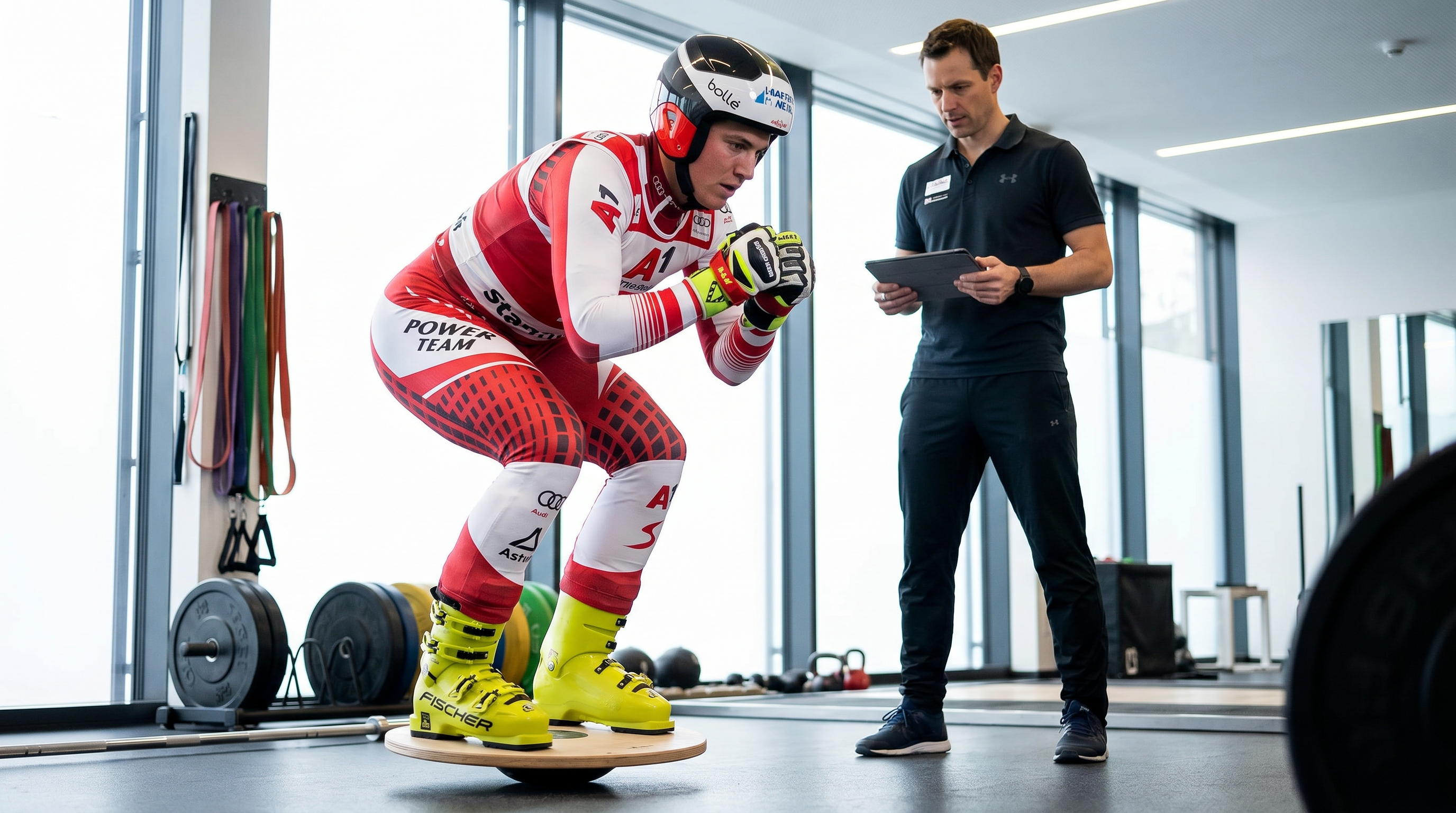
To bridge this gap, the RTP consensus outlines a highly structured, phased progression. The journey begins with off-snow rehabilitation focused on concentric and eccentric muscle strength, mirroring the extreme g-forces experienced in snow sports. Only after these baseline metrics are met does the athlete transition to "restricted on-snow" activities. This phase involves controlled, supervised free-skiing or snowboarding, starting with the absolute basics and gradually introducing complex terrain and variable visibility.[1][7]
To bridge this gap, the RTP consensus outlines a highly structured, phased progression.
Crucially, the new framework elevates psychological readiness to the same tier of importance as physical healing. The trauma of a high-speed crash often leaves lingering mental scars that can cause an athlete to hesitate—a fatal flaw in sports where split-second commitment is required. The consensus mandates cognitive training, proprioceptive exercises, and confidence-building protocols before an athlete is permitted to engage in unrestricted, high-performance team training.[1][6]

Beyond the medical tent, the success of the RTP model relies on a profound cultural shift among coaches and clubs. Ski Racing Media reports that programs across North America and Europe are actively building a "culture of care" to support the new protocols. Clubs are now implementing individualized return-to-snow plans that rely on performance metrics rather than fixed timelines, and they are deliberately staggering return schedules to alleviate the peer pressure athletes feel to keep up with their healthy teammates.[3]
This modernized approach is already being deployed at the highest levels of the sport. When Canadian Olympic snowboarder Liam Brearley sustained a severe knee injury during training, his team opted against rushing a comeback for the immediate competition season. Instead, Canada Snowboard and his medical team designed a carefully monitored, months-long return-to-sport progression, scheduling his first light on-snow activities for the spring to ensure his long-term career viability remained the absolute priority.[5]

The urgency of adopting these protocols is amplified by the changing landscape of youth development in winter sports. Athletes are specializing earlier, and junior competitors are now logging up to 150 days on snow per year. This massive increase in training load has driven up the baseline risk of overuse and acute injuries, making structured prevention and recovery frameworks essential for the survival of local clubs and national academies alike.[3]
By dismantling the outdated "tough it out" mentality, the global snow sports community is finally aligning its recovery strategies with modern sports science. The FIS consensus statement ensures that the journey back from a shattered knee or broken tibia is no longer a solitary, rushed gamble. Instead, it is a calculated, multidisciplinary ascent, guaranteeing that when athletes finally click back into their bindings, they are equipped not just to participate, but to win.[1][6]
How we got here
2006–2019
The FIS Injury Surveillance System collects data across 13 seasons, highlighting a persistent gap in safe return-to-snow practices.
Early 2024
A series of high-profile crashes among top World Cup athletes underscores the urgent need for modernized recovery protocols.
December 2025
Canadian snowboarder Liam Brearley undergoes knee surgery and adopts a long-term, phased recovery plan rather than rushing back for the season.
February 2026
The FIS officially publishes its landmark Return-to-Performance consensus statement in the BMJ Open Sport & Exercise Medicine.
June 2026
Clubs and national federations worldwide begin integrating the new RTP guidelines into their summer off-snow conditioning programs.
Viewpoints in depth
Sports Medicine Researchers
Advocate for bridging the gap between clinical healing and sport-specific physical readiness.
Medical professionals emphasize that a surgically repaired knee does not automatically equip an athlete to handle the extreme g-forces of alpine racing. Researchers argue that the traditional 'clearance to play' model ignores critical deficits in proprioception, eccentric muscle strength, and psychological confidence. By demanding rigorous, data-driven performance testing before an athlete touches the snow, this camp aims to drastically reduce the high rates of secondary injuries.
High-Performance Coaches
Focus on managing the cultural and psychological aspects of an athlete's reintegration.
For coaches and club directors, the challenge of injury recovery is largely environmental. They argue that athletes often rush their comebacks due to internal pressure and the desire to keep pace with healthy teammates. To combat this, high-performance staff are championing a 'culture of care'—staggering return-to-snow schedules, maintaining centralized communication with medical teams, and ensuring that athletes feel supported rather than rushed during their vulnerable transition periods.
Federation Officials
Prioritize standardizing protocols to protect the sport's long-term sustainability.
Governing bodies like the FIS view the high attrition rate from injuries as an existential threat to the sport, particularly as youth athletes face unprecedented training loads. Officials argue that implementing a globally harmonized consensus statement is essential for protecting their investments in athlete development. By mandating structured recovery frameworks, federations hope to extend career longevity and maintain the high quality of international competition.
What we don't know
- How universally the new RTP guidelines will be adopted by smaller, underfunded local clubs that lack dedicated sports medicine staff.
- Whether the implementation of these protocols will definitively lower the overall re-injury rates in the upcoming World Cup seasons.
- How the extended recovery timelines will impact athletes' sponsorship contracts and financial stability during their time away from competition.
Key terms
- Return-to-Performance (RTP)
- The final, highly structured phase of injury recovery where an athlete regains the specific physical, tactical, and psychological skills needed to compete at the highest level.
- Anterior Cruciate Ligament (ACL)
- A crucial stabilizing ligament in the knee that is frequently torn during the high-speed, twisting crashes common in alpine skiing and snowboarding.
- FIS Points
- The official ranking system used by the International Ski and Snowboard Federation to measure an athlete's performance and determine their seeding in competitions.
- Proprioceptive Training
- Exercises designed to improve the body's subconscious ability to sense its position and movement in space, which is critical for maintaining balance on unpredictable snow terrain.
- Eccentric Muscle Strength
- The ability of a muscle to generate force while lengthening, a vital physical trait for skiers and snowboarders absorbing heavy impacts and g-forces during turns.
Frequently asked
What is the difference between returning to sport and returning to performance?
Returning to sport simply means an athlete has received medical clearance to participate. Returning to performance means they have regained the specific physical, tactical, and psychological skills required to compete at or above their pre-injury level.
Why did the FIS commission a new consensus statement?
The FIS recognized a lack of international harmonization and scientific evidence regarding best practices for injury recovery. The new guidelines aim to standardize care and reduce the high rates of re-injury in snow sports.
How does the new protocol address an athlete's mental health?
The framework elevates psychological readiness to the same level as physical healing. It mandates cognitive training and confidence-building exercises to help athletes overcome the trauma of high-speed crashes before they return to unrestricted training.
Are these protocols only for Olympic-level athletes?
No. While developed for elite competitors, the principles are being adopted by local clubs and youth academies to protect junior athletes, who are facing increasingly high training loads and early specialization.
Sources
Source coverage
7 outlets
3 viewpoints surfaced







[1]BMJ Open Sport & Exercise MedicineSports Medicine Researchers
International Ski and Snowboard Federation (FIS) consensus statement on return-to-performance in competitive alpine and freestyle skiers and snowboarders
Read on BMJ Open Sport & Exercise Medicine →[2]FIS Health DataFederation Officials
FIS Alpine Skiing Injury Surveillance (2017–2024)
Read on FIS Health Data →[3]Ski Racing MediaHigh-Performance Coaches
Injury Prevention and Return to Snow in Ski Racing: Building a Culture of Care
Read on Ski Racing Media →[4]Scandinavian Journal of Medicine & Science in SportsSports Medicine Researchers
Returning to Performance After ACL Injury in Competitive Alpine Skiing
Read on Scandinavian Journal of Medicine & Science in Sports →[5]Canada SnowboardHigh-Performance Coaches
Liam Brearley Faces Knee Injury — Focused on the Comeback
Read on Canada Snowboard →[6]Factlen Editorial TeamFederation Officials
Synthesis by Factlen editorial team
Read on Factlen Editorial Team →[7]National Open Access MonitorSports Medicine Researchers
International Ski and Snowboard Federation consensus statement on warm-up and cool-down in competitive alpine and freestyle skiers and snowboarders
Read on National Open Access Monitor →
More in sports
See all 394 stories →Pro Volleyball Boom
How Women's Professional Volleyball Finally Broke Through in America
6 sources
Women's Sports
How Women's Wrestling Became the Fastest-Growing Collegiate Sport in America
8 sources
Engine Regulations
The 2026 Formula 1 Engine Revolution: How Sustainable Fuel and a 50/50 Hybrid Split Are Changing the Sport
8 sources
MLB Milestones
Brewers' Jacob Misiorowski Throws Historic 15-Strikeout, One-Hit Shutout
7 sources

Every angle. Every day.
Get sports stories with full source coverage and perspective breakdowns delivered to your inbox.