
FIFA World Cup 2026 Knockout Bracket Finalized: Japan vs. Brazil Headlines Round of 32
The 2026 World Cup group stage has concluded, setting the stage for a historic 32-team knockout bracket highlighted by a blockbuster clash between five-time champion Brazil and a surging Japan.
By Factlen Editorial Team
- Emerging Football Nations
- Rising programs viewing the expanded Round of 32 as a historic opportunity to topple giants.
- Traditional Powerhouses
- Established footballing nations focused on navigating the grueling five-match knockout gauntlet while avoiding early upsets.
- Tournament Organizers
- Governing bodies and hosts emphasizing the success of the 48-team format in generating competitive matches.
What's not represented
- · Domestic Leagues and Clubs
- · Traveling Supporters
Why this matters
The expanded 48-team format introduces a Round of 32 for the first time, creating immediate high-stakes matchups and forcing teams to survive an unprecedented five-game knockout gauntlet to win the trophy.
Key points
- The 2026 World Cup group stage has concluded, finalizing the historic 32-team knockout bracket.
- Japan secured a Round of 32 clash against five-time champion Brazil following a 1-1 draw with Sweden.
- The Netherlands won Group F and will face 2022 semifinalist Morocco in Monterrey.
- The United States advanced as Group D winners and will play Bosnia and Herzegovina, despite a 3-2 loss to Turkey.
- The expanded 48-team format requires the eventual champion to win five consecutive knockout matches.
The 2026 FIFA World Cup has officially transitioned from its sprawling 48-team group stage into the unprecedented Round of 32, with the final knockout bracket locked in following Thursday's dramatic group finales.[7]
For the first time in the tournament's history, surviving teams must navigate a grueling five-match single-elimination gauntlet to lift the trophy, fundamentally altering the physical and tactical demands of a deep World Cup run.[7]
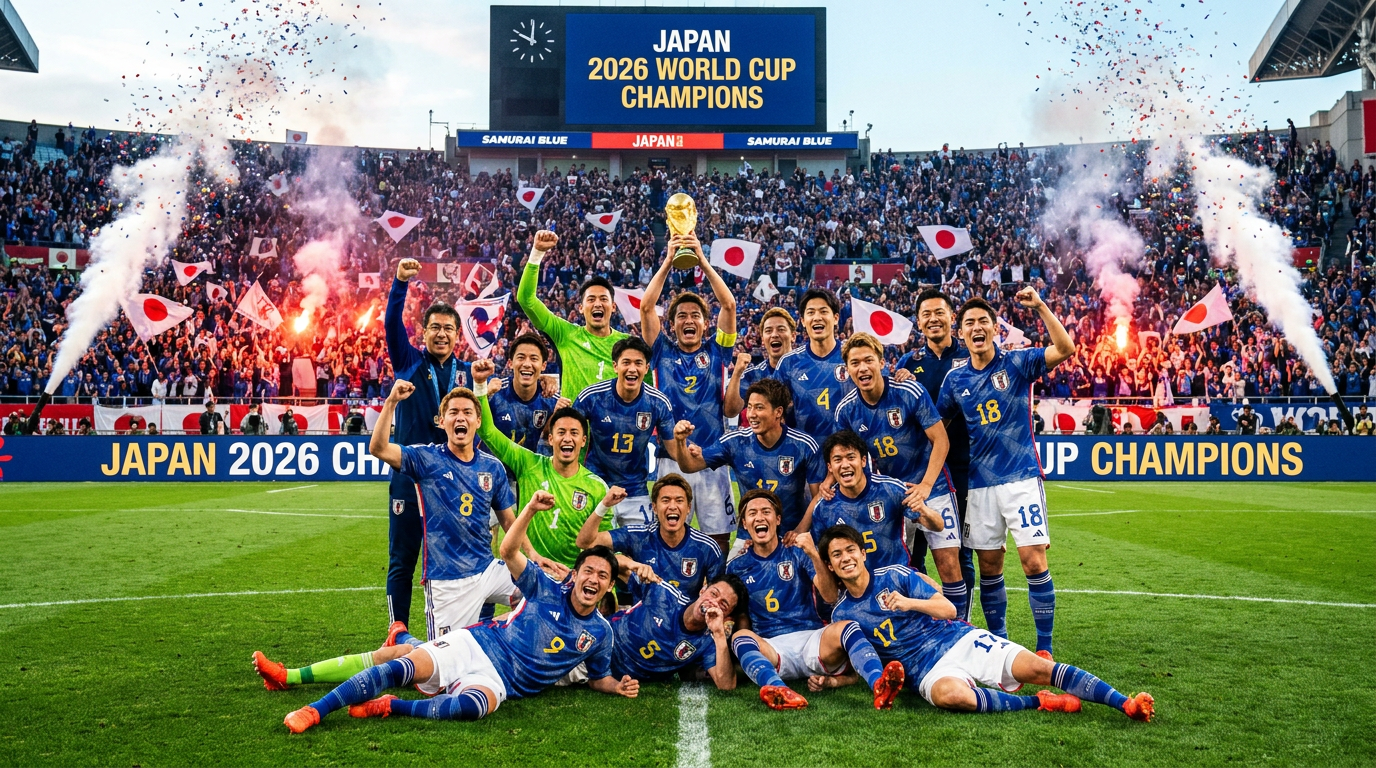
The marquee matchup of the opening knockout round will see five-time world champion Brazil face Japan at NRG Stadium in Houston on June 29. Japan secured their progression with a nerve-shredding 1-1 draw against Sweden in Arlington, Texas, to finish as Group F runners-up behind the Netherlands.[3][7]
Daizen Maeda opened the scoring for the Samurai Blue in the 56th minute, capitalizing on a precise through ball to drill a right-footed shot into the bottom corner. The lead was short-lived, as Sweden's Anthony Elanga equalized just six minutes later, setting up a frantic final half-hour.[3]

A pair of spectacular stoppage-time saves by Japanese goalkeeper Zion Suzuki preserved the point needed to advance. Suzuki swatted away a close-range effort from Elanga before tipping a dangerous header over the crossbar moments later, ensuring Japan's survival in the tournament.[3]
"Last time we proved to Brazil that we aren't a pushover," said Japan coach Hajime Moriyasu, referencing a 3-2 friendly victory over the Seleção in Tokyo last October. "That is what we wanted to do from the beginning of the competition and this is proof in the growth of Japanese football."[3]
The Netherlands claimed the top spot in Group F, cruising past Tunisia 3-1 in Kansas City. The Dutch started at a blistering pace, taking a 2-0 lead within seven minutes behind an Ellyes Skhiri own goal and a clinical free-kick finish from Brian Brobbey.[4]
The Netherlands claimed the top spot in Group F, cruising past Tunisia 3-1 in Kansas City.
The Dutch will now travel to Monterrey, Mexico, to face Group C runners-up Morocco in what promises to be a highly charged fixture. Morocco, who made history by reaching the semifinals in Qatar four years ago, advanced after navigating a difficult group that included Brazil and Scotland.[4]
Dutch manager Ronald Koeman immediately sought to manage expectations against the Atlas Lions, deploying early mind games ahead of the clash. "I'm not sure if we are the favourite in the match against Morocco," Koeman told reporters. "It's a good team with a lot of quality, and they can score easily."[4]

Elsewhere in the bracket, the co-host United States advanced as Group D winners despite a chaotic 3-2 defeat to Turkey in their dead-rubber finale in Los Angeles. Having already secured the top spot, U.S. manager Mauricio Pochettino fielded nine new starters to rest his primary squad.[1][5][6]
The Americans took an early lead through Auston Trusty, but Turkey fought back with a brilliant attacking display. Real Madrid starlet Arda Güler orchestrated the comeback, setting up Baris Alper Yilmaz before scoring a goal of his own to punish the rotated American defense.[5][6]
Sebastian Berhalter hauled the U.S. level straight after halftime, and talisman Christian Pulisic made a welcome return from a calf injury, striking the post in a 30-minute cameo. However, Kaan Ayhan sealed a consolation win for the eliminated Turks with a 98th-minute strike.[5]
Despite the loss, the United States remains in a strong position and will face Bosnia and Herzegovina in the Round of 32 in Santa Clara, California. If they advance, the Americans would travel to Seattle for the Round of 16, mapping out a West Coast-heavy route through the early knockout stages.[5]
Australia also booked their ticket to the last 32, grinding out a tense 0-0 draw against Paraguay in San Francisco. The Socceroos controlled large stretches of the match, but with both teams knowing a draw would likely serve their qualification hopes, the game settled into a cautious rhythm.[8]

The result was enough for Australia to secure second place in Group D, marking their third trip to the World Cup knockout rounds. Paraguay, meanwhile, is well-positioned to progress as one of the eight best third-placed teams, a new qualification route introduced for the 48-team era.[7][8]
The draw mechanism ensures that the 12 group winners are seeded against either a runner-up or a third-place finisher, theoretically providing a softer landing in the Round of 32. However, the presence of dangerous unseeded teams like Morocco and Japan means the traditional powerhouses face immediate jeopardy.[4][7]
As the tournament shifts from the calculated point-gathering of the group stage to the ruthless finality of knockout football, the margin for error has vanished. The road to the July 19 final at New York New Jersey Stadium is set, and the expanded field guarantees an unprecedented gauntlet for the eventual champion.[7]
How we got here
June 11, 2026
The expanded 48-team World Cup kicks off across North America.
June 25, 2026
Japan secures a dramatic 1-1 draw with Sweden to book a Round of 32 clash with Brazil.
June 26, 2026
The group stage concludes, finalizing the historic 32-team knockout bracket.
June 28, 2026
The inaugural Round of 32 begins, marking the start of the single-elimination phase.
July 19, 2026
The World Cup Final is scheduled to take place at New York New Jersey Stadium.
Viewpoints in depth
Traditional Powerhouses
Established footballing nations view the expanded Round of 32 as an unwanted extra hurdle.
For historically dominant teams like Brazil, Germany, and the Netherlands, the addition of a Round of 32 introduces a new layer of jeopardy. Managers have expressed concern over the physical toll of a five-match knockout gauntlet, noting that an extra 90 minutes of high-intensity football increases the risk of injuries and suspensions. Furthermore, facing highly motivated, defensively organized teams in an early elimination scenario leaves traditional giants vulnerable to historic upsets before the tournament even reaches its traditional latter stages.
Emerging Football Nations
Rising programs see the 32-team knockout bracket as a historic opportunity to prove their tactical evolution.
For nations like Japan, Morocco, and Australia, the expanded format is a welcome leveling of the playing field. These teams have spent the last decade refining their tactical discipline, often utilizing compact defensive blocks and lethal counter-attacks to neutralize superior individual talent. The Round of 32 provides an immediate, high-profile platform to execute these game plans against seeded group winners, turning the pressure entirely onto the favorites while allowing emerging nations to play with freedom and ambition.
Tournament Organizers
FIFA and host nations emphasize the success of the 48-team format in generating competitive matches.
From an organizational perspective, the transition to a 48-team World Cup has been validated by the dramatic group stage finales. By advancing 32 teams—including the eight best third-place finishers—FIFA ensured that almost every final group match carried significant qualification stakes, eliminating the dead-rubber fixtures that plagued previous tournaments. Host nations and broadcasters are now preparing for an unprecedented volume of knockout football, anticipating record-breaking global viewership as the single-elimination drama begins a round earlier than ever before.
What we don't know
- How the physical toll of an additional knockout match will affect teams reaching the later stages of the tournament.
- Whether the eight third-placed teams advancing to the knockouts can genuinely challenge the seeded group winners.
- If Christian Pulisic will be fully fit to start for the United States in the Round of 32 following his return from a calf injury.
Key terms
- Round of 32
- A newly introduced knockout stage for the 2026 World Cup, necessitated by the expansion from 32 to 48 participating teams.
- Dead-rubber
- A sporting fixture in which the outcome has no impact on the tournament progression or final standings of the teams involved.
- Third-placed teams
- Under the new format, the eight best teams that finish third in their respective groups advance to the knockout rounds alongside the top two.
Frequently asked
Who does the USMNT play next?
The United States will face Bosnia and Herzegovina in the Round of 32 in Santa Clara, California.
Why is there a Round of 32?
The 2026 World Cup expanded from 32 to 48 teams, requiring an additional knockout round to trim the field down to a champion.
When is the Japan vs. Brazil match?
Japan will face five-time champion Brazil on June 29 at NRG Stadium in Houston.
Did the USMNT win their group?
Yes, despite a 3-2 loss to Turkey in their final match, the U.S. had already secured enough points to win Group D.
Sources
Source coverage
8 outlets
3 viewpoints surfaced








[1]ESPNTournament Organizers
USMNT must heed World Cup lessons learned in loss to Turkiye
Read on ESPN →[2]BBC SportTournament Organizers
Turkey end World Cup on high with last-gasp win over USA
Read on BBC Sport →[3]CNAEmerging Football Nations
Japan won't be pushovers against Brazil in knockouts, coach says
Read on CNA →[4]The NationalTraditional Powerhouses
World Cup 2026: Ronald Koeman says Netherlands will be underdogs against Morocco in last 32
Read on The National →[5]Sky SportsTraditional Powerhouses
World Cup 2026: Turkey 3-2 USA - Christian Pulisic returns from injury
Read on Sky Sports →[6]Al JazeeraEmerging Football Nations
Turkiye beat US with stoppage-time goal in World Cup dead rubber
Read on Al Jazeera →[7]FIFATournament Organizers
FIFA World Cup 2026 knockout bracket
Read on FIFA →[8]The GuardianEmerging Football Nations
Socceroos secure place in World Cup last 32 after nerve-shredding draw with Paraguay
Read on The Guardian →
More in sports
See all 7 stories →Anti-Doping
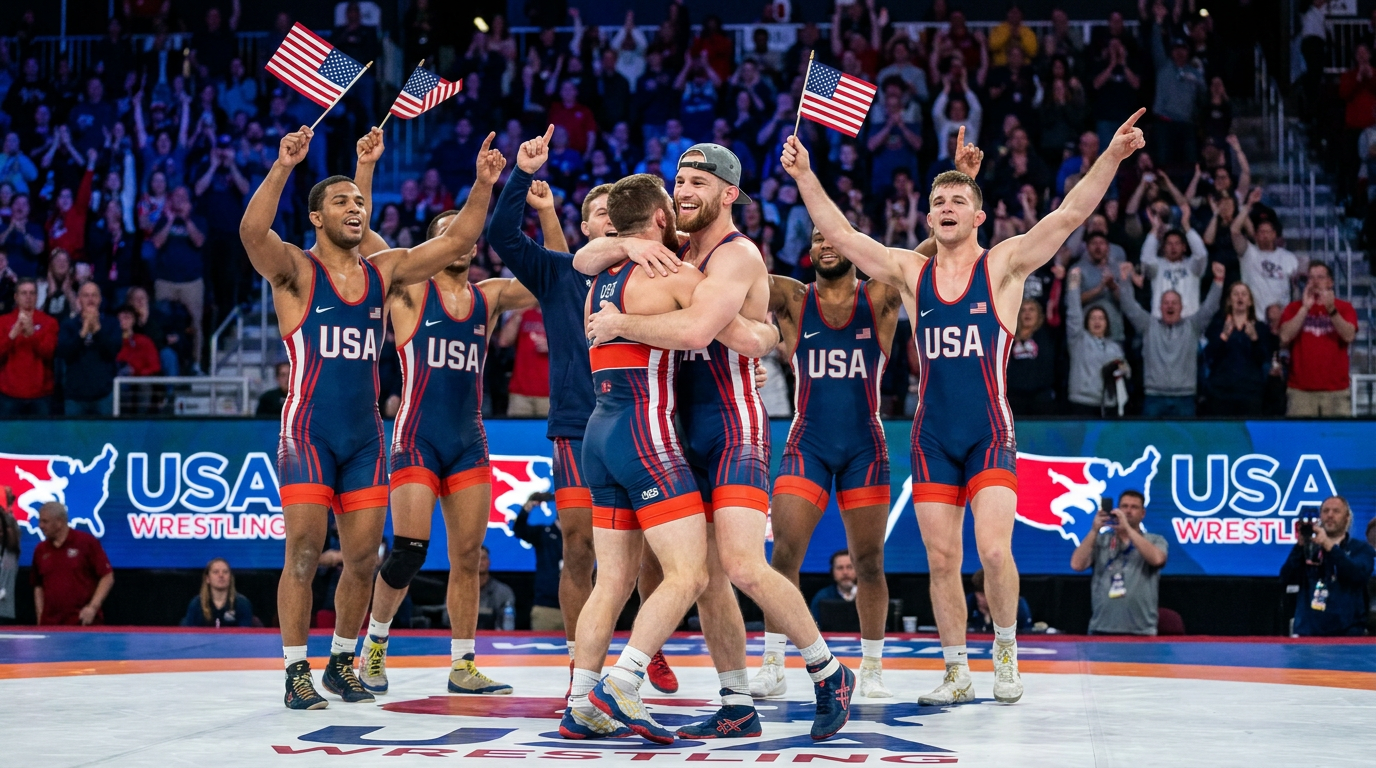
U.S. Men's Freestyle Team Upgraded to Third at 2024 Worlds Following Anti-Doping Disqualification
6 sources
Sports Finance
Premier League Precedent: Everton Ordered to Pay Burnley £26M in Damages for Financial Rule Breach
8 sources
Olympic Governance
IOC Approves Sweeping Charter Changes, Adopts Discipline-Based Methodology for Future Olympic Programs
6 sources
Record Partnership
Latham and Conway Shatter 96-Year-Old Record with 317-Run Partnership Against England
8 sources

Every angle. Every day.
Get sports stories with full source coverage and perspective breakdowns delivered to your inbox.