
SpaceX Clashes With Pentagon Over Starlink Use in Military Drone Strikes
SpaceX has forced the Pentagon to quintuple its payments for Starlink satellite connections used on military drones in Iran, citing a violation of commercial terms of service. The dispute highlights the U.S. military's growing dependence on Elon Musk's company for critical battlefield communications.
By Factlen Editorial Team
- U.S. Defense Establishment
- Argues that commercial vendors shouldn't dictate military operations or price-gouge during active conflicts, highlighting the risk of vendor lock-in.
- SpaceX & Commercial Space
- Argues that military operations must adhere to commercial terms of service and pay appropriate enterprise rates for specialized use cases like aviation.
- Defense Tech Analysts
- Focuses on SpaceX's near-monopoly in LEO satellite communications and the lack of viable competitors for the Pentagon.
What's not represented
- · Defense Contractors Developing Alternative Networks
- · Iranian Citizens Affected by Communications Blackouts
Why this matters
The U.S. military's reliance on commercial technology means private companies can now dictate pricing and operational terms during active conflicts, exposing a critical vulnerability in national defense infrastructure.
Key points
- SpaceX accused the Pentagon of violating terms of service by using ground-tier Starlink terminals on airborne kamikaze drones.
- The company forced the military to upgrade to a $25,000-per-month aviation tier, a 500% price increase.
- The Pentagon agreed to the price hike to maintain drone operations in the ongoing Iran conflict.
- The dispute highlights the military's lack of alternatives to SpaceX, which controls 60% of active satellites.
The U.S. military’s growing reliance on commercial technology has collided with corporate terms of service, sparking a high-stakes pricing dispute between the Pentagon and SpaceX. The conflict centers on the Defense Department's use of the Starlink satellite internet network to guide munitions in active combat zones.[1][2]
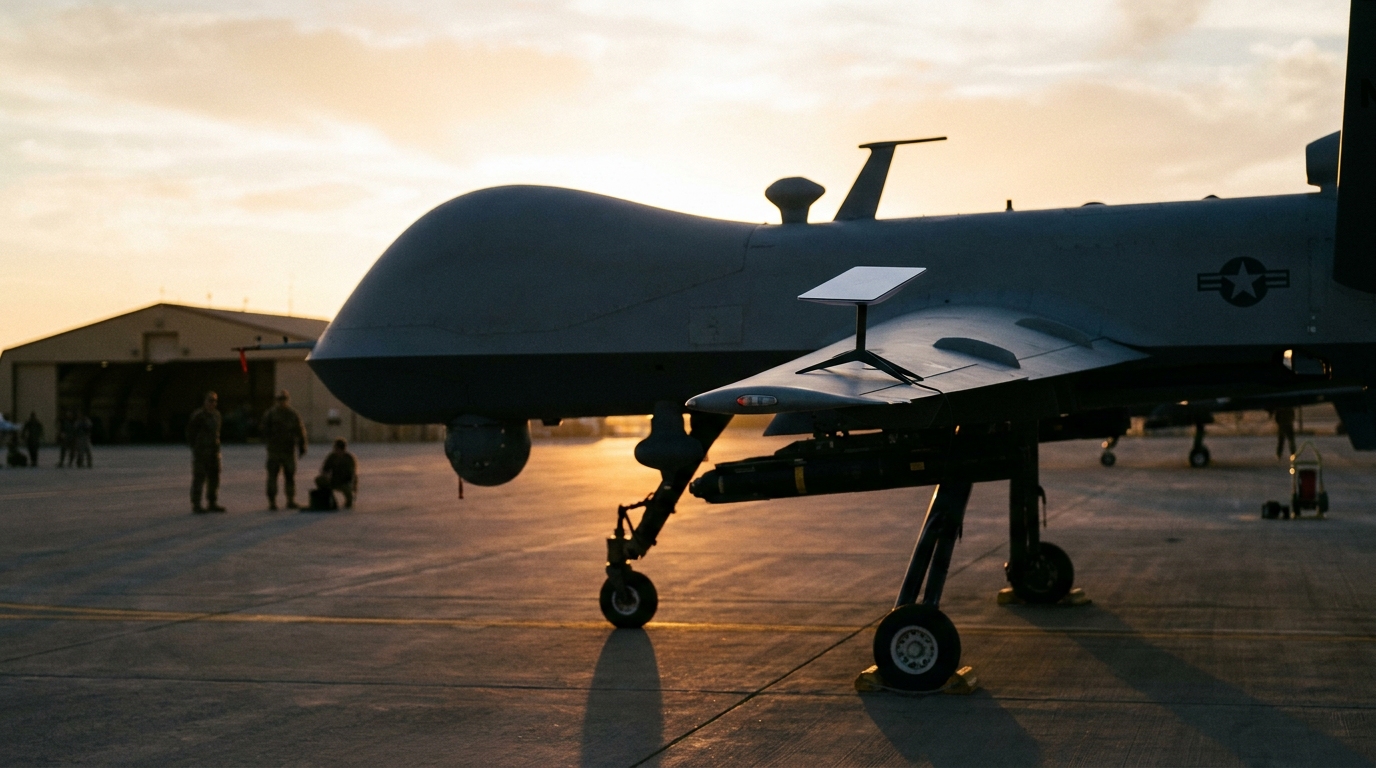
At the heart of the clash is the military’s deployment of Starlink terminals to operate "LUCAS" kamikaze drones during ongoing operations in Iran. The loitering munitions, which circle a target before diving to detonate, require continuous, high-bandwidth connectivity to transmit live video feeds and receive real-time targeting updates from operators.[1][6]
The friction spilled into public view when SpaceX CEO Elon Musk accused the Department of Defense of a "direct violation of terms of service." Musk argued that the military was improperly using civilian-tier ground terminals to pilot airborne weapons, a use case the company explicitly restricts under its standard commercial agreements.[2]
The dispute highlights a profound and growing vulnerability for the U.S. military: its deep dependence on a single private company for critical battlefield communications. As warfare becomes increasingly digitized, the Pentagon finds itself tethered to the corporate policies and pricing structures of commercial tech giants.[3][5]

The mechanical reality of the LUCAS drone necessitates a robust data link. Unlike traditional GPS-guided missiles that follow a pre-programmed coordinate, loitering munitions rely on a "man-in-the-loop" system. Operators need a seamless video feed to identify targets and authorize strikes, a data-heavy requirement that Starlink's low-Earth orbit constellation is uniquely positioned to fulfill.[7]
Prior to the dispute, the Pentagon had been paying roughly $5,000 per month for each Starlink terminal attached to a drone. The military treated these connections under SpaceX's standard ground or mobile tier, viewing the drones as temporary, tactical nodes in their broader communications network.[1][3]
SpaceX executives, however, intervened. During meetings with Defense Department officials, the company argued that because the drones fly, they strictly require Starlink's aviation-tier subscription. That specialized tier, designed for commercial airlines and private jets, costs $25,000 per month.[1][3]
Defense officials reportedly pushed back against the reclassification. They argued that the aviation tier was engineered to provide continuous global coverage for aircraft operating over years, not for one-way, disposable drones that only require a few hours of connectivity before detonating on impact.[1][6]
Defense officials reportedly pushed back against the reclassification.
Despite the Pentagon's objections, the military ultimately caved to SpaceX's demands. Facing the immediate operational needs of the intensified campaign in Iran, the Defense Department agreed to the new terms, effectively quintupling the connectivity cost for every LUCAS drone deployed in the theater.[1][3]
The Pentagon's concession underscores SpaceX's immense market leverage. The company currently operates roughly 10,000 satellites, comprising over 60 percent of all active satellites in orbit. This unprecedented scale provides a level of bandwidth and global coverage that no other entity—public or private—can currently match.[3]

While the Defense Department has expressed a desire to diversify its vendor base, viable alternatives remain years away. Competitors like Amazon's Project Kuiper and Eutelsat OneWeb are still building out their constellations and lack the battle-tested reliability that Starlink has demonstrated in active conflict zones.[3][5]
This is not the first time SpaceX has dictated terms on the battlefield. In 2023, the company actively restricted Ukraine's ability to use Starlink for offensive drone strikes against Russian naval vessels, citing its policy that the civilian network should not be weaponized for offensive military operations.[4]
To bridge the gap between civilian terms of service and military requirements, SpaceX previously introduced "Starshield," a secure, government-only variant of the network. Starshield is designed to handle classified data and integrate directly with military hardware under distinct contractual terms.[4][5]
However, the rapid pace of the Iran conflict has blurred these lines. To meet immediate tactical demands, the military has frequently utilized a mix of commercial Starlink terminals and military-grade Starshield systems, creating contractual gray areas that SpaceX is now aggressively policing.[1][7]
The pricing dispute over drone connectivity is also bleeding into other strategic initiatives. The Pentagon and SpaceX have reportedly been negotiating a direct-to-cell satellite service designed to help Iranian citizens bypass state censorship and maintain access to the outside world.[1][6]
SpaceX has reportedly quoted the government $500 million to launch the direct-to-cell service, plus an additional $100 million per month to maintain it. These figures have caused sticker shock at the Defense Department, further straining the relationship between the military and its most critical space contractor.[1][6]

In response to the growing friction, Pentagon spokespeople have publicly emphasized their commitment to fostering a "competitive environment" for satellite communications. The Defense Department is actively soliciting bids for future architectures that would distribute reliance across a "diverse range" of vendors.[2][5]
How we got here
2023
SpaceX restricts Ukraine's use of Starlink for offensive drone operations, citing terms of service.
Late 2023
The Pentagon awards SpaceX a contract for 'Starshield,' a military-specific satellite network.
Early 2026
The U.S. military begins deploying LUCAS loitering munitions in the Iran conflict using Starlink terminals.
May 2026
SpaceX executives meet with DoD officials, demanding a five-fold price increase for drone connectivity.
May 26, 2026
Elon Musk publicly accuses the Pentagon of violating terms of service; the DoD agrees to the price hike.
Viewpoints in depth
SpaceX & Commercial Space
Argues that military operations must adhere to commercial terms of service and pay appropriate enterprise rates.
From the perspective of SpaceX and the broader commercial space industry, the Pentagon is simply a customer that must abide by the same contractual rules as any other enterprise client. SpaceX argues that its pricing tiers are structured around the technical demands of the hardware; an antenna mounted on a fast-moving aircraft requires more complex satellite handoffs and network resources than a stationary ground terminal. By using the $5,000 ground tier for airborne drones, the military was effectively exploiting a loophole. Furthermore, company leadership has consistently maintained that their civilian network is not intended to be weaponized, making the enforcement of strict terms of service both a financial and ethical imperative.
U.S. Defense Establishment
Argues that commercial vendors shouldn't dictate military operations or price-gouge during active conflicts.
Defense officials view the pricing dispute as a dangerous precedent for national security. From the Pentagon's perspective, a loitering munition that flies for only a few hours before detonating does not require the continuous, years-long global coverage that the $25,000 aviation tier was built to provide. Military planners argue that SpaceX is leveraging its monopoly position to extract exorbitant fees during an active conflict, knowing the U.S. cannot afford to ground its drone fleet. This friction has accelerated calls within the Defense Department to aggressively fund competitors and avoid a future where a single private CEO can effectively veto or tax U.S. military operations.
Defense Tech Analysts
Focuses on SpaceX's near-monopoly in LEO satellite communications and the lack of viable competitors.
Industry analysts point out that the Pentagon's capitulation was inevitable given the current market reality. SpaceX operates over 60 percent of all active satellites in orbit, providing a level of low-latency, high-bandwidth coverage that is currently unmatched. While the Defense Department wants to foster a competitive environment, analysts note that rivals like Amazon's Project Kuiper and Eutelsat OneWeb are years away from offering a battle-tested, globally scaled alternative. Until those networks mature, analysts argue the U.S. military will remain fundamentally dependent on SpaceX, forcing the government to navigate the company's corporate whims and pricing demands.
What we don't know
- Whether the Pentagon will successfully negotiate a lower rate for the proposed direct-to-cell service for Iranian citizens.
- How quickly competitors like Amazon's Project Kuiper can deploy a viable alternative network for military use.
Key terms
- Starlink
- SpaceX's commercial satellite internet constellation in low Earth orbit, designed to provide high-speed broadband globally.
- Starshield
- A highly secure, military-specific variant of the Starlink network designed exclusively for government and defense use.
- LUCAS drone
- A U.S.-made loitering munition, or kamikaze drone, that circles a target area before diving to detonate on impact.
- Low Earth Orbit (LEO)
- An orbit relatively close to Earth's surface that allows satellites to provide internet connections with very low latency.
Frequently asked
Why did SpaceX raise the price for the Pentagon?
SpaceX argued that because the military's drones fly, they require the company's $25,000-per-month aviation tier, rather than the $5,000-per-month ground tier the Pentagon was previously using.
Did the Pentagon agree to pay the higher rate?
Yes. Facing the immediate operational needs of the ongoing campaign in Iran, the Defense Department caved to SpaceX's demands and agreed to the price hike.
Can the military switch to another satellite provider?
Not easily. SpaceX operates over 60 percent of all active satellites in orbit, and competitors like Amazon's Project Kuiper are not yet ready to offer comparable global coverage.
Sources
Source coverage
7 outlets
3 viewpoints surfaced







[1]ReutersDefense Tech Analysts
Exclusive: SpaceX forces Pentagon to pay aviation rates for drone Starlink terminals
Read on Reuters →[2]NewsweekSpaceX & Commercial Space
Elon Musk Accuses Pentagon of Violating Starlink Terms in Iran
Read on Newsweek →[3]EngadgetDefense Tech Analysts
SpaceX leverages satellite monopoly to hike Pentagon prices 500 percent
Read on Engadget →[4]Fox BusinessSpaceX & Commercial Space
SpaceX's history of limiting military use of Starlink
Read on Fox Business →[5]Defense NewsU.S. Defense Establishment
Pentagon seeks satellite alternatives after SpaceX pricing dispute
Read on Defense News →[6]LIGA.netDefense Tech Analysts
SpaceX raises Starlink prices for US military drones in Iran
Read on LIGA.net →[7]C4ISRNETU.S. Defense Establishment
How the LUCAS kamikaze drone relies on commercial satellite networks
Read on C4ISRNET →

More in news politics
See all 6 stories →Watergate Legacy
Vice President Vance Dismisses Watergate Scandal, Claims 'Deep State' Targeted Nixon
6 sources
Taiwan Strait
Taiwan Simulates Countering Chinese Maritime Blockade in Major Defense Exercise
8 sources

NATO Security
Poland Warns Russia May Stage 'False Flag' Operation to Justify Attack on NATO Territory — As US Troops Rotate In
7 sources

Military Health
Pentagon Restores Mandatory Flu Shots for Recruits Following Deadly Base Outbreak
6 sources

Every angle. Every day.
Get news politics stories with full source coverage and perspective breakdowns delivered to your inbox.