
Poland Warns Russia May Stage 'False Flag' Operation to Justify Attack on NATO Territory — As US Troops Rotate In
Polish leaders are warning that Moscow may orchestrate a staged attack on its own soil to manufacture a pretext for striking a NATO member state. The alarm comes as frontline European nations brace for escalation and the U.S. shifts thousands of troops closer to the Russian border.
By Factlen Editorial Team
- NATO Eastern Flank Leaders
- Argues that Russia poses an immediate, existential threat to border nations and requires maximum deterrence and U.S. troop presence.
- Western Defense Strategists
- Focuses on the broader geopolitical chess match, alliance cohesion, and the logistical realities of troop realignments across Europe.
- Russian State Leadership
- Frames NATO and Ukraine as the aggressors, characterizing drone strikes on Russian territory as Western provocations that demand retaliation.
What's not represented
- · Civilians living in border regions
- · Western European governments facing troop drawdowns
Why this matters
A direct military confrontation between Russia and NATO would trigger Article 5 mutual defense obligations, fundamentally altering global security, financial markets, and the daily lives of citizens across Europe and North America.
Key points
- Polish Deputy PM Radek Sikorski warned Russia may stage an attack on its own soil to justify striking a NATO member.
- Prime Minister Donald Tusk hosted an emergency summit of seven frontline NATO nations in Gdansk, warning of a 'highly unstable' security environment.
- The warnings follow threats from Vladimir Putin to retaliate against European nations allegedly aiding Ukrainian drone strikes.
- The U.S. is reportedly advancing plans to shift thousands of troops from Western Europe to Poland and Romania.
- The European Union is accelerating plans for a 'military Schengen' to allow rapid cross-border troop movements by 2027.
Polish leaders are sounding the alarm that Russia may be preparing a "false flag" operation against its own territory to manufacture a pretext for striking a NATO member state. The stark warning from Warsaw comes as the security environment along the alliance's eastern flank deteriorates, prompting urgent regional summits and a controversial realignment of American forces in Europe.[1][2]
Speaking from Gdansk, Polish Deputy Prime Minister Radosław Sikorski explicitly cautioned that Moscow might orchestrate a staged attack to justify military escalation against the West. Sikorski drew historical parallels to the 1939 Gleiwitz incident, suggesting that Russian President Vladimir Putin is actively seeking a casus belli as the war in Ukraine grinds into a volatile new phase. "We need to communicate to Putin that we know what he's up to," Sikorski stated, emphasizing that any incursion would be met with a defense of "every inch of NATO territory."[1][4]
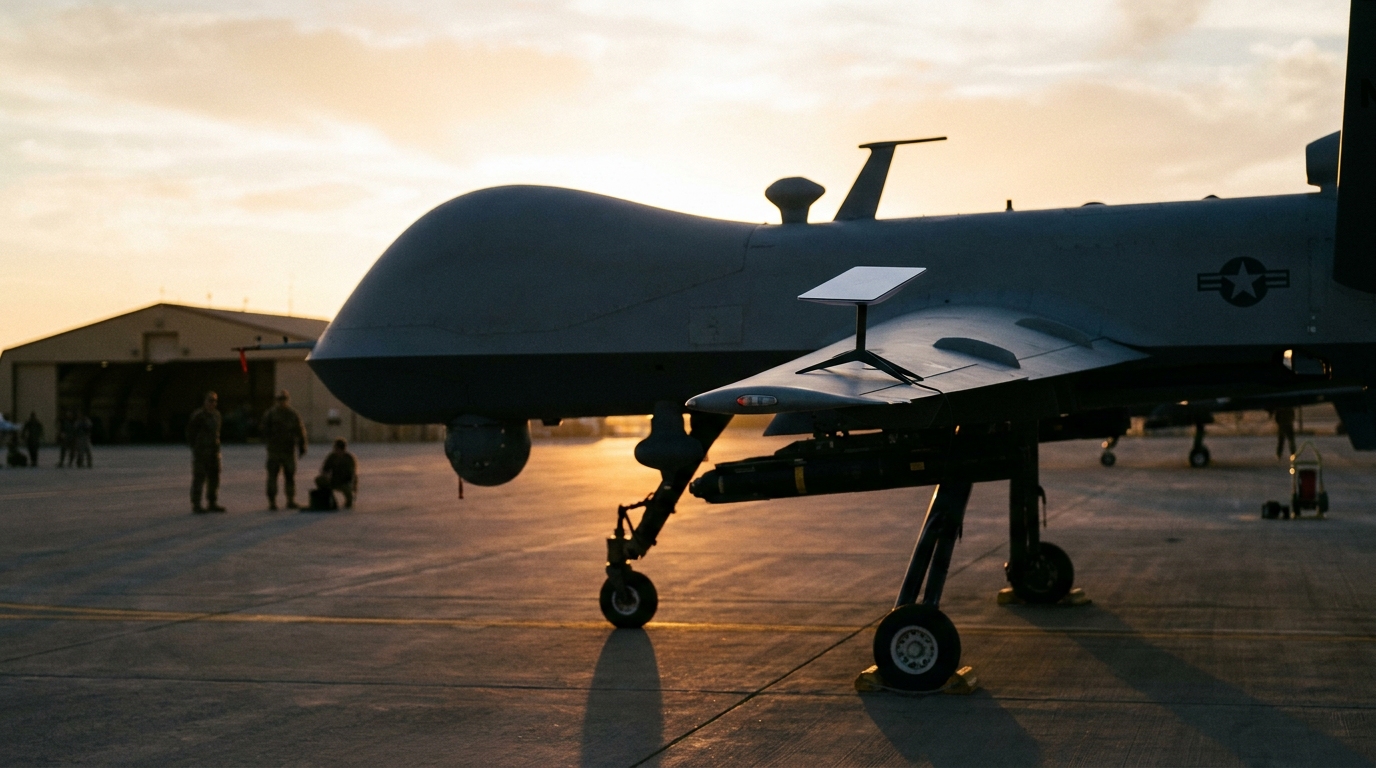
The Polish intelligence assessment follows direct threats from the Kremlin. Earlier in the week, Putin warned of severe retaliation against European nations that Moscow accuses of facilitating Ukrainian drone strikes deep inside Russian borders. Russian state media has amplified these claims, framing the expanding drone campaign—which recently targeted the Moscow Oil Refinery and forced emergency gasoline imports from Kazakhstan—as a NATO-directed offensive rather than a purely Ukrainian operation.[5][7]
The escalating rhetoric prompted Polish Prime Minister Donald Tusk to convene an emergency summit of frontline NATO leaders in Gdansk. Gathering heads of state from Romania, Estonia, Latvia, Lithuania, Finland, and Sweden, Tusk delivered a grim assessment of the region's immediate future. He warned that the border nations face a "highly unstable" landscape and must prepare for "various forms of escalation" in the coming weeks.[2][4]

During the summit, the regional leaders pledged to tighten their coordinated defense planning. Tusk framed the gathering as a direct message to Moscow, stating that the frontline nations stand in "complete unity and complete solidarity." The Baltic and Nordic states, directly exposed to Russian and Belarusian borders, have increasingly viewed the conflict not just as a Ukrainian crisis, but as an existential threat to their own sovereignty.[2][4]
During the summit, the regional leaders pledged to tighten their coordinated defense planning.
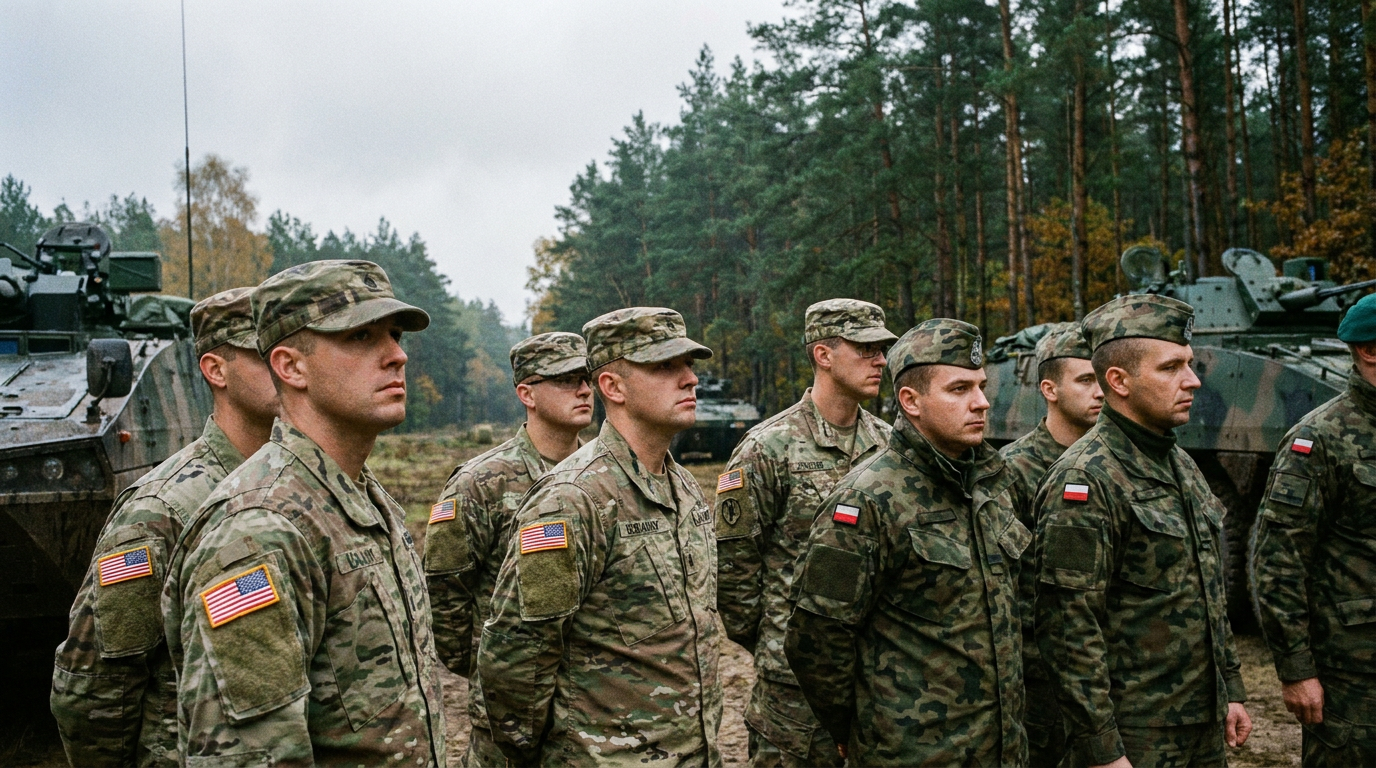
Against this backdrop of heightened European anxiety, the United States is executing a significant and politically charged rotation of its military footprint. The White House is reportedly advancing a plan to shift thousands of American troops closer to Russia's borders. This realignment deliberately rewards nations like Poland and Romania with enhanced U.S. deployments, while simultaneously drawing down forces in Western European countries like Germany and Spain, which the administration has criticized for insufficient defense spending.[3]
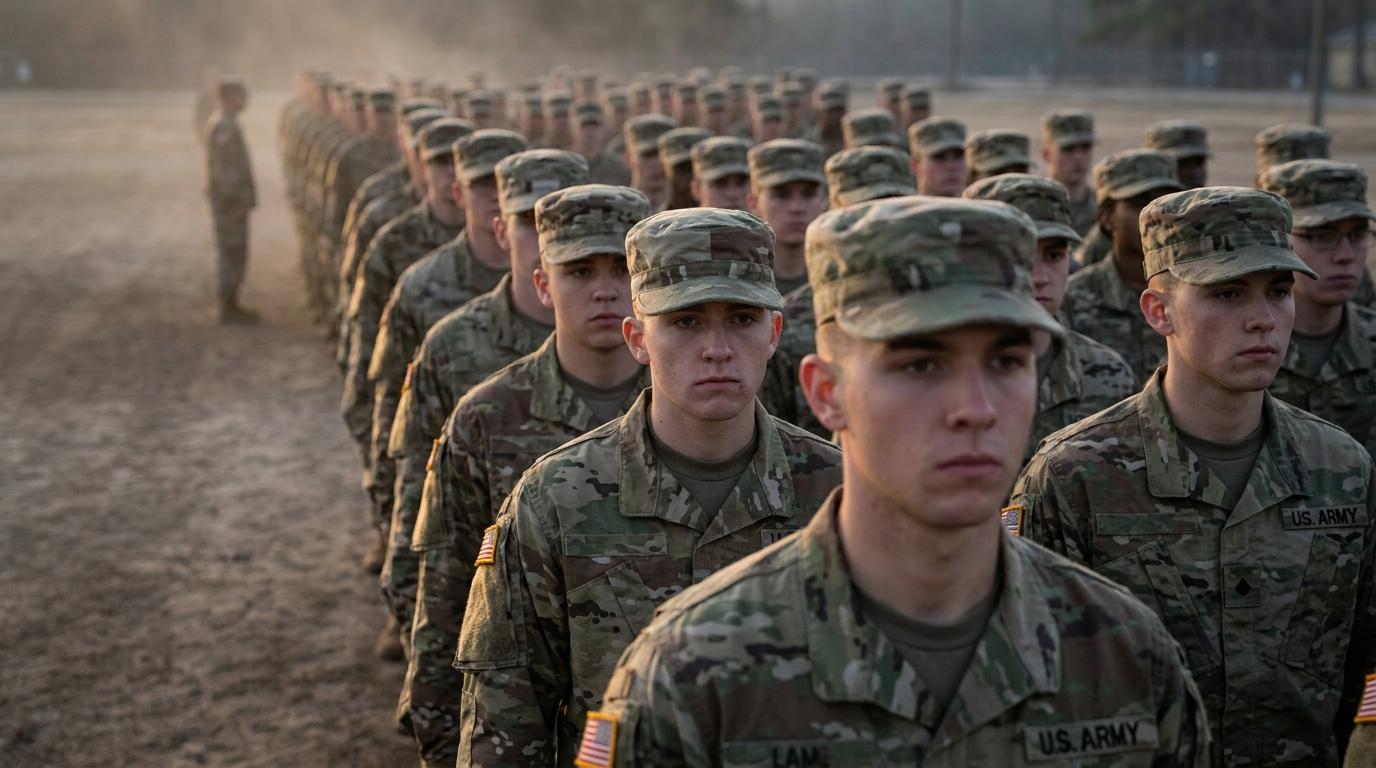
While Warsaw and Bucharest have welcomed the influx of American armor and personnel, the broader troop shift has exposed fissures within NATO. Western European capitals view the punitive relocation of U.S. bases as a destabilizing move that undermines alliance cohesion at a critical moment. However, for the eastern flank, the physical presence of the roughly 84,000 U.S. soldiers currently in Europe remains the ultimate tripwire and the most credible deterrent against Russian adventurism.[3][6]

Recognizing the fragility of the transatlantic political climate, European planners are accelerating their own independent military capabilities. The European Union is aggressively pushing to establish a "military Schengen" by 2027, a logistical framework designed to allow massive armored columns to cross European borders in days rather than months. Funding for military mobility is slated to increase tenfold in the next budget cycle, reflecting a continent-wide acknowledgment that Europe must be physically prepared to fight a conventional war on its eastern edge.[6]
Military analysts note that Russia's conventional forces have been severely degraded by the grinding war of attrition in Ukraine, making a massive, multi-front invasion of NATO territory unlikely in the immediate term. However, the risk of hybrid warfare, sabotage, and localized border incursions—precisely the type of escalation a false flag operation could trigger—remains acutely high.[1][5]
As NATO prepares for its upcoming summit in Ankara, the alliance faces a dual challenge: managing an increasingly unpredictable adversary in Moscow while navigating internal political turbulence driven by Washington. For the nations bordering Russia, the theoretical debates over Article 5 have been replaced by the urgent, practical necessity of fortifying their frontiers against an adversary they believe is actively looking for an excuse to strike.[2][4]
How we got here
August 1939
Nazi Germany stages the Gleiwitz incident, a false flag used to justify invading Poland.
February 2022
Russia launches its full-scale invasion of Ukraine, fundamentally altering European security.
April 2026
Reports emerge of U.S. plans to shift troops from Western Europe to NATO's eastern flank.
June 24, 2026
Russia's mysterious 'Doomsday Radio' transmits 20 coded messages, sparking regional anxiety.
June 25, 2026
Polish leaders publicly warn that Russia may stage an attack on its own territory to justify striking NATO.
Viewpoints in depth
NATO's Eastern Flank
Frontline nations view Russia as an immediate, existential threat that requires maximum deterrence.
For countries like Poland, Romania, and the Baltic states, the war in Ukraine is not a distant geopolitical struggle but a direct threat to their sovereignty. Leaders in these capitals argue that Russia only respects strength and physical military presence. They welcome the influx of American troops and advocate for aggressive rearmament, believing that any hesitation or division within NATO will be exploited by Moscow to launch hybrid or conventional attacks across their borders.
The Kremlin's Stance
Moscow portrays itself as the victim of Western aggression and NATO expansion.
Russian state media and leadership consistently frame the conflict as a defensive struggle against a hostile, expanding NATO alliance. From this perspective, Ukrainian drone strikes on Russian infrastructure are viewed as NATO-directed operations. The Kremlin uses this narrative to justify its own military actions and to threaten retaliation against European nations, arguing that the West is actively trying to dismantle the Russian state.
Western Defense Strategists
Military planners focus on alliance cohesion, logistics, and long-term deterrence.
Analysts in Washington and Western Europe are primarily concerned with the structural integrity of the NATO alliance and the logistical realities of defending the continent. While they acknowledge the acute threat to the eastern flank, they worry that punitive troop realignments—such as moving forces out of Germany to punish it for low defense spending—could fracture the political unity required to sustain long-term deterrence against Russia. Their focus is on building a 'military Schengen' to ensure forces can move rapidly in a crisis, regardless of where they are permanently stationed.
What we don't know
- Whether Russian intelligence is actively preparing a specific false flag operation, or if Warsaw's warnings are preemptive deterrence.
- Exactly how many U.S. troops will be relocated to the eastern flank and the timeline for those deployments.
- How Moscow will respond to the increased concentration of American forces directly on its borders.
Key terms
- False Flag Operation
- A hostile action designed to appear as though it was carried out by another party, used to justify a retaliatory attack.
- Article 5
- The cornerstone of the NATO treaty, stating that an armed attack against one member is considered an attack against all.
- Military Schengen
- A proposed EU agreement to remove bureaucratic and infrastructural barriers, allowing military forces and equipment to move freely across European borders.
- Gleiwitz Incident
- A 1939 false flag operation where Nazi forces staged an attack on a German radio station to justify the invasion of Poland.
Frequently asked
Why is Poland warning about a false flag attack?
Polish intelligence and leadership believe Russia is seeking a pretext to escalate the conflict and test NATO's resolve, following Ukrainian drone strikes deep inside Russia.
Which countries attended the Gdansk summit?
Leaders from Poland, Romania, Estonia, Latvia, Lithuania, Finland, and Sweden met to coordinate defense strategies for NATO's eastern flank.
How is the U.S. changing its military presence in Europe?
The U.S. is reportedly shifting troops eastward, increasing deployments in Poland and Romania while reducing footprints in Western European nations like Germany and Spain.
Sources
Source coverage
7 outlets
3 viewpoints surfaced







[1]CBS NewsNATO Eastern Flank Leaders
Poland's deputy prime minister says Russia could launch a 'false flag operation' to justify an attack on a NATO state
Read on CBS News →[2]Anadolu AgencyNATO Eastern Flank Leaders
Poland says NATO's eastern flank must prepare for escalation from Russia
Read on Anadolu Agency →[3]The Wall Street JournalWestern Defense Strategists
White House Weighs Shifting U.S. Troops to NATO's Eastern Flank
Read on The Wall Street Journal →[4]Yeni SafakNATO Eastern Flank Leaders
Polish PM warns of 'highly unstable' security on NATO's eastern border
Read on Yeni Safak →[5]National Security JournalWestern Defense Strategists
Ukraine War Problems: What Does Russia Do Next?
Read on National Security Journal →[6]The EconomistWestern Defense Strategists
Europe's military mobility drive targets Moscow's capabilities
Read on The Economist →[7]TASSRussian State Leadership
Putin warns of inevitable retaliation against European states facilitating drone strikes
Read on TASS →
Every angle. Every day.
Get news politics stories with full source coverage and perspective breakdowns delivered to your inbox.