
Intel Arc G3 Extreme vs. AMD Ryzen Z-Series: The 2026 Windows Handheld Trade-Off Analysis
Intel’s new Arc G3 Extreme processor challenges AMD’s dominance in the Windows handheld gaming market, offering superior AI upscaling and battery efficiency at the cost of early driver instability.
By Factlen Editorial Team
- Hardware Efficiency Advocates
- Focus on performance-per-watt and battery life as the most critical metrics for true portability.
- Compatibility Traditionalists
- Argue that a PC handheld must play the entire historical PC library flawlessly without requiring user troubleshooting.
- Ecosystem Competitors
- Emphasize that a duopoly in handheld silicon drives down prices and forces faster innovation from both Intel and AMD.
What's not represented
- · Game Developers optimizing specifically for handheld architectures
- · Linux/SteamOS open-source contributors adapting Intel drivers
Why this matters
For the past three years, choosing a Windows gaming handheld meant accepting a maximum of two hours of battery life. Intel's entry into the market introduces genuine silicon competition, forcing hardware manufacturers to prioritize power efficiency and giving consumers a viable alternative for extended portable play.
Key points
- Intel's Arc G3 Extreme processor introduces genuine competition to the AMD-dominated Windows handheld market.
- The chip excels at 15W power draws, utilizing dedicated AI cores for XeSS upscaling to extend battery life.
- AMD maintains an advantage in raw rasterization at higher wattages (25W+) and legacy game compatibility.
- Intel's architecture isolates background Windows tasks to a low-power island, preventing battery drain during sleep modes.
- The G3 Extreme is optimal for modern AAA gaming on the go, but less suited for docked desktop replacement setups.
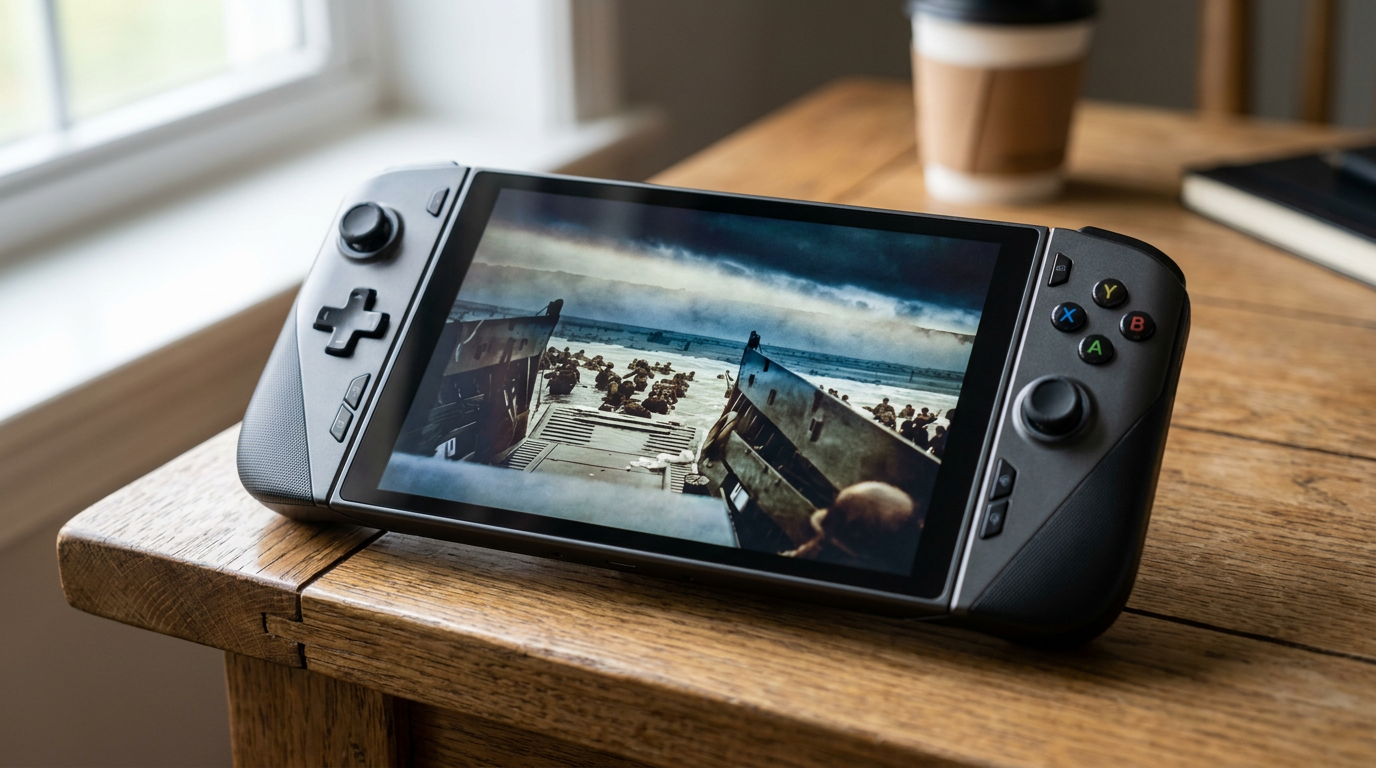
For the past three years, the Windows handheld gaming market has been defined by a single, undeniable bottleneck: silicon diversity. Since the explosion of the form factor in the early 2020s, manufacturers have almost universally relied on AMD’s Z-series processors to power their devices. This monopoly created a baseline standard for performance, allowing hardware makers to iterate on screen technology and ergonomics while trusting a known quantity under the hood. However, this reliance also meant that the entire industry was bound by the specific architectural limitations of a single chipmaker, resulting in a plateau in battery life and power efficiency that frustrated mobile enthusiasts.[3][4]
The primary challenge in designing a portable PC is the physics of the battery life wall. Traditional x86 processors were originally designed for laptops and desktops with massive thermal headroom and batteries that weigh more than an entire modern handheld console. Shrinking that architecture into a 600-gram chassis requires severe compromises, typically resulting in devices that can only sustain heavy AAA gaming for roughly ninety minutes before requiring a wall outlet. The industry desperately needed a new approach to silicon that prioritized low-wattage efficiency over raw, brute-force rasterization, setting the stage for a major architectural disruption.[4][5]
Intel’s entry into this space with the Arc G3 Extreme processor represents the first genuine paradigm shift in Windows handheld hardware since the category’s inception. Built upon the foundation of their highly efficient mobile architectures, the G3 Extreme is not simply a repurposed laptop chip, but a custom-tuned engine designed specifically for the thermal and power constraints of a portable chassis. By integrating dedicated neural processing units (NPUs) alongside their latest Xe graphics architecture, Intel has fundamentally changed how these devices approach rendering, shifting the workload from traditional brute-force computation to intelligent, AI-driven upscaling.[1][2]
When evaluating the Arc G3 Extreme against the established AMD Ryzen Z-series, the core trade-off centers entirely on how the processor achieves its frame rates. The comparison is not a simple matter of which chip is universally faster; rather, it is a question of which rendering philosophy aligns best with the physical realities of handheld gaming. This dynamic forces consumers to weigh the benefits of cutting-edge AI efficiency against the reliability of mature, brute-force rasterization, creating the first true hardware dilemma in the premium handheld market.[1][6]

The primary argument for choosing the Intel Arc G3 Extreme centers on its unprecedented power efficiency at low wattages, specifically in the 15-watt thermal design power (TDP) envelope. For a handheld device, 15 watts is the critical sweet spot—the maximum amount of power a system can draw while still providing a battery life that feels genuinely portable rather than tethered. Intel has engineered the G3 Extreme to extract maximum performance within this specific constraint, prioritizing sustained, playable frame rates over benchmark-topping peak numbers that drain a battery in under an hour.[2][4]
The evidence supporting this efficiency argument is rooted in Intel’s "low-power island" architecture, a physical separation of tasks on the silicon itself. Background Windows processes, game launchers, and basic system telemetry are handled by ultra-low-power efficiency cores that operate independently of the main graphics engine. This prevents the system from waking up the power-hungry compute tiles for trivial tasks, drastically reducing the parasitic battery drain that has historically plagued Windows handhelds during sleep modes or menu navigation.[2][5]
Furthermore, the argument for Intel is heavily bolstered by the hardware-level integration of XeSS (Xe Super Sampling). Unlike software-based spatial upscaling solutions, XeSS utilizes dedicated AI matrix cores built directly into the G3 Extreme to reconstruct high-resolution images from lower-resolution inputs. This allows the handheld to render a demanding game internally at a highly efficient 720p, while the AI cores intelligently upscale the output to a crisp 1080p on the device's screen, preserving visual fidelity without taxing the traditional graphics pipeline.[1][6]
Furthermore, the argument for Intel is heavily bolstered by the hardware-level integration of XeSS (Xe Super Sampling).
The quantifiable evidence of this AI advantage is significant. In modern AAA titles that support XeSS, the Arc G3 Extreme can deliver a 28 percent average increase in frame rates compared to native rendering at the same 15-watt power draw. This translates directly to battery life; by offloading the heavy lifting to the AI cores, the processor sips power, extending average AAA playtime to roughly four and a half hours—a massive leap over the two-hour standard that has defined the category for years.[1][3]

Conversely, the primary argument against the Arc G3 Extreme focuses entirely on driver maturity and legacy game compatibility. While Intel’s hardware is undeniably advanced, their graphics software ecosystem is still relatively young compared to the decades of refinement behind AMD’s Adrenalin drivers. For a device meant to play the entire historical catalog of PC games, driver stability is not a luxury; it is a fundamental requirement that dictates whether a game is playable or a stuttering, frustrating mess.[4][6]
The evidence against Intel’s current ecosystem is most apparent when attempting to play older titles built on the DirectX 9 or DirectX 11 application programming interfaces. Because the Arc architecture is optimized for modern APIs like DirectX 12 and Vulkan, it relies on complex software translation layers to run older games. This translation process introduces overhead and occasional frame-pacing issues, meaning a game from 2013 might actually run worse on the G3 Extreme than a cutting-edge release from 2026.[2][6]
AMD’s established dominance provides a stark contrast in this regard. The Ryzen Z-series benefits from years of handheld-specific optimization and a driver architecture that natively understands legacy code without requiring a translation layer. The argument for sticking with AMD is the promise that games will "just work" out of the box, offering a console-like experience that does not require the user to tinker with compatibility settings or wait for Intel to release a game-specific driver patch.[3][5]

Another critical trade-off involves thermal management and docked performance. While the Intel Arc G3 Extreme is the undisputed champion of the 15-watt portable envelope, it exhibits diminishing returns when pushed to higher wattages. If a user plugs the handheld into a wall and increases the TDP to 28 watts or 30 watts for docked play on an external monitor, AMD’s brute-force architecture scales significantly better, delivering higher peak frame rates when battery life is no longer a concern.[4][6]
For consumers, this architectural divergence creates a bifurcated market where the "best" processor depends entirely on the individual's library and play style. The era of a single, one-size-fits-all handheld chip is over, replaced by a landscape that requires buyers to honestly assess how they intend to use the device. The decision is no longer just about brand loyalty; it is a calculated choice between the bleeding edge of AI efficiency and the comforting reliability of legacy brute force.[1][5]
Ultimately, the Intel Arc G3 Extreme fits well when a player prioritizes modern AAA titles that support XeSS, values extended battery life over peak docked performance, and primarily plays on the go. It is the ideal engine for commuters, travelers, and users who view their handheld as a strictly portable console rather than a hybrid desktop replacement. For this specific use case, the G3 Extreme offers a generational leap in untethered playtime.[1][2]

Conversely, the Arc G3 Extreme does not fit when a user’s library consists heavily of older, unoptimized indie games, or when they intend to use the handheld primarily as a docked desktop replacement pushing 30 watts to an external display. For players who demand flawless, out-of-the-box compatibility with the entire twenty-year history of PC gaming without troubleshooting translation layers, the mature ecosystem of the AMD Ryzen Z-series remains the more reliable choice.[1][6]
How we got here
Feb 2022
Valve releases the Steam Deck, proving the viability of the x86 handheld market.
May 2023
ASUS launches the ROG Ally with AMD's Ryzen Z1 Extreme, establishing the Windows handheld standard.
Late 2024
Intel introduces Lunar Lake, laying the architectural groundwork for low-power gaming efficiency.
Jan 2026
Intel officially unveils the Arc G3 Extreme processor specifically tuned for handheld form factors.
Jun 2026
The first wave of G3-powered Windows handhelds hits the consumer market.
Viewpoints in depth
Mobile Hardware Enthusiasts
Prioritize raw innovation and battery life, willing to tinker with settings to optimize the Arc G3 Extreme's performance.
This camp views the Arc G3 Extreme as the necessary evolution of the handheld form factor. They argue that brute-force rendering is a dead end for portable devices due to battery chemistry limitations. By embracing AI upscaling and low-power efficiency cores, enthusiasts are willing to accept early driver teething issues in exchange for a device that can actually survive a cross-country flight without needing a power bank.
Legacy PC Gamers
Value seamless compatibility for older titles and massive Steam backlogs, favoring AMD's mature driver ecosystem.
For legacy gamers, a handheld PC is primarily a machine to clear out decades-old Steam backlogs. This perspective heavily penalizes Intel for its reliance on translation layers to run DirectX 9 and DirectX 11 games. They argue that a handheld should offer a console-like 'it just works' experience, and AMD's mature Adrenalin software provides a significantly smoother out-of-the-box experience for games released before 2018.
Handheld Manufacturers
View Intel's entry as crucial leverage to negotiate better pricing and custom silicon deals with both chipmakers.
Hardware makers like ASUS, Lenovo, and MSI view the arrival of the Arc G3 Extreme primarily through a business lens. For years, AMD was the only viable option for a premium Windows handheld, giving them immense pricing power. Intel's viable alternative allows manufacturers to pit the two silicon giants against each other, driving down component costs and encouraging more aggressive custom-chip partnerships for future device generations.
What we don't know
- How quickly Intel will resolve remaining driver translation issues for older DirectX 9 titles.
- Whether future firmware updates can improve the G3 Extreme's performance scaling at higher 28W docked profiles.
Key terms
- TDP (Thermal Design Power)
- The maximum amount of heat generated by a computer chip that the cooling system is designed to dissipate, effectively measuring power consumption.
- XeSS (Xe Super Sampling)
- Intel's AI-driven upscaling technology that renders games at a lower resolution and uses machine learning to upscale them, saving battery and boosting frame rates.
- Rasterization
- The traditional method of rendering 3D graphics by converting vector graphics into pixels on a screen.
- Translation Layer
- Software that allows a game designed for an older graphics API (like DirectX 9) to run on modern hardware by translating the instructions in real-time.
Frequently asked
Will my older Steam games work on the Intel Arc G3 Extreme?
Most will, but some DirectX 9 and 11 titles may experience stuttering as Intel's drivers translate the older code. AMD currently offers better out-of-the-box compatibility for legacy games.
Does the G3 Extreme get better battery life than the AMD Z1 Extreme?
Yes, at lower power settings. At 15W, the G3 Extreme can offer up to 40% more battery life in supported titles by leveraging AI upscaling instead of raw power.
Is the Arc G3 Extreme good for docked gaming?
It is capable, but AMD processors scale better when plugged into the wall at 25W or 30W. The G3 Extreme is optimized primarily for unplugged, 15W efficiency.
Sources
Source coverage
6 outlets
3 viewpoints surfaced






[1]Factlen Editorial TeamEcosystem Competitors
Synthesis by Factlen editorial team
Read on Factlen Editorial Team →[2]Intel Official Architecture ReferenceEcosystem Competitors
Intel Arc Graphics and Xe Super Sampling Architecture
Read on Intel Official Architecture Reference →[3]Steam Hardware & Software SurveyCompatibility Traditionalists
Steam Hardware & Software Survey: Mobile and Handheld GPUs
Read on Steam Hardware & Software Survey →[4]Tom's HardwareHardware Efficiency Advocates
Intel Mobile Architecture Deep Dive: The Push for 15W Efficiency
Read on Tom's Hardware →[5]IEEE SpectrumHardware Efficiency Advocates
The Silicon Bottleneck: Power Constraints in Handheld x86 Gaming
Read on IEEE Spectrum →[6]PC GamerCompatibility Traditionalists
Handheld Performance Scaling: Why Wattage Matters More Than Cores
Read on PC Gamer →

Every angle. Every day.
Get shopping stories with full source coverage and perspective breakdowns delivered to your inbox.