
The Evidence Pack: How a Novel Gut Procedure Helps Patients Maintain Weight Loss After Stopping GLP-1 Drugs
Clinical data reveals that a minimally invasive endoscopic procedure targeting the duodenal lining allows patients to retain nearly 80% of their GLP-1-induced weight loss after discontinuing the medication.
By Factlen Editorial Team
- Metabolic Researchers
- Argue that repairing the gut microbiome and mucosal lining addresses the root cause of metabolic dysfunction, rather than just masking it with exogenous hormones.
- Medical Device Innovators
- View the procedure as a highly scalable, one-time mechanical solution to a biological problem that currently requires lifetime pharmaceutical subscriptions.
- Clinical Endocrinologists
- Express cautious optimism about the data but emphasize the need for long-term studies to ensure the gut lining does not revert to a diseased state over time.
What's not represented
- · Insurance providers who will ultimately decide coverage models and reimbursement rates.
- · Patients experiencing the psychological transition off weight-loss medications.
Why this matters
For millions of patients taking GLP-1 drugs, the prospect of lifetime injections and high costs is a major barrier. A one-time outpatient procedure that preserves the metabolic benefits of these drugs could fundamentally change the long-term treatment paradigm for obesity and metabolic disease.
Key points
- Patients typically regain the majority of their weight after stopping GLP-1 medications.
- Duodenal mucosal resurfacing (DMR) is a 45-minute outpatient endoscopic procedure.
- The procedure ablates thickened gut lining, allowing healthy, insulin-sensitive tissue to regenerate.
- Clinical trials show patients maintain 78% of their weight loss a year after stopping GLP-1s following DMR.
- Long-term durability beyond 24 months remains an open question requiring further study.
The GLP-1 revolution has a well-documented catch: when you stop taking the drugs, the weight comes back.[5]
Studies show that patients typically regain two-thirds of their lost weight within a year of discontinuing medications like semaglutide or tirzepatide. This rebound effect has sparked a race across the medical community to find an off-ramp—a way to preserve metabolic gains without committing patients to lifetime weekly injections.[5]
Now, compelling clinical data points to a mechanical solution. A minimally invasive outpatient procedure known as duodenal mucosal resurfacing has demonstrated the ability to help patients maintain 78 percent of their GLP-1-induced weight loss a full year after stopping the medication.[2][6]
How does altering the gut prevent weight regain? The procedure targets the duodenum, the first part of the small intestine immediately past the stomach. In patients with metabolic disease, diets high in sugar and fat cause this duodenal lining to thicken and over-produce signaling hormones that drive insulin resistance and constant hunger.[4]

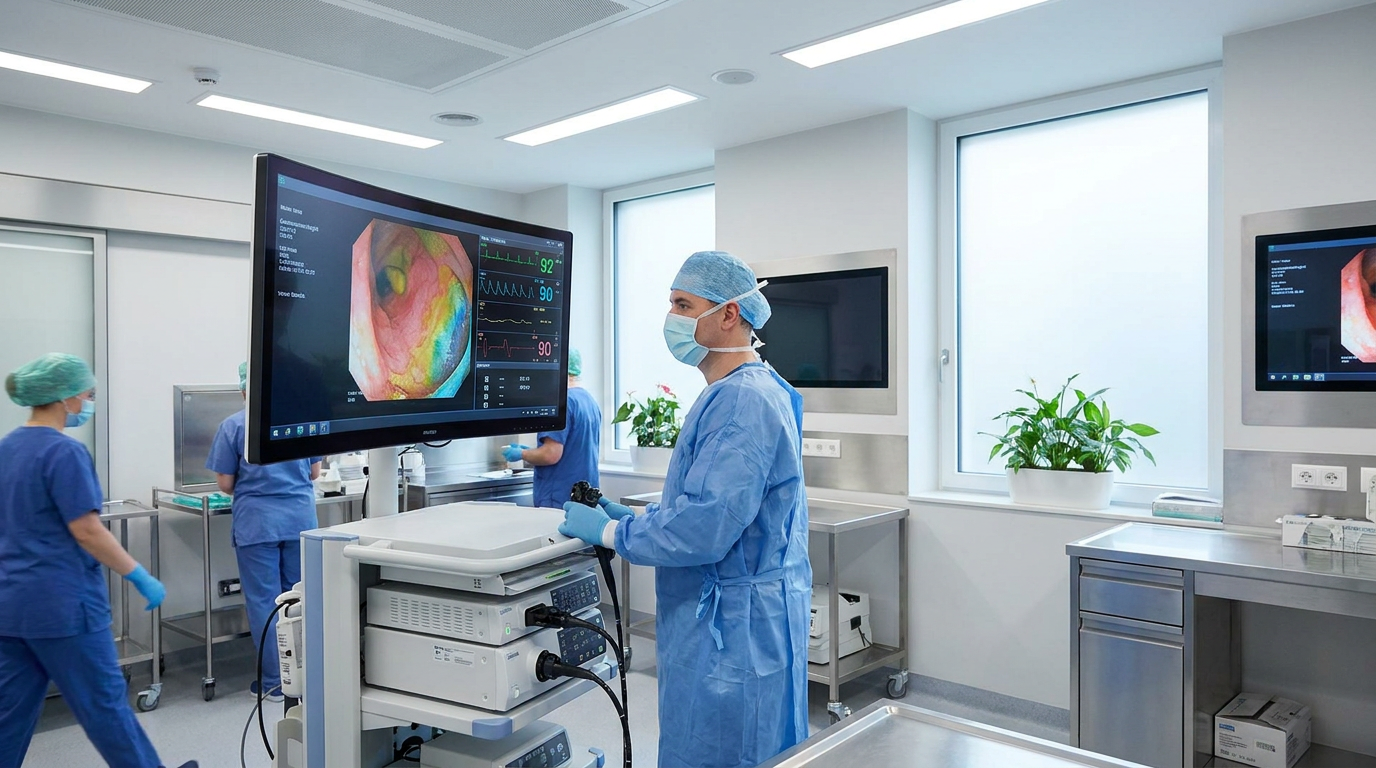
The resurfacing procedure uses a specialized endoscopic catheter to deliver thermal energy to this thickened mucosal layer, safely ablating the dysfunctional tissue. Within days of the procedure, a new, healthy mucosal lining regenerates in its place.[3][4]
The most recent clinical trial enrolled patients who had successfully lost an average of 15 to 20 percent of their body weight using GLP-1 receptor agonists. Instead of keeping them on the drugs indefinitely, researchers performed the resurfacing procedure and then systematically tapered them off the medication entirely.[3]
At the 12-month mark post-discontinuation, the procedural cohort had maintained 78 percent of their initial weight loss. In stark contrast, control groups in historical data who simply stop the drugs typically retain less than 40 percent of their weight loss over the exact same period.[2][5][6]

At the 12-month mark post-discontinuation, the procedural cohort had maintained 78 percent of their initial weight loss.
Beyond just the number on the scale, the regenerated duodenal lining appears to restore natural incretin signaling. By resetting the gut's nutrient-sensing cells, the body naturally produces its own GLP-1 and GIP hormones more effectively, blunting the intense hunger that usually follows drug withdrawal.[1][4]
The intervention itself is relatively straightforward for a trained gastroenterologist. It is performed endoscopically—meaning down the throat, with no incisions—under twilight sedation. The entire process takes roughly 45 minutes, and patients typically go home the exact same day.[3][6]
Because it relies on established endoscopic techniques, the safety profile is highly favorable. The most common side effects reported in the clinical trials were mild, including a temporary sore throat and transient gastrointestinal discomfort that resolved quickly.[2][3]
However, this is an evidence pack, and transparency about what we do not know is critical to evaluating the science. First, the current robust data only extends to 12 and 24 months. It remains unknown if the regenerated duodenal lining will eventually thicken again over a five or ten-year horizon, potentially necessitating a repeat procedure.[1][2]

Furthermore, the 78 percent maintenance figure is an average across the cohort. While some patients maintained 100 percent of their weight loss, a subset still experienced significant regain despite undergoing the procedure. Researchers are currently trying to identify the specific biomarkers that predict who will respond best to the mucosal reset.[4][6]
There is also the looming question of scalability and insurance coverage. While a one-time procedure could theoretically save healthcare systems tens of thousands of dollars compared to lifetime GLP-1 prescriptions, the upfront cost and requirement for specialized endoscopic equipment mean it will not be immediately available at every local clinic.[1]
How we got here
2021
Early studies demonstrate duodenal mucosal resurfacing improves glycemic control in Type 2 diabetes.
2023
The 'rebound effect' of GLP-1 discontinuation becomes widely documented in clinical literature.
2024
Researchers begin trials using DMR specifically as an 'off-ramp' for patients stopping weight-loss drugs.
2026
New data reveals the procedure successfully maintains 78% of weight loss at the one-year mark.
Viewpoints in depth
Metabolic Researchers
Argue that repairing the gut microbiome and mucosal lining addresses the root cause of metabolic dysfunction, rather than just masking it with exogenous hormones.
For decades, metabolic disease has been treated primarily through systemic pharmaceuticals that alter brain chemistry or force insulin production. Metabolic researchers view mucosal resurfacing as a paradigm shift toward 'disease modification.' By physically removing the dysfunctional tissue that sends faulty hunger and insulin signals, they argue the procedure treats the actual source of the disease. This camp believes that the modern western diet fundamentally damages the duodenal lining, and that mechanical regeneration is the most logical way to restore natural metabolic homeostasis without relying on synthetic hormones.
Health Economists
Emphasize the unsustainable financial trajectory of lifetime GLP-1 prescriptions, viewing a one-time endoscopic procedure as a critical cost-saving off-ramp for global healthcare systems.
With millions of patients now taking GLP-1 receptor agonists at costs exceeding $10,000 per year, health economists have raised alarms about the long-term burden on insurance providers and national health systems. This perspective views mucosal resurfacing not just as a medical breakthrough, but as an economic necessity. Even if the procedure costs several thousand dollars upfront, it pays for itself within a year if it allows a patient to permanently discontinue their medication. They argue that healthcare systems must prioritize funding and scaling these 'exit strategies' to prevent bankrupting medical budgets.
Clinical Skeptics
Caution that while 12-month data is promising, the human body is highly adaptive; they want to see 5-year data to ensure the gut lining doesn't simply revert to its diseased state.
While acknowledging the impressive 78% maintenance figure at one year, clinical endocrinologists and skeptics urge caution before declaring an end to the obesity epidemic. The human body is notoriously resilient in its defense of body fat, and this camp questions whether the newly regenerated duodenal lining will simply thicken again over time if the patient's underlying diet does not change. They argue that until we have 5-year and 10-year follow-up data, mucosal resurfacing should be viewed as a promising experimental bridge rather than a permanent cure, and they stress the ongoing need for behavioral and nutritional interventions.
What we don't know
- Whether the regenerated duodenal lining will eventually thicken again over a 5-to-10-year horizon.
- Which specific patient biomarkers predict the highest success rate for the procedure.
- How insurance providers will model the cost-benefit analysis of a one-time procedure versus ongoing drug subscriptions.
Key terms
- Duodenum
- The first segment of the small intestine, responsible for nutrient sensing and signaling hormone release.
- Mucosal Resurfacing
- A medical technique that uses thermal energy to remove diseased tissue lining so healthy tissue can regenerate.
- Incretin Hormones
- Metabolic hormones, including GLP-1 and GIP, released by the gut after eating to stimulate insulin secretion and signal fullness.
- GLP-1 Receptor Agonist
- A class of medications (like semaglutide) that mimic natural gut hormones to reduce appetite and lower blood sugar.
Frequently asked
Is this a surgical procedure?
No. It is performed endoscopically through the mouth without any incisions, typically taking about 45 minutes under twilight sedation.
Does it replace GLP-1 drugs entirely?
In the current clinical trials, it is used as an 'off-ramp' for patients who have already lost weight using GLP-1s but want to stop taking the medication.
What are the side effects?
The most common side effects are mild and temporary, including a sore throat and short-term gastrointestinal discomfort that resolves quickly.
How long does the effect last?
Current data shows strong weight maintenance at 12 to 24 months, but 5-year durability is still being studied to see if the gut lining eventually thickens again.
Sources
Source coverage
6 outlets
3 viewpoints surfaced






[1]Factlen Editorial TeamClinical Endocrinologists
Synthesis by Factlen editorial team
Read on Factlen Editorial Team →[2]American Diabetes AssociationClinical Endocrinologists
Duodenal Mucosal Resurfacing Maintains GLP-1 Weight Loss in Clinical Cohorts
Read on American Diabetes Association →[3]ClinicalTrials.govMedical Device Innovators
Study of Revita DMR in Patients Discontinuing Semaglutide
Read on ClinicalTrials.gov →[4]Journal of GastroenterologyMetabolic Researchers
Mechanisms of Duodenal Mucosal Remodeling in Metabolic Disease
Read on Journal of Gastroenterology →[5]Nature MedicineMetabolic Researchers
Weight rebound and metabolic shifts following GLP-1 receptor agonist withdrawal
Read on Nature Medicine →[6]Fractyl HealthMedical Device Innovators
Clinical Data Demonstrates 78% Weight Maintenance Post-GLP-1
Read on Fractyl Health →

Every angle. Every day.
Get health stories with full source coverage and perspective breakdowns delivered to your inbox.