
Historic Bipartisan Housing Bill Stalls as President Demands Voter ID Legislation
A sweeping bipartisan housing package aimed at boosting supply and restricting corporate landlords is in limbo after President Trump conditioned his signature on the passage of the SAVE America Act, a strict proof-of-citizenship voting bill.
By Factlen Editorial Team
- Housing Supply Advocates
- Argue that the housing bill provides critical regulatory relief and zoning incentives needed to close the nationwide gap in housing supply.
- Election Security Proponents
- Argue that strict documentary proof of citizenship is necessary to ensure absolute confidence that only legal citizens are participating in federal elections.
- Voting Rights Organizations
- Argue that the SAVE America Act solves a non-existent problem while effectively disenfranchising millions of legal citizens who lack immediate access to specific documents.
- Institutional Real Estate Investors
- Argue that banning corporate purchases of single-family homes scapegoats the industry for a supply crisis they did not cause.
What's not represented
- · Local Government Planners
- · First-Time Homebuyers
Why this matters
The standoff delays the most significant federal housing supply intervention in thirty years, leaving billions in zoning grants, regulatory relief, and corporate ownership restrictions in legislative limbo during a nationwide affordability crisis.
Key points
- Congress passed the 21st Century ROAD to Housing Act with overwhelming bipartisan majorities.
- The bill streamlines environmental reviews, removes manufactured housing red tape, and restricts corporate landlords.
- President Trump canceled the bill's signing ceremony, demanding Congress first pass the SAVE America Act.
- The SAVE America Act would require voters to present documentary proof of citizenship in person to register.
- Voting rights groups warn the election bill could disenfranchise over 21 million legal citizens who lack immediate access to passports or birth certificates.
- The housing bill could still become law if Congress overrides a veto or if the 10-day signing window expires while Congress is in session.
The 21st Century ROAD to Housing Act represents the most comprehensive federal housing legislation passed in decades. Negotiated over months by a bipartisan coalition, the measure cleared the House of Representatives by a 358-32 margin and the Senate by an 85-5 vote. Lawmakers from both parties heralded the package as a rare moment of consensus aimed at addressing the nationwide shortage of affordable homes.[1][2]
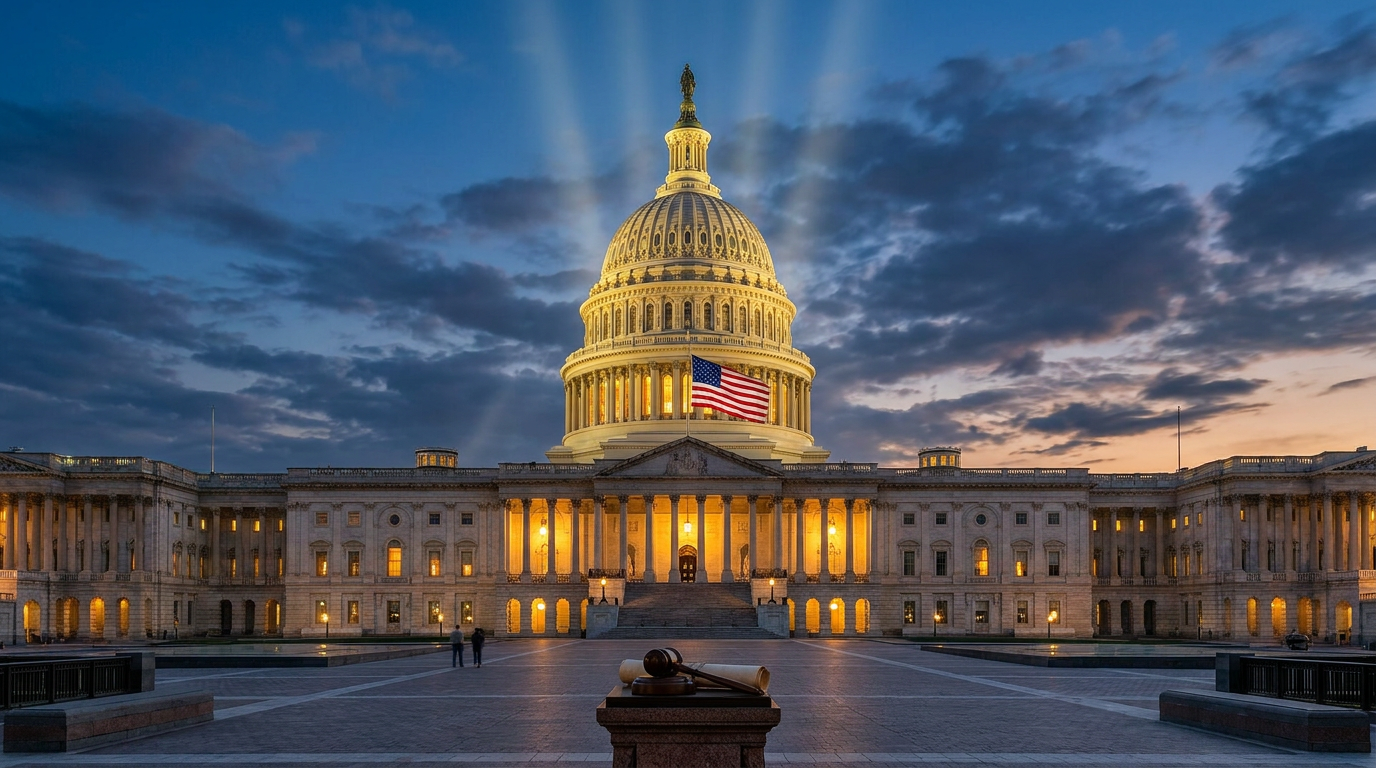
That consensus met an abrupt halt on June 24. Hours before a scheduled signing ceremony at the Capitol, President Trump canceled the event. In a statement, the President announced he would withhold his signature from the housing package until Congress passes the SAVE America Act, a separate and highly contested bill that mandates strict voter identification and proof-of-citizenship requirements for federal elections.[1][7]
The linkage of domestic housing policy to federal election law has stunned lawmakers and housing advocates who spent months negotiating the bipartisan compromise. The standoff places a massive package of zoning reforms, construction incentives, and corporate ownership restrictions in legislative limbo, raising questions about whether the housing bill can survive the political crossfire.[1][7]
To understand the stakes of the delay, the evidence pack begins with the housing bill itself. The 21st Century ROAD to Housing Act does not rely heavily on new federal spending. Instead, it focuses on supply-side regulatory relief and local incentives to spur construction, shifting the federal government's approach from subsidizing demand to removing barriers to supply.[2][4]

A core mechanism of the bill is the streamlining of the National Environmental Policy Act (NEPA). The legislation expands categorical exclusions for housing projects, allowing developers to skip lengthy and costly environmental reviews when building infill housing between existing structures or redeveloping abandoned commercial sites.[1][4]
The bill also eliminates the permanent chassis requirement for manufactured housing. By removing the decades-old mandate that prefabricated homes remain attached to a steel transport frame, the legislation allows modular homes to be permanently affixed to foundations. Housing economists note this single regulatory change could significantly lower production costs for entry-level housing across the country.[4]
The most intensely debated provision, however, targets corporate landlords. The bill prohibits large institutional investors—defined as entities controlling at least 350 single-family homes—from purchasing existing single-family properties. The measure is designed to prevent Wall Street funds from outbidding individual families for starter homes.[3][6]
The most intensely debated provision, however, targets corporate landlords.
Evaluating the evidence on institutional investors reveals a nuanced picture. Nationally, institutional investors own less than 0.5 percent of the total single-family housing stock and about 3 percent of single-family rentals, according to data from the Urban Institute. Many housing economists argue that corporate ownership is a symptom, rather than the primary cause, of the housing shortage.[6]

However, federal data shows this corporate ownership is highly concentrated in specific sunbelt markets. A 2026 Government Accountability Office analysis found that in markets like Jacksonville, Florida, investors own more than 20 percent of single-family rental homes. The legislation attempts to thread this needle by banning purchases of existing homes while carving out a seven-year exception for "build-to-rent" developments that add net-new supply to the market.[3][4]
The legislative vehicle holding this housing package hostage is the SAVE America Act. Introduced as a measure to prevent non-citizen voting, the bill represents a fundamental overhaul of how Americans register and cast ballots in federal elections, moving away from attestation toward strict documentary requirements.[5][8]
The SAVE America Act requires voters to present documentary proof of citizenship—such as a passport or a certified birth certificate—in person when registering to vote. It effectively eliminates most current online and mail-in registration methods, while also mandating government-issued photo identification for both in-person and absentee voting.[5][8]

Furthermore, the bill requires states to submit unredacted voter rolls to the Department of Homeland Security for verification through the Systematic Alien Verification for Entitlements (SAVE) database. It establishes criminal penalties, including potential imprisonment, for local election workers who mistakenly register voters without the required citizenship documentation.[5][8]
The stated goal of the SAVE America Act is to prevent non-citizens from voting—an act that is already a federal crime carrying penalties of imprisonment and deportation. Multiple analyses, including those by the Bipartisan Policy Center, confirm that non-citizen voting in federal elections is exceedingly rare, with existing safeguards catching the few isolated attempts.[4][5][8]
Conversely, the evidence suggests the documentary requirements would present substantial hurdles for legal citizens. Research by the Brennan Center for Justice indicates that 21.3 million eligible American voters do not have ready access to a passport, naturalization certificate, or certified birth certificate.[5]

The burden of these requirements falls disproportionately on specific demographics. Because the documentation must perfectly match the voter's current legal name, an estimated 69 million American women who changed their surnames after marriage would be required to present both a birth certificate and a marriage certificate to establish their identity at the registrar's office.[8]
The immediate future of the housing bill remains uncertain. The SAVE America Act currently lacks the 60 votes required to overcome a legislative filibuster in the Senate, making its passage highly unlikely in the near term and leaving the President's demand unmet.[7]
If the President formally vetoes the housing bill, Congress could theoretically override the veto, given the overwhelming 358-32 and 85-5 margins by which it initially passed. Alternatively, if the President simply refuses to sign or veto the legislation, it could automatically become law after ten days, provided Congress remains in session.[2][7]
How we got here
March 2026
The Senate passes its initial version of the ROAD to Housing Act.
May 2026
The House passes an amended version of the housing package.
June 22, 2026
The Senate approves the final bicameral compromise bill by an 85-5 margin.
June 23, 2026
The House gives final approval to the 21st Century ROAD to Housing Act in a 358-32 vote.
June 24, 2026
President Trump abruptly cancels the signing ceremony, demanding passage of the SAVE America Act.
Viewpoints in depth
Housing Supply Advocates
Argue that the housing bill provides critical regulatory relief and zoning incentives needed to close the nationwide gap in housing supply.
Proponents of the 21st Century ROAD to Housing Act emphasize that the legislation tackles the root cause of the affordability crisis: a severe lack of supply. By streamlining NEPA reviews and incentivizing local zoning reforms, advocates argue the bill removes the bureaucratic friction that makes building entry-level homes unprofitable. They view the delay of the bill as a devastating setback for communities desperate for new construction and regulatory modernization.
Election Security Proponents
Argue that strict documentary proof of citizenship is necessary to ensure absolute confidence that only legal citizens are participating in federal elections.
Supporters of the SAVE America Act maintain that the current system of attestation—where voters swear under penalty of perjury that they are citizens—is insufficient to protect the integrity of federal elections. They argue that requiring a passport or birth certificate is a common-sense measure to prevent non-citizens from exploiting loopholes in the registration process. For these proponents, securing the ballot box is a national emergency that justifies holding other legislative priorities, including housing, as leverage.
Voting Rights Organizations
Argue that the SAVE America Act solves a non-existent problem while effectively disenfranchising millions of legal citizens who lack immediate access to specific documents.
Voting rights advocates point to extensive data showing that non-citizen voting is virtually non-existent under current laws. They argue the SAVE America Act is a solution in search of a problem, one that will inflict massive collateral damage on legal voters. Because millions of Americans—particularly low-income individuals, rural residents, and married women with changed surnames—do not possess a passport or a perfectly matching birth certificate, organizations warn the bill would strip legitimate citizens of their right to vote while exposing local election workers to criminal liability.
Institutional Real Estate Investors
Argue that banning corporate purchases of single-family homes scapegoats the industry for a supply crisis they did not cause.
Representatives of the institutional investment sector argue that the housing bill's ban on corporate purchases of single-family homes is politically motivated rather than economically sound. Citing data that corporate landlords own a fraction of a percent of the national housing stock, they contend that institutional capital actually improves the quality of the rental market by professionalizing property management. They warn that restricting their ability to operate could ultimately reduce the availability of high-quality single-family rentals for families who cannot afford to buy.
What we don't know
- Whether President Trump will formally veto the housing bill or allow it to become law without his signature after ten days.
- If a formal veto occurs, whether Republican leadership in Congress will whip votes to override the President on a bill they overwhelmingly supported.
- Whether the Senate will attempt to bring the SAVE America Act to the floor despite lacking the 60 votes needed to break a filibuster.
Key terms
- NEPA (National Environmental Policy Act)
- A federal law requiring agencies to assess the environmental effects of their proposed actions prior to making decisions, which developers often cite as a source of construction delays.
- Categorical Exclusion
- A class of actions that a federal agency has determined do not individually or cumulatively have a significant effect on the environment, allowing them to bypass lengthy NEPA reviews.
- Institutional Investor
- In the context of this bill, a large corporate entity or private equity firm that controls at least 350 single-family homes.
- Build-to-Rent
- A real estate development model where a company builds a community of single-family homes specifically intended for long-term rental rather than individual sale.
- Documentary Proof of Citizenship (DPOC)
- Official government paperwork, such as a passport or birth certificate, that explicitly states an individual is a U.S. citizen.
Frequently asked
What happens if the President refuses to sign the housing bill?
If the President neither signs nor formally vetoes the bill, it automatically becomes law after ten days, provided Congress remains in session. If he formally vetoes it, Congress can override the veto with a two-thirds majority.
Does the housing bill spend a lot of taxpayer money?
No. The 21st Century ROAD to Housing Act is primarily a policy bill focused on regulatory relief, zoning reform, and corporate ownership restrictions, rather than appropriating large sums of new federal funds.
Is it currently legal for non-citizens to vote in federal elections?
No. It has been a federal crime since 1996 for non-citizens to vote in federal elections, carrying severe penalties including fines, imprisonment, and deportation.
What documents would the SAVE America Act require?
To register to vote, citizens would generally need to present a valid U.S. passport, a certified birth certificate paired with a photo ID, or a naturalization certificate in person.
Sources
Source coverage
8 outlets
4 viewpoints surfaced








[1]NPRHousing Supply Advocates
Congress passes the largest housing affordability bill in decades — and Trump cancels the signing
Read on NPR →[2]TIMEHousing Supply Advocates
What to Know About the Landmark Housing Bill Congress Just Passed
Read on TIME →[3]ForbesElection Security Proponents
Senate Passes Housing Bill Restricting Institutional Investors From Purchasing Homes
Read on Forbes →[4]Bipartisan Policy CenterHousing Supply Advocates
21st Century ROAD to Housing Act Summary
Read on Bipartisan Policy Center →[5]Brennan Center for JusticeVoting Rights Organizations
The SAVE America Act's Threat to Voting Rights
Read on Brennan Center for Justice →[6]The Washington PostInstitutional Real Estate Investors
Senate passes major housing bill targeting Wall Street investors
Read on The Washington Post →[7]Los Angeles TimesElection Security Proponents
Trump refuses to sign landmark housing bill, demanding Congress pass voter ID law
Read on Los Angeles Times →[8]Vote.orgVoting Rights Organizations
What is the SAVE Act?
Read on Vote.org →
Every angle. Every day.
Get real estate stories with full source coverage and perspective breakdowns delivered to your inbox.