
IOC Approves Sweeping Charter Changes, Adopts Discipline-Based Methodology for Future Olympic Programs
The International Olympic Committee has amended its charter to evaluate Olympic inclusion by discipline rather than whole sports, while reinforcing strict political neutrality rules.
By Factlen Editorial Team
- IOC Leadership
- Argues that the reforms are essential to keep the Games affordable and politically independent.
- Geopolitical Skeptics
- Views the neutrality clause as a convenient shield to ignore international sanctions and human rights concerns.
- Global Sports Observers
- Highlights the practical impact on smaller sports and the balancing act of maintaining independence.
What's not represented
- · Athletes from legacy disciplines at risk of being cut
- · Local organizing committees for upcoming Games
Why this matters
By shifting to a discipline-based model, the IOC can cut expensive or unpopular events without dropping entire sports, fundamentally changing which athletes get to compete in future Games. Meanwhile, new neutrality rules could pave the way for controversial nations to return to international competition.
Key points
- The IOC has shifted to a discipline-based methodology for selecting the Olympic program.
- Organizers can now cut expensive or unpopular disciplines without dropping entire sports.
- The fixed list of International Federations has been removed from the Olympic Charter.
- A new neutrality clause mandates the IOC operate free from governmental and societal pressure.
- Critics warn the neutrality rules could be used to ignore international sanctions against specific nations.
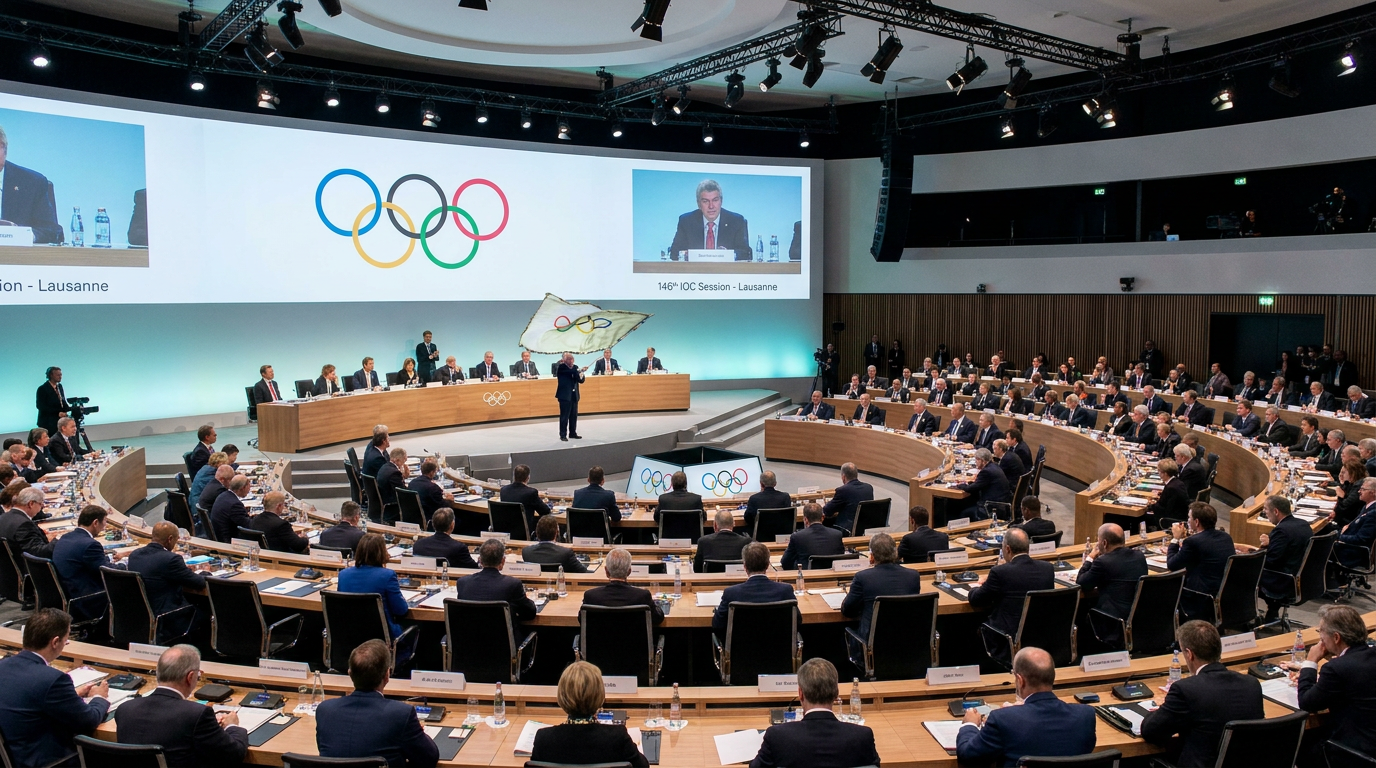
The 146th International Olympic Committee (IOC) Session in Lausanne has fundamentally rewritten the rules governing how the Olympic Games are constructed, marking the most significant governance overhaul in decades. Approved on Wednesday, the sweeping amendments to the Olympic Charter target both the logistical footprint of the Games and the intense geopolitical pressures surrounding them. Driven by the IOC's "Fit for the Future" consultation process, the changes are designed to modernize the Olympic program and insulate the organization from external influence. By altering the very definitions of what constitutes an Olympic sport and explicitly reinforcing the necessity of political neutrality, the IOC is attempting to future-proof its flagship event against ballooning costs and a deeply divided global landscape.[1][2][3]
At the heart of the reform is a fundamental shift to a "discipline-based methodology" for selecting the Olympic program. Previously, the IOC evaluated inclusion at the broader "sport" level. Under the traditional Olympic taxonomy, a sport is governed by a single International Federation—such as World Aquatics—while a discipline is a distinct branch within that sport, like diving, swimming, or water polo. Now, Rule 45 of the Olympic Charter explicitly divides the program into three distinct components: the sports program, the discipline program, and the events program. This granular approach means the IOC will no longer look at a sport as an indivisible monolith, fundamentally changing how future organizing committees will build their event schedules.[1][2][6]
By evaluating at the discipline level rather than the sport level, the IOC can surgically remove costly or underperforming disciplines without excommunicating an entire International Federation from the Olympic family. This modular approach directly targets the ballooning costs of hosting the Games, which has deterred many cities from bidding in recent years. Venue requirements, operational delivery, and overall Games costs can be tightly controlled if organizers are not forced to build massive, specialized facilities for every single discipline within a sprawling sport. If a particular discipline requires a highly expensive temporary venue that offers no legacy value to the host city, the IOC now has the explicit charter authority to cut it while keeping the parent sport intact.[2][4]

To further cement this newfound flexibility, the IOC Session voted to completely remove the fixed list of recognized International Federations from the Olympic Charter. For decades, this list served as a bedrock document, essentially guaranteeing the inclusion of legacy sports that had been part of the Olympic movement since its early days. IOC officials noted that the old list created a "misleading impression of permanence" for these legacy sports, which often assumed their place on the program was guaranteed regardless of their modern relevance, commercial appeal, or logistical feasibility. Removing the list severs that historical entitlement, forcing every sport to continuously prove its value to the Olympic brand.[1][2][6]
This structural change puts traditional sports on immediate notice. If a specific legacy discipline lacks commercial momentum, fails to resonate with youth audiences, or presents an insurmountable logistical hurdle for a specific host city, it can now be axed with far less bureaucratic friction. The IOC has increasingly prioritized sports that appeal to younger demographics—such as skateboarding, surfing, and breaking—and this charter amendment clears the runway to prioritize those disciplines over older, less dynamic events. Traditional federations will now have to lobby for each of their disciplines individually, ensuring that they maintain high global participation and broadcast appeal.[5]
This structural change puts traditional sports on immediate notice.
Conversely, smaller or emerging sports now have a much clearer and more attainable pathway into the Olympic Games. Under the old system, an emerging sport had to prove the viability of its entire sporting apparatus to gain entry, a massive hurdle for niche activities. Now, they only need to prove the viability of a single discipline to get a foot in the door. This offers smaller sports a fair chance to compete against larger, entrenched counterparts for limited spots on the program. It also allows host cities to propose highly localized or culturally significant disciplines that utilize existing infrastructure, rather than building white-elephant stadiums for sports that have no domestic following.[4]

While the programmatic changes reshape the physical field of play, a second major amendment addresses the increasingly volatile geopolitical minefield off the field. The Olympic Charter now includes reinforced, explicit language regarding political neutrality. A newly added paragraph in Rule 2 mandates that the IOC's role is to apply neutrality "at all times, free from governmental, cultural, societal or economic pressure." This language is a direct response to the growing trend of governments and advocacy groups attempting to use the Olympic Games as leverage for international diplomacy, sanctions, and human rights campaigns.[1][2][3]
IOC President Kirsty Coventry praised the openness of the "Fit for the Future" process, emphasizing the urgent need to strengthen neutrality in a deeply divided world. Coventry noted that the working groups reviewed the Olympic Charter and all associated documents specifically to fortify the IOC's position as an independent actor. IOC Vice-President Juan Antonio Samaranch echoed this sentiment during the session, stating that robust charter protections are absolutely vital for empowering the organization to make independent decisions in an increasingly complicated global landscape, free from the dictates of domestic politicians or international coalitions.[2][4][6]
However, this reinforced neutrality clause has ignited immediate pushback from advocacy groups and geopolitical observers who view the language with deep suspicion. Critics warn that the strengthened neutrality language could serve as a legal and rhetorical vehicle to fully rehabilitate Russian and Belarusian athletes in international competition. Since the invasion of Ukraine, the IOC has navigated a complex web of sanctions, eventually allowing some athletes to compete as neutrals. Observers argue that by explicitly banning "governmental" and "societal" pressure in its foundational document, the IOC is building a firewall against future demands to ban specific nations based on their geopolitical actions.[4][5]

By framing the IOC as entirely insulated from external pressure, the organization gives itself the ultimate cover to ignore international sanctions, boycotts, or human rights campaigns. Opponents of the amendment argue that sport cannot exist in a vacuum, and that claiming absolute neutrality often inadvertently benefits aggressor nations by normalizing their presence on the global stage. The debate highlights the central tension of the modern Olympic movement: the desire to unite the world through sport versus the reality that international sport is inherently political and deeply intertwined with national identity and statecraft.[5]
The ultimate test of these sweeping charter changes will arrive in the coming years as organizers for the 2030 French Alps Winter Games and the 2032 Brisbane Summer Games begin finalizing their venue masterplans under the new rules. These host cities will be the first to fully utilize the discipline-based methodology, and their choices will set the precedent for how aggressively the IOC is willing to trim legacy events. If Brisbane chooses to cut a traditional discipline to save on venue costs, it will signal a permanent shift in the balance of power between the IOC and the International Federations.[2][4]
Ultimately, the Olympic movement is trading historical permanence for modular survival. By adopting a more flexible, discipline-focused approach and legally fortifying its political independence, the IOC is betting that adaptability will keep the Games viable in an increasingly complex century. The era of the Olympic program as a static, guaranteed monolith is officially over, replaced by a dynamic, highly scrutinized selection process where every discipline must continuously justify its place on the world's biggest stage. As the global economy fluctuates and geopolitical fault lines deepen, the IOC has armed itself with the charter authority to shrink, shift, and shield the Games as necessary, ensuring the Olympic flame continues to burn, even if the torch looks fundamentally different.[1][5]
How we got here
2020
The IOC launches the initial phases of its strategic roadmap to reduce the cost and complexity of hosting the Olympic Games.
Early 2026
The 'Fit for the Future' working groups propose shifting to a discipline-based evaluation model and reinforcing neutrality clauses.
June 10, 2026
The IOC Executive Board officially recommends the proposed Charter amendments for a full vote.
June 24, 2026
The 146th IOC Session in Lausanne formally approves the sweeping changes to the Olympic Charter.
Viewpoints in depth
The IOC's Modernization Push
Leadership views the changes as a necessary evolution to save the Games from logistical collapse.
For the IOC, the 'Fit for the Future' process is fundamentally about survival. By breaking sports down into disciplines, the committee can eliminate the bloated venue requirements that have historically deterred cities from bidding to host. Furthermore, leadership argues that explicitly codifying political neutrality is the only way to protect the Olympic movement from being torn apart by an increasingly polarized global landscape.
Geopolitical Skeptics
Critics argue the neutrality amendments provide cover for controversial geopolitical decisions.
Advocacy groups and international observers view the new neutrality language with deep suspicion. By legally mandating that the IOC must operate free from 'societal or governmental pressure,' critics argue the organization is building a rhetorical fortress. This allows them to dismiss widespread calls for boycotts or sanctions—such as those directed at Russia and Belarus—by framing those demands as inappropriate external interference rather than legitimate human rights concerns.
Emerging Sports Federations
Smaller sports see the discipline-based methodology as a massive opportunity for inclusion.
For niche and emerging sports, the removal of the fixed International Federations list is a monumental victory. Under the old system, gaining Olympic status required proving the viability of an entire global sporting apparatus. Now, a federation only needs to demonstrate that a single, highly engaging discipline can succeed. This lowers the barrier to entry and allows host cities to incorporate culturally relevant, youth-oriented events that utilize existing infrastructure.
What we don't know
- Which specific legacy disciplines might be the first to be cut under the new methodology.
- How the reinforced neutrality clause will be applied to athletes from Russia and Belarus in upcoming qualification cycles.
- Whether traditional International Federations will push back against their removal from the Olympic Charter.
Key terms
- Olympic Charter
- The foundational document that codifies the principles, rules, and bye-laws governing the International Olympic Committee and the Olympic Games.
- Discipline-Based Methodology
- A new evaluation system where the IOC assesses specific branches of a sport for Olympic inclusion, rather than approving or rejecting the entire sport as a whole.
- International Federation (IF)
- The global governing body for a specific sport, responsible for managing its rules, international competitions, and Olympic qualification processes.
- Fit for the Future
- The IOC's strategic consultation process aimed at modernizing the governance, cost-efficiency, and political independence of the Olympic Games.
Frequently asked
What is the difference between a sport and a discipline?
In Olympic terminology, a sport is governed by an International Federation (like Aquatics), while a discipline is a specific branch of that sport (like diving, swimming, or water polo).
Why did the IOC remove the list of International Federations?
The IOC removed the list from the Olympic Charter to eliminate the 'impression of permanence' for legacy sports, giving organizers more flexibility to cut unpopular or expensive events.
How does the new neutrality clause affect sanctioned nations?
Critics argue the explicit ban on 'governmental or societal pressure' could be used by the IOC to justify allowing athletes from sanctioned nations, like Russia, to compete despite international objections.
Sources
Source coverage
6 outlets
3 viewpoints surfaced




[1]Olympics.comIOC Leadership
IOC Session approves changes to Olympic Charter
Read on Olympics.com →[2]XinhuaIOC Leadership
IOC Session approves changes of Olympic Charter
Read on Xinhua →[3]The Straits TimesGlobal Sports Observers
IOC accepts charter change on sports neutrality and sports programme
Read on The Straits Times →[4]DevdiscourseGlobal Sports Observers
IOC Strengthens Olympic Charter to Uphold Political Neutrality
Read on Devdiscourse →[5]Malaysia SignalGeopolitical Skeptics
IOC Mulls Olympic Charter Changes as Russia's Athletic Future Hangs in Balance
Read on Malaysia Signal →[6]China.orgIOC Leadership
IOC accepts charter changes on sports neutrality and Olympic programme
Read on China.org →
More in sports
See all 6 stories →Anti-Doping
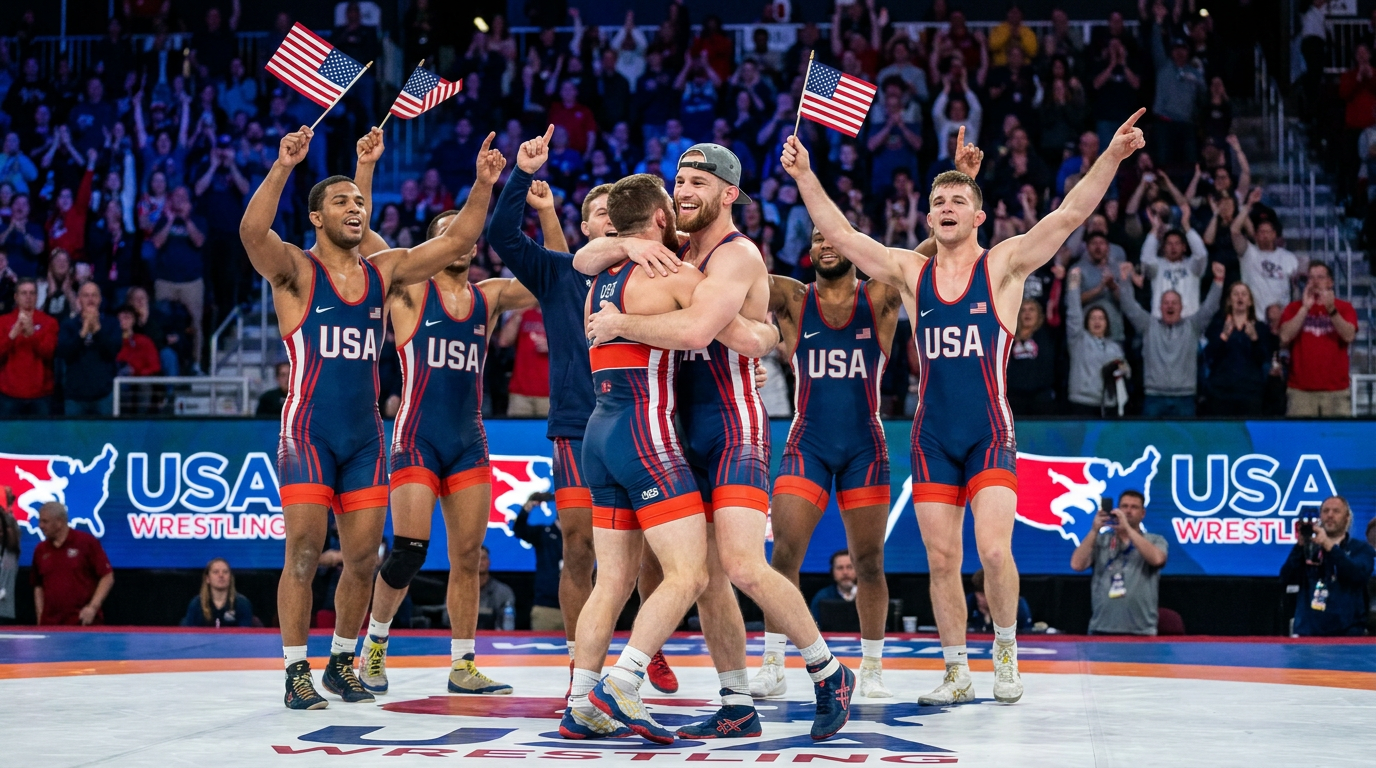
U.S. Men's Freestyle Team Upgraded to Third at 2024 Worlds Following Anti-Doping Disqualification
6 sources
Sports Finance
Premier League Precedent: Everton Ordered to Pay Burnley £26M in Damages for Financial Rule Breach
8 sources
Record Partnership
Latham and Conway Shatter 96-Year-Old Record with 317-Run Partnership Against England
8 sources

Elite Chess
Indian Prodigy Praggnanandhaa Wins Norway Chess 2026, Securing First Major Classical Title
6 sources
Every angle. Every day.
Get sports stories with full source coverage and perspective breakdowns delivered to your inbox.