
The End of Easy Credit: How New EU and UK Laws Are Turning 'Buy Now, Pay Later' Into a Regulated Debt Product
Sweeping new regulations in the UK and EU are forcing 'Buy Now, Pay Later' providers to conduct mandatory income checks and offer credit-card-style refund protections.
By Factlen Editorial Team
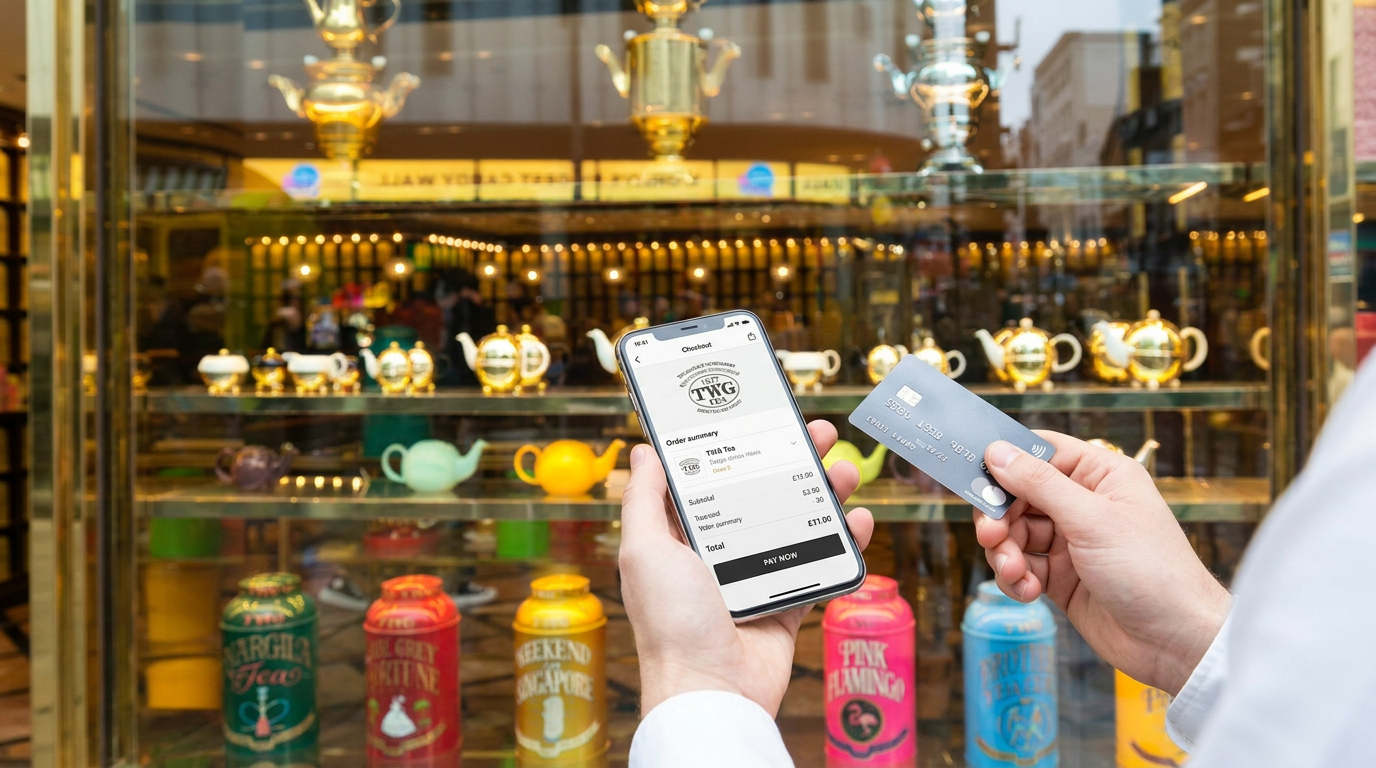
- Consumer Protection Advocates
- Argue that BNPL is a debt trap that exploited regulatory loopholes to target vulnerable shoppers, making mandatory affordability checks and ombudsman oversight essential.
- Fintech & Retail Industry
- Emphasize the operational burden of the new laws, warning that clunky credit checks could ruin the seamless checkout experience unless open banking technology can automate the process.
- Financial Regulators
- Focus on standardizing the credit market, ensuring that any product allowing consumers to defer payment is subject to the exact same transparency and reporting rules as traditional credit cards.
What's not represented
- · Retailers relying on BNPL for high average order values
- · Young consumers with thin credit files who may now be excluded
Why this matters
For years, shoppers could split payments at checkout with no formal credit checks, leading to hidden debt traps. Starting in 2026, new laws in the UK and EU will force lenders to verify your income, report to credit bureaus, and offer full refund protections, fundamentally changing how online shopping works and protecting consumers from over-extension.
Key points
- New UK and EU laws classify Buy Now, Pay Later as a regulated credit product.
- Lenders must now perform mandatory affordability checks for every purchase, regardless of size.
- UK shoppers gain Section 75 protection, making BNPL providers liable for faulty goods.
- The EU's CCD2 requires credit checks to be based on verified financial data, not just behavior.
- Fintechs are turning to Open Banking to automate income checks and prevent cart abandonment.
- Consumers gain the right to escalate disputes to official financial ombudsmen.
The era of frictionless, unregulated "Buy Now, Pay Later" (BNPL) is officially coming to an end. For the better part of a decade, consumers across Europe and the United Kingdom have been able to split the cost of sneakers, concert tickets, and even groceries into interest-free installments with little more than a name and an email address. The convenience made BNPL a ubiquitous feature of modern e-commerce, but it also allowed millions of shoppers to accumulate debt entirely off the radar of traditional financial oversight.
In 2026, that checkout experience is undergoing a radical transformation. Sweeping new regulatory frameworks—the Financial Conduct Authority's (FCA) new rules in the UK and the Consumer Credit Directive 2 (CCD2) in the European Union—are reclassifying BNPL from a simple payment feature into a strictly regulated debt product. This shift forces fintech providers to adopt the same rigorous underwriting standards, consumer protections, and transparency requirements expected of major banks and credit card issuers.
This evidence pack examines the primary claims driving these regulatory overhauls, the data supporting the need for mandatory credit checks, and the transparent uncertainties regarding how these rules will impact retail conversion rates and the fintech landscape. By mapping the claims to the underlying evidence, a clear picture emerges of a financial sector being forced to mature.
Claim 1: The regulatory grey zone created a hidden debt crisis. The primary argument from consumer advocates and debt charities is that the lack of friction in BNPL led to unsustainable borrowing, particularly among vulnerable demographics who used the service to mask cash-flow problems.
The evidence strongly supports this claim. According to the FCA's Financial Lives Survey, 20% of UK adults—roughly 10.9 million people—used BNPL in the year leading up to May 2024, driving the market to over £13 billion in lending.[1]

Further evidence from the debt charity StepChange revealed that BNPL users are twice as likely as traditional credit users to borrow money simply to cover essential household bills. Because these micro-loans were historically not reported to central credit bureaus, consumers could easily stack multiple debts across different providers without any single lender realizing the borrower was dangerously overextended.[2][8]
In the European Union, the data is similarly stark. A report by the Dutch Authority for the Financial Markets (AFM) found that nine out of ten BNPL transactions that resulted in severe payment problems fell below the previous €250 threshold, meaning they legally bypassed any requirement for affordability assessments or credit registration.[3]
Claim 2: Mandatory affordability checks will prevent over-indebtedness. Regulators assert that forcing lenders to verify a buyer's financial health before approving a transaction will drastically reduce default rates and protect consumers from taking on debt they cannot service.
Claim 2: Mandatory affordability checks will prevent over-indebtedness.
Under the UK's new rules, which take effect on July 15, 2026, lenders are legally obligated to run "proportionate" affordability checks for every single purchase, including micro-transactions under £50. This is a massive departure from the historical practice of running a single "soft" check when an account is first opened, ensuring that a consumer's real-time financial capacity is evaluated at the exact moment of purchase.[2][7]
The EU's CCD2, which must be applied by November 20, 2026, takes a similar approach. It explicitly closes the loophole for micro-loans by mandating creditworthiness assessments for amounts under €200. Crucially, Article 18 of the directive requires lenders to base these assessments on verified financial data—such as income and expenses—rather than relying solely on behavioral indicators or internal algorithms.[4][5][6]

Claim 3: Consumers need parity with credit card protections. Consumer rights groups have long argued that if BNPL acts like a credit card in practice, it should offer the exact same legal safety nets when purchases go wrong or retailers fail to deliver.
The new regulations deliver this parity unequivocally. In the UK, BNPL agreements made after July 2026 will be covered by Section 75 of the Consumer Credit Act. This means that for purchases between £100 and £30,000, the BNPL provider is jointly liable with the retailer. If a merchant goes bust or a product is faulty, the lender is legally obligated to refund the consumer, completely shielding the buyer from retail bankruptcies.[2]
Furthermore, UK consumers will gain the legal right to escalate disputes to the Financial Ombudsman Service. In the EU, CCD2 mandates standardized, plain-language disclosures about late fees and the consequences of missed payments, ensuring buyers are fully informed before they commit to an installment plan.[4][7]

Where the Evidence is Weak: The Impact on E-commerce. While the consumer protection benefits are well-documented and universally praised by debt charities, there is high uncertainty regarding how these regulations will affect the broader retail economy. BNPL was heavily adopted by merchants because it demonstrably reduced cart abandonment and increased average order values.
Introducing mandatory income verification at checkout inherently adds friction. Industry analysts warn that if affordability checks take too long or require consumers to manually upload documents, cart abandonment rates could spike, hurting retailers who have come to rely on the inflated purchasing power BNPL provides.
To solve this friction, fintechs are racing to integrate Open Banking data, which allows lenders to instantly scan a buyer's bank account to verify income and expenses in milliseconds. However, it remains uncertain whether consumers will be comfortable granting checkout apps access to their primary bank accounts just to split the cost of a winter coat.[6]
Finally, the compliance burden is expected to reshape the provider landscape. Smaller BNPL startups may lack the capital to build robust, real-time underwriting engines and manage Ombudsman complaints. Consequently, the market is likely to consolidate around a few major players who can afford the new cost of doing business, leaving retailers with fewer options but consumers with significantly safer products.[1][8]
How we got here
2008
The original EU Consumer Credit Directive is established, largely exempting loans under €200.
2014 - 2023
BNPL explodes in popularity across e-commerce, operating mostly outside traditional credit regulations.
October 2023
The EU publishes the revised Consumer Credit Directive (CCD2) to close micro-loan loopholes.
May 2024
UK BNPL lending reaches £13 billion, prompting urgent calls for regulatory intervention.
July 15, 2026
The UK's Financial Conduct Authority officially brings BNPL under formal consumer credit regulation.
November 20, 2026
The deadline for EU member states to enforce the new CCD2 rules for all digital credit providers.
Viewpoints in depth
Consumer Protection Advocates
Argue that BNPL is a debt trap that exploited regulatory loopholes to target vulnerable shoppers.
Debt charities and consumer rights groups view the new regulations as a long-overdue correction. They point to data showing that BNPL users are disproportionately likely to use the service to cover essential bills, masking deeper financial distress. By forcing lenders to conduct hard affordability checks and report to credit bureaus, advocates believe the new rules will stop consumers from stacking hidden debts across multiple platforms. The addition of Section 75 protections in the UK is seen as a massive victory for consumer rights.
Fintech & Retail Industry
Emphasize the operational burden of the new laws and the risk to e-commerce conversion rates.
For the fintech sector and online retailers, the new regulations present a significant operational hurdle. BNPL's primary value proposition to merchants was its frictionless checkout experience, which dramatically reduced cart abandonment. Industry leaders warn that if mandatory credit checks require consumers to manually prove their income, sales will plummet. To survive, the industry is heavily investing in Open Banking integrations to automate underwriting in milliseconds, though smaller providers may be forced out of the market due to compliance costs.
Financial Regulators
Focus on standardizing the credit market and ensuring fair treatment across all financial products.
Authorities like the FCA and the European Commission maintain that if a product allows a consumer to defer payment, it is fundamentally a credit product and must be regulated as such. Regulators argue that the previous exemptions for micro-loans created an uneven playing field and systemic risk. Their goal is not to eliminate BNPL, but to ensure it operates transparently, with clear disclosures, standardized late fees, and formal avenues for dispute resolution through official ombudsmen.
What we don't know
- How many smaller BNPL providers will exit the market due to the high costs of regulatory compliance.
- Whether consumers will be willing to grant Open Banking access to their bank accounts just to split a small purchase.
- The exact impact these mandatory checks will have on overall e-commerce conversion rates during the 2026 holiday season.
Key terms
- Buy Now, Pay Later (BNPL)
- A type of short-term financing that allows consumers to make purchases and pay for them in future installments, often interest-free.
- Consumer Credit Directive 2 (CCD2)
- A sweeping European Union law updating credit regulations to include digital micro-loans and BNPL products.
- Section 75
- A UK consumer protection law that makes a credit provider jointly liable with a retailer for faulty goods or undelivered services.
- Open Banking
- A financial technology standard that allows consumers to securely share their bank account data with third-party apps, enabling instant income verification.
- Financial Ombudsman Service
- An independent UK body that settles disputes between consumers and financial businesses.
Frequently asked
Will I have to undergo a hard credit check to use BNPL in 2026?
Yes, lenders in both the UK and the EU will be legally required to assess your creditworthiness and affordability before approving a transaction, even for small amounts.
What happens if I buy something using BNPL and the retailer goes out of business?
In the UK, new BNPL purchases between £100 and £30,000 will be covered by Section 75, meaning the BNPL provider is legally obligated to refund you if the retailer fails to deliver.
Can I still use BNPL if I have a low credit score?
It will be more difficult. Because lenders must now verify your income and existing debts, consumers who are already financially overextended are more likely to be declined.
When do these new rules officially start?
The UK regulations take effect on July 15, 2026, while the EU's Consumer Credit Directive 2 (CCD2) must be applied by November 20, 2026.
Sources
Source coverage
8 outlets
3 viewpoints surfaced








[1]ConcentrixFintech & Retail Industry
Buy Now, Pay Later in 2026: The Structural Shift
Read on Concentrix →[2]MoneySavingExpertConsumer Protection Advocates
BNPL regulations confirmed – here's what it means for you
Read on MoneySavingExpert →[3]Projective GroupFinancial Regulators
CCD2 strengthens consumer credit rules by bringing BNPL under supervision
Read on Projective Group →[4]SchufaConsumer Protection Advocates
New EU Credit Directive: Credit check for Buy Now Pay Later is now mandatory
Read on Schufa →[5]UnzerFintech & Retail Industry
Buy Now Pay Later (BNPL) Regulations: What is changing under CCD2?
Read on Unzer →[6]PlaidFintech & Retail Industry
The Consumer Credit Directive 2 (CCD2) Explained
Read on Plaid →[7]Credit StrategyFinancial Regulators
UK regulates BNPL from 15 July 2026, adding affordability checks
Read on Credit Strategy →[8]SignicatFintech & Retail Industry
The EU Consumer Credit Directive 2 (CCD2): what it means for BNPL
Read on Signicat →

More in shopping
See all 6 stories →Food Waste
The End of 'Sell By' Dates: Comparing the New Standardized Food Labels and Their Impact on Food Waste
8 sources
Console Gaming
Local Hardware vs. Cloud Gaming: The 2026 Trade-Off Analysis Following Xbox's $150 Price Hike
6 sources

Supply Chain Tech
The Digital Product Passport: How New EU and US Laws Are Forcing Total Transparency on Product Sustainability and Traceability
9 sources
Handheld Gaming
Intel Arc G3 Extreme vs. AMD Ryzen Z-Series: The 2026 Windows Handheld Trade-Off Analysis
6 sources

Every angle. Every day.
Get shopping stories with full source coverage and perspective breakdowns delivered to your inbox.