
The Rise of Sensory-Friendly Cinema: How Theaters Are Making Moviegoing Accessible for All
Major multiplexes and independent cinemas are rapidly expanding sensory-friendly screenings in 2026, offering modified environments that make the magic of the movies accessible to neurodivergent audiences.
By Factlen Editorial Team
- Neurodivergent Advocates
- Praise the format for creating safe, judgment-free zones that remove the anxiety of traditional moviegoing.
- Major Theater Chains
- View sensory-friendly screenings as a vital community service and a way to welcome a previously underserved demographic.
- Independent Cinemas
- Emphasize their role as inclusive cultural gathering spaces that must adapt to serve their entire local community.
What's not represented
- · Film directors and sound mixers discussing how they feel about their films being exhibited with altered audio-visual settings.
Why this matters
For decades, the strict rules and overwhelming sensory environment of traditional movie theaters effectively excluded millions of neurodivergent individuals. The widespread adoption of sensory-friendly screenings transforms a potentially stressful outing into a joyful, inclusive community event for families.
Key points
- Theaters worldwide are expanding sensory-friendly screenings to accommodate neurodivergent audiences.
- Modifications include dimmed lighting, lowered volume, and the freedom to move or vocalize.
- Major chains like AMC have eliminated pre-show trailers to reduce required 'sit time'.
- Independent cinemas are providing 'sensory kits' with headphones and fidget tools.
- The initiative transforms moviegoing from a stressful environment into an inclusive community event.
The traditional movie theater experience is defined by sensory extremes: booming surround sound that shakes the seats, pitch-black darkness, and a strict social expectation to sit perfectly still and remain completely silent. For many moviegoers, these elements are exactly what make the cinema immersive. But for millions of others, they represent an overwhelming barrier to entry.[7]
In 2026, the exhibition industry is undergoing a quiet, compassionate revolution. Across the globe, both major multiplex chains and independent arthouse cinemas are rapidly expanding "sensory-friendly" screenings. These modified showings are intentionally adapted to accommodate neurodivergent individuals, including those with autism, ADHD, and sensory processing disorders, ensuring that the magic of the movies is accessible to everyone.[7]
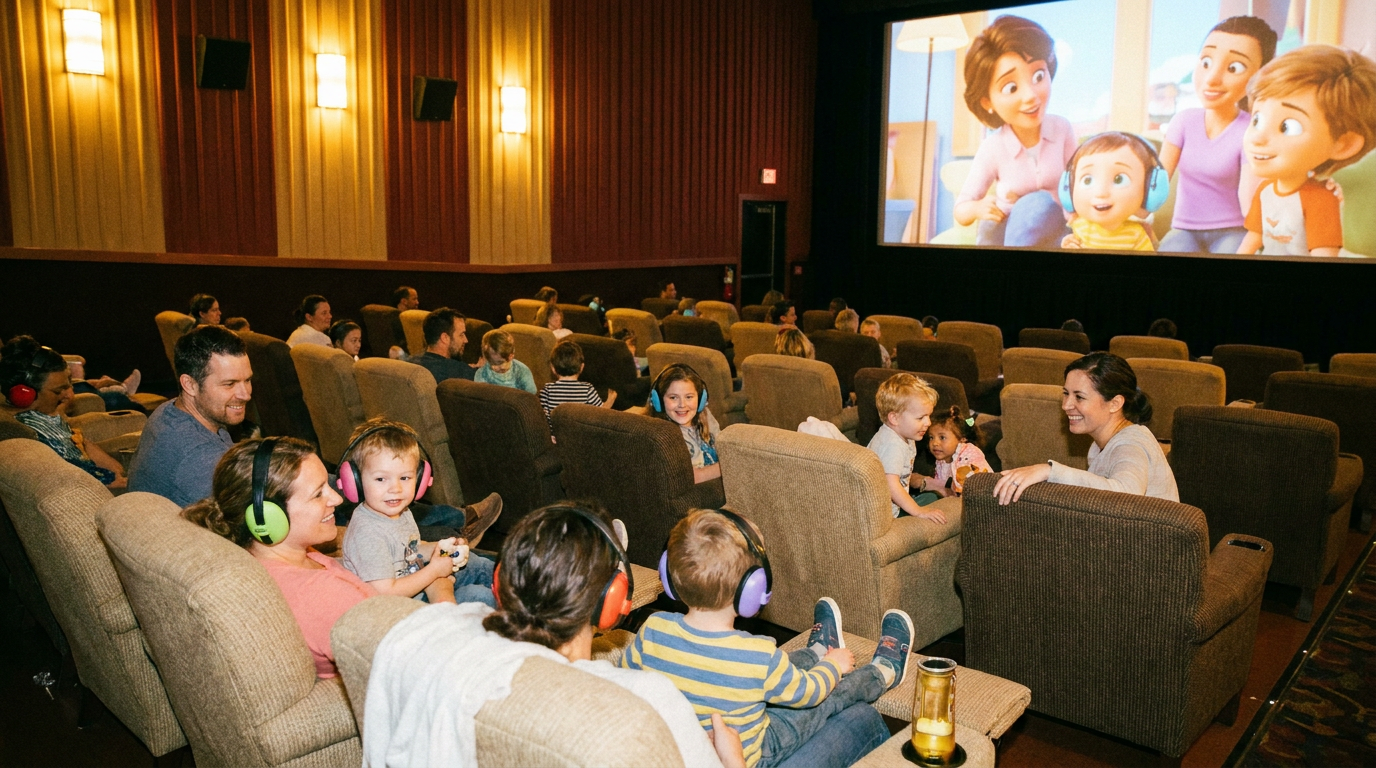
The modifications required to create a sensory-friendly environment are relatively simple, yet profoundly transformative. During these specific showtimes, the house lights are kept dimmed rather than completely darkened, providing visual comfort and reducing anxiety. The volume of the film is significantly lowered to prevent auditory overstimulation, a crucial adjustment for those with sensitive ears.[3][4][7]

Perhaps more importantly, the strict behavioral rules of the traditional cinema are lifted. Audiences at sensory-friendly screenings are free to move around the auditorium, dance, vocalize, or use fidget tools without fear of judgment. The environment is explicitly designed to be a safe space where enjoyment comes first, and families do not have to worry about disturbing other patrons.[1][2][7]
Major theater chains have thrown their considerable weight behind the initiative. AMC Theatres, in partnership with the Autism Society, has established a robust Sensory Friendly Film program. The chain offers these unique showings on the second and fourth Saturday of every month for family-friendly films, and on Wednesday evenings for mature audiences. Blockbusters like Pixar's "Toy Story 5" and the animated "Minions & Monsters" are leading the 2026 summer slate for these accessible events.[1]
Major theater chains have thrown their considerable weight behind the initiative.
To further reduce the required "sit time" and provide a more predictable experience, AMC and other chains have completely eliminated pre-show trailers from these screenings. The movie begins exactly at the scheduled showtime, removing the unpredictable loud noises and flashing lights that often accompany coming attractions.[1][3]
The movement is equally strong internationally and within the independent theater circuit. In the United Kingdom, Showcase Cinemas has dedicated every Sunday to sensory-friendly screenings, allowing families to build reliable weekend routines around the cinema. They also exclusively show 2D films during these times to avoid the additional visual overstimulation caused by 3D effects.[2]
Independent venues are proving that accessibility isn't just a corporate initiative. Pennsylvania's Bryn Mawr Film Institute has made sensory-friendly accommodations a weekly staple every Wednesday. Meanwhile, The Lindsay Theater, which pioneered the format in its region, ensures that a sensory-friendly screening is typically the only event scheduled in the building at that time, allowing for increased staffing and an unhurried, personal experience for guests.[3][4]
For families with neurodivergent children, the impact of these screenings cannot be overstated. Organizations like the Canucks Autism Network, which recently partnered with the Kamloops Film Society for a free screening of "Inside Out," note that these events create meaningful opportunities for connection. They allow individuals to participate in cultural experiences that might otherwise feel entirely out of reach.[6]

Theaters are also implementing physical accommodations beyond the auditorium. The Carolina Theatre of Durham, working with the Duke Center for Autism and Brain Development, provides "sensory kits" that include noise-canceling headphones and fidget toys. Many venues are also establishing designated quiet zones in their lobbies, allowing patrons to step away, self-soothe, and regroup before returning to the film.[4][8]
This push for accessibility is part of a broader cultural shift within the film industry. In July 2026, the Academy Museum of Motion Pictures in Los Angeles is hosting a "Disabilities, Representation, and Film" event. The program features short films directed by neurodivergent filmmakers, presented in a fully sensory-friendly environment with open captions, dimmed lights, and lower volume.[5]
As awareness grows, sensory-friendly cinema is moving from a niche, occasional offering to a standard, expected feature of the modern movie theater. By simply turning the lights up and the sound down, the industry is sending a powerful message: the shared, communal joy of watching a story unfold on the big screen belongs to everyone.[1][7]
How we got here
Early 2010s
A few pioneering independent theaters begin experimenting with 'autism-friendly' screenings on a localized basis.
2017
The Lindsay Theater and other regional hubs formalize sensory-friendly programs, proving the model works for community cinemas.
2020-2022
The pandemic temporarily halts theatrical exhibition, but sparks a broader cultural conversation about accessibility and mental health.
2025
Major chains like AMC solidify national partnerships with the Autism Society to standardize sensory-friendly offerings.
Summer 2026
Sensory-friendly screenings become a standard, expected feature for major blockbuster releases across both multiplexes and independent theaters.
Viewpoints in depth
Neurodivergent Advocates & Families
Praise the format for creating safe, judgment-free zones that remove the anxiety of traditional moviegoing.
Advocacy groups and families emphasize that traditional theaters—with their booming sound systems and strict expectations of silence—are inherently exclusionary spaces for those with sensory processing differences. They view sensory-friendly screenings not as a special favor, but as a necessary accommodation that allows neurodivergent individuals to participate in a fundamental cultural pastime without fear of judgment or sensory overload.
Major Theater Chains
View sensory-friendly screenings as a vital community service and a way to welcome a previously underserved demographic.
For multiplex operators like AMC and Showcase Cinemas, implementing sensory-friendly programs is both a community outreach initiative and a smart business decision. By partnering with organizations like the Autism Society, they are able to train staff appropriately and open their doors to a large demographic of families who previously avoided the cinema entirely, turning traditionally slow weekend mornings into vibrant community events.
Independent Cinemas
Emphasize their role as inclusive cultural gathering spaces that must adapt to serve their entire local community.
Independent and arthouse theaters view accessibility as core to their mission of community building. Venues like The Lindsay Theater and the Bryn Mawr Film Institute often go beyond the basic lighting and sound adjustments, creating dedicated quiet rooms, offering free admission for specific events, and curating specialized "social narratives" to help guests prepare for their visit before they even arrive.
What we don't know
- Whether studios will begin mixing specific 'sensory-friendly' audio tracks directly at the production level, rather than relying on theaters to manually lower the master volume.
- How quickly sensory-friendly accommodations will expand to premium formats like IMAX or 4DX.
Key terms
- Neurodivergent
- Having a brain that functions, learns, and processes information differently than what is considered typical, encompassing conditions like autism and ADHD.
- Sensory Processing Disorder (SPD)
- A condition in which the brain has trouble receiving and responding to information that comes in through the senses, making loud noises or bright lights overwhelming.
- Sensory Kit
- A bag or box provided by venues containing items like noise-canceling headphones, sunglasses, and fidget toys to help individuals manage sensory input.
- Social Narrative
- A written or visual guide that helps individuals prepare for a new experience by explaining what to expect step-by-step, reducing anxiety.
Frequently asked
What makes a movie screening sensory-friendly?
The theater keeps the house lights dimmed rather than fully dark, lowers the film's volume, and lifts the strict rules requiring silence and stillness.
Who are these screenings designed for?
They are primarily designed for neurodivergent individuals, including those with autism, ADHD, and sensory processing disorders, though anyone who prefers a gentler environment is welcome.
Are trailers shown before the movie?
Most sensory-friendly screenings eliminate pre-show trailers entirely so the feature film begins exactly at the scheduled start time.
Can I bring my own food or comfort items?
Yes, most participating theaters allow guests to bring their own snacks, weighted blankets, and fidget tools to ensure maximum comfort.
Sources
Source coverage
8 outlets
3 viewpoints surfaced








[1]AMC TheatresMajor Theater Chains
Sensory Friendly Film Showings
Read on AMC Theatres →[2]Showcase CinemasMajor Theater Chains
Dedicated sensory friendly screenings every Sunday
Read on Showcase Cinemas →[3]The Lindsay TheaterIndependent Cinemas
Sensory Friendly Screenings
Read on The Lindsay Theater →[4]Bryn Mawr Film InstituteIndependent Cinemas
Sensory Friendly
Read on Bryn Mawr Film Institute →[5]Academy Museum of Motion PicturesIndependent Cinemas
Disabilities, Representation, and Film 2026
Read on Academy Museum of Motion Pictures →[6]Kamloops Film SocietyNeurodivergent Advocates
First Sensory-Friendly Screening at the Paramount Theatre
Read on Kamloops Film Society →[7]Sensory Safe EventsNeurodivergent Advocates
Sensory-Friendly Movie Theater: Creating Inclusive Cinema Experiences for All
Read on Sensory Safe Events →[8]Carolina Theatre of DurhamIndependent Cinemas
A New Season of Sensory Friendly Film Series Begins
Read on Carolina Theatre of Durham →
Every angle. Every day.
Get entertainment stories with full source coverage and perspective breakdowns delivered to your inbox.