
EU Council Extends Full Economic Sanctions Against Russia Until July 2027
The European Union has extended its sweeping economic sanctions against Russia for a full year, departing from its standard six-month renewal cycle. The move aims to secure long-term pressure on Moscow while bypassing the risk of semi-annual vetoes from member states.
By Factlen Editorial Team
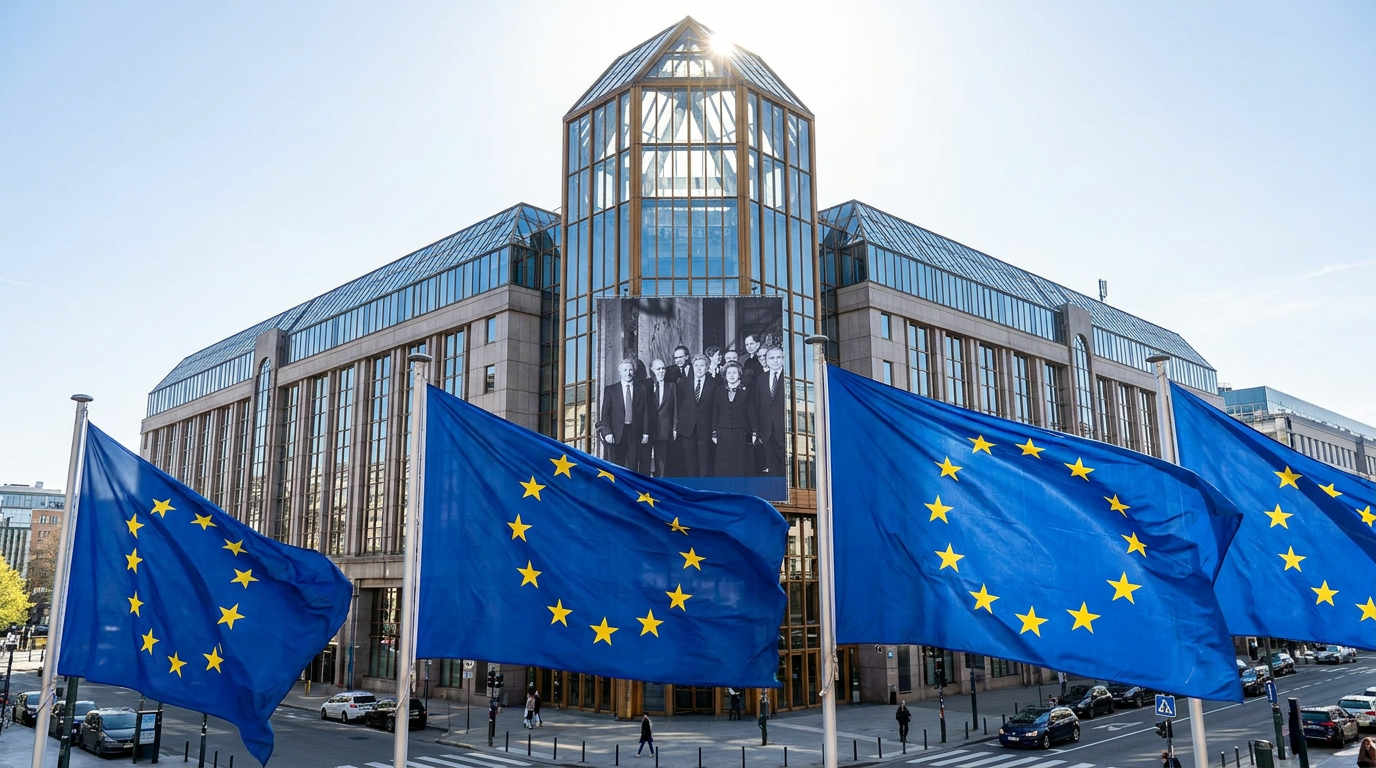
- EU Leadership
- Prioritizes long-term stability in the sanctions regime and preventing internal veto threats.
- Ukrainian Advocates
- Supports the extended timeline to ensure continuous economic pressure on Russia without semi-annual uncertainty.
- Russian State Media
- Views the sanctions as an illegal and hostile act by Western nations.
What's not represented
- · European businesses affected by the prolonged trade restrictions
- · Third-party nations facilitating parallel imports
Why this matters
By shifting to a 12-month renewal cycle, the EU is insulating its core economic restrictions against Russia from internal political leverage, particularly from member states like Hungary that have previously used the six-month deadlines to extract concessions. The extension guarantees that bans on Russian oil, finance, and technology will remain locked in through mid-2027.
Key points
- The EU has extended its economic sanctions against Russia until July 31, 2027.
- The renewal period has been increased from six months to 12 months for the first time.
- The shift aims to prevent member states from using semi-annual vetoes as political leverage.
- Sanctions cover Russian oil imports, financial institutions, and dual-use technologies.
- The EU has adopted 20 sanctions packages since the 2022 invasion of Ukraine.
The Council of the European Union has officially extended its sweeping economic sanctions against the Russian Federation for a full year, locking in the bloc's primary financial and trade restrictions until July 31, 2027.[1][4]
The decision, formalized on Thursday, marks a significant procedural shift for Brussels. Since the sanctions were first introduced in 2014, the EU has relied on a six-month renewal cycle, requiring unanimous approval from all member states twice a year to keep the measures active.[2][6]
By extending the timeline to 12 months, European leaders aim to ensure predictability in their sanctions policy and reduce the vulnerability of the measures to internal political maneuvering. During previous renewal windows, member states—most notably Hungary under Prime Minister Viktor Orbán—have occasionally threatened to veto the extensions to extract unrelated political or financial concessions from Brussels.[2][5]

The formal adoption by the Council follows a political agreement reached by EU heads of state and government during a two-day summit on June 18 and 19.[1][3]
The extended restrictions represent the core of the EU's economic retaliation against Moscow for its ongoing military aggression against Ukraine. The measures have been vastly expanded across 20 distinct sanctions packages since the full-scale invasion began in February 2022.[4][5]
The extended restrictions represent the core of the EU's economic retaliation against Moscow for its ongoing military aggression against Ukraine.
Currently, the sanctions regime covers a broad swath of the Russian economy. It includes a comprehensive ban on the import and maritime transport of Russian crude oil and specific petroleum products into the EU.[1][2]

The financial sector is also heavily targeted, with transaction bans imposed on numerous Russian financial institutions and cryptocurrency service providers operating both within Russia and in third countries.[4][6]
Additionally, the measures restrict the export of dual-use technologies that could bolster Russia's military-industrial complex, and suspend the broadcasting licenses of several Kremlin-backed media outlets operating within the European Union.[1][5]
In its official statement, the Council emphasized that specific provisions are also in place to counter the circumvention of these sanctions through third-party nations.[1][3]

Russian state media acknowledged the extension, noting that the restrictions continue to target key sectors of the Russian economy, including trade, finance, and energy.[7]
How we got here
July 2014
The EU first introduces economic sanctions against Russia following the annexation of Crimea.
February 2022
The EU significantly expands the sanctions regime in response to Russia's full-scale invasion of Ukraine.
June 18-19, 2026
EU leaders agree at a summit to shift from a six-month to a 12-month renewal cycle.
June 25, 2026
The Council of the EU formally adopts the extension, locking in the measures until July 2027.
Viewpoints in depth
European Union Leadership
Argues that a 12-month extension provides necessary stability and signals unwavering long-term commitment to Ukraine.
For Brussels, the shift to an annual renewal cycle is both a practical and symbolic victory. Practically, it insulates the sanctions regime from the semi-annual threat of vetoes by dissenting member states, ensuring that the economic pressure on Moscow remains consistent. Symbolically, it demonstrates to both Kyiv and Moscow that the bloc's resolve is not fatiguing, and that European capitals are prepared to maintain a hardline economic posture well into the future.
Ukrainian Officials
Views the extended timeline as a crucial step in preventing sanctions fatigue and closing diplomatic loopholes.
Kyiv has long advocated for longer renewal periods, arguing that the six-month cycle created unnecessary anxiety and offered Russia regular opportunities to exploit divisions within the EU. Ukrainian diplomats view the 12-month extension as a critical safeguard that guarantees the continued isolation of the Russian economy, particularly its energy and financial sectors, which are vital to funding the ongoing war effort.
Russian Government
Dismisses the sanctions as illegal and ineffective, while acknowledging their impact on bilateral relations.
Moscow consistently condemns the EU's restrictive measures as illegitimate under international law and asserts that they ultimately harm European economies more than the Russian Federation. While Russian officials frequently downplay the long-term economic damage, state media closely tracks the renewals, recognizing that the prolonged bans on technology transfers and energy exports necessitate a continued pivot toward Asian markets and alternative financial networks.
What we don't know
- Whether the 12-month renewal cycle will become the permanent standard for all future EU sanctions regimes.
- How member states that previously utilized the six-month veto threat will adapt their diplomatic strategies within the bloc.
Key terms
- Council of the European Union
- The institution representing the member states' governments, where national ministers meet to adopt laws and coordinate policies.
- Dual-use technology
- Goods, software, and technology that can be used for both civilian and military applications.
- Sanctions circumvention
- The practice of using third-party countries or complex corporate structures to bypass trade restrictions and continue doing business with a sanctioned entity.
Frequently asked
Why did the EU change the renewal period to 12 months?
The shift from six to 12 months reduces the frequency of unanimous votes required to keep the sanctions active, thereby limiting the ability of individual member states to threaten a veto in exchange for unrelated political concessions.
What exactly do these sanctions restrict?
The measures ban the import of Russian seaborne crude oil, restrict transactions with major Russian banks, prohibit the export of military and dual-use technologies to Russia, and block Kremlin-backed media broadcasts in the EU.
Does this mean no new sanctions will be added until 2027?
No. The EU can still introduce new sanctions packages at any time. The July 2027 date simply marks when the current baseline of economic restrictions will require its next renewal vote.
Sources
Source coverage
7 outlets
3 viewpoints surfaced






[1]Council of the European UnionEU Leadership
EU renews economic sanctions against Russia for a further 12 months
Read on Council of the European Union →[2]Ukrainska PravdaUkrainian Advocates
EU extends economic sanctions against Russia for one year
Read on Ukrainska Pravda →[3]InterfaxEU Leadership
Council of EU approves 1-year extension of anti-Russian economic sanctions
Read on Interfax →[4]UkrinformUkrainian Advocates
EU Council extends economic sanctions against Russia until July 2027
Read on Ukrinform →[5]LIGA.netUkrainian Advocates
EU sanctions against Russia have been officially extended until July 31, 2027
Read on LIGA.net →[6]UA NewsUkrainian Advocates
The Council of the European Union has extended economic sanctions against Russia until July 2027
Read on UA News →[7]RIA NovostiRussian State Media
EU Council Extends Economic Sanctions Against Russia Until July 31, 2027
Read on RIA Novosti →
More in news politics
See all 7 stories →Synthetic Media
Evidence Pack: AI-Generated Images Falsely Link NYC Mayor Mamdani to Jeffrey Epstein
8 sources
Drone Warfare
South Korea to Train 500,000 'Drone Warriors' in Sweeping Military Overhaul
7 sources
Crowdsourced Truth
Evidence Pack: Does Crowdsourced Fact-Checking Actually Bridge Partisan Divides?
8 sources

Watergate Legacy
Vice President Vance Dismisses Watergate Scandal, Claims 'Deep State' Targeted Nixon
6 sources
Every angle. Every day.
Get news politics stories with full source coverage and perspective breakdowns delivered to your inbox.