
ATP and WTA Announce Historic Commercial Merger, Guaranteeing Equal Prize Money
The men's and women's professional tennis tours have officially agreed to merge their commercial operations into a single entity, creating a unified calendar and ensuring equal prize money at all top-tier events by 2027.
By Factlen Editorial Team
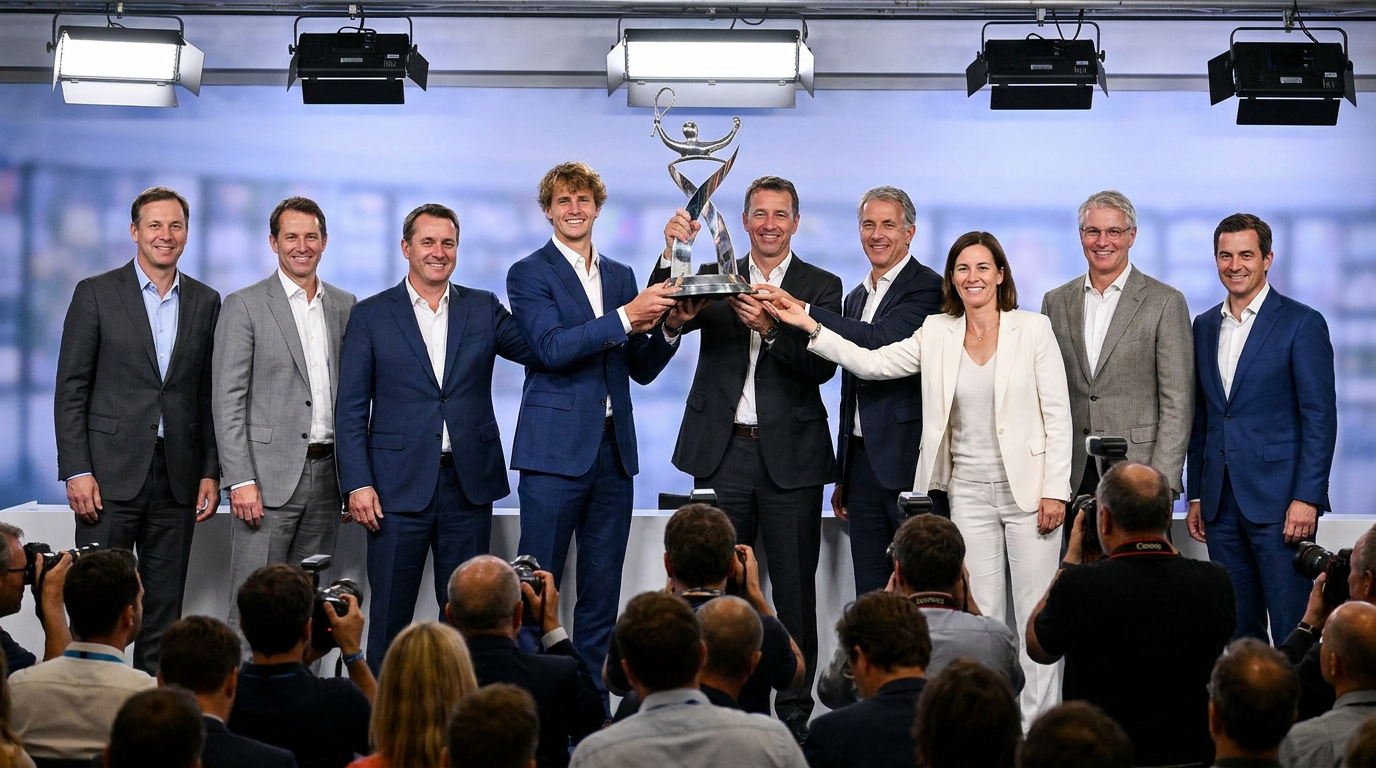
- WTA Leadership & Players
- Views the merger primarily as a historic victory for gender equity and the culmination of a 50-year fight for equal pay.
- ATP & Commercial Partners
- Focuses on the massive revenue potential, streamlined product, and ability to compete with other global sports leagues.
- Tennis Fans & Broadcasters
- Celebrates the end of fragmented TV rights and the move toward a single, easy-to-navigate viewing platform.
What's not represented
- · Independent tournament directors who must fund the prize money increases
- · Lower-ranked players outside the top 250
Why this matters
For decades, female tennis players have fought for pay equity outside the four Grand Slams, while fans have struggled with fragmented broadcasting rights. This landmark merger not only secures equal compensation but also simplifies the viewing experience into a single, unified platform.
Key points
- The ATP and WTA are merging their commercial operations into a single entity called 'Tennis Ventures'.
- The agreement guarantees equal prize money at all top-tier combined events by 2027.
- Fans will benefit from a unified broadcasting and streaming package, ending the need for multiple subscriptions.
- The merger is projected to generate over $1.2 billion in combined annual revenue.
- Additional funding will be directed to lower-tier circuits to support players ranked outside the top 100.
After years of fragmented schedules, separate broadcasting deals, and persistent disparities in compensation, the men’s and women’s professional tennis tours are finally uniting under a single commercial umbrella. On Friday, the ATP and WTA announced the formation of "Tennis Ventures," a groundbreaking joint entity that will manage the commercial rights, broadcasting, and scheduling for both tours globally.[1][3]
The landmark agreement, which has been quietly negotiated over the past two years under the working title "Project One," represents the most significant structural shift in professional tennis since the Open Era began in 1968. By pooling their assets, the tours aim to present a unified front to broadcasters and sponsors, maximizing revenue while simplifying the sport for a global fanbase that has long complained about the difficulty of tracking two separate circuits.[2][5]
At the heart of the merger is a historic commitment to gender equity. The new commercial structure guarantees equal prize money across all top-tier combined events—such as Indian Wells, Miami, Madrid, and Rome—by the start of the 2027 season. While the four Grand Slams have offered equal pay for decades, the weekly tour events have historically seen significant gaps, with male champions often taking home substantially more than their female counterparts at the exact same venues.[1][4]

WTA founder Billie Jean King, who famously spearheaded the fight for equal pay in the 1970s and formed the original women's tour, called the merger the realization of a fifty-year dream. Current WTA stars echoed the sentiment, noting that the agreement ensures future generations of female athletes will not have to fight the same exhausting battles for basic financial parity on the global stage.[4][6]
For the ATP, the merger is driven heavily by the promise of untapped commercial growth. ATP leadership has long argued that tennis punches below its weight in global sports revenue due to its fractured governance. By combining the men's and women's rights, Tennis Ventures is projected to generate upwards of $1.2 billion in combined annual revenue, leveraging the unique appeal of a sport that boasts a nearly 50-50 gender split among its global fanbase.[1][5]
For the ATP, the merger is driven heavily by the promise of untapped commercial growth.
The financial muscle behind the merger is bolstered by a strategic partnership with private equity, which will help fund the transition period. This initial injection of capital is designed to cover the immediate prize money increases for the WTA while investing heavily in a centralized digital infrastructure that both tours desperately need to compete with other global sports leagues.[2][5]

Fans are expected to be the most immediate beneficiaries of this digital overhaul. Starting in 2027, the tours will launch a unified streaming platform and consolidate their television rights packages. Instead of requiring separate subscriptions to watch a men's match and a women's match happening at the same tournament, viewers will have a single access point for all non-Grand Slam professional tennis.[2][6]
The scheduling will also see a massive overhaul. The new calendar will feature a significant increase in "combined" events, where both men and women compete simultaneously over a two-week period. This model, already highly successful at tournaments like Indian Wells and Miami, creates a festival-like atmosphere that drives higher ticket sales, stronger local economic impact, and better television ratings.[3][5]
Beyond the top tier, the merger includes provisions to support the lower rungs of the professional game. A portion of the unified revenue will be redirected to the ATP Challenger and WTA 125 circuits, aiming to provide a living wage for players ranked between 100 and 250 in the world. This addresses a long-standing criticism that tennis is only lucrative for the absolute elite, leaving lower-ranked players struggling to cover travel and coaching expenses.[4][6]

The transition will not be instantaneous. The remainder of 2026 will serve as a phased integration period, allowing existing regional broadcasting contracts to expire and giving tournament directors time to upgrade their facilities to accommodate larger, combined player fields. Logistical challenges, such as locker room space and practice court availability at smaller venues, are currently being mapped out by a joint transition committee.[1][3]
Despite the logistical hurdles ahead, the announcement has been met with near-universal acclaim across the sporting world. It positions tennis as a pioneer in sports governance, becoming the first major global sport to fully integrate its men's and women's elite professional circuits into a single, equitable commercial enterprise.[3][4]
How we got here
1973
The US Open becomes the first Grand Slam to offer equal prize money, spearheaded by Billie Jean King.
2007
Wimbledon becomes the final Grand Slam to mandate equal pay for male and female competitors.
2024
The ATP and WTA begin serious closed-door negotiations under the working title 'Project One'.
June 2026
The tours officially announce their commercial merger and the timeline for tour-wide equal pay.
Viewpoints in depth
WTA Leadership & Players
Views the merger primarily as a historic victory for gender equity and the culmination of a 50-year fight for equal pay.
For the women's tour, this merger is the ultimate realization of Billie Jean King's original vision when she founded the WTA in 1973. Players and advocates emphasize that while the Grand Slams have offered equal pay for years, the weekly grind of the tour often saw female athletes earning significantly less than men for winning equivalent tournaments. By legally binding the commercial rights, the WTA ensures that future generations of female players will have guaranteed financial parity, removing the burden of constantly negotiating for equal worth on a tournament-by-tournament basis.
ATP & Commercial Partners
Focuses on the massive revenue potential, streamlined product, and ability to compete with other global sports leagues.
From a business perspective, ATP executives and private equity partners view the historical separation of the tours as a massive market inefficiency. They argue that tennis is uniquely positioned as the only truly global sport with a 50/50 male-female fanbase, yet it has routinely lost out on major broadcasting and sponsorship deals because brands had to negotiate with two separate entities. By bundling the rights, the newly formed Tennis Ventures can demand premium rates from broadcasters and offer sponsors a cohesive, year-round global narrative.
Tennis Fans & Broadcasters
Celebrates the end of fragmented TV rights and the move toward a single, easy-to-navigate viewing platform.
For years, the most common complaint among tennis fans has been the sheer logistical difficulty of following the sport. A fan wanting to watch both the men's and women's matches at a single tournament often had to purchase two different streaming services or navigate between multiple cable channels. Broadcasters and fan advocacy groups are championing the merger because it promises a centralized app and unified TV packages, making the sport significantly more accessible to casual viewers and easier to market to new audiences.
What we don't know
- Exactly how smaller, independent tournaments will fund the mandated prize money increases by 2027.
- Which streaming platform or network will secure the first unified global broadcasting rights package.
- How the ranking points systems might be adjusted to align perfectly across both tours.
Key terms
- Combined Event
- A tennis tournament where both the men's (ATP) and women's (WTA) tours play simultaneously at the same venue.
- Open Era
- The current era of professional tennis, which began in 1968 when Grand Slam tournaments allowed professional players to compete alongside amateurs.
- Challenger / 125 Circuit
- The secondary tier of professional tennis tours, serving as a stepping stone for lower-ranked players to earn points and qualify for main tour events.
Frequently asked
When will equal prize money take effect?
Equal prize money across all top-tier combined events is guaranteed to be fully implemented by the start of the 2027 season.
Will I still need two streaming subscriptions?
No. Starting in 2027, the unified tour plans to launch a single streaming platform and consolidated TV package for all non-Grand Slam events.
Does this affect the Grand Slams?
The four Grand Slams (Australian Open, Roland Garros, Wimbledon, US Open) are independently run and already offer equal prize money, so their structure remains unchanged.
Sources
Source coverage
6 outlets
3 viewpoints surfaced






[1]ReutersATP & Commercial Partners
ATP, WTA finalize commercial merger, promising equal prize money
Read on Reuters →[2]ESPNTennis Fans & Broadcasters
Tennis tours unite: What the ATP-WTA merger means for fans
Read on ESPN →[3]BBC SportTennis Fans & Broadcasters
Historic day for tennis as ATP and WTA agree to commercial union
Read on BBC Sport →[4]The GuardianWTA Leadership & Players
A victory for equality: WTA and ATP merger secures equal pay
Read on The Guardian →[5]Tennis.comATP & Commercial Partners
Project One realized: Inside the ATP and WTA's groundbreaking deal
Read on Tennis.com →[6]Sports IllustratedWTA Leadership & Players
The unified future of tennis is finally here
Read on Sports Illustrated →

More in sports
See all 397 stories →Women's Sports
How Women's Wrestling Became the Fastest-Growing Collegiate Sport in America
8 sources

Engine Regulations
The 2026 Formula 1 Engine Revolution: How Sustainable Fuel and a 50/50 Hybrid Split Are Changing the Sport
8 sources

MLB Milestones
Brewers' Jacob Misiorowski Throws Historic 15-Strikeout, One-Hit Shutout
7 sources

Pitching Milestone
Jacob Misiorowski Throws Historic 15-Strikeout, One-Hit Complete Game in Brewers Win
7 sources

Every angle. Every day.
Get sports stories with full source coverage and perspective breakdowns delivered to your inbox.