
Wonder Without Warfare: How 'Cozy Fantasy' is Reshaping the Publishing Industry
A new subgenre of speculative fiction is trading apocalyptic stakes for magical coffee shops, proving that readers are increasingly hungry for gentleness and emotional sanctuary.
By Factlen Editorial Team
- Comfort-Seeking Readers
- Readers who prioritize emotional safety, healing, and escapism over high-stakes tension.
- Publishing Industry Analysts
- Market watchers tracking the commercial viability, sales data, and expansion of the genre.
- Traditional Epic Fantasy Fans
- Readers who prefer the complex worldbuilding, high stakes, and epic battles of classic fantasy.
- Cozy Fiction Authors
- Writers focused on the craft of building narrative momentum and emotional resonance without relying on violence.
What's not represented
- · Literary critics who argue the genre lacks narrative depth
- · Independent bookstore owners managing the shift in shelf space
Why this matters
The explosion of cozy fantasy represents a fundamental shift in how we consume media. It proves that fiction doesn't need to be traumatic or violent to be commercially successful, offering readers a much-needed psychological sanctuary in an increasingly stressful world.
Key points
- Cozy fantasy is a rapidly growing subgenre that trades world-ending stakes for personal growth, community, and everyday life.
- The trend accelerated during the COVID-19 pandemic as readers sought escapism without the anxiety of grimdark fiction.
- Travis Baldree's 2022 novel 'Legends & Lattes' served as the primary catalyst for the modern publishing boom.
- The genre relies heavily on sensory immersion, often described as 'literary ASMR,' to soothe readers.
- Social media platforms like BookTok have fueled the genre's rise by popularizing its cottagecore aesthetic.
- Traditional publishers and platforms like Amazon have created dedicated categories to capture the lucrative market.
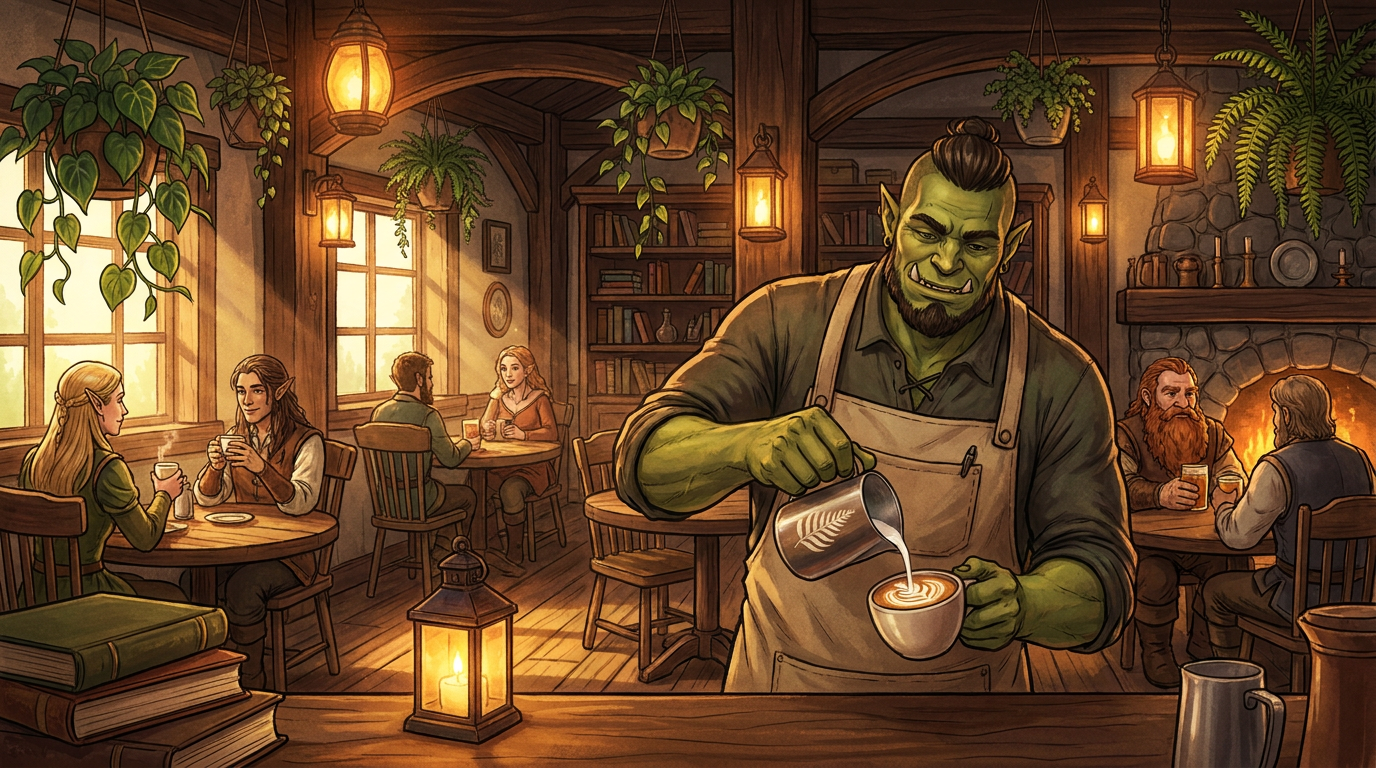
For decades, the fantasy genre has been defined by its apocalyptic stakes. Readers opening a new fantasy novel expected to find dark lords, bloody succession wars, complex magic systems weaponized for combat, and heroes tasked with saving the world from imminent destruction. The prevailing wisdom in publishing dictated that fantasy required high stakes to matter. But recently, a very different kind of protagonist has captured the market's attention: an exhausted orc warrior who hangs up her broadsword, moves to a quiet town, and opens a coffee shop.[4]
This is the premise of Travis Baldree’s 'Legends & Lattes', a novel that helped crystallize a massive shift in the publishing world known as 'cozy fantasy.' Billed as a story of high fantasy and low stakes, the subgenre trades the battlefield for the bakery, and the quest for world domination for the pursuit of a perfectly brewed cup of tea. It is a movement that fundamentally reimagines what a fantasy world can be used for, proving that magic and wonder do not strictly require warfare to be compelling.[1][4][6]
To understand cozy fantasy, one must look at what it deliberately excludes. The genre eschews violence, grimdark cruelty, and world-ending threats. Instead, it focuses heavily on themes of community, healing, everyday life, and personal growth. The conflicts are deeply personal rather than geopolitical; a protagonist might struggle to keep their small business afloat, navigate a misunderstanding with a neighbor, or learn to trust a new group of friends. If a kingdom falls, it happens entirely off-page, far away from the charming village where the actual story takes place.[1][2][4]
While the term 'cozy fantasy' gained mainstream prominence around 2022, its roots trace back to the early days of the COVID-19 pandemic. In March 2020, as global anxiety skyrocketed and daily routines were upended, readers found their appetite for grim, stressful fiction rapidly diminishing. Traditional epic fantasy, with its heavy political intrigue and constant peril, began to feel less like escapism and more like an extension of real-world exhaustion. Readers and writers alike began seeking out narratives that offered a sense of sanctuary and hope.[1][3][4]

Baldree himself noted that he wrote 'Legends & Lattes' during the pandemic because he no longer wanted to watch characters he liked get beheaded; he simply wanted them to be okay. The book, originally self-published before being acquired by Tor Books, became a runaway sensation, proving that there was a massive, untapped market for gentleness in speculative fiction. It set a template that countless other authors have since followed, blending fantasy tropes with the comforting rhythms of a slice-of-life narrative.[4][6]
Industry analysts have likened the appeal of cozy fantasy to a 'literary ASMR experience.' Just as autonomous sensory meridian response videos use gentle sounds to trigger physical relaxation, cozy fantasy uses sensory immersion to soothe the reader's nervous system. Authors dedicate significant page space to describing the smell of old books, the warmth of a hearth fire, the taste of spiced pastries, and the soft glow of magical lanterns. This deliberate pacing and focus on sensory comfort creates a reading experience designed to lower the heart rate rather than raise it.[2][4]
The publishing industry has moved aggressively to capitalize on this shift. Amazon recently introduced a dedicated category for cozy fantasy, recognizing it as a distinct and highly profitable market segment. Market research firms like K-lytics have analyzed thousands of search results, identifying over 1,300 genuine cozy fantasy titles that have flooded the market to meet reader demand. Advances for established authors pivoting into the cozy space have climbed significantly, with publishers actively seeking manuscripts that prioritize emotional healing over dramatic conflict.[4][7]
The publishing industry has moved aggressively to capitalize on this shift.
Social media has been the primary engine driving this commercial success. Platforms like BookTok and Bookstagram thrive on aesthetic presentation, and cozy fantasy delivers highly photogenic content. Illustrated covers featuring teacups, sleeping dragons, and cottagecore architecture are inherently shareable. Readers use these platforms to invite others into a shared emotional experience, building digital communities around the concept of comfort reading and pushing titles like TJ Klune's 'The House in the Cerulean Sea' onto bestseller lists.[1][4]

While the marketing category is new, the literary DNA of cozy fantasy is not. The genre shares a direct lineage with the long-established cozy mystery genre. Cozy mysteries have thrived for decades by offering readers a comforting puzzle in a quaint setting, usually featuring an amateur sleuth with a charming hobby. Cozy fantasy occupies the exact same emotional territory, but it takes the formula one step further: it keeps the charming village and the quirky neighbors, but it removes the murder entirely.[2][4][5]
The genre also draws heavy inspiration from classic children's literature and foundational fantasy texts. J.R.R. Tolkien’s 'The Hobbit' (1937) is frequently cited as an early precursor to the cozy aesthetic. While Bilbo Baggins eventually faces a dragon, the novel's opening chapters—focused on the comforts of the Shire, well-stocked pantries, and unexpected tea parties—perfectly encapsulate the cozy vibe. Similarly, Diana Wynne Jones’s 'Howl’s Moving Castle' (1986) is often viewed as the grandmother of the genre, prioritizing domestic magic and character quirks over epic battles.[1][5]
Beyond Western literature, the visual and narrative style of Studio Ghibli films has profoundly influenced modern cozy fantasy authors. The Japanese animation studio is famous for its quiet, lingering shots of nature, meticulous depictions of cooking, and stories where magic exists alongside mundane daily chores. This aesthetic of aspirational gentleness has translated seamlessly into prose, teaching a new generation of writers that a scene of characters simply sharing a meal can be just as captivating as a sword fight.[4][5]
The movement has also expanded beyond traditional fantasy settings, bleeding into science fiction. Becky Chambers’s Hugo Award-winning 'A Psalm for the Wild-Built' is a prime example of cozy sci-fi, following a tea monk and a robot as they travel through a utopian, post-scarcity world simply learning about each other. This cross-pollination demonstrates that the cozy approach is not limited to dragons and elves; it is a fundamental storytelling philosophy that can be applied to any speculative setting.[1][5]

However, writing a successful cozy fantasy presents a unique structural challenge for authors. Traditional storytelling relies heavily on external conflict to drive the plot forward. When an author removes the threat of death, the ticking clock of a doomsday device, and the presence of a traditional villain, they must find new ways to maintain narrative momentum. If a story is entirely devoid of tension, it risks becoming stagnant and boring.[2][4]
The solution, for the best writers in the genre, lies in emotional stakes. The tension in a cozy fantasy comes from the characters' internal journeys and their relationships with one another. Will the protagonist overcome their past trauma to accept love? Will the community rally together to save the local festival? By shrinking the scale of the conflict, the author magnifies the emotional resonance of the outcome. A burnt batch of magical pastries can feel just as devastating as a lost battle if the reader cares deeply enough about the baker.[2][3][5]
This intense focus on relationships is why the 'found family' trope is a cornerstone of the genre. Cozy fantasies frequently feature diverse ensemble casts of outcasts and misfits who come together to build a supportive community. Furthermore, the genre has become a prominent space for queer representation, with many of the most popular titles featuring healthy, low-angst LGBTQ+ romances that develop naturally alongside the main plot. For marginalized readers, finding a fantasy world where their existence is normalized and safe is a powerful form of escapism.[1][4]

As the market continues to saturate with coffee-shop alternate universe style fantasies, some industry watchers wonder if the trend has peaked. There is a risk that publishers, eager to cash in on the hype, will produce derivative works that mimic the aesthetic of coziness without capturing the genuine emotional depth that made the pioneers successful. Yet, the underlying demand for comfort media shows no signs of waning in an increasingly complex real world.[4][5]
Ultimately, the rise of cozy fantasy is more than just a publishing trend; it is a validation of the reader's desire for gentleness. It challenges the long-held cultural assumption that serious literature must be dark, gritty, and cynical. By proving that optimism, healing, and community are legitimate and commercially viable artistic choices, cozy fantasy has permanently broadened the horizons of speculative fiction, inviting readers to finally take a deep breath and stay a while.[4][8]
How we got here
1937
J.R.R. Tolkien publishes 'The Hobbit', introducing readers to the cozy, food-obsessed lifestyle of the Shire.
1986
Diana Wynne Jones publishes 'Howl's Moving Castle', setting an early template for domestic magic and whimsical, low-stakes fantasy.
March 2020
The onset of the COVID-19 pandemic drives a massive shift in reader preferences toward comforting, escapist fiction.
February 2022
Travis Baldree self-publishes 'Legends & Lattes', which quickly goes viral on BookTok and defines the modern cozy fantasy movement.
Late 2022
Traditional publishers begin aggressively acquiring cozy fantasy manuscripts, leading to a surge of new titles hitting the shelves.
2024
Amazon officially introduces a dedicated 'Cozy Fantasy' category to organize the thousands of titles flooding the market.
Viewpoints in depth
Comfort-Seeking Readers
Readers who prioritize emotional safety and escapism over high-stakes tension.
For this demographic, the appeal of cozy fantasy lies in its predictability and gentleness. In an era marked by real-world political instability, economic stress, and a global pandemic, these readers view traditional grimdark fantasy as emotionally exhausting rather than entertaining. They argue that fiction does not need to be traumatic to be profound, and they actively seek out books that function as a form of self-care. The guarantee of a happy ending and the focus on found family provide a necessary psychological sanctuary.
Publishing Industry Analysts
Market watchers tracking the commercial viability and expansion of the genre.
Industry experts view cozy fantasy as one of the most lucrative breakout trends of the decade. They point to the massive organic marketing engine of BookTok, which has proven capable of turning self-published slice-of-life stories into mainstream bestsellers. Analysts note that the genre inspires fierce series loyalty, as readers who find a comforting author tend to buy their entire backlist. However, some warn of impending market saturation, advising publishers to look for unique crossover concepts rather than simply greenlighting endless variations of magical coffee shops.
Traditional Epic Fantasy Fans
Readers who prefer the complex worldbuilding and high stakes of classic fantasy.
While generally accepting of the cozy subgenre's existence, traditionalists often argue that removing life-or-death stakes fundamentally weakens the narrative drive of a fantasy novel. This camp values intricate magic systems, sprawling geopolitical conflicts, and the epic hero's journey. They sometimes critique cozy fantasy as being overly simplistic or lacking the ambition required to win major literary awards like the Hugo. For these readers, the tension of a world on the brink of destruction is exactly what makes the eventual triumph satisfying.
What we don't know
- Whether the genre will maintain its current explosive growth or settle into a smaller, stable niche.
- How quickly the market might reach saturation with derivative 'magical coffee shop' premises.
- If the cozy aesthetic will successfully cross over into other traditionally dark genres, like horror or dystopian fiction.
Key terms
- Cozy Fantasy
- A fantasy subgenre characterized by low-stakes conflict, personal growth, and a focus on community and comfort rather than epic battles.
- Grimdark
- A subgenre of speculative fiction known for its tone, style, or setting that is particularly dystopian, amoral, or violent.
- Found Family
- A literary trope where characters who are not biologically related choose to support and love each other as a family unit.
- Slice-of-life
- A storytelling technique that presents a seemingly arbitrary sample of a character's everyday life, often lacking a traditional plot or major conflict.
- Literary ASMR
- A term used to describe writing that focuses heavily on sensory details—like the smell of baking or the sound of rain—to induce a feeling of deep relaxation in the reader.
Frequently asked
What exactly is cozy fantasy?
Cozy fantasy is a subgenre of speculative fiction that focuses on low-stakes, comforting narratives. It emphasizes themes of community, healing, and everyday life while avoiding violence, war, and world-ending threats.
What was the first cozy fantasy book?
While J.R.R. Tolkien's 'The Hobbit' and Diana Wynne Jones's 'Howl's Moving Castle' are early precursors, Travis Baldree's 2022 novel 'Legends & Lattes' is widely credited with launching the modern cozy fantasy trend.
Is cozy fantasy the same as romantasy?
No. While cozy fantasies often include romantic subplots, their primary focus is on community, personal growth, and comfort. Romantasy specifically centers the plot around a romantic relationship, often with higher stakes or explicit content.
Why did this genre become so popular?
The genre's popularity surged during the COVID-19 pandemic as readers sought escapism from real-world anxieties. Social media platforms like BookTok further accelerated its rise by popularizing its comforting, cottagecore aesthetic.
Sources
Source coverage
8 outlets
4 viewpoints surfaced








[1]WikipediaComfort-Seeking Readers
Cozy fantasy
Read on Wikipedia →[2]Jane FriedmanPublishing Industry Analysts
Cozy Fantasy: It’s All about the Vibes
Read on Jane Friedman →[3]Paste MagazineComfort-Seeking Readers
Spellshop Author Sarah Beth Durst on Why We Love Cozy Fantasy
Read on Paste Magazine →[4]Novelists, Inc.Cozy Fiction Authors
The Rise of Cozy Fantasy and Why It Matters
Read on Novelists, Inc. →[5]MediumComfort-Seeking Readers
How the 'Cozy' trend in Sci-Fi and Fantasy came about
Read on Medium →[6]SFF Book ReviewsTraditional Epic Fantasy Fans
Let's Start a Hype: Travis Baldree – Legends & Lattes
Read on SFF Book Reviews →[7]K-lyticsPublishing Industry Analysts
Cozy Fantasy Report and Market Seminar
Read on K-lytics →[8]Factlen Editorial TeamPublishing Industry Analysts
Synthesis by Factlen editorial team
Read on Factlen Editorial Team →

More in entertainment
See all 53 stories →Pixar Animation
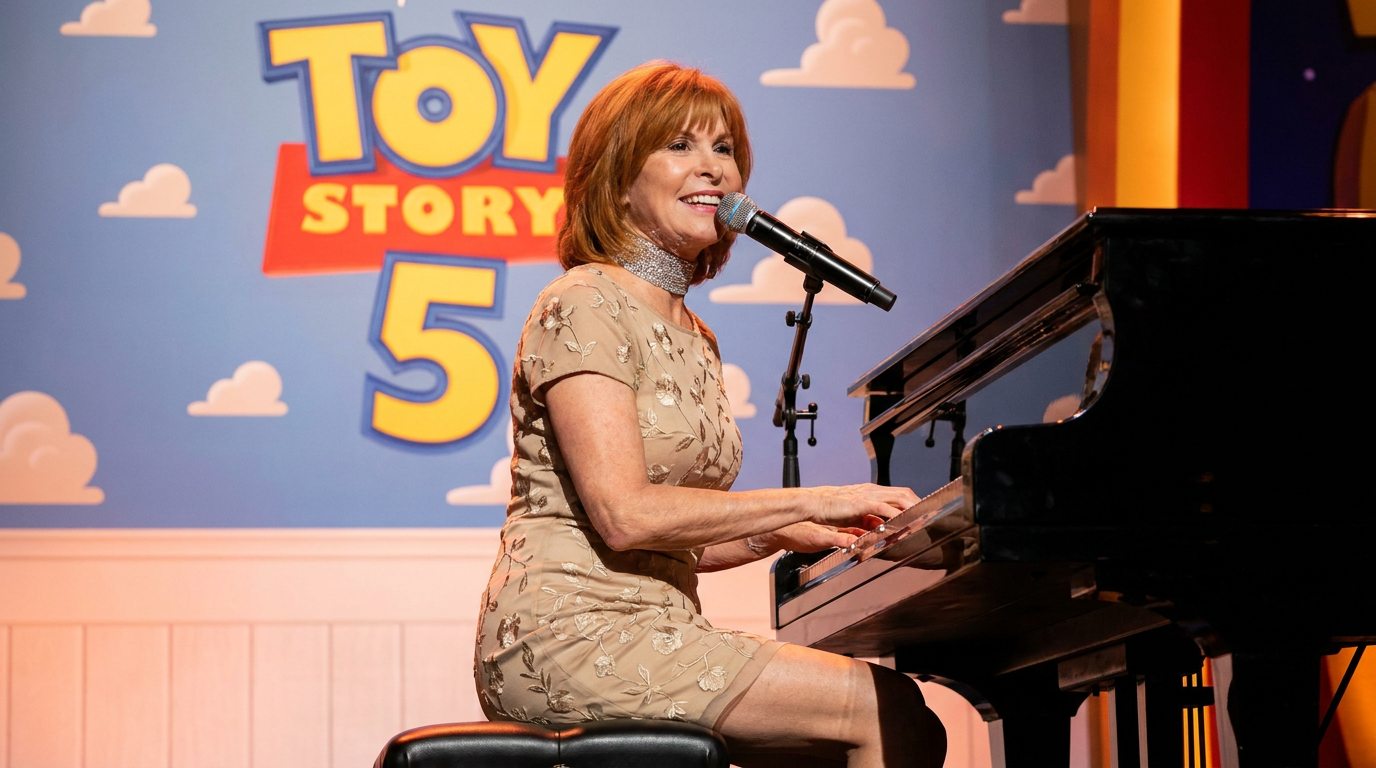
Taylor Swift Surprises at 'Toy Story 5' World Premiere as Pixar Unveils Highly Anticipated Sequel
7 sources
Color E-Readers
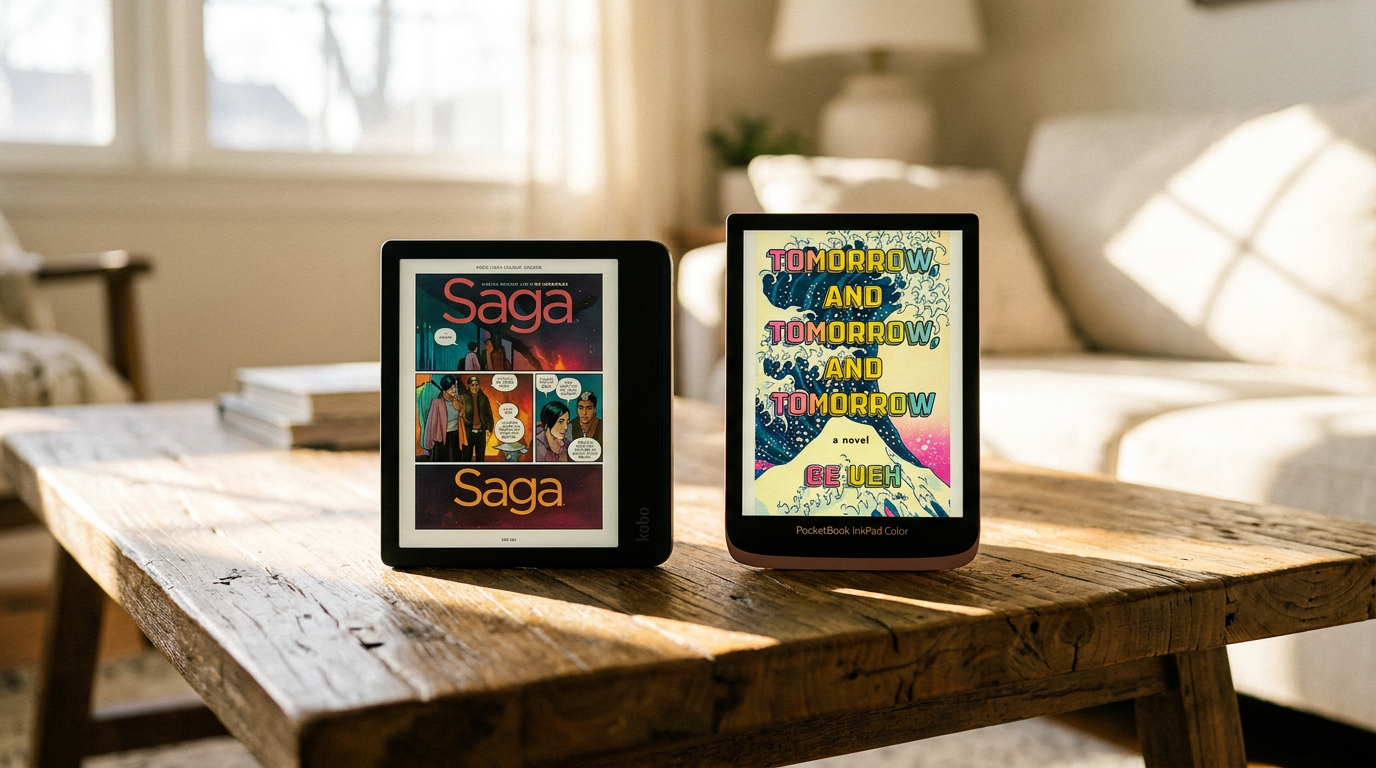
Kindle Colorsoft vs. Kobo Libra Colour: The 2026 Color E-Reader Trade-Off
6 sources
Creator Economy
The Post-Algorithm Era: Why Internet Creators Are Building Their Own Streaming Platforms
8 sources

Premium Cinema
IMAX vs. Dolby Cinema vs. ScreenX: The 2026 Premium Theater Experience Compared
9 sources

Every angle. Every day.
Get entertainment stories with full source coverage and perspective breakdowns delivered to your inbox.