
What Consumer Sleep Trackers Actually Measure: An Evidence Review
Clinical evaluations of leading consumer sleep wearables reveal they are highly accurate at measuring total sleep time, but fundamentally unreliable at diagnosing specific sleep stages like REM and deep sleep.
By Factlen Editorial Team
- Clinical Sleep Researchers
- Medical professionals who view polysomnography as the only true measure of sleep architecture.
- Behavioral Health Proponents
- Health coaches and behavioral scientists who value wearables for their psychological nudges.
- Consumer Tech Analysts
- Reviewers focused on the rapid iteration of sensor hardware and machine learning models.
What's not represented
- · Device Manufacturers (Apple, Oura, Whoop)
- · Patients with Diagnosed Sleep Disorders
Why this matters
Millions of consumers base their daily routines, caffeine intake, and mood on the 'sleep scores' generated by their wearables. Understanding exactly where these devices are medically accurate—and where they are guessing—empowers users to improve their health without falling into the anxiety of orthosomnia.
Key points
- Leading wearables like the Oura Ring and Apple Watch detect sleep and wakefulness with over 95 percent sensitivity.
- Total sleep time estimates from consumer devices generally fall within 15 to 30 minutes of clinical polysomnography.
- Devices struggle significantly with sleep staging, often misclassifying light, deep, and REM sleep due to their reliance on indirect heart rate data.
- Experts recommend using wearables to track long-term schedule consistency rather than fixating on daily point estimates of specific sleep stages.
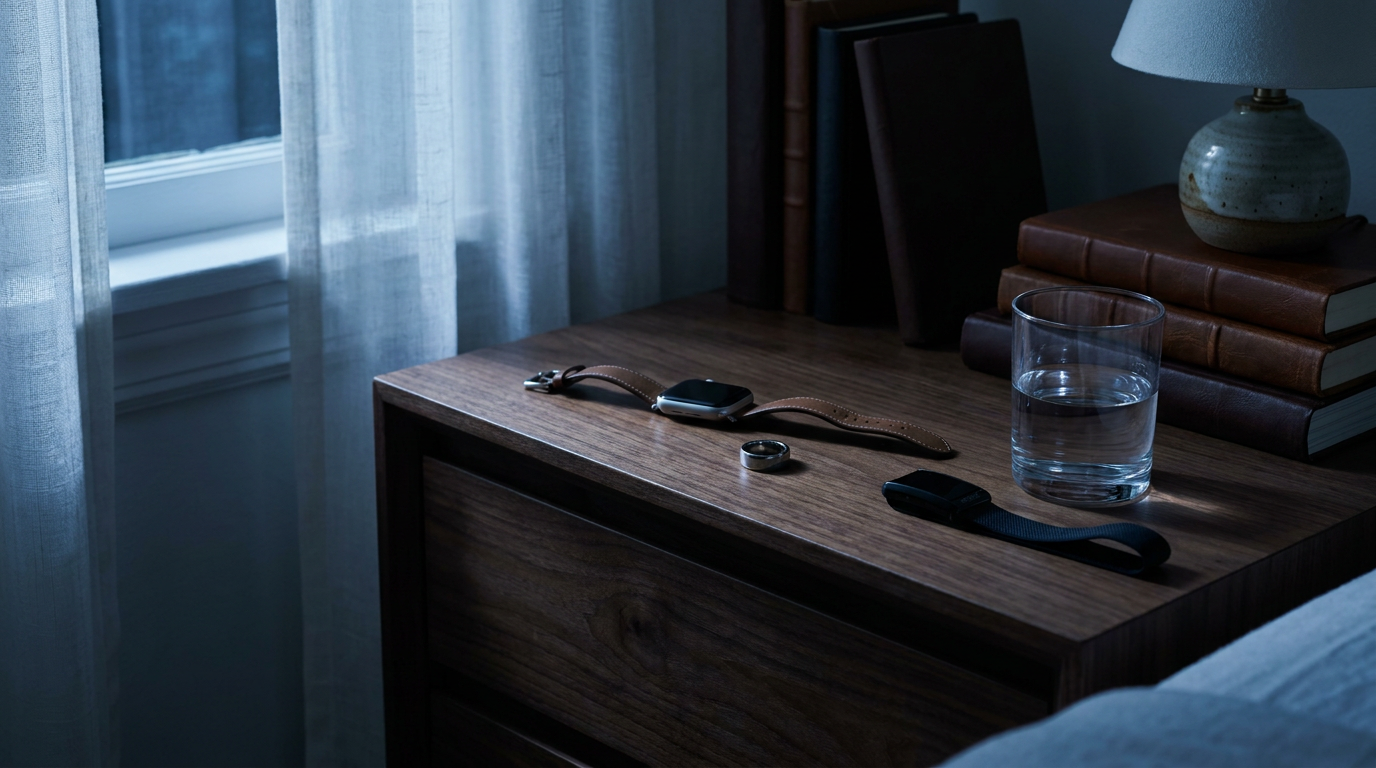
The modern nightstand has been replaced by the modern wrist. Millions of consumers now go to sleep wearing an Apple Watch, an Oura Ring, a Whoop strap, or a Fitbit, effectively outsourcing the assessment of their nightly rest to a dashboard of morning metrics. These devices promise a level of physiological insight that was previously available only in highly specialized clinical sleep laboratories. They claim to measure not just how long a user slept, but the precise architecture of that rest: how many minutes were spent in rapid eye movement (REM), how deep the slow-wave sleep was, and how efficiently the central nervous system recovered overnight. For many users, the resulting sleep score dictates their daily behavior, influencing everything from their morning caffeine intake to the intensity of their afternoon workout.
As the consumer sleep-tracking market expands into a multi-billion dollar industry, clinical researchers have begun rigorously testing these commercial claims against the medical gold standard: polysomnography (PSG). Polysomnography involves wiring a patient with electroencephalogram (EEG) sensors to directly measure brain waves, alongside respiratory belts, eye-movement trackers, and cardiac monitors. The resulting evidence from these head-to-head comparisons reveals a stark divide between what wearables are genuinely capable of and where their marketing outpaces their underlying science. For consumers deciding whether to invest in a premium tracking device—or how seriously to take a low score on a Tuesday morning—the clinical data offers a clear, evidence-based map of the technology's utility and its hard limitations.[3]
The strongest consensus across multiple clinical validations is that modern wearables are genuinely excellent at telling a user if they are asleep and for exactly how long. A comprehensive 2024 study published in the journal MDPI Sensors evaluated the Oura Ring Gen3, Fitbit Sense 2, and Apple Watch Series 8 against clinical polysomnography, finding that all three devices demonstrated a sensitivity of 95 percent or higher for distinguishing sleep from wakefulness. Similarly, home-based comparisons by consumer technology analysts have found that leading devices consistently produce total-sleep-time figures within 15 to 30 minutes of the clinical reference standard. For answering basic, foundational questions—such as whether a user achieved a healthy seven hours of sleep or scraped by on five and a half—the devices serve as highly reliable barometers that accurately capture the broad strokes of a night's rest.[1][4]

However, there is a notable point of uncertainty regarding specificity, which is the algorithmic ability to detect brief awakenings during the night. Devices often misclassify periods of lying perfectly still awake as light sleep, which can lead to a slight overestimation of total sleep duration, particularly for individuals suffering from clinical insomnia. Furthermore, the most heavily marketed features of consumer trackers—the colorful, highly specific charts breaking down REM, deep, and light sleep—are where the scientific evidence is the weakest. A rigorous evaluation published by Oxford University Press tested devices including the Whoop 4.0 and Garmin Vivosmart 4, finding that their agreement with polysomnography for sleep staging ranged from merely fair to moderate, with Cohen's kappa coefficients sitting between 0.21 and 0.53.[2][3]
However, there is a notable point of uncertainty regarding specificity, which is the algorithmic ability to detect brief awakenings during the night.
The core limitation driving this inaccuracy is fundamentally physiological rather than a simple software bug. Clinical polysomnography defines sleep stages by directly observing distinct brainwave frequencies via EEG. Consumer wearables, by contrast, must infer these complex brain states indirectly by measuring peripheral signals like heart rate, heart rate variability, skin temperature, and wrist or finger movement. This indirect measurement leads to consistent algorithmic errors across the industry. The MDPI analysis found that the Apple Watch Series 8 tended to underestimate deep sleep by an average of 43 minutes while simultaneously overestimating light sleep. Fitbit devices showed a remarkably similar pattern of overestimating light sleep and underestimating deep sleep across the tested clinical cohort.[1]

While the Oura Ring Gen3 performed the best among the tested group—showing no statistically significant difference from polysomnography in aggregate stage estimation—even the most accurate consumer devices still demonstrate a sensitivity for specific sleep stages that hovers between 76 and 79 percent. This leaves a substantial margin of error on any given night. Beyond sensor accuracy, the behavioral impact of wearing a tracker is decidedly mixed. Health analysts note that the primary benefit of consumer wearables is their role as a behavioral nudge. By making bedtime and wake time highly visible, the devices successfully encourage users to adopt more consistent evening routines, reduce late-night screen time, and prioritize their sleep schedules in a way they previously ignored.[1][5]
The utility of these devices also varies wildly depending on the specific population using them. For professional athletes and highly active individuals, the continuous monitoring of resting heart rate and heart rate variability provides a genuinely useful proxy for central nervous system recovery, helping to modulate training loads. In these populations, the absolute accuracy of the sleep stages matters less than the directional trends of their cardiovascular baselines. However, for individuals struggling with clinical sleep disorders like sleep apnea or chronic insomnia, consumer wearables can be actively misleading. Because the devices rely heavily on movement to determine wakefulness, an insomniac lying perfectly still in frustration is frequently logged as experiencing light sleep, leading to a dashboard that falsely reassures the user while completely missing the underlying medical issue.[5][6]

Ultimately, the scientific consensus suggests that consumers should treat wearable sleep data as a long-term trendline rather than a daily diagnostic tool. If a device indicates that deep sleep has trended downward over a six-week period, that macro-level shift is likely real and worth investigating through lifestyle adjustments. But if an app claims a user received exactly 14 minutes of REM sleep on a random Tuesday, that point estimate should be treated with substantial skepticism. The most effective way to utilize a modern sleep tracker is to monitor total duration and schedule consistency, while actively ignoring the granular stage data if it conflicts with the subjective reality of how rested the user actually feels upon waking.[4][5][6]
How we got here
2012
Fitbit introduces its first basic sleep tracking feature based on simple wrist movement.
2015
Apple launches the first Apple Watch, though native sleep tracking would not arrive until years later.
2018
Oura releases its second-generation ring, popularizing finger-based optical heart rate sensors for sleep.
2023
Clinical studies begin highlighting 'orthosomnia' as a widespread side effect of wearable sleep tracking.
2026
Independent medical reviews confirm that while total sleep time accuracy is high, stage tracking remains fundamentally flawed.
Viewpoints in depth
Clinical Sleep Researchers
Medical professionals who view polysomnography as the only true measure of sleep architecture.
Clinical researchers emphasize that sleep is fundamentally a neurological process, defined by specific brainwave frequencies that cannot be measured from the wrist or finger. They caution that while consumer wearables are improving at detecting movement and heart rate variability, algorithmic guesses at REM and deep sleep remain too inaccurate for medical use. This camp frequently warns about 'orthosomnia,' where the anxiety of chasing a perfect wearable score actively degrades a patient's actual ability to fall asleep.
Behavioral Health Proponents
Health coaches and behavioral scientists who value wearables for their psychological nudges.
This perspective argues that the absolute clinical accuracy of a device matters less than its ability to change user behavior. By making sleep visible and gamifying bedtime consistency, wearables successfully encourage users to reduce late-night screen time and limit evening alcohol consumption. For behavioral proponents, a tracker that is consistently wrong by 20 minutes is still a highly effective tool, provided it accurately captures the user's long-term baseline trends.
Consumer Tech Analysts
Reviewers focused on the rapid iteration of sensor hardware and machine learning models.
Technology analysts view the current limitations of sleep trackers as temporary software hurdles rather than permanent roadblocks. They point out that modern devices like the Oura Ring Gen3 and Apple Watch Series 8 are vastly superior to the basic accelerometers of a decade ago. This camp anticipates that as machine learning models are trained on larger datasets of paired wearable-and-PSG data, the gap between consumer estimates and clinical reality will continue to close.
What we don't know
- It remains unclear if upcoming sensor technologies, such as continuous blood pressure or advanced temperature tracking, will significantly bridge the gap in sleep stage accuracy.
- Long-term clinical data on the psychological impact of 'orthosomnia'—and whether the anxiety of tracking sleep outweighs the benefits for the general public—is still being actively studied.
Key terms
- Polysomnography (PSG)
- The clinical gold standard for sleep testing, which uses sensors to monitor brain waves, oxygen levels, heart rate, and breathing.
- Electroencephalogram (EEG)
- A test that detects electrical activity in the brain, essential for accurately identifying specific sleep stages.
- Cohen's kappa
- A statistical measure used to calculate the agreement between two different measuring methods, accounting for agreement occurring by chance.
- Orthosomnia
- A medical term for the unhealthy obsession with achieving perfect sleep data on wearable tracking devices.
- Sensitivity
- In sleep tracking, the ability of a device to correctly identify that a person is actually asleep.
- Specificity
- In sleep tracking, the ability of a device to correctly identify brief moments of wakefulness during the night.
Frequently asked
Which consumer sleep tracker is the most accurate?
Studies show the Oura Ring Gen3 generally performs best for sleep staging, but all leading devices (Apple Watch, Fitbit, Whoop) are highly accurate for measuring total sleep time.
Can my Apple Watch accurately tell me how much REM sleep I got?
No. Consumer wearables infer REM sleep from heart rate and movement, which leads to significant error margins. They cannot directly measure the brainwaves required to definitively stage REM sleep.
What is orthosomnia?
Orthosomnia is an unhealthy preoccupation with achieving perfect sleep metrics on a tracking device, which can ironically cause anxiety that disrupts actual sleep.
Should I stop wearing my sleep tracker?
If checking your sleep score causes morning anxiety or makes you feel more tired, experts recommend taking a break. If you use the data to maintain a consistent bedtime, it remains a helpful tool.
Sources
Source coverage
6 outlets
3 viewpoints surfaced






[1]MDPIClinical Sleep Researchers
Accuracy of Oura Ring Gen3, Fitbit Sense 2, and Apple Watch Series 8 Compared to Polysomnography
Read on MDPI →[2]Oxford University PressClinical Sleep Researchers
Evaluation of six popular consumer wearable sleep-tracking devices against polysomnography
Read on Oxford University Press →[3]National Institutes of HealthClinical Sleep Researchers
Performance of consumer sleep-tracking devices alongside actigraphy versus polysomnography
Read on National Institutes of Health →[4]The Curated WeeklyConsumer Tech Analysts
A side-by-side comparison of six widely used wearables against polysomnography
Read on The Curated Weekly →[5]Mito HealthBehavioral Health Proponents
Do Sleep Trackers Improve Sleep Quality?
Read on Mito Health →[6]Factlen Editorial TeamConsumer Tech Analysts
Synthesis by Factlen editorial team
Read on Factlen Editorial Team →
More in shopping
See all 106 stories →E-Bikes
The 2026 E-Bike Buying Guide: How to Choose the Right Electric Bicycle
8 sources

Gear Showdown
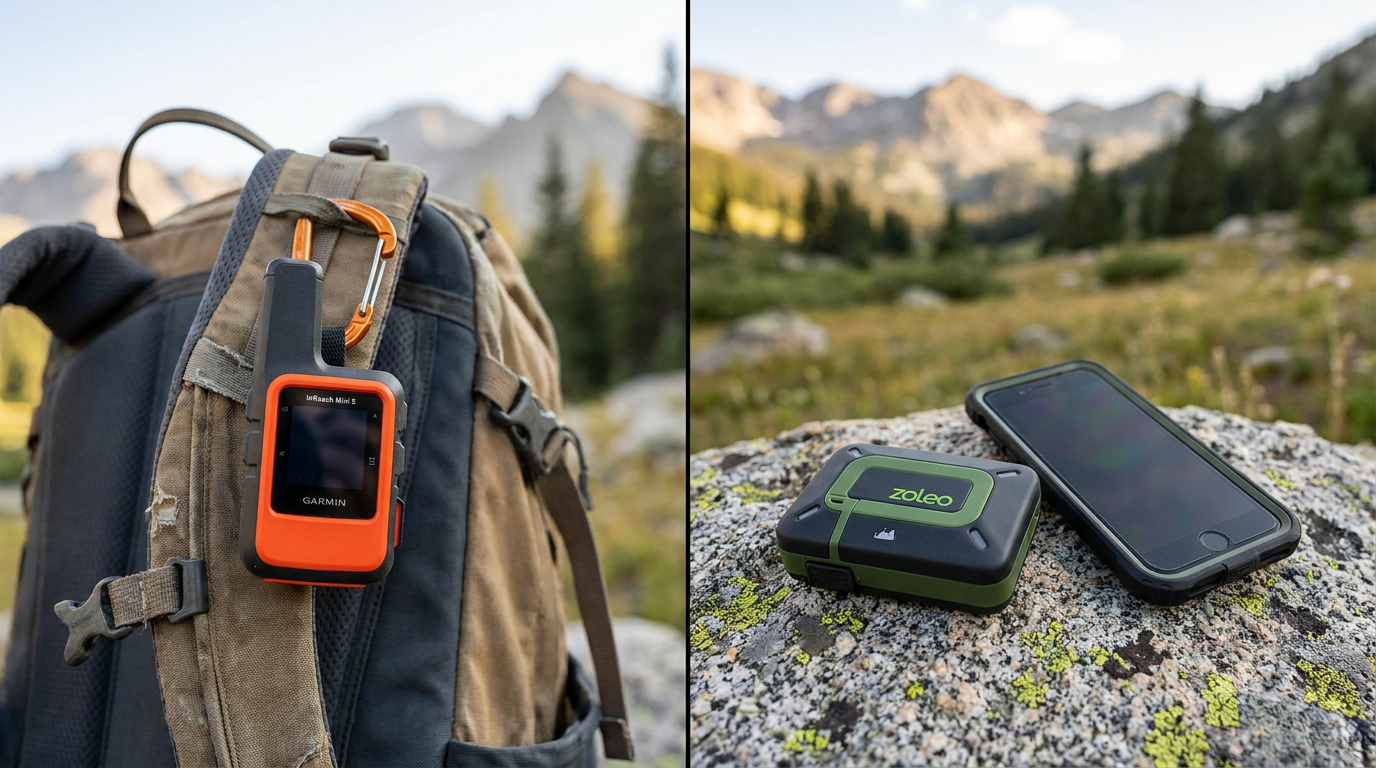
Garmin inReach Mini 2 vs. Zoleo: Which Satellite Communicator Belongs in Your Pack?
9 sources
Material Science
Plant-Based Leather vs. Traditional Leather: The 2026 Material Comparison
11 sources

Used EVs
The 2026 Guide to Buying a Used EV: Navigating Battery Health, Depreciation, and the Post-Tax-Credit Market
8 sources

Every angle. Every day.
Get shopping stories with full source coverage and perspective breakdowns delivered to your inbox.