
US Blocks Foreign Access to Anthropic's Advanced AI Models Over National Security
The Trump administration has placed unprecedented export controls on Anthropic's most powerful artificial intelligence models, barring foreign governments and companies from accessing the technology. The move marks a major escalation in Washington's effort to treat cutting-edge AI systems as restricted national security assets.
By Factlen Editorial Team
- National Security Advocates
- Argue that advanced AI is a dual-use weapon that must be kept out of the hands of foreign adversaries to protect American infrastructure and military supremacy.
- Tech Industry & Commercial AI
- Warn that software export controls will cripple American companies' revenue, isolate the US tech sector, and accelerate foreign efforts to build competing sovereign AI models.
- International Partners & Diplomats
- Express frustration at being caught in a blanket ban, arguing that treating strategic partners like adversaries undermines global technological cooperation and economic stability.
What's not represented
- · Open-source AI developers who fear the regulations will eventually target their public code repositories.
- · Academic researchers outside the US who rely on advanced models for non-defense scientific studies.
Why this matters
By classifying top-tier commercial AI models as restricted national security assets, the U.S. is fundamentally altering the global technology landscape. This decision not only cuts off international businesses and researchers from leading AI tools but also sets a precedent that could fracture the global internet into siloed, state-controlled AI ecosystems.
Key points
- The Trump administration has blocked foreign access to Anthropic's most advanced AI models.
- The models are now classified as restricted national security assets by the Pentagon and Commerce Department.
- The ban prevents Anthropic from offering API or cloud access to entities outside the United States.
- Officials argue the AI's advanced capabilities make it a dual-use technology that must be kept from adversaries.
- The tech industry warns the move will cripple international revenue and isolate American developers.
- Allied nations are scrambling to secure exemptions from the blanket restrictions.
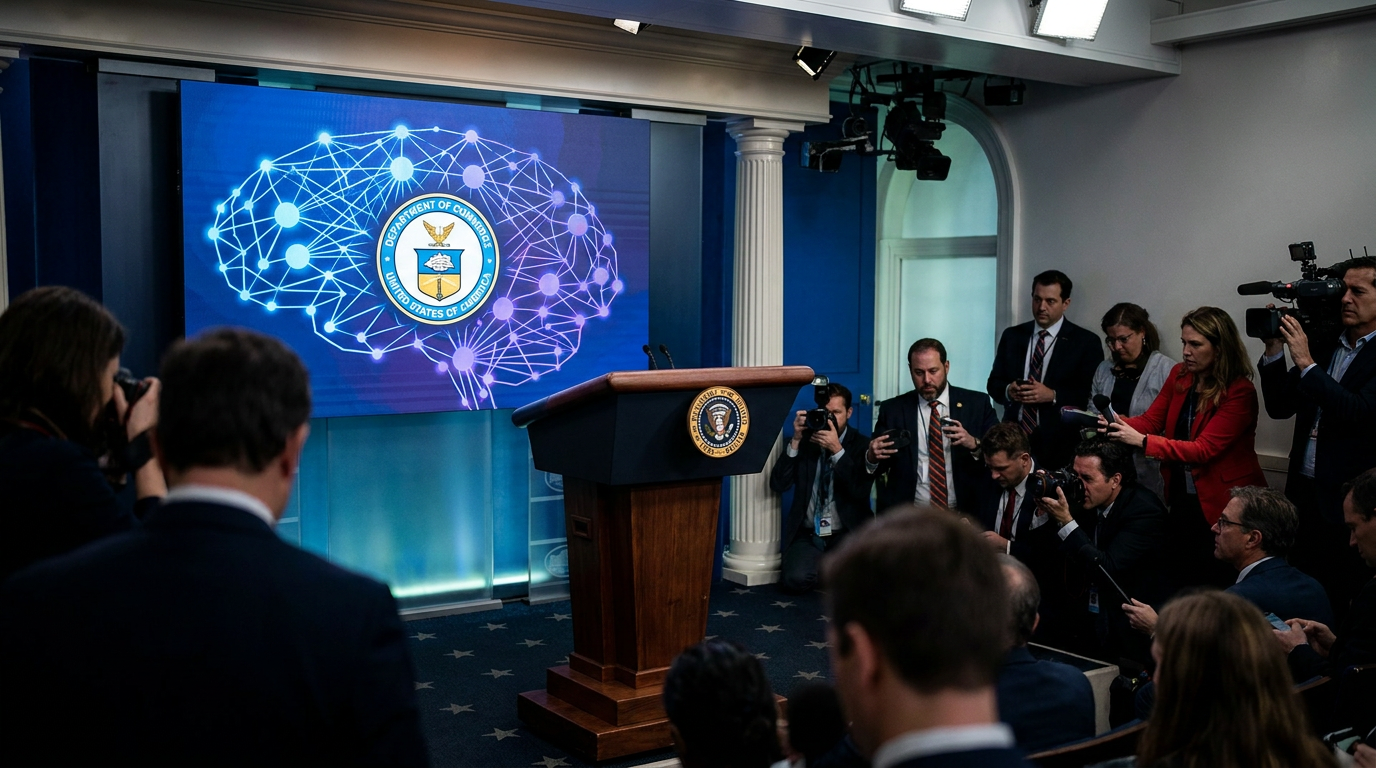
The Trump administration has enacted sweeping export controls that block foreign governments, corporations, and individuals from accessing Anthropic's most advanced artificial intelligence models. The unprecedented directive effectively classifies the San Francisco-based company's top-tier systems as restricted national security assets, fundamentally altering how the United States governs the proliferation of commercial AI.[1][3]
Under the new rules, Anthropic has been placed on a specialized Pentagon and Commerce Department restricted list. This designation prohibits the company from offering API access or cloud-based deployment of its most capable models to any IP address or registered entity outside the United States, forcing an immediate halt to international enterprise contracts.[4][7]
The restrictions specifically target Anthropic's "Mythos" class of models, which recently demonstrated advanced capabilities in autonomous coding, strategic planning, and zero-day vulnerability detection. Defense and intelligence officials argue these capabilities cross a critical threshold, transforming the software from a standard commercial product into a potential dual-use weapon that requires strict containment.[1][5]

Proponents of the ban within the administration frame the move as a necessary step to maintain American technological supremacy. By treating cutting-edge AI with the same regulatory severity as nuclear technology or advanced aerospace engineering, the White House aims to prevent foreign adversaries from leveraging American innovation to accelerate their own military, surveillance, or cyber-offensive programs.[2][4]
Proponents of the ban within the administration frame the move as a necessary step to maintain American technological supremacy.
The tech industry has reacted with a mix of shock and logistical panic. While export controls on physical AI hardware—such as advanced semiconductors and specialized microchips—have been standard practice for years, restricting cloud-based access to a software model represents a massive and technically complex expansion of federal authority over the internet.[6][8]
Anthropic, which has historically positioned itself as a safety-conscious AI developer, now finds its commercial ambitions severely curtailed. The company has reportedly been forced to sever lucrative contracts with international enterprise clients overnight, prompting deep concerns across Silicon Valley about the financial viability of developing multi-billion-dollar models if the global market is suddenly closed off by federal mandate.[3][7]

The diplomatic fallout has been immediate and severe. European and Asian allies, many of whom rely heavily on American AI models to power their own domestic industries and research sectors, are scrambling to secure exemptions. Several allied nations have expressed intense frustration that the blanket ban treats strategic partners with the same suspicion as geopolitical rivals.[3][6]
Legal and policy experts warn that the Anthropic ban is likely just the beginning of a broader regulatory regime. If the administration successfully defends this classification in federal court, similar restrictions could soon be applied to advanced models developed by competitors like OpenAI, Google, and Meta, effectively fracturing the global AI ecosystem into isolated, state-controlled silos.[5][8]

In the coming weeks, the Commerce Department is expected to release a framework detailing how, or if, allied nations might apply for specialized licensing to regain access. Until then, the global tech community remains in a holding pattern, grappling with a new reality where the world's most powerful software stops abruptly at the American border.[4][6]
How we got here
Oct 2022
The US implements sweeping export controls on advanced AI hardware and microchips.
Late 2025
Anthropic releases its 'Mythos' class models, demonstrating unprecedented autonomous capabilities.
May 2026
The Pentagon drafts an internal memo classifying top-tier AI models as dual-use national security assets.
June 12, 2026
The Trump administration officially blocks foreign access to Anthropic's advanced models.
Viewpoints in depth
National Security Hawks
Advocates for strict containment of advanced AI to preserve American military and cyber dominance.
Defense officials and national security analysts argue that the latest generation of AI models are no longer just chatbots; they are powerful engines capable of writing zero-day malware, planning strategic logistics, and accelerating weapons development. From this perspective, allowing foreign adversaries to rent access to these capabilities via the cloud is akin to selling them advanced military hardware. They maintain that temporary economic hits to tech companies are a necessary trade-off to prevent hostile states from using American innovation against the United States.
Global Tech Industry
Tech leaders warning that software export bans will economically cripple American AI dominance.
Silicon Valley executives and tech policy advocates view the ban as a catastrophic overreach that misunderstands how software scales. They argue that cutting off the global market deprives American companies of the massive revenue needed to train the next generation of models. Furthermore, they warn that the ban will simply accelerate foreign investment in sovereign AI, forcing Europe, Asia, and the Middle East to build their own competing models rather than relying on US-based infrastructure, ultimately diminishing American influence over global AI standards.
Allied Nations
International partners frustrated by a blanket ban that treats them with the same suspicion as adversaries.
Diplomats from allied nations in Europe and Asia have expressed deep frustration over being caught in the crossfire of Washington's national security pivot. Many of these countries have integrated American AI models into their own domestic industries, healthcare systems, and research institutions. They argue that a blanket ban undermines decades of technological cooperation and forces them to reconsider their reliance on US tech infrastructure, demanding immediate exemptions to prevent severe disruptions to their own economies.
What we don't know
- Whether the administration will grant exemptions or specialized licenses to close allies like the UK, Japan, or the EU.
- How Anthropic will offset the massive loss of international enterprise revenue required to fund future model development.
- If this software-level export ban will survive the inevitable legal challenges from the tech industry regarding federal authority over cloud computing.
Key terms
- Export Controls
- Federal regulations that restrict the export of certain goods, software, and technology for national security or foreign policy reasons.
- Dual-Use Technology
- Technology that has both civilian commercial applications and potential military or destructive uses.
- API Access
- Application Programming Interface access, which allows external companies to integrate and use an AI model hosted on the developer's servers.
Frequently asked
Does this ban affect individual users outside the US?
Yes, the current directive blocks foreign individuals, companies, and governments from accessing Anthropic's most advanced models via API or cloud platforms.
Are other AI companies like OpenAI or Google affected?
Currently, the restriction specifically targets Anthropic's top-tier models, but experts expect similar rules may soon apply to other leading American AI developers.
Can foreign users bypass this with a VPN?
The Commerce Department is requiring strict 'know-your-customer' and IP-verification protocols to prevent VPN workarounds, though enforcement remains a significant technical challenge.
Sources
Source coverage
8 outlets
3 viewpoints surfaced








[1]AxiosInternational Partners & Diplomats
Scoop: Trump admin blocks foreign access to Anthropic's most powerful AI
Read on Axios →[2]Fox NewsNational Security Advocates
Trump administration secures American AI, blocks foreign adversaries from accessing Anthropic's top models
Read on Fox News →[3]The New York TimesInternational Partners & Diplomats
White House Restricts Global Access to Anthropic's Advanced AI, Citing National Security
Read on The New York Times →[4]The Wall Street JournalNational Security Advocates
Commerce Department Halts Foreign Access to Anthropic AI Models in Unprecedented Export Control
Read on The Wall Street Journal →[5]WiredTech Industry & Commercial AI
The US Just Classified Anthropic's AI as a National Security Asset. What Now?
Read on Wired →[6]ReutersInternational Partners & Diplomats
US blocks foreign access to Anthropic AI models, escalating tech protectionism
Read on Reuters →[7]TechCrunchTech Industry & Commercial AI
Anthropic placed on Pentagon restricted list, cutting off international API access
Read on TechCrunch →[8]The VergeTech Industry & Commercial AI
The Trump administration is treating AI like nuclear weapons
Read on The Verge →
More in news politics
See all 145 stories →Media Literacy
Fact-Checking the 'Prebunking' Strategy: Can Psychological Inoculation Stop Misinformation?
7 sources

AI Export Controls
U.S. Blocks Foreign Access to Anthropic's Advanced AI Models Over Security Concerns
7 sources
AI Policy
Trump Administration Blocks Foreign Access to Anthropic's Most Advanced AI Models
8 sources
AI Policy
Trump Administration Blocks Foreign Access to Anthropic's Advanced AI Models
8 sources
Every angle. Every day.
Get news politics stories with full source coverage and perspective breakdowns delivered to your inbox.