
US and Iran Sign Preliminary Agreement to End 110-Day War and Reopen Strait of Hormuz
The US and Iran have signed a 14-point memorandum of understanding to halt military operations and reopen the Strait of Hormuz, initiating a 60-day window for final negotiations. The deal grants Tehran immediate sanctions relief and a proposed $300 billion reconstruction fund, drawing sharp criticism from Israeli officials.
By Factlen Editorial Team
- US Administration
- Views the deal as a historic victory that ends a devastating war and reopens global shipping.
- Israeli Government
- Argues the deal is a dangerous concession that rewards Iranian aggression and leaves the nuclear threat unresolved.
- Iranian Leadership
- Frames the immediate sanctions relief and the lifting of the US naval blockade as a strategic victory over US pressure.
- Global Shipping Industry
- Relieved by the diplomatic breakthrough but highly cautious due to the massive mine-clearing operation required.
What's not represented
- · Lebanese Civilians
- · European Energy Importers
Why this matters
This preliminary agreement pauses a devastating 110-day war and begins the process of reopening the Strait of Hormuz, a critical artery for 20% of the world's oil. However, the massive economic concessions granted to Iran have infuriated Israel and exposed deep fractures in the U.S.-Israeli alliance, raising the risk that the conflict could splinter into a prolonged proxy war in Lebanon.
Key points
- The US and Iran signed a 14-point MOU to halt their 110-day war.
- Iran receives immediate waivers for crude oil exports and banking services.
- A 60-day window has been established to negotiate a final nuclear agreement.
- The Strait of Hormuz will reopen, but clearing 80 naval mines will take weeks.
- Israel is furious with the deal, viewing it as a dangerous concession to Tehran.
- The US has committed to lifting its naval blockade of Iran within 30 days.
The United States and Iran have signed a sweeping 14-point memorandum of understanding (MOU) to halt a devastating 110-day war, initiating a fragile 60-day window to negotiate a final peace treaty. The preliminary agreement, mediated by a coalition led by Pakistan, mandates an immediate and permanent end to military operations on all fronts, including the heavily contested border between Israel and Lebanon. For the global economy, the centerpiece of the deal is the reopening of the Strait of Hormuz, a critical maritime chokepoint that has been paralyzed by naval mines and a U.S. blockade since late February.[1][2][3][4]
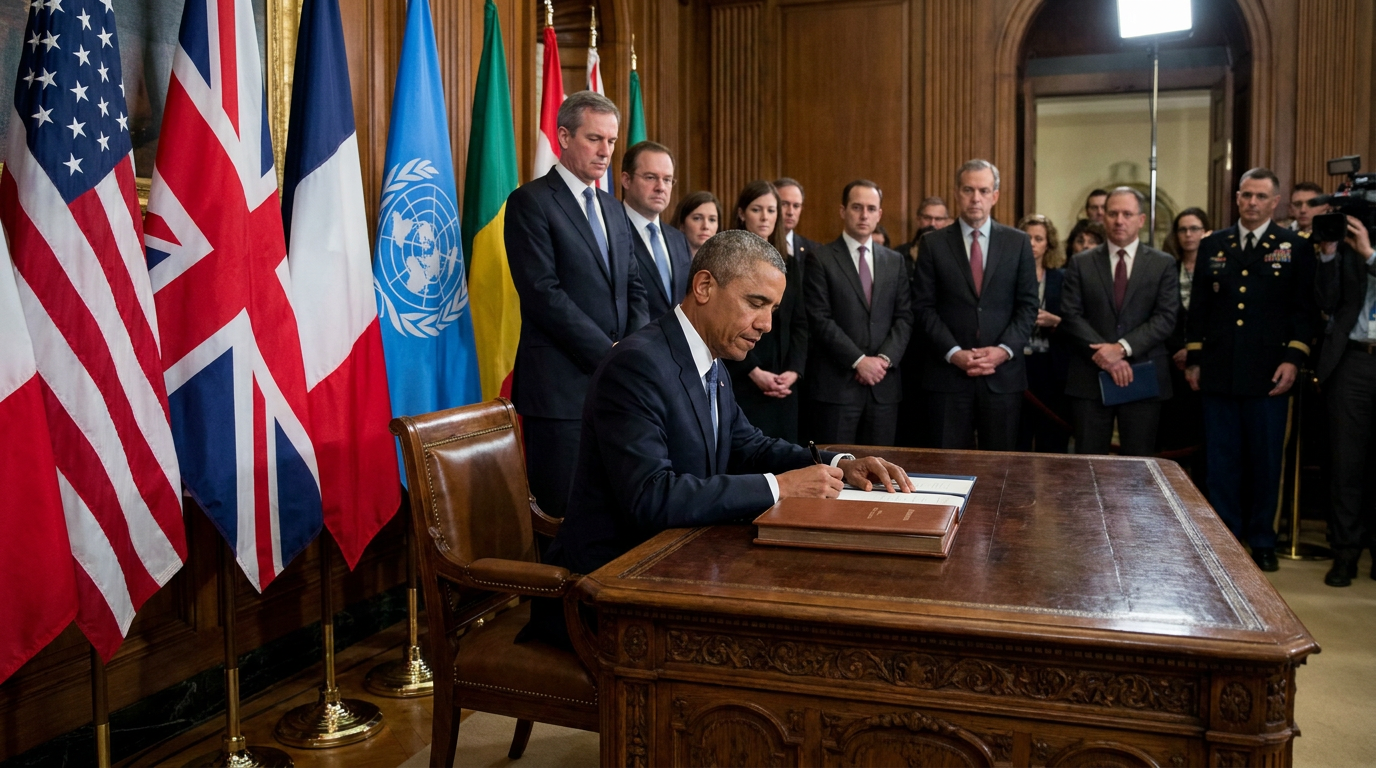
Under the terms dictated by senior U.S. officials, the agreement grants Tehran massive and immediate economic concessions. The moment the document was signed by U.S. President Donald Trump and Iranian President Masoud Pezeshkian, the U.S. Treasury Department was mandated to issue sweeping waivers allowing Iran to resume exporting crude oil and petroleum products. Furthermore, the U.S. and its regional partners have committed to developing a $300 billion reconstruction and economic development plan for Iran, the mechanisms of which will be finalized during the 60-day negotiation period.[1][2]
In exchange for sanctions relief, Iran has agreed to maintain the "status quo" of its nuclear program and down-blend its stockpile of highly enriched uranium on Iranian soil under the supervision of the International Atomic Energy Agency (IAEA). The U.S. has also agreed to begin lifting its naval blockade immediately, with a commitment to fully remove it within 30 days. If a final, comprehensive deal is reached within the 60-day window, the U.S. has pledged to withdraw its forces from the immediate proximity of Iran and refrain from deploying additional troops to the region.[1][2][3]

Despite the diplomatic breakthrough, the physical reality in the Strait of Hormuz remains treacherous. The shipping industry has warned that the waterway will not return to normal operations for weeks, or possibly months, due to the presence of roughly 80 naval mines laid by Iranian forces in the central traffic separation scheme. "The main route through the middle of the Strait of Hormuz, that's closed, that's dangerous," noted a director at the tanker owners association Intertanko, emphasizing that clearing the explosives will require a massive, painstaking operation involving specialized minesweepers and underwater drones.[4][8]
The logistical backlog is staggering. More than 500 commercial vessels are currently stranded in the Gulf of Oman and the Persian Gulf, waiting for assurances that the corridor is genuinely safe. Shipping executives have stressed that a political signature does not immediately translate to maritime security, and many insurance companies remain hesitant to underwrite voyages until the U.S. military and its allies can guarantee that the minefield has been entirely neutralized. During the conflict, some vessels resorted to paying what the industry dubbed "Tehran's tollbooth" to sneak through Iranian coastal waters.[4][8]

More than 500 commercial vessels are currently stranded in the Gulf of Oman and the Persian Gulf, waiting for assurances that the corridor is genuinely safe.
The agreement has exposed a deep and increasingly public rift between the U.S. administration and the Israeli government. Israel was not a party to the negotiations, and Israeli officials were reportedly caught off guard by the speed and scope of the concessions. Senior Israeli figures have privately described the preliminary agreement as "terrible," arguing that it prematurely relieves economic pressure on Tehran while leaving Iran's nuclear infrastructure and its network of regional proxy militias largely intact.[1][5]
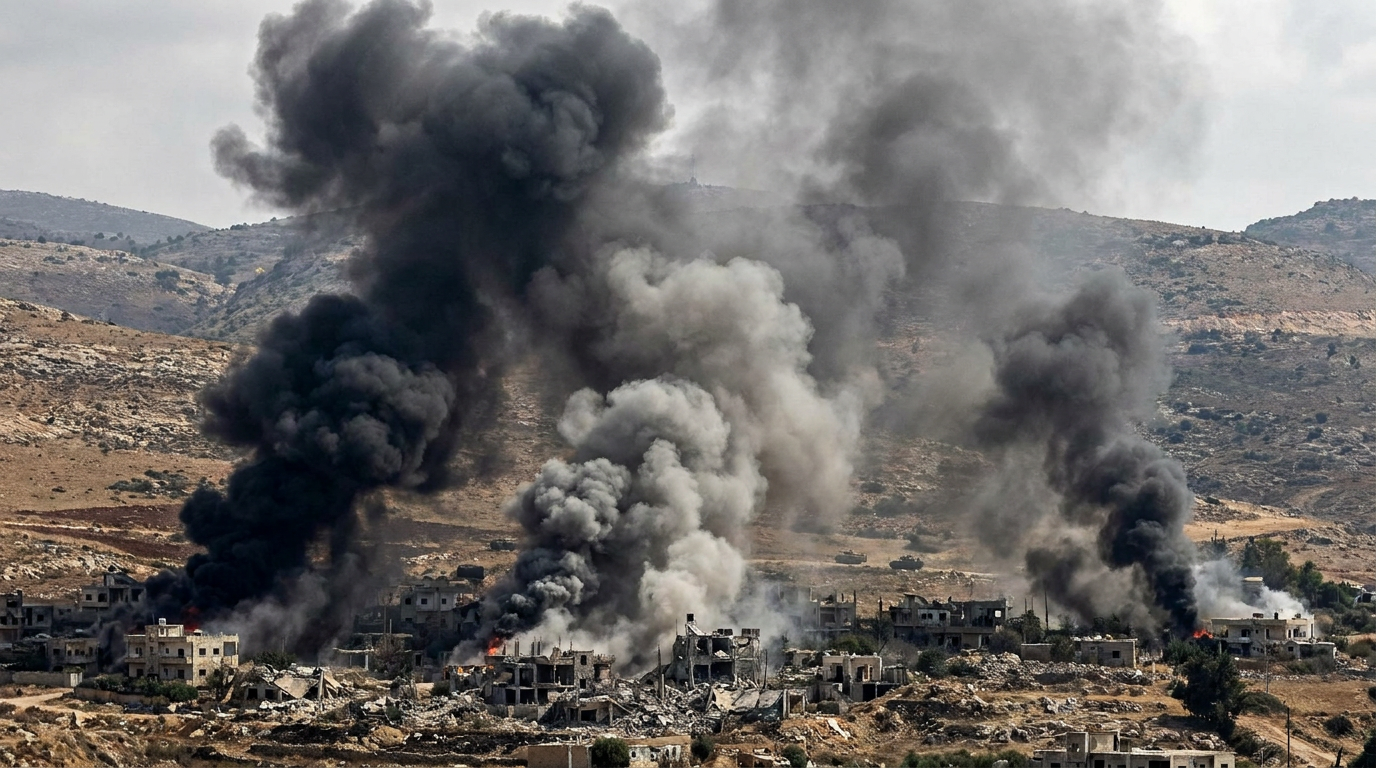
The inclusion of Lebanon in the ceasefire mandate has been a particular flashpoint. The MOU explicitly calls for the termination of military operations "on all fronts, including in Lebanon," effectively demanding that Israel halt its campaign against Hezbollah. Israeli Prime Minister Benjamin Netanyahu has vowed that Israeli forces will remain in southern Lebanon as long as security requires, and Israeli officials have signaled they do not feel bound by the U.S.-Iran pact.[1][2][6]
The friction reached a boiling point this week, with President Trump reportedly expressing intense frustration with Netanyahu's resistance to the deal. In a highly unusual public rebuke, U.S. Vice President JD Vance warned the Israeli cabinet against criticizing the agreement, declaring that Trump is "the only head of state in the entire world who is sympathetic to the nation of Israel at this moment in time." Vance insisted that the deal requires Iran to rein in Hezbollah, though he acknowledged that minor "flare-ups" might still occur.[5][6]

Regional allies in the Gulf are viewing the agreement with a mixture of profound relief and quiet anxiety. While states like Saudi Arabia and Oman are desperate for an end to the violence and the resumption of normal maritime trade, they are deeply concerned by the MOU's provision that U.S. forces will withdraw from the area following a final deal. Gulf leaders fear they will be left to manage a newly enriched and emboldened Iran without the traditional American security umbrella.[3]
The next 60 days will test the durability of the framework. U.S. officials have bluntly acknowledged the fragility of the MOU, noting that either side can walk away at any time if negotiations over the nuclear file collapse. Furthermore, a dispute is already brewing over the long-term status of the Strait of Hormuz; while the U.S. insists on a permanent toll-free reopening, Iranian state media and officials have signaled an intent to impose transit "service fees" once the initial 60-day window expires. If the talks fail, the U.S. has warned it is prepared to return to a state of war and drastically tighten economic pressure.[1][2][3][7]
How we got here
Feb 28, 2026
The US and Israel launch an air war against Iran, sparking a 110-day regional conflict.
Mar-May 2026
Iran heavily mines the Strait of Hormuz; the US imposes a naval blockade on Iranian ports, paralyzing global shipping.
Jun 14, 2026
Despite an Israeli strike in Beirut, President Trump insists the US-Iran ceasefire deal remains on track.
Jun 17, 2026
US officials dictate the 14-point preliminary memorandum of understanding to reporters.
Jun 18, 2026
The MOU is formally signed, initiating a 60-day negotiation window and an immediate halt to military operations.
Viewpoints in depth
The US Administration's view
Focuses on the economic victory of reopening the Strait of Hormuz and ending a costly 110-day war.
The US administration views the MOU as a historic diplomatic triumph that halts a devastating regional war and rescues the global economy from a paralyzing energy shock. By securing an immediate halt to hostilities and the reopening of the Strait of Hormuz, officials argue they have achieved their primary strategic objectives. The administration maintains that the 60-day negotiation window provides the necessary leverage to secure a final, verifiable agreement on Iran's nuclear program without the continued cost of active military engagement.
The Israeli Government's view
Deeply frustrated by the terms, viewing the immediate sanctions relief as a reward for Iranian aggression.
Israeli officials are furious with the preliminary agreement, viewing it as a dangerous capitulation that prematurely relieves economic pressure on Tehran. They argue that by granting immediate oil export waivers before a final nuclear deal is reached, the US has surrendered its primary leverage. Furthermore, Israel strongly objects to the MOU's demand for a ceasefire in Lebanon, arguing that it ties the Israeli military's hands while allowing Hezbollah and other Iranian proxy networks to rebuild and rearm unhindered.
The Shipping Industry's view
Welcomes the diplomatic breakthrough but remains highly pragmatic about the physical dangers in the water.
While the global shipping industry is relieved by the political ceasefire, maritime executives emphasize that a signed document does not make the water safe. Industry leaders point out that the Strait of Hormuz is currently littered with roughly 80 naval mines, and clearing them will require a massive, weeks-long operation by specialized military vessels. Until the corridor is certified safe by international authorities, insurance premiums will remain exorbitant, and the backlog of over 500 stranded commercial ships will take significant time to clear.
What we don't know
- Whether Israel will abide by the ceasefire in Lebanon or continue its military operations against Hezbollah.
- How long it will actually take to clear the estimated 80 naval mines from the Strait of Hormuz to allow safe commercial shipping.
- Whether Iran and the US can successfully negotiate a comprehensive nuclear agreement within the fragile 60-day window.
- The exact mechanisms and conditions attached to the $300 billion reconstruction fund and the unfreezing of Iranian assets.
Key terms
- Memorandum of Understanding (MOU)
- A preliminary, non-binding agreement outlining the broad terms of a deal before a final, comprehensive treaty is negotiated.
- Strait of Hormuz
- A narrow, strategically critical waterway between the Persian Gulf and the Gulf of Oman, through which roughly 20% of the world's oil supply typically passes.
- Down-blending
- The process of diluting highly enriched uranium into a lower-enriched form, making it much harder to use for a nuclear weapon.
- Naval Blockade
- A military operation in which ships are used to cut off a country's ports, preventing the import or export of goods.
- Traffic Separation Scheme
- The internationally recognized maritime routing system in the Strait of Hormuz that separates inbound and outbound vessel traffic.
Frequently asked
Is the war between the US and Iran officially over?
Military operations have been halted under a preliminary ceasefire, but a final, permanent peace treaty must still be negotiated over the next 60 days.
When will oil shipping return to normal?
It will likely take weeks or even months. While the agreement lifts the blockade, the Strait of Hormuz is littered with roughly 80 naval mines that must be painstakingly cleared.
What does Iran get out of this preliminary deal?
Iran receives immediate waivers to export crude oil, the lifting of the US naval blockade, and a commitment to develop a $300 billion reconstruction plan.
Why is Israel upset about the agreement?
Israeli officials argue the deal prematurely relieves economic pressure on Iran, leaves its nuclear program largely intact, and attempts to restrict Israel's military operations against Hezbollah in Lebanon.
Sources
Source coverage
8 outlets
4 viewpoints surfaced








[1]The Guardian
US officials reveal preliminary memorandum of understanding between Washington and Tehran
Read on The Guardian →[2]CBS NewsUS Administration
Senior U.S. officials dictate 14 points of U.S.-Iran memorandum of understanding
Read on CBS News →[3]Council on Foreign Relations
Trump's Iran Deal Reopens the Strait. Much Remains to Be Done.
Read on Council on Foreign Relations →[4]ReutersGlobal Shipping Industry
Ensuring Strait of Hormuz is safe from mines could delay return to normal shipping
Read on Reuters →[5]AxiosIsraeli Government
Trump to Axios: Netanyahu has "no fucking judgment" but Iran deal still on
Read on Axios →[6]PBSIsraeli Government
Vance warns Israeli Cabinet against criticizing Trump on Iran deal
Read on PBS →[7]Al JazeeraIranian Leadership
Trump’s Iran deal: A victory lap before the victory
Read on Al Jazeera →[8]The Washington PostGlobal Shipping Industry
More than 500 ships remain stranded in the Strait of Hormuz
Read on The Washington Post →
More in news politics
See all 8 stories →School Meals
Fact-Checking the Evidence on Universal Free School Meals: Impacts on Health, Behavior, and Budgets
7 sources

Middle East Peace
Israel and Hezbollah Renew Ceasefire After Deadly Flare-Up Delays U.S.-Iran Peace Talks
8 sources
Middle East Conflict
Israel and Hezbollah Agree to Renewed Ceasefire as Violence Delays US-Iran Talks
8 sources
Middle East Peace
Israel and Hezbollah Begin Ceasefire as U.S.-Iran Peace Talks Face Immediate Delays
8 sources
Every angle. Every day.
Get news politics stories with full source coverage and perspective breakdowns delivered to your inbox.