
The 'Abundance Agenda': Inside the Bipartisan Push to Build More
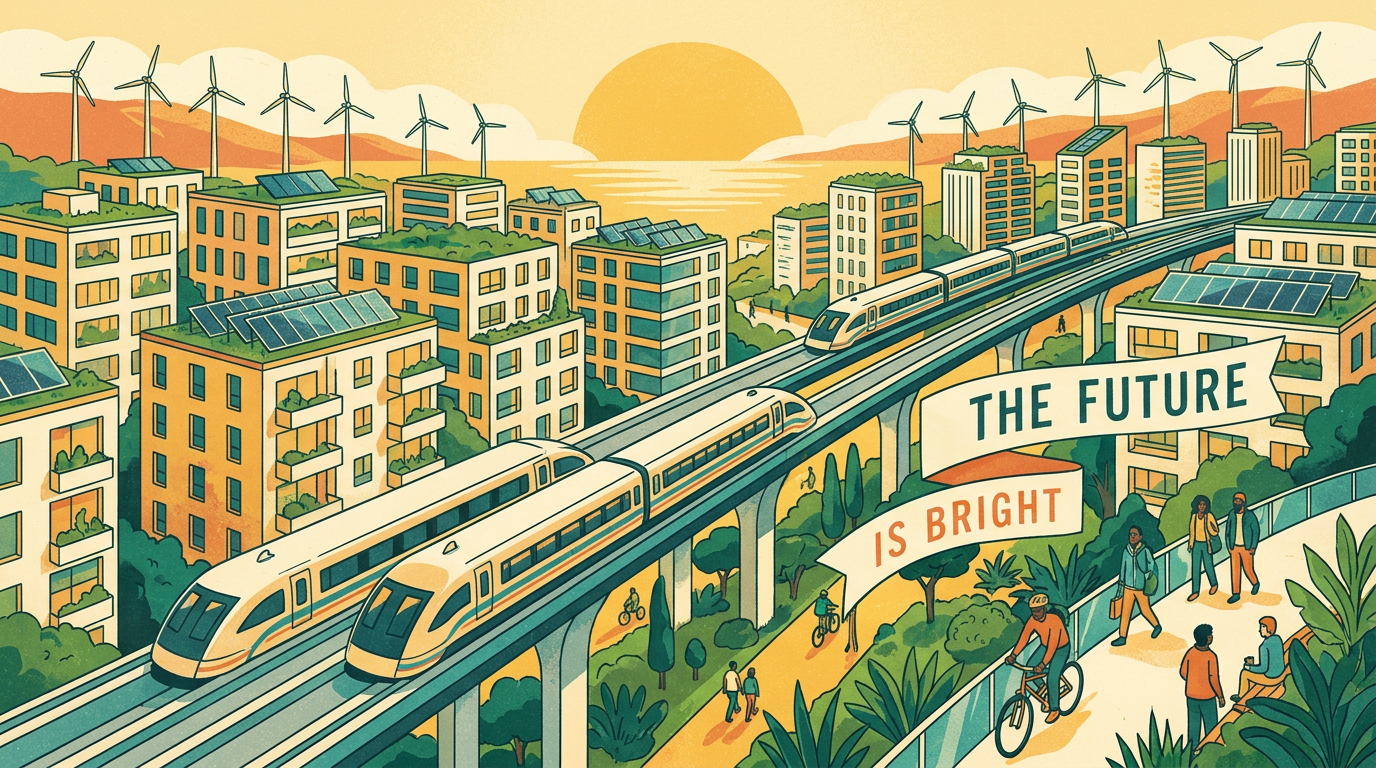
A growing political and intellectual movement is arguing that the solution to America's cost-of-living and climate crises isn't more regulation, but a massive, deregulated push to build housing, energy, and infrastructure.
By Factlen Editorial Team
- Abundance Advocates
- Argue that removing regulatory bottlenecks to build housing, energy, and infrastructure is the key to solving the cost-of-living crisis.
- Free-Market Skeptics
- Agree with deregulation but argue the movement still relies too heavily on state-directed industrial policy.
- Labor & Distribution Focus
- Warn that focusing purely on supply ignores corporate power, wealth redistribution, and the need for strong labor unions.
- Eco-Conservationists
- Argue that infinite building ignores planetary boundaries, material limits, and the emissions generated by mass construction.
What's not represented
- · Local Homeowners / NIMBYs
- · Low-Income Renters
Why this matters
For decades, political debates have centered on how to redistribute wealth and regulate industry. The 'Abundance Agenda' flips the script, arguing that making housing, healthcare, and clean energy radically cheaper through massive supply expansion is the most effective way to improve living standards.
Key points
- The 'Abundance Agenda' argues that scarcity of housing, energy, and infrastructure is the root of modern economic crises.
- Advocates push for 'supply-side progressivism,' which involves cutting red tape and overriding local zoning laws to build faster.
- The movement gained national prominence following the 2025 publication of the book Abundance by Ezra Klein and Derek Thompson.
- Critics on the left warn that the agenda ignores wealth inequality and could bypass crucial labor union protections.
- Libertarian critics agree with the deregulation aspect but oppose the movement's reliance on government-directed industrial policy.
- Environmentalists are split between 'eco-modernists' who want to build green infrastructure and conservationists who warn against over-extraction.
For the past half-century, the dominant instinct of American progressivism has been defensive. The goal was to stop bad things from happening: blocking polluting highways, regulating corporate excess, and preserving neighborhood character. But in 2026, a new intellectual movement has captured the center-left and tech-policy spheres, arguing that this defensive crouch has become a straitjacket.[1][2]
It is called the "Abundance Agenda," or "supply-side progressivism." Its core premise is simple but radical: the most pressing crises facing the developed world—from skyrocketing housing costs to climate change—are fundamentally crises of scarcity. The solution is not to subsidize demand or ration resources, but to massively expand the supply of essential goods.[2][3]
The economic foundation of this movement rests on what analysts call "cost disease." Over the last few decades, the price of manufactured goods like televisions and toys has plummeted, while the cost of heavily regulated, localized essentials—housing, healthcare, and higher education—has skyrocketed. Abundance advocates argue that government policy has inadvertently choked off the supply of these critical services, making the American dream unaffordable for the working class.[2][4]

The movement gained mainstream velocity with the 2025 publication of Abundance, a bestselling manifesto by journalists Ezra Klein and Derek Thompson. They argued that a "liberalism that builds" must replace the current "vetocracy"—a system where endless environmental reviews, local zoning boards, and bureaucratic red tape make it nearly impossible to build anything quickly or cheaply.[1][5]
To understand the abundance mindset, consider the housing crisis. Traditionally, policymakers have tried to help renters by offering housing vouchers or imposing rent control. Abundance advocates argue these are mere band-aids that often drive up prices by subsidizing demand without increasing supply. Instead, they champion YIMBY (Yes In My Back Yard) policies: overriding local zoning laws, legalizing dense apartment buildings, and stripping away the power of local homeowners to block construction.[3][4]
The same logic applies to clean energy. To decarbonize the economy, the world needs an unprecedented build-out of solar farms, nuclear plants, and high-voltage transmission lines. Yet, abundance advocates point out that the very environmental laws designed to protect nature in the 1970s—like the National Environmental Policy Act (NEPA)—are now the primary weapons used to delay green infrastructure.[1][3]

To decarbonize the economy, the world needs an unprecedented build-out of solar farms, nuclear plants, and high-voltage transmission lines.
In some cases, navigating the labyrinth of more than 60 federal permitting programs can trap clean energy projects in regulatory purgatory for over a decade. Klein and Thompson highlighted a Wyoming wind farm that, if completed in 2026, will have taken 18 years from proposal to reality. The abundance solution is to gut these procedural veto points and fast-track green development.[5]
This focus on deregulation has created strange political bedfellows. The Niskanen Center, a moderate think tank, notes that an "Abundance Faction" is emerging, uniting tech entrepreneurs, YIMBY activists, and business-friendly centrists. It offers a rare bridge between Silicon Valley techno-optimists who want to accelerate innovation and progressives who want to lower the cost of living for the working class.[4][8]
Organizations like the Inclusive Abundance Initiative have formalized this energy into concrete policy menus. Their 2026 agenda pushes for 16 core federal reforms, ranging from streamlining geothermal energy permits to reforming civil service requirements to build state capacity. The goal is to prove that democratic governments can still execute mega-projects efficiently.[1][3]
However, the movement's rapid rise has sparked intense pushback from multiple flanks. On the traditional left, critics argue that the abundance agenda is a Trojan horse for neoliberalism. Outlets like Jacobin warn that focusing purely on deregulation and supply ignores the realities of corporate power and wealth inequality.[6]

Labor advocates echo this concern. The Roosevelt Institute has cautioned that a "build baby build" mentality could easily sideline workers if it bypasses union protections in the name of speed. They argue that true abundance must be democratic, ensuring that the massive infrastructure push creates high-paying union jobs rather than just enriching private developers.[7]
Meanwhile, free-market libertarians view the movement with a mix of validation and skepticism. While they applaud the left's newfound hatred of zoning and red tape, critics in libertarian circles point out that supply-side progressives still want the government to direct the economy. They argue that relying on state-funded industrial policy and subsidies—rather than pure market forces—will inevitably lead to inefficiencies and cronyism.[5][8]

Finally, the environmental movement is experiencing a deep internal schism over the abundance framework. Eco-modernists embrace the push for nuclear power and massive green infrastructure. But conservationists and "degrowth" advocates argue that infinite building is incompatible with planetary boundaries, warning that constructing millions of new homes and energy grids will consume vast amounts of the world's remaining carbon budget.[2][9]
Despite these fractures, the abundance agenda has undeniably shifted the Overton window. It has forced policymakers to confront the reality that subsidizing the cost of scarce goods only makes them more expensive. Whether through bipartisan permitting reform in Congress or state-level zoning overrides, the politics of the late 2020s are increasingly being defined not by what government can stop, but by what it can build.[1][3][8]
How we got here
2021
The term 'supply-side progressivism' begins gaining traction in policy circles as a critique of regulatory bottlenecks.
January 2022
The Institute for Progress launches, backed by tech philanthropists, to advocate for innovation and state capacity.
March 2025
Journalists Ezra Klein and Derek Thompson publish 'Abundance', bringing the movement into the mainstream political spotlight.
May 2025
Stanford University hosts 'The Abundance Agenda' policy forum, bridging academic research with state and federal policymakers.
Early 2026
The Inclusive Abundance Initiative releases a comprehensive 16-point federal policy menu to streamline infrastructure and housing.
Viewpoints in depth
Supply-Side Progressives
The core advocates who believe deregulation and state capacity are needed to build essential infrastructure.
This camp argues that the left lost its way by focusing entirely on process, environmental reviews, and demand subsidies. They believe that to solve the housing and climate crises, the government must aggressively override local NIMBYism, strip away permitting veto points, and fund massive industrial build-outs of clean energy and dense housing.
Free-Market Skeptics
Libertarians and conservatives who support deregulation but oppose state-directed industrial policy.
While they agree that zoning and environmental reviews are choking the economy, this camp argues that the abundance agenda still relies too heavily on government intervention. They warn that using federal industrial policy to pick winners in the energy and tech sectors will lead to inefficiency, preferring that markets dictate what gets built once regulations are lifted.
Labor and Distribution Advocates
Left-wing critics who warn that a pure focus on supply ignores wealth inequality and worker protections.
This faction cautions that stripping away regulations to 'build baby build' risks handing a blank check to corporate developers. They argue that true abundance must include strong union protections, wealth redistribution, and public ownership of resources, ensuring that the working class actually benefits from the new infrastructure rather than just private capital.
Eco-Conservationists
Environmentalists who argue that infinite growth is incompatible with planetary boundaries.
Often aligned with the 'degrowth' movement, this camp rejects the premise that we can simply build our way out of the climate crisis. They argue that mass construction of new housing and energy grids is inherently carbon-intensive and extractive, advocating instead for reduced consumption, energy conservation, and better utilization of existing resources.
What we don't know
- It remains unclear if the bipartisan coalition supporting the abundance agenda can hold together once specific, controversial projects are proposed in local communities.
- Whether streamlining environmental reviews will actually speed up clean energy deployment without causing unintended ecological damage is still heavily debated.
- It is unknown if the movement can successfully integrate labor union demands without sacrificing the speed and cost-efficiency it champions.
Key terms
- Supply-side economics
- Traditionally a conservative theory focused on tax cuts, now adapted by progressives to mean increasing the physical supply of goods like housing and energy.
- Vetocracy
- A system of governance where numerous groups and bureaucratic layers have the power to veto or indefinitely delay new projects.
- YIMBY
- An acronym for 'Yes In My Back Yard,' a pro-housing movement that advocates for building more dense housing in existing neighborhoods.
- NEPA
- The National Environmental Policy Act, a 1970 law requiring federal agencies to assess the environmental effects of their proposed actions, often cited as a major source of project delays.
- Industrial Policy
- Government intervention to encourage the development and growth of specific sectors of the economy, such as clean energy or semiconductor manufacturing.
Frequently asked
What is the main goal of the abundance agenda?
To solve the cost-of-living and climate crises by massively increasing the supply of essential goods—like housing, clean energy, and healthcare—rather than just subsidizing demand.
How does this differ from traditional progressivism?
Traditional progressivism often focuses on regulating industry, protecting the environment from development, and redistributing wealth. The abundance agenda focuses on deregulation, fast-tracking construction, and economic growth.
Why do some environmentalists oppose it?
Some conservationists and 'degrowth' advocates argue that infinite building is incompatible with the Earth's material limits, warning that mass construction will generate massive carbon emissions.
Does this movement have bipartisan support?
Yes. While rooted in center-left policy circles, its focus on deregulation, cutting red tape, and economic growth has attracted support from tech entrepreneurs, libertarians, and business-friendly conservatives.
Sources
Source coverage
9 outlets
4 viewpoints surfaced









[1]Factlen Editorial TeamAbundance Advocates
Synthesis by Factlen editorial team
Read on Factlen Editorial Team →[2]WikipediaAbundance Advocates
Supply-side progressivism
Read on Wikipedia →[3]Inclusive Abundance InitiativeAbundance Advocates
Abundance: A Primer
Read on Inclusive Abundance Initiative →[4]Niskanen CenterAbundance Advocates
The Abundance Faction
Read on Niskanen Center →[5]ReasonFree-Market Skeptics
Progressives Used to Believe in Building. Can They Again?
Read on Reason →[6]JacobinLabor & Distribution Focus
The Abundance Agenda Is a Post-Neoliberal Trap
Read on Jacobin →[7]Roosevelt InstituteLabor & Distribution Focus
Labor and the Abundance Agenda
Read on Roosevelt Institute →[8]The DispatchFree-Market Skeptics
The Abundance Conference and the Center-Left
Read on The Dispatch →[9]MediumEco-Conservationists
Why the 'Abundance Agenda' misses the mark on planetary boundaries
Read on Medium →
Every angle. Every day.
Get opinion stories with full source coverage and perspective breakdowns delivered to your inbox.