
How 2026 Became the Tipping Point for Right to Repair Laws
A wave of new state legislation and a sweeping EU directive are dismantling manufacturer repair monopolies, legally empowering consumers to fix their own devices.
By Factlen Editorial Team
- Consumer Rights Advocates
- Argue that ownership inherently includes the right to repair, modify, and maintain property without manufacturer interference.
- Original Equipment Manufacturers
- Contend that software locks and authorized repair networks are necessary to protect intellectual property, user safety, and data security.
- Independent Repair Industry
- Focus on the economic benefits of fair competition, arguing that equal access to parts and manuals lowers costs for consumers.
What's not represented
- · Environmental NGOs focusing on e-waste reduction
- · Cybersecurity experts analyzing the risks of unlocked hardware
Why this matters
As devices become increasingly integrated with proprietary software, manufacturers have gained unprecedented control over how we fix the things we own. The legal shift toward the 'Right to Repair' in 2026 fundamentally restores consumer property rights, promising to lower repair costs, stimulate local economies, and significantly reduce electronic waste.
Key points
- The 'Right to Repair' movement has evolved into a robust legal framework aimed at dismantling manufacturer repair monopolies.
- By July 2026, all EU member states must enact laws requiring manufacturers to provide repairs and spare parts for up to ten years.
- US states like California and Minnesota have passed sweeping repair laws, though the US lacks a unified federal mandate.
- 'Parts pairing'—using software to block third-party hardware—remains the most fiercely contested legal issue between OEMs and consumer advocates.
- The agricultural and automotive sectors are facing intense antitrust scrutiny over their control of diagnostic software.
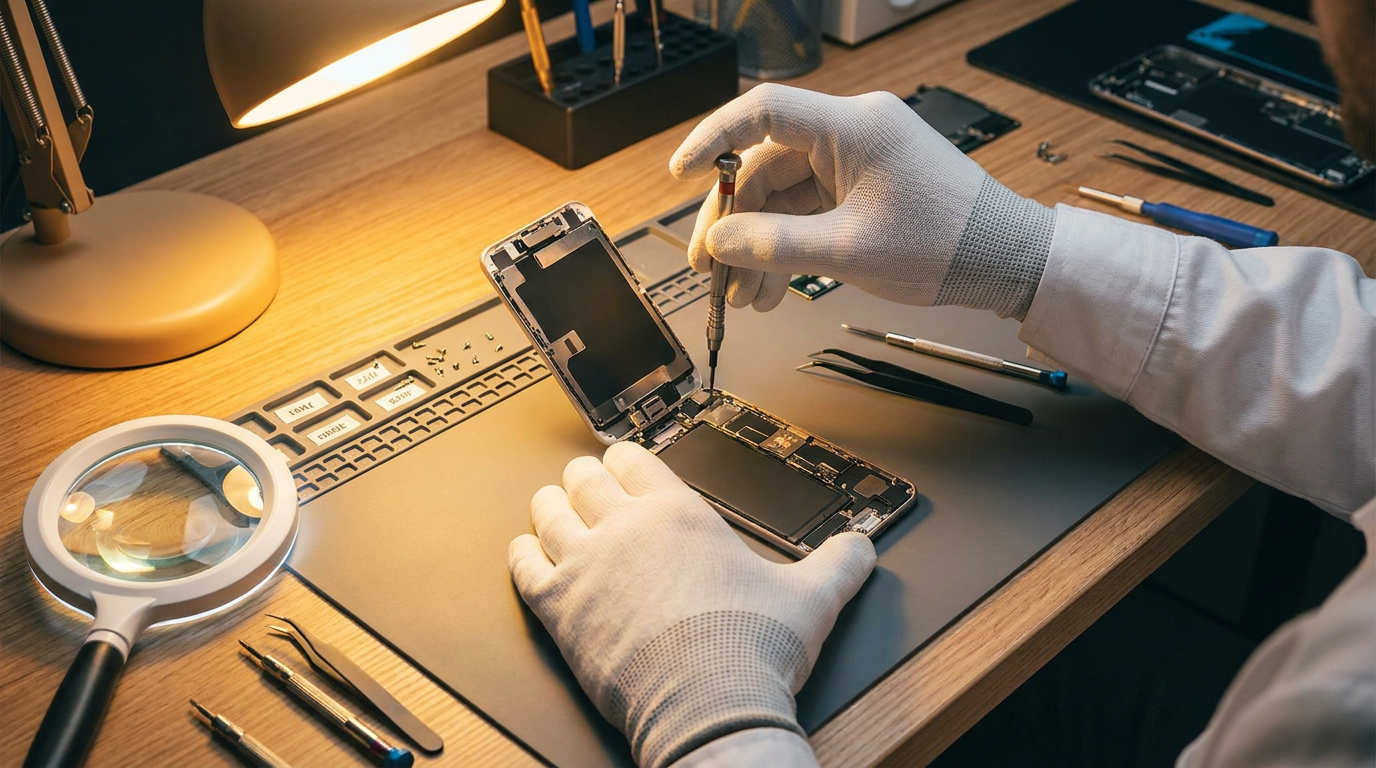
For decades, purchasing a physical product meant owning it outright, complete with the freedom to tinker, modify, or fix it when it broke. However, as devices grew more sophisticated, Original Equipment Manufacturers (OEMs) began constructing "repair monopolies." By utilizing proprietary screws, glued-in batteries, and restrictive software locks, companies effectively tethered consumers to expensive, authorized repair networks. In 2026, the legal landscape is undergoing a massive shift to dismantle these barriers. The "Right to Repair" movement has evolved from a fringe tinkerer's grievance into a formidable regulatory framework.[1][6]
At its core, the legal mechanism of right-to-repair legislation is designed to break artificial aftermarket monopolies. It mandates that manufacturers provide consumers and independent repair shops with equal access to the same diagnostic tools, repair manuals, and spare parts that authorized dealers receive. By legally enforcing this access at fair market prices, lawmakers aim to restore true ownership, stimulate local repair economies, and drastically reduce the environmental impact of electronic waste. The legislation shifts the burden, ensuring that the design and post-sale support of a product facilitate longevity rather than planned obsolescence.[5][6]
The most unified and aggressive regulatory push is currently unfolding in the European Union. Directive (EU) 2024/1799 establishes a harmonized legal framework that fundamentally alters the post-sale relationship between manufacturers and consumers. By July 31, 2026, all EU member states are required to transpose this directive into their national laws. The legislation compels manufacturers of specific goods—ranging from smartphones to washing machines—to offer repair services at a reasonable price and within a reasonable timeframe.[1][4]

Furthermore, the EU directive obligates manufacturers to supply spare parts to independent repairers for a defined period, often up to seven or ten years after the last unit of a model is placed on the market. For commercial supply chains, this represents a seismic shift in liability and operational requirements. Legal and procurement teams across Europe are currently rewriting distribution contracts, vendor agreements, and service-level terms to allocate these new statutory repair obligations. Importers and distributors must ensure they are legally protected through back-to-back warranties if a foreign manufacturer fails to comply with the new repair mandates.[4]
In the United States, the legal strategy has relied on a patchwork of state-level victories rather than a single federal mandate. California’s sweeping Right to Repair Act, which recently took full effect, serves as the high-water mark for consumer electronics. It requires manufacturers to provide repair documentation, parts, and tools for up to seven years after a product's manufacture date, depending on the item's price. Other states have followed suit, though their legislative scopes vary significantly. Minnesota enacted a broad law that empowers consumers but carved out specific exemptions for motor vehicles, medical devices, and farm machinery.[2][3]
In the United States, the legal strategy has relied on a patchwork of state-level victories rather than a single federal mandate.
Despite these state-level victories, the most fiercely contested legal battleground remains the practice of "parts pairing." This occurs when a manufacturer uses cryptographic software locks to tie a specific hardware component—like a smartphone screen or battery—to the device's logic board. If a consumer or independent shop replaces the part with an identical, functioning component from another device, the software detects the mismatch and disables certain features. Manufacturers argue that these digital locks are essential to protect device security, safeguard user data, and defend intellectual property.[2][3]

Conversely, right-to-repair advocates and antitrust regulators view parts pairing as a modern, digital tactic to enforce aftermarket monopolies. They argue it violates the traditional legal doctrine of property exhaustion, which dictates that a manufacturer's control over a physical good ends once it is sold. As physical goods increasingly rely on embedded software, the clash between digital copyright law and physical ownership rights remains the movement's most complex legal hurdle. New York’s Digital Fair Repair Act, for instance, faced heavy industry lobbying and ultimately compromised by not explicitly allowing independent repair providers to bypass these software locks.[2][3][5]
The automotive sector possesses its own distinct legal history regarding repair rights, largely because cars have transformed into rolling computers that generate vast amounts of telematics data. In the United States, the Magnuson-Moss Warranty Act has long prevented automakers from voiding warranties simply because an independent mechanic serviced the vehicle. However, access to the vehicle's digital diagnostic data has become the new chokepoint. To address this, the bipartisan REPAIR Act has gained significant momentum in Congress, aiming to legally prohibit automakers from acting as gatekeepers to vehicle-generated maintenance data.[3][7]

Beyond consumer electronics and automobiles, the agricultural sector has witnessed some of the most high-profile legal clashes over repair rights. Modern farming equipment, particularly tractors manufactured by companies like John Deere, rely heavily on proprietary diagnostic software. Historically, farmers have been locked out of repairing their own multi-hundred-thousand-dollar machines, forced to wait for authorized technicians even for minor software resets during critical harvest windows. This dynamic has drawn the attention of federal regulators, who are increasingly scrutinizing the intersection of agricultural tech and consumer rights.[2][3]
The Federal Trade Commission (FTC), backed by several state attorneys general, has increasingly utilized federal antitrust laws to challenge these agricultural practices. Regulators allege that exclusive control over diagnostic software creates an unlawful repair monopoly that stifles competition and artificially inflates costs. As 2026 progresses, the combination of aggressive antitrust enforcement, sweeping EU directives, and robust state laws indicates that the era of the disposable, unrepairable device is facing unprecedented legal headwinds. The balance of power is steadily shifting back to the consumer, redefining what it legally means to own a product in the digital age.[1][2][3]
How we got here
1975
US passes the Magnuson-Moss Warranty Act, protecting consumers from voided warranties due to third-party repairs.
2012
Massachusetts passes the first Automotive Right to Repair law, setting a precedent for data sharing.
July 2024
California's sweeping Right to Repair Act takes full effect for consumer electronics.
January 2025
FTC files an antitrust lawsuit against John Deere over agricultural repair monopolies.
July 2026
Deadline for EU member states to transpose the Right to Repair Directive into national law.
Viewpoints in depth
Consumer & Independent Repair Advocates
Argue that true ownership requires the unrestricted ability to maintain and repair property.
This coalition views manufacturer restrictions as artificial monopolies designed to force consumers into expensive upgrade cycles. They argue that providing equal access to diagnostic tools and spare parts stimulates local economies, lowers costs, and is essential for reducing the environmental impact of electronic waste. To them, property exhaustion means the manufacturer's control ends at the point of sale.
Original Equipment Manufacturers (OEMs)
Contend that software locks and authorized repair networks protect device integrity and user safety.
Manufacturers argue that modern devices are highly complex and that unauthorized repairs can compromise cybersecurity, user data, and physical safety (such as with lithium-ion batteries). They maintain that practices like parts pairing are not monopolistic tactics, but necessary quality-control measures to ensure that replacement components meet strict engineering and intellectual property standards.
What we don't know
- How federal courts will ultimately rule on the conflict between physical property rights and digital copyright protections.
- Whether the US Congress will pass a comprehensive federal right-to-repair law or leave it to state-by-state legislation.
Key terms
- Parts Pairing
- The use of cryptographic software locks to tie a specific hardware component to a device, preventing unauthorized replacements.
- Property Exhaustion
- A legal doctrine stating that once a manufacturer sells a physical good, they lose the right to control how it is used, resold, or repaired.
- Block Exemption Regulation (BER)
- An EU framework that exempts automakers from certain antitrust laws, provided they share technical repair data with independent mechanics.
- Original Equipment Manufacturer (OEM)
- The company that originally manufactured the product or its components, such as Apple, John Deere, or Ford.
Frequently asked
What is a repair monopoly?
A situation where a manufacturer controls the aftermarket for their products by restricting access to parts, tools, and manuals, forcing consumers to use their authorized services.
Does repairing my own device void the warranty?
Under laws like the US Magnuson-Moss Warranty Act, simply using an independent mechanic or repairing a device yourself does not automatically void the warranty, unless the manufacturer provides repairs for free.
What is parts pairing?
It is a practice where manufacturers use software to link a specific hardware component to a device's logic board, preventing the use of third-party or salvaged parts.
How does the 2026 EU Directive change things?
By July 2026, EU member states must enact laws requiring manufacturers to repair certain goods at reasonable prices and provide spare parts for up to ten years.
Sources
Source coverage
7 outlets
3 viewpoints surfaced







[1]Factlen Editorial TeamConsumer Rights Advocates
Synthesis by Factlen editorial team
Read on Factlen Editorial Team →[2]The Regulatory ReviewIndependent Repair Industry
The Right to Repair Movement's Uneven Progress
Read on The Regulatory Review →[3]JD SupraOriginal Equipment Manufacturers
Navigating the Convergence of Right to Repair Laws
Read on JD Supra →[4]Global Law ExpertsIndependent Repair Industry
How the EU Right to Repair Directive Will Change Commercial Contracts
Read on Global Law Experts →[5]Repair.orgConsumer Rights Advocates
Legislation and Policy Objectives
Read on Repair.org →[6]WikipediaConsumer Rights Advocates
Right to repair
Read on Wikipedia →[7]Motor Finance OnlineIndependent Repair Industry
The Right to Repair in the Automotive Industry
Read on Motor Finance Online →
Every angle. Every day.
Get law justice stories with full source coverage and perspective breakdowns delivered to your inbox.