
How Kyoto is Rewiring Tourism with 'Empty-Handed' Travel and Neighborhood Dispersal
Facing intense overtourism, Kyoto is pioneering a new travel model that forwards luggage directly to hotels and uses real-time data to guide visitors into lesser-known local neighborhoods.
By Factlen Editorial Team
- Sustainable Tourism Advocates
- Focuses on utilizing technology and behavioral nudges to protect Kyoto's infrastructure and cultural heritage.
- Local Residents & Merchants
- Prioritizes the immediate quality of life in residential neighborhoods and the equitable distribution of tourist spending.
- International Travelers
- Seeks authentic, frictionless cultural experiences while navigating the city's new guidelines.
- Policy Analysts
- Evaluates the long-term viability of dispersal strategies as a blueprint for global overtourism.
What's not represented
- · Municipal transit workers managing the daily bus routes
- · Hotel operators handling the increased influx of forwarded luggage
Why this matters
As global travel reaches unprecedented highs, popular destinations are buckling under the weight of overtourism. Kyoto's data-driven approach to luggage forwarding and neighborhood dispersal offers a highly replicable blueprint for how cities can protect their residents' quality of life without closing their doors to the world.
Key points
- Kyoto is aggressively promoting 'Tebura Kanko' (empty-handed tourism) to keep large luggage off municipal buses.
- Luggage forwarding services save international travelers an estimated 1.5 hours of leisure time.
- The city's Congestion Forecast tool uses live data to steer tourists away from crowded hotspots.
- Nearly half of the tourists using the forecast tool successfully adjusted their visiting times.
- The strategy aims to disperse economic benefits into local, lesser-known residential neighborhoods.
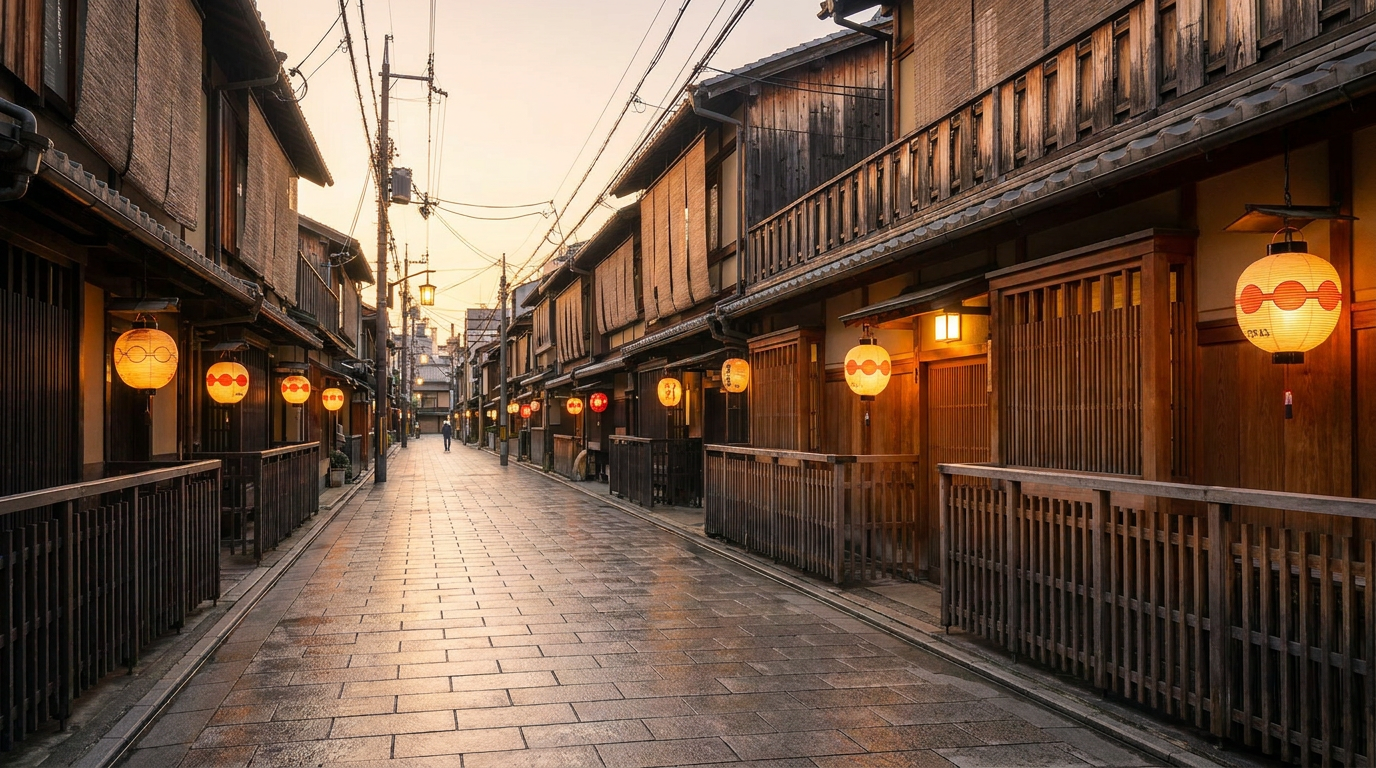
Kyoto's post-pandemic resurgence brought a familiar friction back to its ancient streets: municipal buses packed so tightly with international travelers and their oversized suitcases that local residents could barely commute. The sheer volume of visitors crowding into the Gion district and the Arashiyama bamboo grove pushed the city's infrastructure to its breaking point. But rather than simply complaining about the influx, Kyoto has spent the last two years actively re-engineering the mechanics of how visitors move through the city.[4][6]
At the center of this transformation is a concept known as Tebura Kanko, or "empty-handed tourism." The initiative fundamentally changes the arrival experience by intercepting travelers' luggage before they ever board a local bus. Through an expanded network of temporary baggage storage and forwarding services at major transit hubs, visitors can drop their heavy bags upon arrival and have them delivered directly to their hotels.[1]
The results of the empty-handed initiative have been immediate and highly visible. Bus drivers across Kyoto's municipal transit network have reported a significant reduction in passengers boarding with large suitcases, easing the daily commute for residents. For the travelers themselves, the service is not just a courtesy—it is a measurable time-saver. Industry surveys indicate that utilizing empty-hand travel services allows international visitors to reclaim up to 1.5 hours of leisure time that would otherwise be spent navigating transit with heavy bags or waiting for hotel check-ins.[1][2]

But removing luggage from buses is only the first half of Kyoto's strategy. The second, more ambitious phase involves fundamentally altering where tourists go. The city is actively working to disperse foot traffic away from its most congested bottlenecks and into its quieter, everyday neighborhoods, transforming the spatial geometry of local tourism.[3][6]
To achieve this, Kyoto has deployed technology in the form of the Kyoto Travel Congestion Forecast. This real-time tool utilizes live camera feeds and Wi-Fi access data to predict crowd comfort levels at popular spots. When a famous site like Kiyomizu-dera or Nishiki Market is flashing red for overcrowding, the system actively suggests attractive, alternative sightseeing spots that remain relatively empty.[2][3]
The data-driven nudging is working. According to follow-up surveys conducted by the city, 47% of tourists who consulted the congestion forecast adjusted their itineraries to visit popular sites during off-peak hours. Furthermore, 40% of users reported that the tool prompted them to explore entirely new neighborhoods they had not previously considered.[2]

Furthermore, 40% of users reported that the tool prompted them to explore entirely new neighborhoods they had not previously considered.
This dispersal strategy aligns perfectly with a growing traveler desire for more authentic, hyper-local experiences. Guidebooks and local experts are increasingly steering visitors toward neighborhoods like Demachiyanagi and Shimogamo in the north, where the Kamo River delta offers peaceful morning walks and independent cafes. Similarly, the Kamigamo and Kitayama districts are being highlighted for their traditional craft studios, leather workshops, and relaxed residential streets.[5]
By shifting the focus to these areas, the city is spreading the economic benefits of tourism more evenly. Instead of tourist dollars concentrating solely around major temples, they are flowing into local community hubs. For example, the Kyoto Sanjō-kai shopping street—an 800-meter covered arcade bustling with local delicatessens, cafes, and general stores—offers visitors a vibrant slice of everyday Kyoto life while directly supporting neighborhood merchants.[3]
To ensure this influx into residential areas remains respectful, Kyoto has introduced the concept of "Locally Honored Tourism." This initiative asks travelers to shift from a mindset of passive sightseeing to one of active, respectful engagement. Visitors are encouraged to reflect on their behavior, adhere to local etiquette, and recognize that they are walking through living, breathing neighborhoods, not just open-air museums.[3][4]
Practical advice for this new era of Kyoto travel heavily emphasizes timing and scale. Local guides strongly advocate for early morning excursions, noting that iconic sites like Kiyomizu-dera open as early as 6:00 AM. Visiting at dawn not only guarantees soft light and empty streets for photography, but it also significantly reduces the midday pressure on local infrastructure.[3][4]

Travelers are also encouraged to embrace "slow travel" micro-habits: walking one extra station instead of taking the bus, carrying small cash for family-run shops, and exploring the stone-paved backstreets away from the packed main thoroughfares. These small adjustments collectively transform the visitor experience from a stressful checklist of crowded landmarks into a serene exploration of the city's hidden charm.[5][6]
Despite these uplifting successes, uncertainties remain. While the combination of empty-handed tourism and digital congestion forecasting has eased the immediate strain, some residents still report daily stress from noise pollution and lingering bad manners. Awareness campaigns and luggage forwarding are powerful tools, but urban planners acknowledge that if overall arrival numbers continue to climb indefinitely, Kyoto may eventually need to explore more tangible hard caps on visitor entry in highly sensitive historic zones.[4][6]
For now, however, Kyoto stands as a compelling blueprint for other global destinations grappling with their own popularity. By treating tourists not as a nuisance to be endured, but as a flow to be intelligently managed and dispersed, the city is proving that it is possible to protect the local way of life while still sharing its timeless beauty with the world.[6]
How we got here
2019
Kyoto begins testing Wi-Fi based congestion forecasting in the Arashiyama district.
2023
Post-pandemic travel surges, leading to severe overcrowding on municipal buses.
2024
The city aggressively expands the 'Tebura Kanko' luggage forwarding network.
2026
Dispersal strategies show measurable success, with nearly half of forecast users adjusting their plans.
Viewpoints in depth
Sustainable Tourism Advocates
Focuses on utilizing technology and behavioral nudges to protect Kyoto's infrastructure and cultural heritage.
This camp, which includes city planners and environmental groups, argues that overtourism is fundamentally a geometry problem. By implementing luggage forwarding and real-time congestion forecasting, they believe the city can handle high visitor volumes without degrading the resident experience. They champion 'Locally Honored Tourism' as a necessary evolution of global travel ethics, shifting the burden of responsibility onto the visitor to adapt to the city's rhythms.
Local Residents & Merchants
Prioritizes the immediate quality of life in residential neighborhoods and the equitable distribution of tourist spending.
Everyday citizens and neighborhood business owners have borne the brunt of the tourism boom, dealing with packed buses and noise pollution. While they welcome the economic benefits, they advocate fiercely for dispersal strategies that push foot traffic into local shopping arcades like Sanjō-kai. However, some remain skeptical that voluntary nudges will be enough, quietly supporting harder caps on visitor numbers if quality of life does not improve.
International Travelers
Seeks authentic, frictionless cultural experiences while navigating the city's new guidelines.
Modern visitors are increasingly aware of their footprint and are eager to avoid the stress of overcrowded landmarks. This group highly values the convenience of Tebura Kanko luggage forwarding, as it directly buys them more leisure time. They are highly responsive to digital tools that point them toward hidden gems, viewing dispersal not as a restriction, but as an opportunity for a more authentic and relaxed trip.
What we don't know
- Whether voluntary dispersal strategies will remain effective if total annual visitor numbers continue to break historical records.
- How the expansion of luggage forwarding services will scale during peak cherry blossom and autumn foliage seasons.
- If other major Japanese cities like Tokyo and Osaka will adopt identical congestion forecasting models.
Key terms
- Tebura Kanko
- A Japanese travel initiative, translating to 'empty-handed tourism,' that promotes luggage forwarding to reduce transit congestion.
- Overtourism
- The phenomenon where the volume of tourists disrupts the daily lives of local residents and degrades the local environment.
- Machiya
- Traditional wooden townhouses found throughout Kyoto, many of which are now being preserved as local businesses or guesthouses.
- Locally Honored Tourism
- A Kyoto initiative asking travelers to reflect on their behavior and actively respect local customs rather than passively sightseeing.
Frequently asked
What is Tebura Kanko?
It translates to 'empty-handed tourism,' a city-wide initiative encouraging visitors to forward their luggage from transit hubs directly to their hotels to keep large bags off local buses.
How does the Kyoto Congestion Forecast work?
The tool uses live camera feeds and Wi-Fi access data to predict crowd levels in real-time, suggesting alternative, less-crowded neighborhoods for tourists to visit.
Are tourists still allowed to visit famous spots like Gion?
Yes, but the city strongly encourages visiting these highly popular areas early in the morning or late in the evening to avoid peak congestion and respect local residents.
What is 'Locally Honored Tourism'?
It is a mindset shift promoted by Kyoto that asks travelers to actively respect local etiquette, support neighborhood businesses, and treat the city as a living community rather than an amusement park.
Sources
Source coverage
6 outlets
4 viewpoints surfaced






[1]eTurboNewsInternational Travelers
Kyoto's battle against overtourism: Empty-handed tourism
Read on eTurboNews →[2]Travel Voice JapanLocal Residents & Merchants
Kyoto City demonstrated the over-tourism project in Arashiyama area
Read on Travel Voice Japan →[3]Kyoto City Official Travel GuideSustainable Tourism Advocates
Sustainable Tourism and Congestion Forecast
Read on Kyoto City Official Travel Guide →[4]Zenbird MediaSustainable Tourism Advocates
Kyoto's initiatives for sustainable tourism
Read on Zenbird Media →[5]Japan Cultural TrailsLocal Residents & Merchants
5 Kyoto Neighborhoods Locals Love (and Visitors Rarely See)
Read on Japan Cultural Trails →[6]Factlen Editorial TeamPolicy Analysts
Synthesis by Factlen editorial team
Read on Factlen Editorial Team →
Every angle. Every day.
Get travel stories with full source coverage and perspective breakdowns delivered to your inbox.