
How the US-Iran Interim Deal is Reshaping Global Oil Markets and the Strait of Hormuz
The implementation of a US-Iran interim peace deal has reopened the Strait of Hormuz to toll-free tanker traffic, stabilizing global markets even as regional clashes threaten long-term negotiations.
By Factlen Editorial Team
- Geopolitical Skeptics
- Warn that the interim deal is highly fragile, pointing to delayed nuclear talks and escalating proxy violence.
- Market Optimists
- Focus on the immediate resumption of global trade and the deflationary benefits of normalized energy flows.
- Energy Security Pragmatists
- Emphasize the permanent shifts in the energy supply chain, such as Asia's renewed reliance on coal.
What's not represented
- · Environmental organizations concerned about the resurgence of coal
- · Local fishing and maritime communities in the Persian Gulf
Why this matters
The Strait of Hormuz is the world's most critical energy chokepoint. Its reopening directly lowers global shipping costs and energy prices, which could help cool inflation and influence upcoming central bank interest rate decisions that affect consumer loans and mortgages.
Key points
- The US-Iran interim deal has successfully reopened the Strait of Hormuz to toll-free commercial shipping.
- Global stock markets surged in response, viewing the normalized energy flows as a buffer against inflation.
- Long-term nuclear negotiations between the US and Iran have been delayed due to escalating clashes in Lebanon.
- The preceding conflict forced major Asian economies to increase their reliance on coal to offset LNG shortages.
- Shipping insurers remain concerned about how the Strait will be governed once the temporary toll-free period expires.
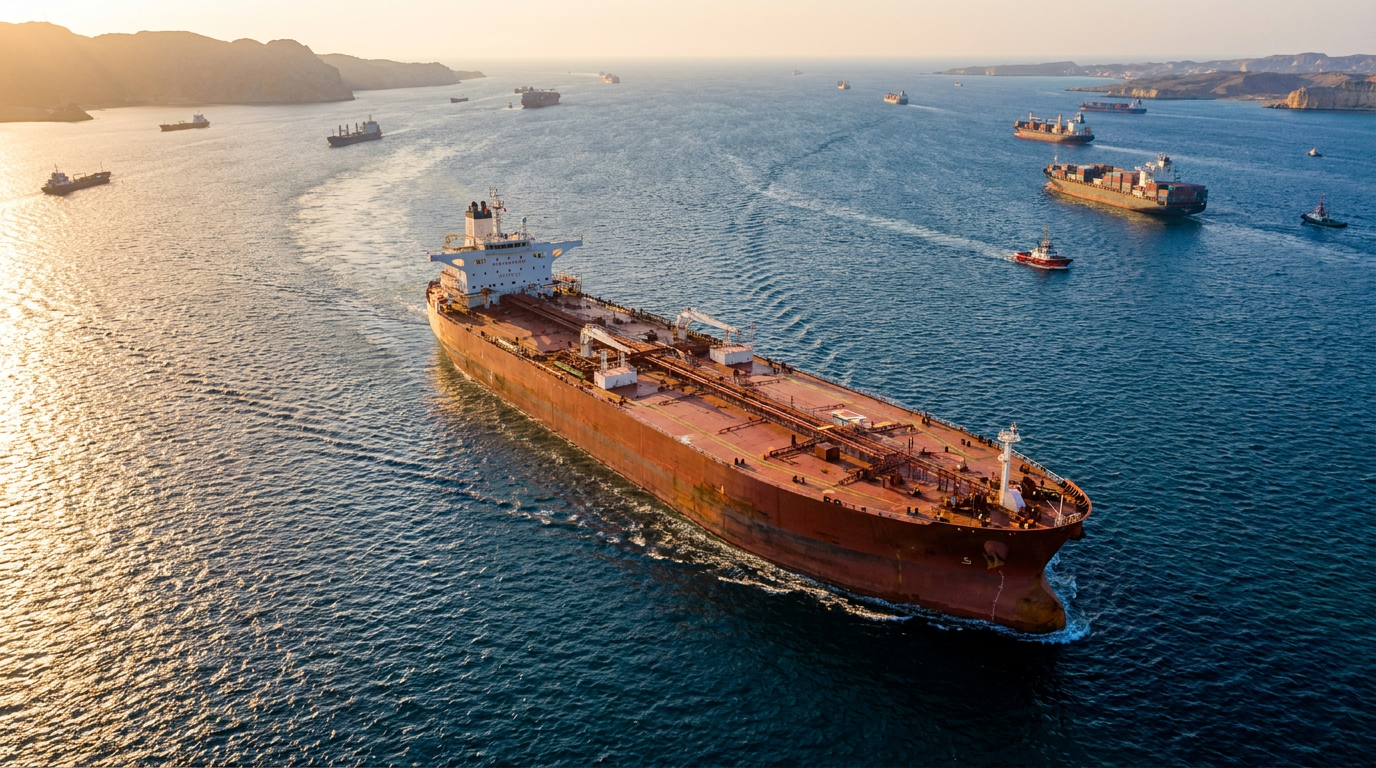
The immediate economic aftermath of the US-Iran interim peace deal has materialized in the waters of the Middle East, triggering a sharp jump in oil tanker traffic through the Strait of Hormuz. For months, the narrow waterway—a critical artery for global energy—operated under the shadow of conflict, disrupting the flow of crude oil and liquefied natural gas to global markets.[1][8]
The implementation of a newly negotiated "toll-free" sea lane has temporarily removed the immediate physical and financial barriers to maritime trade. This arrangement has allowed Very Large Crude Carriers (VLCCs) and other massive transport vessels to resume normal transit schedules without the prohibitive insurance premiums that characterized the height of the crisis.[1][7]
The economic relief was felt almost instantly across global trading floors. The S&P 500 surged late in the week, effectively erasing earlier losses that had been driven by hawkish signals from central bankers regarding interest rates.[5]
Investors seized on the reopening of the Strait as a powerful deflationary signal. The prevailing market logic suggests that normalized energy flows will reduce input costs for global manufacturers, lower fuel prices for consumers, and give central banks more breathing room to halt rate hikes.[5][8]

However, the broader market euphoria remains tempered by the fragile nature of the diplomatic agreements underpinning this physical reopening. Global stocks ended the week on a decidedly cautious note, as relief over the interim pact gave way to the daunting reality of securing a lasting resolution.[2]
The primary source of this caution is the delayed timeline for a permanent diplomatic framework. Negotiations between Washington and Tehran over a comprehensive nuclear agreement have been officially paused.[3]
The primary source of this caution is the delayed timeline for a permanent diplomatic framework.
This delay was triggered by an intensification of military clashes in southern Lebanon. The spillover violence highlights how interconnected and volatile the regional security architecture remains, threatening to unravel the bilateral progress made in the Gulf.[3]
The diplomatic friction is also evident among traditional allies. The US administration has faced pushback from Israeli officials who have openly criticized the parameters of the interim deal with Iran, prompting sharp public rebukes from Washington.[6]
Beyond the immediate geopolitical maneuvering, the disruption of the past year has already forced structural shifts in how major economies source their power, particularly in Asia. The energy map has been fundamentally redrawn.[4][8]
With Middle Eastern Liquefied Natural Gas (LNG) supplies severely constrained during the height of the tensions, major Asian demand centers pivoted aggressively back to coal to keep their electrical grids operational and prevent rolling blackouts.[4]

Energy analysts note that while the Strait is open today, the legacy of that disruption means coal will likely retain an amplified role in Asia's energy mix for the near future. Many nations signed medium-term coal contracts during the crisis, complicating global climate targets even as cleaner fuels become available again.[4][8]
The shipping industry is similarly grappling with the temporary nature of the current maritime arrangement. The US-Iran deal established a specific "toll-free period" for the Strait, but the long-term governance of the waterway remains entirely unresolved.[1]
Maritime insurers and fleet operators are actively questioning what regulatory or financial frameworks will replace the interim agreement once the toll-free window expires. Without a permanent treaty, the risk of sudden closures or exorbitant transit fees remains priced into long-term shipping contracts.[1][7]

How we got here
Early 2026
Tensions in the Middle East severely restrict commercial transit through the Strait of Hormuz, spiking global energy prices.
May 2026
Asian economies pivot heavily to coal imports to offset the disruption of Middle Eastern LNG supplies.
June 2026
The US and Iran implement an interim peace deal, establishing a toll-free sea lane for commercial tankers.
Late June 2026
Broader nuclear negotiations are delayed as military clashes intensify in southern Lebanon.
Viewpoints in depth
Global Shippers & Insurers
Cautiously optimistic but demanding long-term regulatory clarity.
For the maritime logistics industry, the interim deal is a welcome but insufficient band-aid. While the immediate removal of transit barriers has allowed VLCCs to resume operations and lowered short-term insurance premiums, fleet operators are highly exposed to the deal's expiration. Industry groups argue that without a permanent, internationally recognized treaty governing the Strait, they cannot accurately price long-term shipping contracts, leaving the global supply chain vulnerable to sudden price shocks if the toll-free period lapses without a successor agreement.
Energy Importers (Asia & Europe)
Relieved by restored flows but locked into defensive energy postures.
Major energy-consuming nations view the reopening of the Strait as vital economic relief, but the preceding crisis has permanently altered their risk calculus. Having narrowly avoided rolling blackouts by substituting missing LNG with coal, many Asian nations are now hesitant to fully dismantle their revived coal infrastructure. Policymakers in these regions argue that energy security must temporarily supersede climate commitments, ensuring they have domestic or alternative baseload power ready if the fragile Gulf peace collapses.
Geopolitical Analysts
Warning that the interim peace is highly susceptible to regional proxy conflicts.
Security experts caution against over-interpreting the economic stabilization as a permanent diplomatic victory. They point to the delayed nuclear talks and the worsening clashes in Lebanon as evidence that the core ideological and strategic conflicts between the US, Israel, and Iran remain unresolved. From this perspective, the open sea lane is merely a tactical pause, and the underlying architecture of the Middle East remains a powder keg that could disrupt global markets again with little warning.
What we don't know
- What specific regulatory or financial framework will govern the Strait of Hormuz once the interim 'toll-free' period expires.
- When, or if, the US and Iran will resume comprehensive nuclear negotiations given the escalating violence in Lebanon.
- How quickly Asian economies will transition away from the coal contracts they signed during the height of the LNG disruption.
Key terms
- Strait of Hormuz
- A narrow waterway between the Persian Gulf and the Gulf of Oman through which roughly a fifth of the world's oil consumption passes.
- VLCC
- Very Large Crude Carrier; massive oil tankers capable of carrying up to 2 million barrels of oil, essential for global energy transport.
- LNG
- Liquefied Natural Gas; natural gas that has been cooled to a liquid state for easier and safer non-pipeline transport.
Frequently asked
What is the 'toll-free' period in the Strait?
As part of the interim US-Iran deal, a specific window was established where commercial vessels can transit the Strait of Hormuz without facing transit fees or the threat of seizure, drastically lowering shipping costs.
Why did the stock market surge because of this?
Investors view the reopening of the Strait as a deflationary event. Cheaper, reliable oil and gas lower the cost of manufacturing and transportation, which could prevent central banks from raising interest rates further.
Why are the broader nuclear talks delayed?
Negotiations for a permanent diplomatic resolution have been paused due to an intensification of military clashes in southern Lebanon, which has complicated the broader regional security environment.
Sources
Source coverage
8 outlets
3 viewpoints surfaced





[1]CNBCMarket Optimists
Oil tanker traffic in Strait of Hormuz jumps after U.S. and Iran implement deal to open sea lane
Read on CNBC →[2]BloombergGeopolitical Skeptics
Global Stocks End Strong Week on Cautious Note
Read on Bloomberg →US, Iran Delay Nuclear Talks as Lebanon Clashes Worsen
Read on Bloomberg →[4]ForbesEnergy Security Pragmatists
Has The Iran War Amplified Coal’s Role In Asia’s Energy Mix?
Read on Forbes →Fedspeak vs. war deal: Here are the things that drove this week's stock market
Read on CNBC →‘They Do As I Say’ Trump Says Of Israel Amid Disagreement Over Iran Deal
Read on Forbes →[7]ReutersGeopolitical Skeptics
Global shipping insurers weigh risks as Hormuz sea lane reopens
Read on Reuters →[8]Financial TimesMarket Optimists
Energy markets stabilize on interim Gulf accord, but structural shifts remain
Read on Financial Times →

Every angle. Every day.
Get business stories with full source coverage and perspective breakdowns delivered to your inbox.