
How the Gut-Brain Axis and 'Psychobiotics' Are Reshaping Mental Health Treatment
Emerging research in nutritional psychiatry reveals that the trillions of microbes in our digestive system directly influence brain chemistry, stress responses, and mood, offering new dietary pathways to treat anxiety and depression.
By Factlen Editorial Team
- Nutritional Psychiatrists
- Advocate for integrating dietary interventions and psychobiotics as foundational, first-line treatments alongside traditional psychotherapy.
- Microbiome Researchers
- Focus on the precise biochemical mechanisms, emphasizing the need for strain-specific clinical trials rather than generic probiotic use.
- Public Health Advocates
- Highlight the population-level impact of ultra-processed foods on global mental health and push for accessible dietary education.
- Factlen Editorial
- Synthesizes the emerging science into actionable, empowering lifestyle changes for the general reader.
What's not represented
- · Traditional Pharmacologists
- · Agricultural Producers
Why this matters
Understanding the gut-brain connection empowers you to actively manage your mental health and stress levels through everyday dietary choices, transforming food into a functional tool for emotional well-being.
Key points
- The gut-brain axis is a bidirectional communication network where digestive microbes actively influence mood, stress, and cognition.
- Approximately 90% of the body's serotonin, a crucial neurotransmitter for happiness, is produced in the digestive tract.
- "Psychobiotics"—including specific probiotics, prebiotics, and postbiotics—are emerging as targeted, non-pharmacological treatments for anxiety and depression.
- Ultra-processed foods degrade the microbiome and drive neuroinflammation, while fiber-rich, Mediterranean-style diets foster a resilient mental state.
- Future psychiatric care may routinely include personalized dietary interventions based on an individual's unique microbiome genetic sequencing.
For decades, the adage "you are what you eat" was treated as a metaphor for physical fitness—a simple equation of calories, macronutrients, and cardiovascular health. But a quiet revolution at the intersection of neuroscience and gastroenterology is taking that phrase literally. The human digestive system is not merely a furnace for extracting energy; it is a complex, biologically active ecosystem that exerts a profound influence on our emotions, stress levels, and cognitive function. This paradigm shift is moving the conversation about diet beyond weight management and into the realm of mental health, offering a deeply empowering realization: the food on our plates directly alters the chemistry of our brains.[6]
This realization has given rise to the rapidly expanding field of nutritional psychiatry. Historically, mental health treatment has relied heavily on psychotherapy and pharmacological interventions like selective serotonin reuptake inhibitors (SSRIs). While these remain critical tools, researchers and clinicians are increasingly recognizing that they only address part of the equation. According to the World Health Organization, nearly one in seven people globally lives with a mental health disorder, and traditional treatments are not universally effective or accessible. Nutritional psychiatry proposes a complementary approach, utilizing dietary modifications and targeted nutritional interventions to build a biochemical foundation for mental resilience.[3][5]
At the heart of this science is the gut-brain axis, a dynamic, bidirectional communication highway connecting the central nervous system (the brain and spinal cord) to the enteric nervous system (the vast network of neurons lining the gastrointestinal tract). This connection is not merely theoretical; it is a physical and chemical reality. The gut and the brain are in constant dialogue, exchanging signals that regulate everything from digestion and immune responses to mood and executive function. When this communication breaks down, or when the signals become predominantly inflammatory, the psychological consequences can be severe.[1][8]
The primary drivers of this conversation are the estimated 100 trillion microorganisms residing in the human digestive tract, collectively known as the gut microbiome. This microscopic community, which includes bacteria, viruses, and fungi, functions almost as an endocrine organ in its own right. The specific composition of an individual's microbiome is as unique as a fingerprint, shaped by genetics, environment, and, most importantly, diet. Researchers at the University of South Australia recently highlighted that these microbes do not just passively reside in the gut; they actively manufacture the chemical messengers that the brain relies on to regulate mood and behavior.[4]

One of the most critical physical pathways for this communication is the vagus nerve, a thick cable of nerve fibers extending from the brainstem down to the abdomen. The vagus nerve acts as a high-speed biological internet connection, transmitting information about the state of the gut directly to the brain's emotional centers, including the amygdala. Interestingly, the vast majority of the traffic on this nerve flows upward—from the gut to the brain—suggesting that the digestive system is constantly updating the central nervous system on the body's internal environment. When the gut microbiome is balanced, these signals promote a state of calm and homeostasis.[2][6]
Beyond physical nerve connections, the gut microbiome communicates via a sophisticated chemical language. It is a little-known fact that the gut, not the brain, is the body's primary factory for neurotransmitters. Approximately 90 percent of the body's serotonin—the chemical heavily implicated in feelings of happiness and well-being—is produced in the digestive tract. Gut bacteria also synthesize gamma-aminobutyric acid (GABA), an inhibitory neurotransmitter that helps calm nervous activity and reduce anxiety, as well as dopamine, which governs motivation and reward. If the microbial factories producing these chemicals are starved or disrupted, mental health inevitably suffers.[1][7]
Another crucial mechanism involves the production of short-chain fatty acids (SCFAs), such as butyrate, propionate, and acetate. These powerful molecules are created when beneficial gut bacteria ferment dietary fibers that human digestive enzymes cannot break down. SCFAs serve multiple vital roles: they provide energy for the cells lining the colon, strengthen the intestinal barrier to prevent "leaky gut," and, crucially, cross the blood-brain barrier to exert potent anti-inflammatory effects on the brain. By reducing neuroinflammation, SCFAs help protect against the cognitive decline and depressive symptoms frequently associated with chronic systemic inflammation.[7][8]
Another crucial mechanism involves the production of short-chain fatty acids (SCFAs), such as butyrate, propionate, and acetate.
The microbiome also plays a regulatory role in the hypothalamic-pituitary-adrenal (HPA) axis, the body's central stress response system. When a person encounters a stressor, the HPA axis triggers the release of cortisol, the primary stress hormone. While acute cortisol spikes are necessary for survival, chronic elevation leads to anxiety, burnout, and depression. Emerging evidence indicates that a healthy, diverse microbiome helps modulate the HPA axis, blunting exaggerated cortisol responses and helping the body return to a baseline state of calm more efficiently after a stressful event.[2][6]

Understanding these mechanisms has led to the development of "psychobiotics"—a term coined to describe live microorganisms (probiotics), the fibers that feed them (prebiotics), and their beneficial byproducts (postbiotics) that confer mental health benefits when consumed in adequate amounts. Unlike traditional probiotics marketed solely for digestive regularity, psychobiotics are specifically evaluated for their neurological and psychological impacts. Clinical trials have demonstrated that targeted psychobiotic interventions can significantly reduce scores on standardized anxiety and depression scales, offering a novel, non-pharmacological tool for psychiatric care.[2][3]
Specific bacterial strains have shown remarkable efficacy in clinical settings. For example, rigorous studies have identified strains like Bifidobacterium longum and Lactobacillus rhamnosus as potent modulators of anxiety and stress. These specific microbes appear to excel at reducing systemic inflammation and influencing vagal nerve signaling. As the science advances into 2026, researchers are moving away from generic, multi-strain probiotic supplements and toward precision psychobiotics, where specific bacterial strains are matched to an individual's unique psychological symptoms and baseline microbiome composition.[2][7]
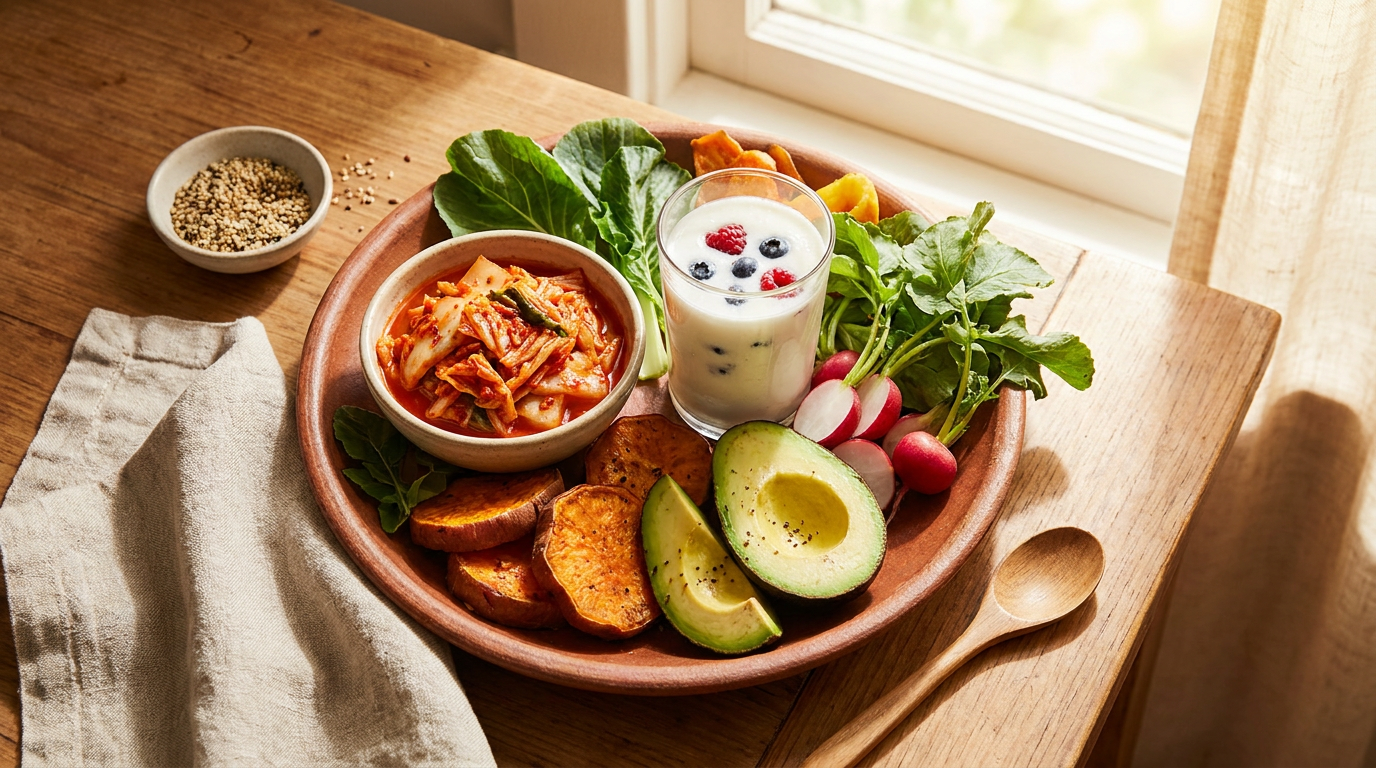
However, experts caution that simply swallowing a probiotic capsule is rarely a silver bullet. The concept of the "food matrix"—the complex physical and chemical structure of whole foods—plays a vital role in how nutrients and microbes are absorbed and utilized by the body. Fermented foods like kefir, kimchi, sauerkraut, and traditional yogurt provide a natural, highly effective delivery system for psychobiotics. The structural matrix of these foods protects beneficial bacteria during their perilous journey through stomach acid, ensuring they reach the lower intestine alive and ready to colonize.[6][8]
To sustain a healthy microbiome, the bacteria must be consistently fed with prebiotics, primarily found in diverse, plant-based foods. The Mediterranean diet, characterized by a high intake of vegetables, fruits, legumes, whole grains, nuts, and omega-3-rich fish, is widely considered the gold standard for nutritional psychiatry. This dietary pattern provides an abundance of the complex fibers and polyphenols that beneficial microbes thrive on. Consequently, high adherence to a Mediterranean-style diet is consistently associated with a significantly lower risk of developing depression and cognitive impairment over a lifespan.[3][7]

Conversely, the modern Western diet, heavily reliant on ultra-processed foods (UPFs), acts as a wrecking ball to the gut microbiome. UPFs are typically stripped of fiber and loaded with refined sugars, emulsifiers, and artificial additives. This nutritional profile starves beneficial bacteria while feeding pathogenic strains that thrive on sugar. The resulting imbalance, known as dysbiosis, degrades the intestinal lining, allowing bacterial endotoxins to leak into the bloodstream. This triggers a systemic immune response and subsequent neuroinflammation, creating a biochemical environment that actively fosters anxiety and depressive symptoms.[8]
The future of nutritional psychiatry lies in personalized, microbiome-targeted therapies. At recent medical conferences, researchers showcased the potential of microbiome genetic sequencing to guide treatment. By analyzing a patient's stool sample, clinicians can identify specific microbial deficiencies and prescribe tailored dietary interventions or next-generation symbiotics—formulations that combine specific psychobiotic strains with the exact prebiotic fibers they need to flourish. This level of precision promises to elevate dietary advice from general wellness tips to targeted medical treatments.[7]
Another exciting frontier is the development of postbiotics. Since live bacteria can be fragile and difficult to deliver reliably, scientists are increasingly focusing on the beneficial metabolites the bacteria produce, such as specific peptides and short-chain fatty acids. By administering these postbiotics directly, clinicians can bypass the unpredictable process of bacterial colonization entirely, delivering the neurological benefits of a healthy microbiome even to patients with severely compromised digestive systems.[7][8]

Ultimately, the integration of the gut-brain axis into mainstream medicine represents a profound shift in how we view mental health. It dismantles the artificial boundary between the mind and the body, proving that psychological well-being is inextricably linked to physiological health. While nutritional psychiatry is not intended to replace traditional psychiatric care for severe mental illness, it offers a powerful, accessible, and side-effect-free adjunct therapy that can significantly improve patient outcomes and overall quality of life.[3][4]
For the general public, the science of psychobiotics offers a deeply hopeful message. Mental health is not solely dictated by genetics or immutable brain chemistry; it is a dynamic state that we can actively influence every day. By prioritizing whole, fiber-rich foods, embracing fermented products, and minimizing ultra-processed ingredients, individuals have the power to cultivate an internal ecosystem that actively supports their emotional resilience, transforming every meal into an opportunity to nourish the mind.[6]
How we got here
2013
The International Society for Nutritional Psychiatry Research (ISNPR) is founded, formalizing the study of diet's impact on mental health.
2015
Landmark studies confirm the bidirectional communication of the gut-brain axis, proving gut bacteria influence mammalian behavior.
2020
The term 'psychobiotics' gains mainstream clinical traction as specific bacterial strains demonstrate anti-anxiety effects in human trials.
2025-2026
Clinical focus shifts toward personalized microbiome sequencing and 'postbiotics' to deliver targeted neurological benefits.
Viewpoints in depth
Nutritional Psychiatrists' view
Treating the gut as the foundation of mental resilience.
Clinicians in this emerging field argue that the current model of psychiatric care is incomplete because it largely ignores the body's metabolic and microbial health. They emphasize that while SSRIs and cognitive behavioral therapy are essential, their efficacy can be severely blunted if a patient's neuroinflammation remains high due to a poor diet. By prescribing Mediterranean-style diets and specific fermented foods, these psychiatrists aim to create a biochemical environment that actively supports emotional stability, viewing food not just as fuel, but as a daily medical intervention.
Microbiome Researchers' view
Mapping the precise chemical language of bacteria.
For microbiologists and neuroscientists, the focus is on moving away from broad, generic advice and toward precision medicine. They caution that the probiotic supplements currently lining grocery store shelves are often ineffective because they lack the specific strains proven to cross the gut-brain axis. Researchers are focused on mapping exactly which bacterial strains produce specific neurotransmitters, with the ultimate goal of developing FDA-approved 'psychobiotics' that can be prescribed with the same precision and predictable dosing as traditional pharmaceuticals.
Public Health Advocates' view
Addressing the systemic drivers of the mental health crisis.
Public health experts view the gut-brain axis through the lens of epidemiology and food policy. They point out that the global rise in anxiety and depression correlates strongly with the proliferation of ultra-processed foods (UPFs) in the standard Western diet. From this perspective, the mental health crisis cannot be solved in the therapist's office alone; it requires systemic changes to the food environment, better access to whole foods, and updated nutritional guidelines that explicitly recognize the link between diet quality and psychological well-being.
What we don't know
- The exact optimal dosage and strain combinations of psychobiotics required to treat specific psychiatric conditions reliably.
- How individual genetic differences in human metabolism interact with microbial outputs to affect mental health.
- The long-term stability of microbiome alterations achieved through short-term dietary interventions or specialized supplements.
Key terms
- Gut-Brain Axis
- The bidirectional communication network connecting the central nervous system to the enteric nervous system in the digestive tract.
- Psychobiotics
- Live microorganisms, prebiotic fibers, or bacterial metabolites that confer mental health benefits when consumed in adequate amounts.
- Short-Chain Fatty Acids (SCFAs)
- Beneficial compounds produced when gut bacteria ferment dietary fiber, known for reducing neuroinflammation.
- Vagus Nerve
- A major cranial nerve that acts as a physical communication highway transmitting signals from the gut directly to the brain.
- Postbiotics
- The beneficial chemical byproducts, such as peptides and SCFAs, produced by live bacteria during fermentation.
- Dysbiosis
- An imbalance in the gut microbiome, often caused by poor diet or antibiotics, which can trigger systemic inflammation.
Frequently asked
Can changing my diet actually cure anxiety or depression?
While diet alone is rarely a 'cure' for severe clinical depression, research shows that a microbiome-friendly diet significantly reduces symptoms and improves the efficacy of traditional treatments by lowering neuroinflammation.
Are over-the-counter probiotic supplements effective for mental health?
Most generic probiotics are designed for digestive health, not mental health. Researchers recommend focusing on whole fermented foods or seeking out specific 'psychobiotic' strains like Bifidobacterium longum.
How quickly can dietary changes affect the gut microbiome?
The gut microbiome is highly responsive; significant shifts in bacterial composition and metabolic output can be observed within just a few days of switching to a high-fiber, whole-food diet.
What are the worst foods for the gut-brain axis?
Ultra-processed foods (UPFs) high in refined sugars, artificial emulsifiers, and low in fiber are the most detrimental, as they starve beneficial bacteria and promote inflammatory strains.
Sources
Source coverage
8 outlets
4 viewpoints surfaced








[1]Nature Mental HealthMicrobiome Researchers
The gut microbiome directly influences brain chemistry and stress responses
Read on Nature Mental Health →[2]Frontiers in NeuroscienceMicrobiome Researchers
Psychobiotic potential of probiotics in modulating anxiety through the gut-brain axis
Read on Frontiers in Neuroscience →[3]ISNPRNutritional Psychiatrists
Nutritional Psychiatry and the Microbiota-Gut-Brain Axis
Read on ISNPR →[4]University of South AustraliaNutritional Psychiatrists
Gut-brain connection is one of the most exciting frontiers in mental health research
Read on University of South Australia →[5]World Health OrganizationPublic Health Advocates
Mental health and well-being
Read on World Health Organization →[6]Factlen Editorial TeamFactlen Editorial
Synthesis by Factlen editorial team
Read on Factlen Editorial Team →[7]Nutrition InsightPublic Health Advocates
Microbiome modulation for mental health support
Read on Nutrition Insight →[8]MDPI NutrientsMicrobiome Researchers
Dietary modulation of the gut microbiome and its implications for mental health
Read on MDPI Nutrients →

Every angle. Every day.
Get health stories with full source coverage and perspective breakdowns delivered to your inbox.