
Women's Club Soccer Shatters Global Attendance Records in Historic 2026 Season
Driven by massive expansion crowds in the NWSL and unprecedented stadium takeovers in England's WSL, women's professional soccer has reached a new commercial pinnacle in 2026.
By Factlen Editorial Team
- League Executives
- Focused on capitalizing on the commercial momentum and building sustainable infrastructure.
- Players & Staff
- Focused on the elevated on-pitch quality and the long-overdue recognition of the women's game.
- Supporters
- Focused on preserving the unique, inclusive culture of women's soccer as it scales.
What's not represented
- · Traditional Men's Club Supporters
- · Lower-Division Women's Clubs
Why this matters
The explosion of attendance in women's club soccer proves the sport has permanently transitioned from a niche market to a mainstream commercial powerhouse, driving new stadium infrastructure and massive franchise valuations.
Key points
- Women's professional soccer leagues in the US and England have shattered all-time attendance records in 2026.
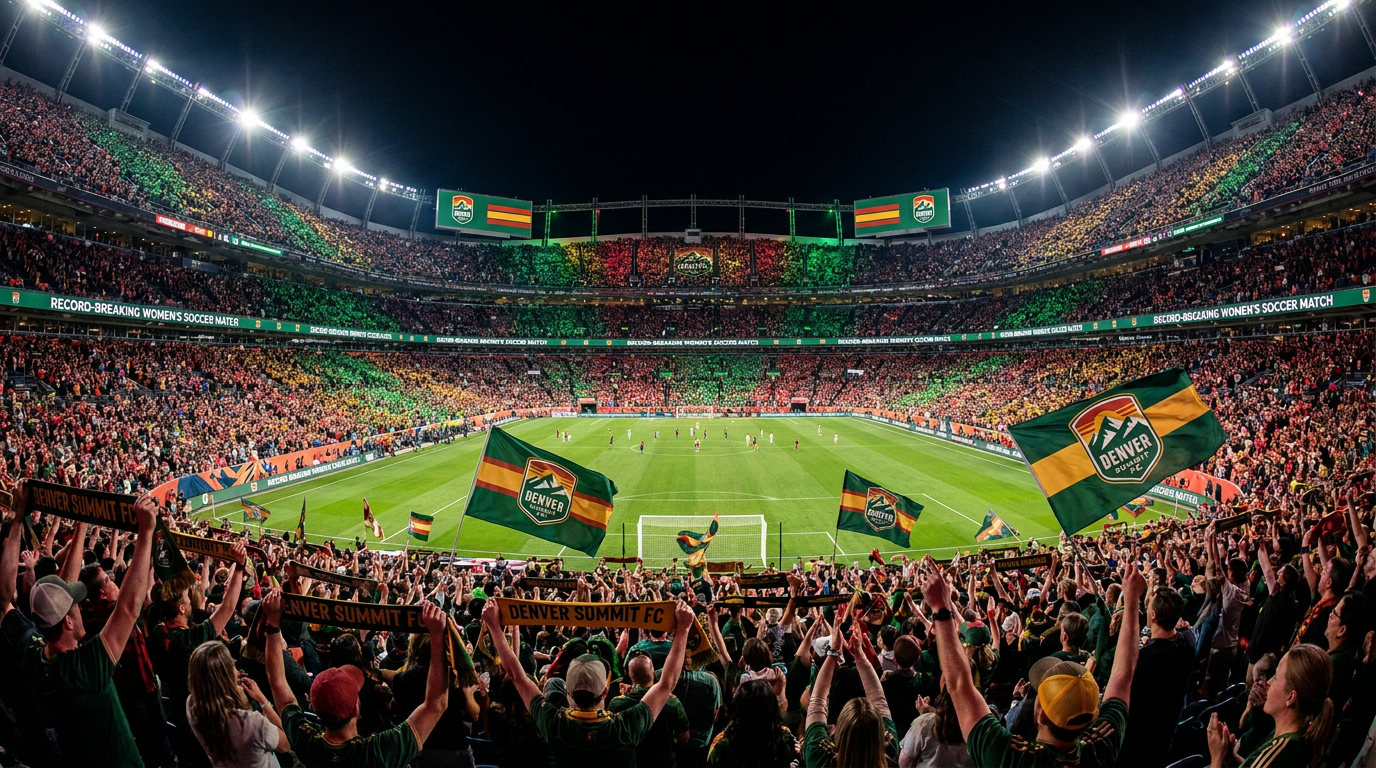
- The NWSL's Denver Summit FC drew a staggering 63,004 fans to their inaugural home match, obliterating previous records.
- England's WSL saw Arsenal consistently pack the 60,000-seat Emirates Stadium, while Manchester City claimed the league title.
- Clubs are rapidly transitioning from temporary suburban fields to massive NFL/Premier League venues and bespoke soccer-specific stadiums.
While the globe's attention turns to the 2026 Men's World Cup, the most transformative structural story in global soccer is unfolding quietly but forcefully at the club level. Women's professional leagues in the United States and England have shattered all-time attendance, broadcast, and revenue records this year, proving that the commercial appetite for the women's game has reached unprecedented heights. This is no longer a niche market or a charitable endeavor; it is a rapidly maturing asset class drawing massive crowds, securing lucrative television deals, and attracting serious institutional investment from global ownership groups.[7]
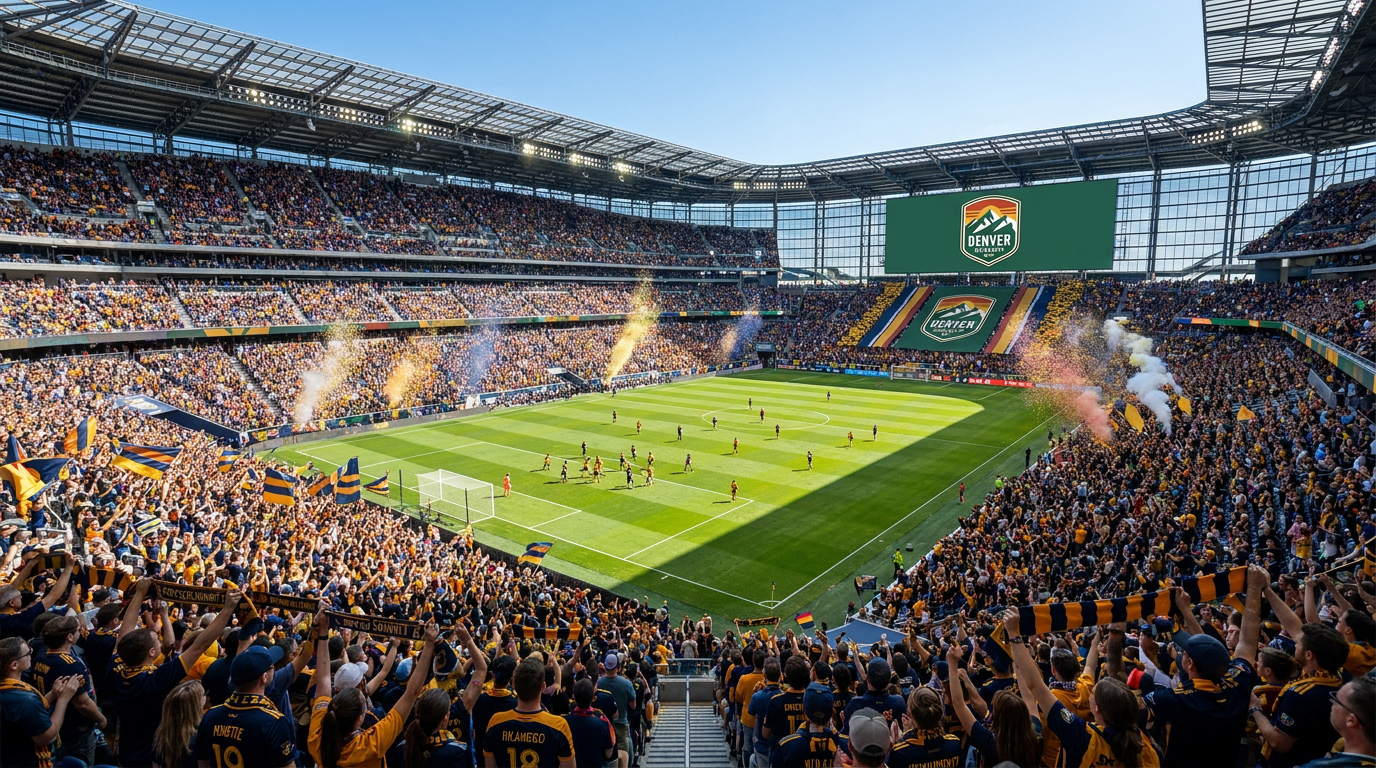
The vanguard of this commercial surge is the National Women's Soccer League (NWSL) in the United States. When the expansion Denver Summit FC hosted their inaugural home opener at Empower Field at Mile High this spring, they didn't just beat the league's attendance record—they obliterated it in spectacular fashion. A staggering 63,004 fans packed the massive NFL stadium, easily surpassing the previous high of 40,091 set by Bay FC at Oracle Park in 2025, and sending a clear message about the viability of women's sports in the Mountain West.[1][3][4]
The Denver milestone was not an isolated anomaly driven by a single market's curiosity. The NWSL's 2026 opening weekend drew a record-breaking 129,202 fans across eight matches, averaging over 16,150 supporters per game and setting a new standard for the league's baseline engagement. Another highly anticipated expansion side, Boston Legacy FC, welcomed 30,207 supporters for their debut match, setting a brand-new benchmark for a club's first-ever game and proving that well-marketed new franchises can immediately command major-league audiences right out of the gate.[5]

Across the Atlantic, England's Women's Super League (WSL) has mirrored this explosive North American growth with its own series of historic milestones. The recently concluded 2025–26 season saw Arsenal consistently fill the 60,000-seat Emirates Stadium, setting a new league attendance record of 60,160 during a marquee clash against Manchester United. The London club has effectively normalized playing in their primary men's stadium, shifting the paradigm for what a standard weekend fixture looks like in the English top flight and forcing rival clubs to scale up their own venue ambitions.[7]
The English domestic season culminated in a historic double for Manchester City, who finally dethroned long-time champions Chelsea to claim the WSL crown. City's dominant title run, spearheaded by Jamaican international Khadija Shaw's record-breaking 21-goal golden boot campaign, played out in front of packed crowds and record-setting domestic broadcast audiences. The undeniable commercial and competitive momentum has prompted the WSL to announce a strategic expansion to 14 teams for the upcoming 2026–27 season, further widening the league's national footprint and creating new broadcast inventory.[4][6]
The English domestic season culminated in a historic double for Manchester City, who finally dethroned long-time champions Chelsea to claim the WSL crown.
What unites the American and European booms is a fundamental shift in infrastructure strategy and long-term ambition. For years, professional women's teams were relegated to suburban training grounds, college campuses, or minor-league baseball stadiums with limited amenities and poor broadcast lighting. Today, ambitious clubs are either taking over massive NFL and Premier League venues for their marquee matchups or, increasingly, building their own bespoke fortresses designed specifically to optimize the matchday experience for the women's game.[3][7]
Denver Summit's long-term roadmap perfectly exemplifies this new infrastructural ambition. While currently utilizing Empower Field and Dick's Sporting Goods Park to accommodate their massive initial crowds, the club is actively developing a permanent, 14,500-seat soccer-specific stadium at Santa Fe Yards, slated to open in 2028. This follows the groundbreaking blueprint set by the Kansas City Current's CPKC Stadium, which opened as the first venue built explicitly for a women's professional sports team and has enjoyed a sold-out, raucous atmosphere ever since its inauguration.[3][5]

The on-pitch product has evolved in tandem with this massive commercial investment. The sudden influx of capital has allowed clubs to attract top-tier international talent, elevate daily training standards, and foster a highly competitive, fast-paced tactical environment. In the WSL, a record number of international stars—particularly from Scandinavia and the Americas—have migrated to England, drawn by the league's growing prestige, elite coaching, and newfound financial stability that rivals the top men's leagues in smaller European nations.[2][4]
Crucially, fans are responding to a matchday experience that feels distinct from the traditional men's game. Supporters consistently highlight the inclusive, family-friendly atmosphere, accessible ticket pricing, and deep community engagement as the primary drivers of their fierce loyalty. The crowds are diverse, passionate, and deeply invested in the success of the athletes, creating a vibrant, welcoming environment that blue-chip corporate sponsors and major television broadcasters are increasingly eager to associate with.[1][7]
The emotional resonance of these milestones is palpable among the supporters who have championed the sport for decades, often through periods of financial instability. 'This is a big deal, and it's very important,' noted one fan at the Denver Summit's record-breaking opener. 'It's a huge milestone for women's sports to prove that we want more women's sports, and that we will show up in massive numbers when given the opportunity and the proper stage.'[1]

The primary challenge for these leagues now is converting the novelty of expansion launches and massive stadium takeovers into sustained, week-over-week attendance that doesn't dip when the initial hype fades. However, with franchise valuations soaring into the tens of millions and major broadcasters fiercely vying for exclusive media rights, the financial foundation is more solid than ever before, providing clubs with the runway to build generational fanbases.[3][7]
As the 2026 NWSL season pushes toward its highly anticipated playoffs and the WSL prepares for an expanded 14-team footprint this fall, the global narrative is no longer about mere survival or charity. Women's club soccer has firmly established itself as a premier sports entertainment product, and the roaring crowds filling mega-stadiums from London to Denver prove the ceiling is nowhere in sight.[4][5]
How we got here
August 2025
Bay FC sets an NWSL attendance record by drawing 40,091 fans to Oracle Park.
March 2026
The NWSL opens its season with record numbers, averaging over 16,000 fans per match.
March 28, 2026
Denver Summit FC shatters the NWSL record, drawing 63,004 fans to their inaugural home match.
May 2026
Manchester City secures the WSL title in England, capping a season of record-breaking crowds.
June 2026
The WSL announces its expansion to 14 teams for the upcoming 2026-27 season.
Viewpoints in depth
League Executives
Focused on capitalizing on the commercial momentum and building sustainable infrastructure.
For owners and league officials, the 2026 attendance boom validates years of aggressive investment. They view the transition from temporary venues to massive NFL or Premier League stadiums—and eventually to bespoke, club-owned arenas—as the critical step in unlocking broadcast revenue and massive franchise valuations. Their primary goal is converting these record-breaking single-game crowds into sustained season-ticket bases.
Players & Staff
Focused on the elevated on-pitch quality and the long-overdue recognition of the women's game.
Athletes and coaches emphasize that the massive crowds are a direct result of a vastly improved on-pitch product. With better training facilities, higher salaries, and an influx of international talent, the level of competition has never been higher. For veterans who spent years playing in front of sparse crowds at suburban training grounds, the 60,000-seat sellouts represent the realization of a lifelong dream.
Supporters
Focused on preserving the unique, inclusive culture of women's soccer as it scales.
Fans are the engine of this growth, drawn to a matchday experience that often feels more inclusive, family-friendly, and community-oriented than the men's equivalent. While they celebrate the massive attendance milestones, supporter groups are also vocal about keeping ticket prices accessible and ensuring that the grassroots culture of the women's game isn't lost in the rush toward commercialization.
What we don't know
- Whether expansion clubs like Denver and Boston can convert their massive inaugural crowds into sustained, week-over-week season ticket sales.
- How the influx of massive broadcast and stadium revenue will alter the competitive balance between top-tier and lower-tier clubs.
- The exact timeline for several proposed bespoke women's stadiums to clear local zoning and construction hurdles.
Key terms
- NWSL
- The National Women's Soccer League, the top-tier professional women's soccer league in the United States.
- WSL
- The Women's Super League, the highest level of women's professional soccer in England.
- Expansion Team
- A newly created franchise entering a sports league for its first season, such as the Denver Summit or Boston Legacy.
- Soccer-Specific Stadium
- A venue built specifically for soccer, typically offering a more intimate atmosphere and better sightlines than massive American football stadiums.
Frequently asked
Which team holds the NWSL attendance record?
The expansion Denver Summit FC set the record in March 2026, drawing 63,004 fans to Empower Field at Mile High.
What is the attendance record in England's WSL?
Arsenal holds the WSL record, drawing 60,160 fans to the Emirates Stadium during the 2025-26 season.
Are women's teams building their own stadiums?
Yes. Following the Kansas City Current's CPKC Stadium, clubs like the Denver Summit are planning bespoke, soccer-specific venues for the coming years.
Who won the English Women's Super League in 2026?
Manchester City won the 2025-26 WSL title, dethroning long-time champions Chelsea.
Sources
Source coverage
7 outlets
3 viewpoints surfaced






[1]AP NewsSupporters
Denver Summit shatters NWSL crowd record with 63,004 fans at Mile High
Read on AP News →[2]Equalizer SoccerPlayers & Staff
Denver breaks NWSL attendance record
Read on Equalizer Soccer →[3]National Soccer NetworkSupporters
Denver Summit FC hosts inaugural home opener, draws staggering 63,004 fans
Read on National Soccer Network →[4]HerFootballSupporters
WSL Trophies to Change as League Enters a New Era
Read on HerFootball →[5]NWSL OfficialLeague Executives
NWSL SETS OPENING WEEKEND ATTENDANCE RECORD TO KICK OFF 2026 SEASON
Read on NWSL Official →[6]Manchester City OfficialPlayers & Staff
2025/26 WSL Season Review: Manchester City's Historic Double
Read on Manchester City Official →[7]Factlen Editorial TeamLeague Executives
Synthesis by Factlen editorial team
Read on Factlen Editorial Team →
More in sports
See all 12 stories →Flag Football
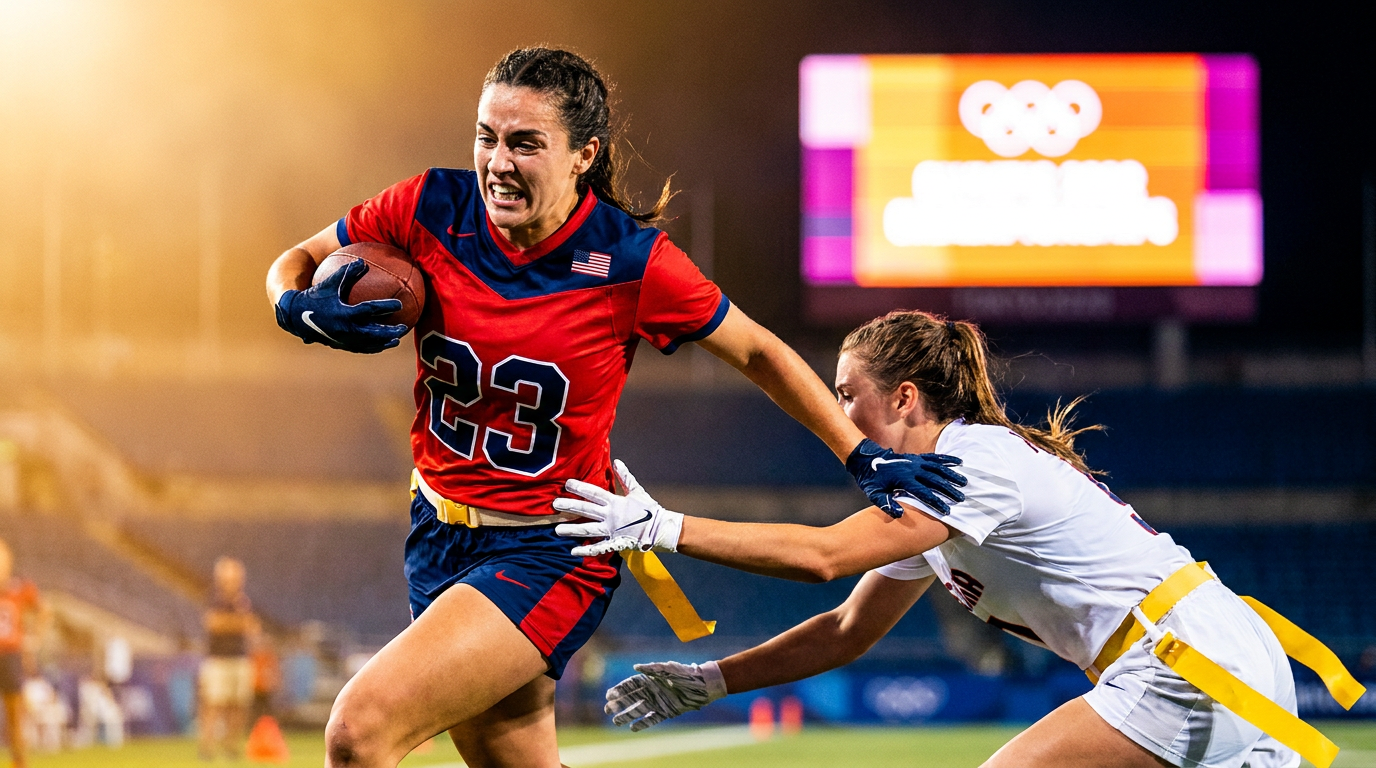
The Mechanics of Olympic Flag Football: How the 5v5 Game Will Work at LA 2028
6 sources
Injury
Global Swimming Injury Update: Major Stars Cleared for Summer 2026 Competitions
8 sources

Standings
Ledecky Dominates, Mathias Sets American Record at 2026 Pro Swim Series Finale in Indianapolis
6 sources

NCAA Expansion
How Women's Wrestling Became the NCAA's 91st Championship Sport
6 sources
Every angle. Every day.
Get sports stories with full source coverage and perspective breakdowns delivered to your inbox.