
U.S. and Iran Sign Memorandum of Understanding to End War and Reopen Strait of Hormuz
The United States and Iran have signed a 14-point memorandum of understanding to halt hostilities, reopen the Strait of Hormuz, and begin a 60-day negotiation period for a final nuclear agreement. The deal offers Iran immediate sanctions relief and a proposed $300 billion reconstruction plan, sparking fierce bipartisan backlash from Congress.
By Factlen Editorial Team
- Congressional Critics
- Views the deal as a capitulation that bypasses congressional oversight and rewards Iran with immediate sanctions relief and a $300 billion reconstruction plan.
- Trump Administration & Allies
- Argues the agreement is a victory of 'peace through strength' that reopens global shipping and forces Iran to the table without a nuclear weapon.
- Israeli Officials
- Deeply skeptical of the agreement, warning that it removes economic and military pressure on the Iranian regime while leaving its nuclear infrastructure intact.
- International Mediators
- Welcomes the immediate de-escalation and the reopening of the Strait of Hormuz as a critical relief for the global economy.
What's not represented
- · Iranian civilian populace facing the economic transition
- · Global shipping companies navigating the reopened Strait of Hormuz
Why this matters
This agreement abruptly halts a major international military conflict and immediately restores the flow of global oil through the Strait of Hormuz, stabilizing energy markets. However, the sweeping economic concessions granted to Iran without a finalized nuclear treaty have triggered a constitutional clash in Washington and raised alarms about the long-term security of the Middle East.
Key points
- The U.S. and Iran signed a 14-point memorandum ending the 111-day military conflict known as Operation Epic Fury.
- The agreement immediately reopens the Strait of Hormuz to commercial shipping and ends the U.S. naval blockade.
- Iran receives immediate sanctions relief and a proposed $300 billion reconstruction plan in exchange for entering a 60-day negotiation window.
- The deal leaves the specific mechanisms for dismantling Iran's nuclear program to be finalized in upcoming technical talks.
- Bipartisan lawmakers have condemned the agreement, accusing the administration of bypassing congressional oversight and surrendering leverage.
- Israeli officials have expressed deep concern that the deal provides the Iranian regime with an economic lifeline without neutralizing its proxy networks.
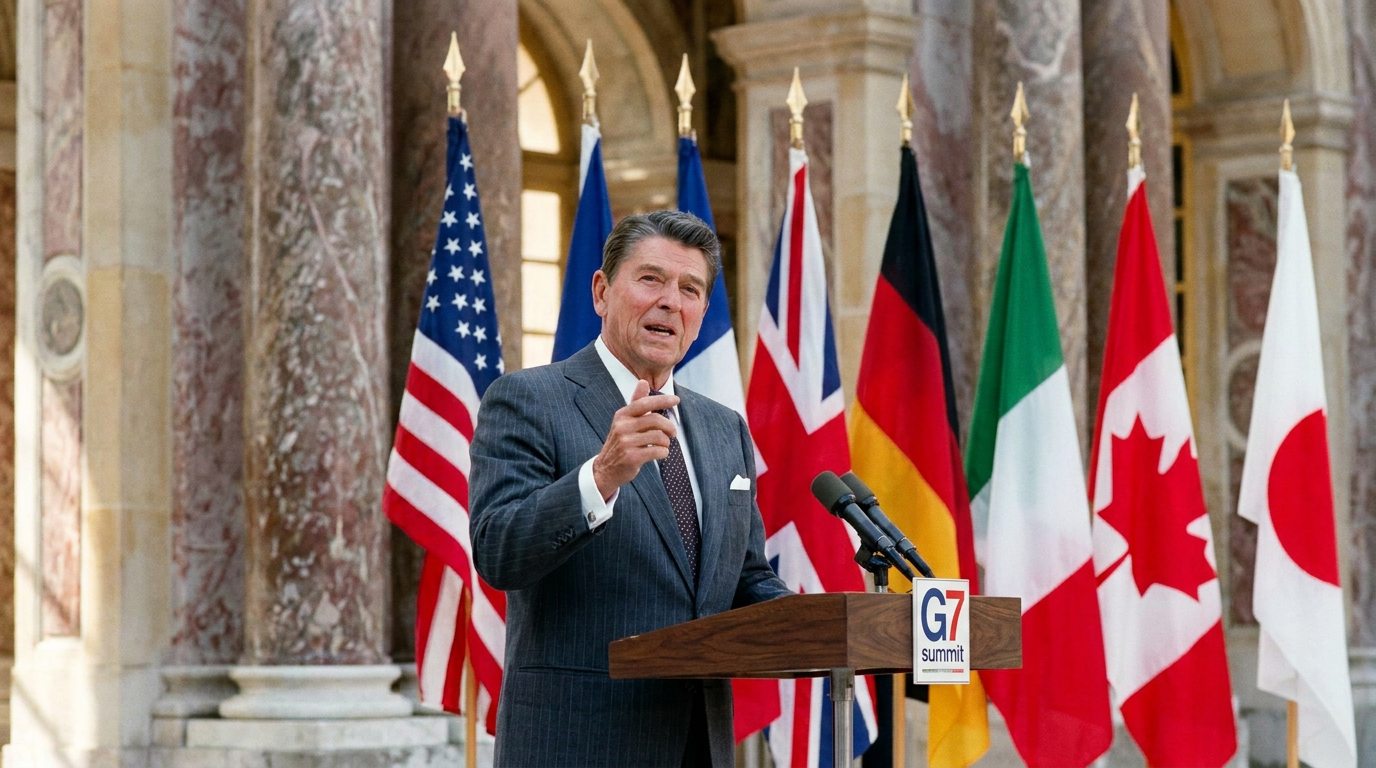
The United States and Iran have officially halted the 111-day military conflict known as Operation Epic Fury, signing a sweeping 14-point Memorandum of Understanding (MOU) that immediately reopens the Strait of Hormuz and sets a 60-day clock for a final nuclear agreement. The U.S. administration and Iranian President Masoud Pezeshkian electronically signed the accord, which was mediated by Pakistan and announced during the G7 summit in France. The agreement mandates an immediate and permanent termination of military operations on all fronts, including in Lebanon, fundamentally reshaping the geopolitical landscape of the Middle East after months of intense warfare.[1][3][4]
Under the terms of the newly released text, the immediate focus is the restoration of global maritime trade. Iran has agreed to allow the safe, toll-free passage of commercial vessels through the Strait of Hormuz—a critical artery for global oil supplies—for the next 60 days. In exchange, the United States will begin lifting its naval blockade immediately, with a commitment to fully end the blockade and remove its forces from the proximity of the Islamic Republic within 30 days of a final deal. Traffic through the strait has already seen a noticeable increase in the hours following the signing.[1][2][4]
The most heavily scrutinized provision of the MOU involves a massive financial incentive for Tehran. The agreement stipulates that the United States and its regional partners will develop a definitive, mutually agreed plan to provide at least $300 billion for the reconstruction and economic development of Iran. Furthermore, the U.S. has agreed to grant all required licenses and waivers for relevant financial transactions, effectively unfreezing Iranian assets and lifting sanctions on crude oil exports and associated banking services. This immediate economic relief is designed to bring Iran to the negotiating table for the next phase of talks.[1][3][4]

While the MOU halts the fighting, it leaves the most complex issue—Iran's nuclear program—unresolved, punting it to a 60-day negotiation window. The text includes a reaffirmation from Iran that it will not procure or develop nuclear weapons, but the mechanics of enforcing this pledge and handling Iran's current stockpile of 60% highly enriched uranium will be decided in upcoming technical talks. The agreement suggests a minimum standard of downblending the enriched material on-site under the supervision of the International Atomic Energy Agency, though the specifics remain a major point of contention.[2][4][7]
The U.S. administration has aggressively framed the agreement as a historic diplomatic victory achieved through overwhelming military leverage. The White House released statements from allied lawmakers praising the executive branch for forcing Iran to the table from a position of American strength, arguing that the brief war decimated Iran's naval and air capabilities. The administration claims the deal achieves everything it set out to accomplish, warning that if Iran violates the terms during the 60-day window, the U.S. military will immediately resume its bombing campaign.[4][5][7]
administration has aggressively framed the agreement as a historic diplomatic victory achieved through overwhelming military leverage.
However, the agreement has ignited a firestorm of bipartisan outrage on Capitol Hill, where lawmakers are accusing the administration of bypassing congressional oversight and capitulating to Tehran. Representative Brad Schneider, a Democrat on the House Foreign Affairs Committee, issued a blistering statement calling the MOU a surrender agreement that concedes unacceptable terms without achieving the war's initial objectives. Schneider argued that the immediate sanctions relief and the $300 billion reconstruction plan will simply allow Iran to rebuild its missile programs and fund proxy terrorist groups.[6]
Republican hawks have also voiced deep unease with the concessions. Senator Roger Wicker, chair of the Senate Armed Services Committee, warned that the memorandum negotiates away the victories of Operation Epic Fury in a manner inconsistent with the administration's stated goals. The primary procedural grievance centers on the 2015 Iran Nuclear Agreement Review Act (INARA), which mandates that any agreement regarding Iran's nuclear program be submitted to Congress for review. Because the administration structured the current deal as a Memorandum of Understanding rather than a formal treaty or final nuclear pact, it has so far avoided triggering the statutory review process.[2][6][7]

When pressed on the congressional bypass, the administration remarked that it wouldn't mind sending the memo to Congress, though no formal submission has occurred. The Vice President, who is expected to lead the American delegation in the upcoming negotiations in Switzerland, firmly defended the unilateral maneuvering. The administration argued that the immediate priority was securing the safe passage of global shipping and halting the bloodshed, framing the MOU as a necessary precursor to a permanent, binding treaty.[4][7]
Internationally, the agreement has exposed a sharp divide between European relief and Israeli alarm. G7 leaders and the Swiss government welcomed the deal as a vital de-escalation, with French officials noting it ends a period of great instability that threatened the global economy. The United Nations Secretary-General also praised the framework for providing a peaceful settlement to the conflict. For European nations heavily dependent on the free flow of oil through the Persian Gulf, the reopening of the Strait of Hormuz overrides immediate concerns about the structure of the negotiations.[3]

In stark contrast, Israeli officials view the MOU with profound skepticism and concern. Mark Regev, a former senior adviser to the Israeli prime minister, argued that by lifting the naval blockade and unfreezing assets upfront, the United States has surrendered its primary leverage. Regev warned that the agreement gives the Iranian regime a return to life without dismantling its nuclear infrastructure or addressing its support for Hezbollah and other regional proxies. The Israeli military has already indicated that, despite the MOU's call for an end to hostilities on all fronts, its forces will continue operating against Hezbollah in Lebanon.[2][3]
The ultimate success or failure of the Islamabad Memorandum of Understanding now hinges on the 60-day negotiation period. If the U.S. and Iran can agree on a permanent mechanism to dismantle Tehran's nuclear ambitions and formalize the $300 billion reconstruction fund, the MOU will serve as the foundation for a historic realignment in the Middle East. If the talks collapse, however, the region faces the immediate threat of a renewed, potentially devastating military conflict, with Iran newly enriched by two months of uninhibited oil exports.[2][4][7]
How we got here
February 2026
Operation Epic Fury begins, initiating a 111-day military conflict between the U.S. and Iran.
May 2026
The U.S. establishes a naval blockade, severely restricting traffic through the Strait of Hormuz.
June 17, 2026
The U.S. and Iran electronically sign a 14-point Memorandum of Understanding to halt hostilities.
August 2026
The 60-day negotiation window for a final, permanent nuclear agreement is set to expire.
Viewpoints in depth
The Administration's View
The White House frames the MOU as a historic diplomatic victory achieved through overwhelming military leverage.
The administration and its allies argue that the 111-day military campaign successfully decimated Iran's naval and air capabilities, forcing Tehran to accept terms from a position of weakness. By securing the immediate reopening of the Strait of Hormuz, the administration claims it has stabilized global markets while maintaining the credible threat of renewed bombing if Iran violates the 60-day negotiation window. Supporters view the upfront economic incentives not as capitulation, but as necessary leverage to finalize a permanent end to Iran's nuclear ambitions.
Congressional Critics' View
Bipartisan lawmakers argue the deal surrenders American leverage and illegally bypasses statutory oversight.
Lawmakers from both parties have expressed profound alarm over the immediate unfreezing of assets and the proposed $300 billion reconstruction fund. Critics argue that by granting sanctions relief before securing a binding mechanism to dismantle Iran's nuclear program, the U.S. is effectively funding the regime's recovery and its proxy networks. Furthermore, members of Congress are furious that the administration structured the agreement as an MOU, deliberately sidestepping the mandatory review process established by the 2015 Iran Nuclear Agreement Review Act.
Israel's View
Israeli officials warn the agreement provides the Iranian regime with a dangerous economic lifeline.
For Israel, the primary concern is that the MOU removes the intense military and economic pressure that had been crippling Tehran, without extracting irreversible concessions in return. Former Israeli officials argue that allowing Iran to resume uninhibited oil exports for 60 days gives the regime the financial resources to rebuild its defenses and continue funding groups like Hezbollah. Consequently, the Israeli military has signaled it will not be bound by the MOU's call for a comprehensive ceasefire, particularly regarding its operations in Lebanon.
What we don't know
- It remains unclear how the U.S. and Iran will resolve the disposition of Tehran's 60% highly enriched uranium stockpile during the 60-day window.
- The exact sources and mechanisms for funding the proposed $300 billion reconstruction plan have not been finalized.
- It is unknown whether Congress will successfully force a formal review of the agreement under the 2015 INARA law.
- The impact of Israel's refusal to halt military operations against Hezbollah in Lebanon on the broader ceasefire remains to be seen.
Key terms
- Memorandum of Understanding (MOU)
- A formal, non-binding agreement between two or more parties outlining the terms and details of an understanding, often used as a precursor to a final treaty.
- Strait of Hormuz
- A highly strategic waterway between the Persian Gulf and the Gulf of Oman, through which a significant portion of the world's oil supply passes.
- Iran Nuclear Agreement Review Act (INARA)
- A 2015 U.S. law requiring the president to submit any agreement related to Iran's nuclear program to Congress for a review period before waiving sanctions.
- Downblending
- The process of mixing highly enriched uranium with natural or depleted uranium to reduce its concentration, making it unusable for nuclear weapons.
- Operation Epic Fury
- The U.S. military campaign against Iran that lasted for 111 days prior to the signing of the memorandum.
Frequently asked
What does the Memorandum of Understanding actually do?
It establishes an immediate ceasefire, reopens the Strait of Hormuz to commercial traffic, lifts the U.S. naval blockade, and sets a 60-day window to negotiate a final nuclear deal.
How much money is Iran receiving?
The agreement unfreezes Iranian assets, lifts sanctions on oil exports, and commits the U.S. and regional partners to developing a $300 billion reconstruction and economic development plan.
Does this agreement permanently end Iran's nuclear program?
Not yet. While Iran reaffirmed it will not procure nuclear weapons, the specific mechanisms for enforcing this and handling its enriched uranium will be negotiated over the next 60 days.
Why is Congress angry about the deal?
Lawmakers argue the administration bypassed the 2015 Iran Nuclear Agreement Review Act by framing the deal as a memorandum rather than a formal treaty, denying Congress its statutory right to review the concessions.
Sources
Source coverage
7 outlets
4 viewpoints surfaced







[1]The Washington PostCongressional Critics
Text of President Donald Trump's memorandum of understanding with Iran
Read on The Washington Post →[2]CBS NewsInternational Mediators
Trump's Iran memorandum sets up two-month sprint for nuclear deal
Read on CBS News →[3]The GuardianIsraeli Officials
Pakistan hails US-Iran deal as critics call it a 'return to life' for regime
Read on The Guardian →[4]Military TimesInternational Mediators
Read the 14-point memorandum of understanding between the United States and Iran
Read on Military Times →[5]The White HouseTrump Administration & Allies
President Trump's Iran Agreement Is America First in Action
Read on The White House →[6]U.S. House of RepresentativesCongressional Critics
Schneider Statement on Memorandum of Understanding Between U.S. and Iran
Read on U.S. House of Representatives →[7]PBSTrump Administration & Allies
Trump says he 'wouldn't mind' sending Iran deal memo to Congress
Read on PBS →

More in news politics
See all 6 stories →US-Iran Relations
US-Iran Nuclear Talks in Switzerland Postponed Amid Lebanon Escalation
6 sources

Nuclear Diplomacy
U.S. and Iran Resume Indirect Nuclear Talks in Switzerland
9 sources
Workplace Trends
Fact-Checking the Four-Day Workweek: Does It Actually Boost Productivity?
6 sources

US-Iran Relations
US-Iran Nuclear Talks in Switzerland Postponed Days After Historic 14-Point Agreement
8 sources

Every angle. Every day.
Get news politics stories with full source coverage and perspective breakdowns delivered to your inbox.