
The Rise of the 'Coolcation': How Climate-Adaptive Travel is Reshaping Summer Tourism
Travelers are increasingly abandoning sweltering Mediterranean beaches for temperate northern destinations, driving a massive surge in summer tourism across Scandinavia and the Scottish Highlands.
By Factlen Editorial Team
- Climate-Adaptive Travelers
- Prioritizing health, thermal comfort, and active outdoor experiences over traditional beach holidays.
- Nordic Tourism Boards
- Welcoming the economic boom of summer arrivals while focusing on sustainable infrastructure to prevent overtourism.
- Global Travel Industry
- Tracking the massive shift in consumer demand and pivoting marketing strategies to accommodate climate realities.
What's not represented
- · Local residents of newly popular Arctic towns facing sudden summer crowding.
- · Small business owners in Southern Europe who rely exclusively on peak summer beach tourism.
Why this matters
As global temperatures rise, the traditional summer beach holiday is becoming physically uncomfortable and occasionally dangerous. Understanding the shift toward temperate destinations helps travelers plan safer, more enjoyable vacations while highlighting how the global hospitality economy is adapting to climate realities.
Key points
- Travelers are actively avoiding southern Europe in the summer due to record-breaking heatwaves.
- Searches for temperate destinations have surged by 74% globally.
- Scandinavia, Iceland, and Scotland are the primary beneficiaries of this 'coolcation' trend.
- The shift is driven by a desire for thermal comfort, wellness, and active outdoor experiences.
- Nordic countries are seeing a more balanced, year-round tourism economy as a result.
- Traditional hotspots are adapting by promoting spring and autumn 'shoulder season' travel.
For generations, the ultimate summer vacation formula was universally understood: pack a swimsuit, head south, and bake on a crowded Mediterranean beach. But as global temperatures continue to shatter historical records, a massive structural shift is rewriting the rules of global tourism in 2026. Travelers are actively fleeing the sweltering heat of traditional sun-and-sand resorts, turning their compasses northward in search of crisp air, deep fjords, and temperate forests.[1]
This mass migration has given rise to the defining travel movement of the decade: the "coolcation." A portmanteau of "cool" and "vacation," the term was initially coined as a niche industry buzzword to describe travelers seeking high-altitude or high-latitude refuges. Today, it represents a fundamental realignment of the global hospitality market. Instead of enduring 40-degree Celsius heatwaves in southern Europe, vacationers are deliberately targeting destinations where the summer average hovers comfortably between 15 and 22 degrees Celsius.[1][6]
The catalyst for this shift is rooted in the harsh climate realities of recent years. The summers of 2023 through 2025 delivered unprecedented thermal shocks to the Mediterranean basin, with temperatures frequently topping 44 degrees Celsius in peak tourist zones. For many families, what was supposed to be a relaxing getaway transformed into an exercise in heat endurance, marked by canceled excursions, health risks, and the confinement of air-conditioned hotel rooms.[1][8]
The data tracking this behavioral pivot is staggering. According to the 2026 Travel & Sustainability Report, climate uncertainty is now a primary driver of itinerary planning, with 74 percent of global travelers factoring extreme weather risks into their destination choices. More tellingly, a full quarter of respondents explicitly stated they are actively seeking out cooler climates to guarantee a reliable, comfortable travel experience.[4]

Flight booking patterns provide the clearest evidence that coolcationing has moved from concept to mainstream reality. Scandinavian Airlines (SAS) reported a massive surge in summer bookings from Southern Europe to the Nordic region. Searches for flights from Rome to Gothenburg, Sweden, skyrocketed by an astonishing 507 percent, while interest from Bologna to Stockholm jumped 412 percent.[3]
This north-bound exodus is not limited to European travelers. Global booking platforms are tracking similar trends across international markets. Industry reports indicate that global search volumes for designated cooler destinations have escalated by 74 percent year-over-year. The demand for cold-weather activities, fjord cruises, and glacial treks has outpaced the growth of traditional summer markets by a wide margin.[7]
The European Travel Commission's recent sentiment surveys underscore this transition. A growing share of Europeans are rethinking their travel plans entirely, with 28 percent actively prioritizing destinations that offer milder temperatures and a reduced risk of extreme heat. Furthermore, the desire to escape the crushing overtourism of traditional hotspots has driven 55 percent of travelers to seek out "off-the-beaten-track" locations.[2]
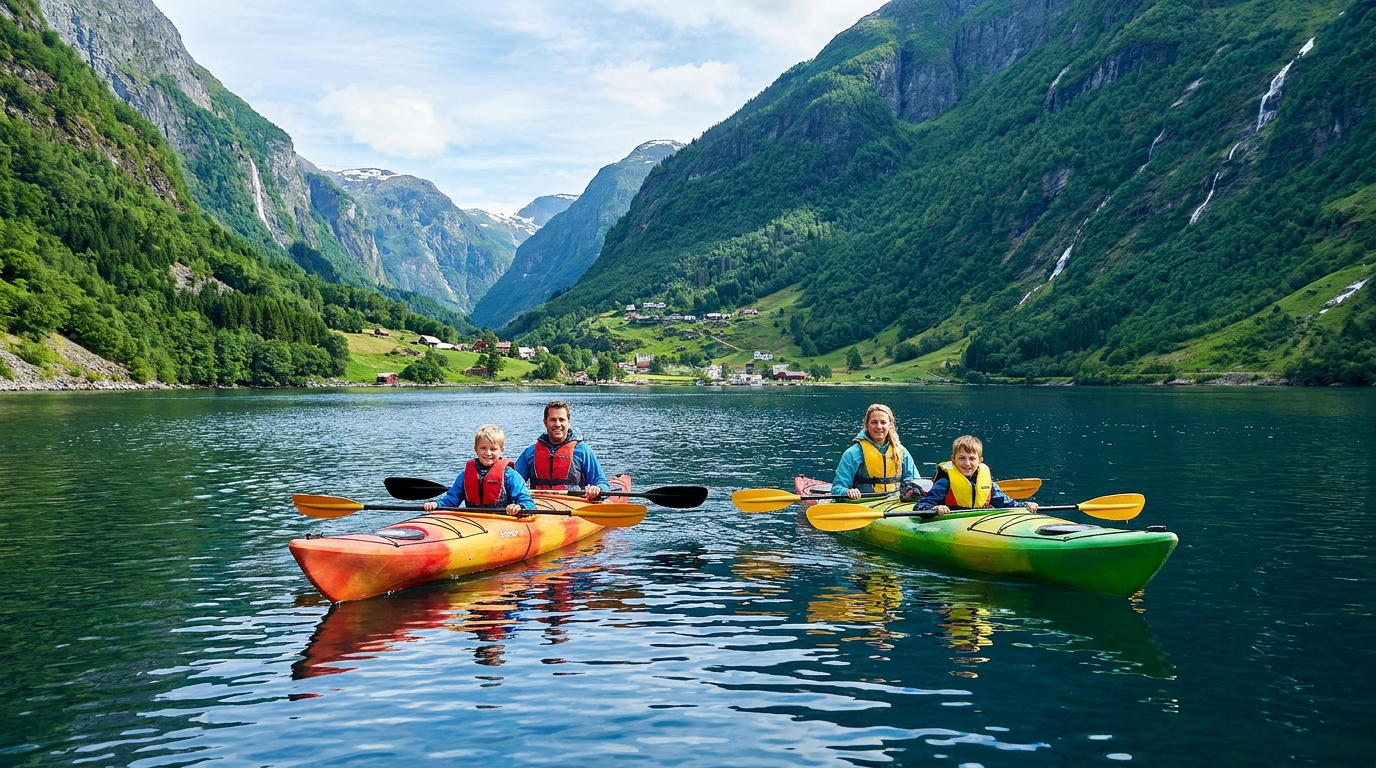
So, where exactly are the coolcationers going? The Nordic countries—Norway, Sweden, Finland, and Denmark—are the primary beneficiaries of this geographic reshuffling. Norway, with its dramatic Vestland fjords and the Arctic gateway city of Tromsø, has seen sustained increases in summer and shoulder-season arrivals. Tromsø, once known primarily as a winter destination for Northern Lights viewing, is rapidly transforming into a year-round hub for nature enthusiasts.[8]
Sweden is experiencing a similar boom, particularly in its northern regions. Destinations like Umeå and Luleå are drawing thousands of new passengers seeking the expansive space and pristine lakes of the Swedish wilderness. Tourism officials note that foreign bed nights in the Nordic countries have increased more robustly during the summer months than in Mediterranean countries, proving the region's newfound summer appeal.[3][5]

Sweden is experiencing a similar boom, particularly in its northern regions.
Finland, too, is breaking records. The country saw overnight hotel stays by international visitors reach an all-time high of 7.2 million recently, driven by strong growth from diverse global markets including the United States, the United Kingdom, and Asia. The appeal of Finnish Lapland under the midnight sun offers a stark, refreshing contrast to the crowded, sweltering beaches of the south.[8]
Beyond Scandinavia, other temperate regions are capturing the coolcation market. Iceland remains a top-tier destination for those looking to swap sweat for sweaters, offering unparalleled access to glaciers, massive waterfalls, and volcanic landscapes. Meanwhile, the Scottish Highlands and the alpine regions of Slovenia are attracting travelers who want dramatic scenery and historic exploration without the suffocating summer heat.[1]
The coolcation trend is also deeply intertwined with the evolving wellness tourism sector. Modern travelers are increasingly prioritizing active, outdoor experiences over passive beach lounging. The mild climates of northern Europe are perfectly suited for hiking, kayaking, and cycling—activities that become physically dangerous during a southern European heatwave.[1][6]
A sub-trend known as "blue health travel" is further fueling the northern migration. This concept centers on the therapeutic benefits of proximity to water, driving demand for cold-water swimming in Nordic lakes, coastal foraging, and restorative stays in glacier-adjacent eco-lodges. The focus has shifted from achieving a tan to achieving mental clarity and physical invigoration.[1]
For the destination countries, the economic implications of the coolcation boom are profound. Historically, Nordic tourism was heavily skewed toward the winter months. Now, the influx of summer visitors is creating a more balanced, year-round hospitality economy. In Sweden, for example, summer now accounts for 43 percent of the year's guest nights, contributing to more stable demand and employment throughout the year.[5][8]

However, this rapid growth presents new challenges for northern destination managers. Having witnessed the detrimental effects of overtourism in the Mediterranean, Nordic tourism boards are proactively implementing sustainable management strategies. The focus is on dispersing visitors across lesser-known regions and promoting community-based tourism that benefits local economies without overwhelming natural ecosystems.[1][5]
Conversely, the traditional powerhouses of European summer tourism are being forced to adapt to their new climate reality. Recognizing that peak summer is becoming increasingly inhospitable, destinations in Greece, Italy, and Spain are aggressively promoting "shoulder season" travel. By shifting marketing efforts to spring and autumn, they hope to maintain visitor numbers while offering a safer, more comfortable experience.[2]
Some southern destinations are also investing heavily in climate-resilient infrastructure. This includes the development of shaded public spaces, improved water management systems, and the promotion of nocturnal tourism—where cultural sites and outdoor dining open late in the evening when temperatures finally drop.[1]

The hospitality industry at large is pivoting to meet the demands of the climate-conscious traveler. Luxury operators and travel advisors report that their clients are no longer asking for the hottest beach, but rather the most temperate retreat. Ski resorts in the Alps and the Rockies are successfully rebranding themselves as premier summer destinations, offering mountain biking and alpine hiking as snowpack becomes less reliable.[1][6]
Ultimately, the rise of the coolcation represents a maturation of the global traveler. It is a rational, health-conscious response to a warming world, prioritizing thermal comfort, personal well-being, and environmental engagement over outdated seasonal traditions.[1]
As we look toward the future of travel in 2026 and beyond, the map of summer tourism has been permanently redrawn. The ultimate luxury is no longer a sun-drenched lounger on a crowded coast; it is the quiet, refreshing breeze of a northern fjord, signaling a cooler, more sustainable way to explore the world.[1]
How we got here
Summer 2023
Record-breaking heatwaves across Southern Europe begin to severely disrupt traditional peak-season travel.
Early 2024
The term 'coolcationing' emerges in travel media as a niche trend for luxury travelers seeking high-altitude escapes.
Summer 2025
Nordic countries report all-time highs in foreign guest nights as the trend goes mainstream.
June 2026
Major booking platforms report a 74% year-over-year surge in searches for temperate summer destinations.
Viewpoints in depth
Nordic Destination Managers
Welcoming the economic boost but emphasizing sustainable, year-round tourism models.
As destinations like Tromsø and Umeå experience unprecedented summer arrivals, local tourism boards are acutely aware of the risks of overtourism. Having watched the Mediterranean struggle with overcrowding, Nordic officials are prioritizing sustainable growth. Their strategy focuses on dispersing visitors across lesser-known regions and promoting community-based tourism that bolsters local economies without degrading the pristine natural environments that draw travelers in the first place.
Mediterranean Hospitality Sector
Adapting to climate realities by shifting peak seasons and investing in resilient infrastructure.
Traditional sun-and-sand destinations are not simply conceding defeat to the heat. Instead, the southern European hospitality sector is actively adapting. Tourism boards in Greece, Italy, and Spain are aggressively marketing 'shoulder season' travel, encouraging visitors to arrive in spring or autumn. Additionally, resorts are investing in climate-resilient infrastructure, such as enhanced shading, advanced cooling systems, and 'nocturnal tourism' initiatives that shift outdoor activities to the cooler evening hours.
Climate-Conscious Travelers
Viewing travel as an exercise in thermal comfort and active environmental engagement.
For the modern traveler, the coolcation is more than a logistical pivot; it is a lifestyle choice. This demographic prioritizes physical well-being and active outdoor engagement—such as hiking and kayaking—over passive beach lounging. By selecting destinations with milder climates, they are ensuring their holidays remain comfortable and safe, while also signaling a broader consumer demand for travel options that respect and adapt to the realities of a warming planet.
What we don't know
- Whether the infrastructure of remote Nordic towns can sustainably handle the long-term influx of peak-summer tourists without degrading the natural environment.
- How severely the economies of traditional Southern European tourist hotspots will be impacted if the summer exodus becomes permanent.
- If the aviation industry's carbon footprint will increase as travelers fly longer distances to reach northern latitudes.
Key terms
- Coolcationing
- The deliberate choice to take a summer holiday in a temperate or high-altitude climate to avoid extreme heat.
- Shoulder Season
- The travel periods between peak and off-peak seasons, typically spring and autumn, which are seeing increased demand.
- Thermal Comfort
- The condition of mind that expresses satisfaction with the thermal environment, increasingly a primary driver of travel decisions.
- Blue Health Travel
- Wellness tourism centered around the therapeutic benefits of proximity to water, including cold-water swimming.
Frequently asked
What exactly is a coolcation?
A vacation deliberately taken in a destination with a naturally cooler climate during the summer months, typically to escape extreme heatwaves.
Which countries are the most popular coolcation spots?
Norway, Sweden, Finland, Iceland, and Scotland are currently leading the trend, offering summer temperatures comfortably between 15°C and 22°C.
Are traditional beach holidays disappearing?
No, but they are shifting. Many travelers are now visiting Mediterranean hotspots during the 'shoulder seasons' of spring and autumn to avoid peak summer heat.
Is coolcationing just about the weather?
While temperature is the catalyst, the trend is also driven by a desire to avoid overtourism and a growing preference for active, nature-based wellness experiences.
Sources
Source coverage
8 outlets
3 viewpoints surfaced







[1]Factlen Editorial TeamClimate-Adaptive Travelers
Synthesis by Factlen editorial team
Read on Factlen Editorial Team →[2]European Travel CommissionGlobal Travel Industry
Monitoring Sentiment for Domestic and Intra-European Travel
Read on European Travel Commission →[3]SAS GroupNordic Tourism Boards
SAS Trends: Scandinavian Coolcation
Read on SAS Group →[4]Booking.comGlobal Travel Industry
2026 Sustainable Travel Report
Read on Booking.com →[5]Visit SwedenNordic Tourism Boards
Coolcation is becoming more and more popular – and Sweden remains the coolest choice
Read on Visit Sweden →[6]Condé Nast TravelerClimate-Adaptive Travelers
Why 'Coolcationing' Is the Travel Trend We Need Right Now
Read on Condé Nast Traveler →[7]Trip.com GroupGlobal Travel Industry
2026 Summer Travel Trends Report
Read on Trip.com Group →[8]Life in NorwayNordic Tourism Boards
The Coolcation Trend: Scandinavia Tourism Statistics
Read on Life in Norway →

Every angle. Every day.
Get travel stories with full source coverage and perspective breakdowns delivered to your inbox.