
The Rise of Local AI: How Small Language Models Are Transforming Personal Computing
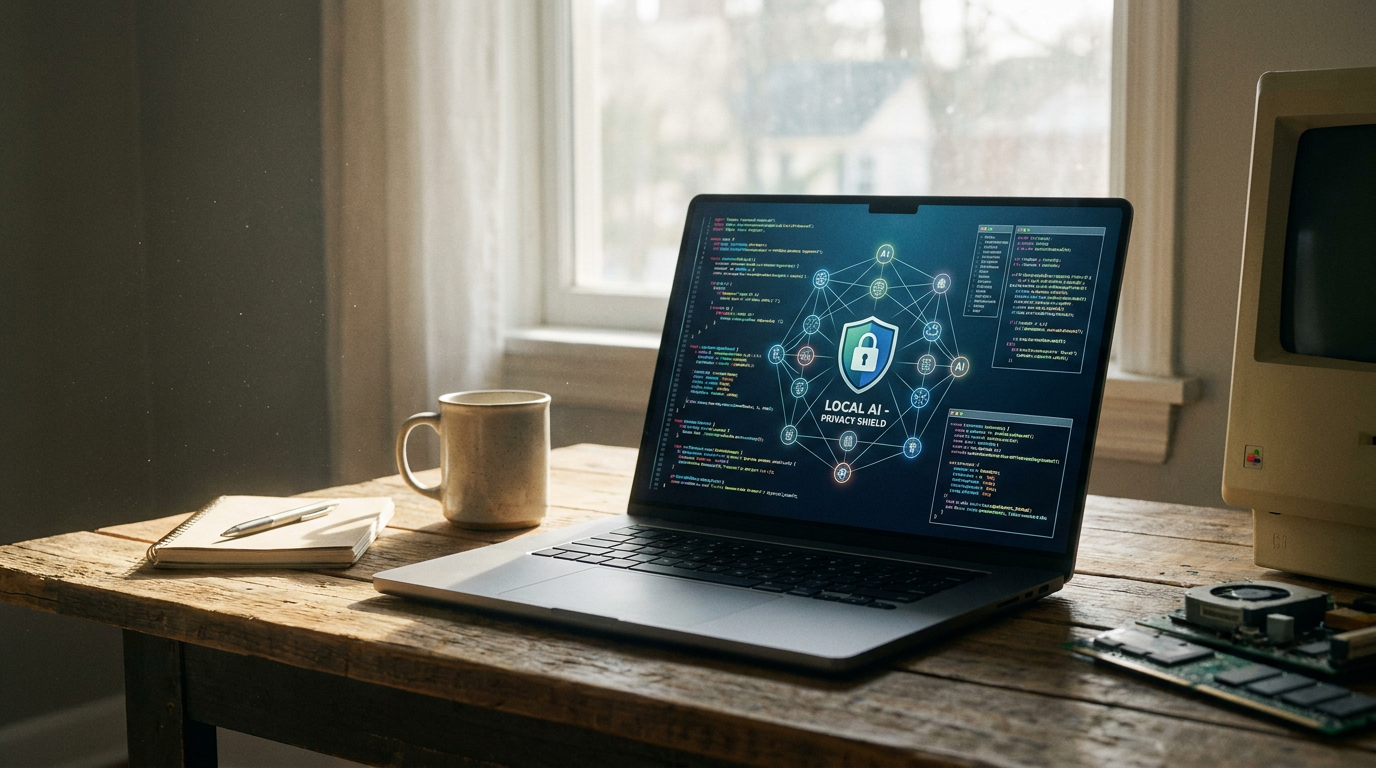
In 2026, the AI revolution has shifted from massive cloud servers to the chips inside everyday laptops and phones. Small Language Models (SLMs) are delivering zero-latency, privacy-first intelligence directly on consumer hardware.
By Factlen Editorial Team
- Privacy & Security Advocates
- Argue that the default state of software should not involve streaming user data to remote servers, championing local AI for sensitive applications.
- Enterprise Developers
- Focused on unit economics and uptime, they champion SLMs for reducing operational costs by up to 99% and eliminating dependency on external cloud providers.
- Frontier AI Researchers
- Emphasize that true artificial general intelligence and complex multi-step reasoning still require massive parameter counts, viewing SLMs as useful edge routers rather than replacements.
What's not represented
- · Hardware Manufacturers
- · Cloud Service Providers
Why this matters
Running AI locally means your personal data never leaves your device, eliminating privacy risks and recurring subscription costs. This shift empowers users to access powerful, zero-latency intelligence offline, fundamentally changing how we interact with software.
Key points
- Small Language Models (SLMs) run directly on consumer devices rather than cloud servers.
- Local execution guarantees complete data privacy, as information never leaves the device.
- Hardware NPUs and software quantization allow 8-billion parameter models to run on standard laptops.
- Hybrid routing architectures send 95% of tasks to local models, reserving cloud AI for complex queries.
For the past three years, the artificial intelligence narrative has been dominated by massive, cloud-based behemoths. Models like OpenAI's GPT-4 and Google's Gemini require vast datacenter GPU clusters, consuming immense amounts of power and forcing users to send their personal data over the internet for processing. This centralized approach created a bottleneck, limiting AI's utility in environments where privacy, offline capability, and low latency were paramount. But in 2026, a quiet architectural revolution has taken hold of the software industry, fundamentally changing how developers and consumers interact with machine learning on a daily basis.[6]
Developers and consumers alike are increasingly turning to Small Language Models (SLMs)—compact, highly efficient AI systems designed to run entirely locally on everyday devices. Instead of relying on a server farm in Virginia to process a simple text summarization, these models execute directly on the silicon inside your laptop, smartphone, or edge device. This shift represents a democratization of compute power, moving intelligence out of the hands of a few centralized cloud providers and directly into the hardware owned by the end user.[1][3]
The primary distinction between a Large Language Model (LLM) and an SLM comes down to parameter count—the internal variables the neural network uses to make decisions and generate text. While frontier LLMs operate with hundreds of billions or even trillions of parameters, SLMs typically range from 500 million to 14 billion. This drastically reduced footprint allows them to operate without the massive memory overhead of their larger counterparts, making them practical for consumer-grade hardware while still retaining a remarkable degree of language comprehension and reasoning ability.[1][2]

The catalyst for this rapid shift is a powerful convergence of hardware and software engineering. Modern consumer hardware now routinely features Neural Processing Units (NPUs)—dedicated silicon designed specifically to accelerate artificial intelligence workloads efficiently. From Apple's M-series and A-series chips to AMD's Ryzen AI 10000 series, devices are shipping with the raw compute power necessary to run AI locally without draining the battery in minutes or causing the system to overheat. This hardware foundation means that the physical constraints that previously kept AI tethered to the cloud have largely evaporated for the average consumer.[3]
On the software side, a mathematical technique known as "quantization" has served as the silver bullet for local deployment. Quantization compresses the model's weights—often reducing them from 16-bit floating-point numbers down to 4-bit integers—with minimal loss in actual reasoning quality. Because of this aggressive compression, an 8-billion parameter model that would normally require massive server memory can now fit comfortably inside just 6GB of standard Video RAM (VRAM). This breakthrough has effectively unlocked high-performance AI for anyone with a mid-range laptop, eliminating the need for specialized enterprise hardware.[1]
The most immediate and profound benefit of local AI is absolute data privacy. When an artificial intelligence model runs entirely on your device, the data never leaves your machine. There are no API keys to manage, no cloud servers intercepting your queries, and no risk of sensitive information being harvested for future model training. For highly regulated industries like healthcare, finance, and legal services, this local-first approach solves the fundamental compliance roadblock that has historically prevented widespread enterprise AI adoption.[2][3]
Apple has leaned heavily into this paradigm with its FoundationModels framework, which allows developers to integrate AI features like summarization and classification directly on-device. A journaling application, for instance, can now analyze and summarize a user's deeply personal entries without ever transmitting a single word to a third-party cloud provider. This architecture ensures that the user retains total sovereignty over their data, aligning perfectly with growing consumer demands for digital privacy and security in an increasingly connected world.[4]
Beyond the obvious privacy benefits, local models offer the distinct advantage of zero network latency. Cloud-based AI inherently suffers from round-trip delays—packaging a request, sending it over HTTPS, waiting for server processing, and finally receiving the response. Local SLMs eliminate this bottleneck entirely, enabling real-time, offline applications that feel instantly responsive. Whether you are on an airplane without Wi-Fi or in a secure facility with restricted internet access, the intelligence remains fully available and functional at all times.[3]

Beyond the obvious privacy benefits, local models offer the distinct advantage of zero network latency.
The economics of Small Language Models are equally compelling for businesses and independent developers. Relying on cloud LLMs means paying per-token API fees that scale linearly with user growth, creating a financial penalty for success. Deploying an SLM locally on user devices or on dedicated edge servers can reduce operating costs by 95% to 99% compared to cloud-only deployments. This dramatic reduction in overhead allows startups to build AI-native features without the fear of bankrupting themselves on compute costs.[1]
The 2026 model landscape is highly competitive, with major tech giants releasing incredibly capable small models that challenge the dominance of their larger siblings. Microsoft's Phi-4 family, particularly the 3.8-billion parameter Phi-4-mini, has proven that high-quality, curated training data can beat raw scale. Despite its diminutive size, the model outperforms much larger systems on graduate-level reasoning benchmarks, demonstrating that efficiency and intelligence are not mutually exclusive in modern machine learning architecture. This shift in focus from quantity to quality has redefined how researchers approach model training.[1]
Google's Gemma 3 and Meta's Llama 3.3 series have also established themselves as dominant open-weight options for the local computing community. For developers with 8GB of VRAM, models in the 7-to-9 billion parameter range have become the undisputed "sweet spot" for daily productivity tasks. These models offer clean, reliable text generation, robust coding assistance, and accurate document summarization, all while running smoothly in the background of a standard workflow without monopolizing system resources. The open-weight nature of these releases has spurred a massive wave of community-driven innovation and fine-tuning.[1][5]
The tooling ecosystem has matured rapidly to support this hardware and model proliferation. Applications like Ollama, LM Studio, and Unsloth Studio have democratized local AI, allowing users of all technical skill levels to search, download, and run models with a single click. These platforms handle the complex inference math, quantization settings, and environment configuration in the background, providing a seamless chat interface or a local API endpoint that mimics cloud services but runs entirely on the host machine. This frictionless user experience has been critical in driving mainstream adoption.[1][5]

Remarkably, SLMs are now capable of running autonomous "agentic" workflows directly on consumer hardware. Developers are increasingly using local models to independently refactor codebases, write comprehensive unit tests, and manage local file systems. While they currently operate at roughly 75% of the accuracy and speed of frontier cloud models, the ability to run these iterative loops entirely offline is a massive breakthrough for secure software development. It allows engineers to automate tedious tasks and experiment with autonomous agents without ever exposing proprietary corporate code to an external network.[5]
Despite their rapid advancement and undeniable utility, Small Language Models are not without their limitations. Because they have significantly fewer parameters, they inherently possess less generalized world knowledge than massive LLMs. They are more prone to struggling with highly complex, multi-step reasoning tasks, nuanced creative writing, or obscure trivia that was not heavily represented in their specialized, condensed training data. Recognizing these boundaries is crucial for developers looking to implement them effectively, as asking an SLM to perform outside its domain often leads to hallucinations or degraded output quality.[2]
To balance these inherent trade-offs, the software industry is rapidly adopting hybrid routing architectures. In this optimized setup, an application defaults to processing 95% of routine queries—such as text summarization, basic coding autocomplete, and data extraction—through a fast, free local SLM running on the device. Only when a query requires deep, complex reasoning or extensive world knowledge does the system intelligently escalate the request to a massive cloud LLM. This ensures that users experience the speed and privacy of local processing while still having access to frontier intelligence when necessary.[1]

This hybrid approach represents the true maturation of the artificial intelligence industry. The reflexive, unquestioned habit of calling a cloud API for every minor AI task is being replaced by thoughtful, resilient, and privacy-respecting engineering. By pushing intelligence directly to the edge and utilizing the silicon already sitting in our pockets, the tech world is building a future where AI is not just a distant service we rent, but a powerful, private capability we own. The era of the personal, local AI has officially arrived, fundamentally reshaping personal computing.[3][6]
How we got here
Late 2023
Early open-weight models spark developer interest in running AI locally.
Mid 2024
Microsoft releases the Phi-3 family, proving that small models can achieve high reasoning scores.
Early 2026
Hardware NPUs become standard in consumer laptops and smartphones.
June 2026
Local AI ecosystems mature, enabling agentic workflows and seamless offline integration.
Viewpoints in depth
Privacy & Security Advocates
Argue that the default state of software should not involve streaming user data to remote servers.
This camp views the reliance on cloud APIs as a fundamental security flaw. They argue that packaging user data into JSON payloads and sending it to centralized servers creates unnecessary vulnerabilities and privacy violations. For them, local SLMs are the only viable path forward for sensitive applications like healthcare diagnostics, personal journaling, and legal analysis, ensuring that user sovereignty is maintained.
Enterprise Developers
Focused on unit economics and uptime, they champion SLMs for their massive cost savings.
For enterprise engineers, paying per-token API fees for basic text summarization or data extraction is financially wasteful and scales poorly. They champion SLMs for reducing operational costs by up to 99% and eliminating dependency on external cloud providers. Furthermore, local models provide absolute reliability—if a cloud provider experiences an outage, a locally hosted SLM continues to function without interruption.
Frontier AI Researchers
Emphasize that true artificial general intelligence still requires massive parameter counts.
While acknowledging the impressive efficiency of SLMs, this camp emphasizes that true artificial general intelligence (AGI) and complex multi-step reasoning still require massive parameter counts and vast world knowledge. They view SLMs as highly capable edge routers and specialized tools, but caution against treating them as wholesale replacements for the frontier cloud models that continue to push the boundaries of machine learning.
What we don't know
- Whether hardware manufacturers will increase base RAM configurations to accommodate larger local models.
- How quickly cloud providers will adapt their pricing models to compete with free local inference.
Key terms
- Small Language Model (SLM)
- An AI model typically under 14 billion parameters, designed to run efficiently on consumer hardware rather than massive cloud servers.
- Quantization
- A compression technique that reduces the precision of an AI model's weights, allowing it to use significantly less memory without major performance loss.
- Neural Processing Unit (NPU)
- Specialized hardware built into modern computer chips specifically designed to accelerate artificial intelligence tasks efficiently.
- VRAM (Video RAM)
- The memory on a graphics card used to load and run AI models; more VRAM allows for running larger, more capable models.
- Inference
- The process of an AI model generating an output or prediction based on the input prompt it receives.
Frequently asked
Can my current laptop run a local AI model?
Yes, most modern laptops with at least 8GB of RAM can run 3-billion to 8-billion parameter models using tools like Ollama or LM Studio.
Do I need an internet connection to use an SLM?
No. Once the model file is downloaded to your device, it runs entirely offline, ensuring complete privacy and zero latency.
Are Small Language Models as smart as ChatGPT?
SLMs are highly capable at specific tasks like summarizing text or writing code, but they lack the broad world knowledge and complex reasoning of massive cloud models.
Sources
Source coverage
6 outlets
3 viewpoints surfaced





[1]Local AI MasterEnterprise Developers
What Are Small Language Models?
Read on Local AI Master →[2]SplunkEnterprise Developers
What are small language models?
Read on Splunk →[3]Vercel BlogPrivacy & Security Advocates
Local AI Needs to Be the Norm: Why On-Device Intelligence Is the Future of Software
Read on Vercel Blog →[4]AppleMagazinePrivacy & Security Advocates
Foundation Models Gives Developers Private AI
Read on AppleMagazine →[5]Vicki BoykisEnterprise Developers
Running local models is good now
Read on Vicki Boykis →[6]Factlen Editorial TeamFrontier AI Researchers
Synthesis by Factlen editorial team
Read on Factlen Editorial Team →



Every angle. Every day.
Get ai stories with full source coverage and perspective breakdowns delivered to your inbox.