
U.S. and Iran Near High-Stakes Ceasefire Deal to End Months of Conflict
President Trump announced that a comprehensive peace agreement with Iran is in its final stages, potentially reopening the Strait of Hormuz and freezing Tehran's nuclear program. However, Iranian officials caution that key details remain unresolved, and Israel is watching closely for security guarantees.
By Factlen Editorial Team
- U.S. Administration
- Focuses on ending the military conflict, securing an indefinite halt to Iran's nuclear weapons program, and reopening global trade routes.
- Iranian Leadership
- Prioritizes immediate sanctions relief, access to frozen financial assets, and maintaining the right to civilian nuclear enrichment.
- Global Markets & Mediators
- Views the agreement primarily through the lens of economic stability, focusing on lowering energy costs and preventing regional escalation.
- Israeli Government
- Demands the complete physical dismantling of Iran's nuclear infrastructure and a cessation of Iranian support for regional proxy militias.
What's not represented
- · Lebanese Civilians
- · Hezbollah Leadership
- · Gulf State Energy Producers
Why this matters
The reopening of the Strait of Hormuz would immediately lower global energy costs and stabilize supply chains, while a permanent nuclear agreement would fundamentally reshape the balance of power and security architecture of the Middle East.
Key points
- The U.S. and Iran are nearing a comprehensive agreement to end the war that began in February 2026.
- The proposed deal includes a 60-day ceasefire extension and the reopening of the Strait of Hormuz within 30 days.
- Washington is demanding an indefinite commitment from Tehran to never procure nuclear weapons.
- Iranian officials caution that no final decision has been made and insist on maintaining civilian enrichment rights.
- Israel is closely monitoring the talks, demanding the physical removal of Iran's enriched nuclear material.
- Global oil prices dropped by more than 3% in response to the anticipated reopening of maritime trade routes.
After months of escalating warfare that disrupted global energy markets and reshaped Middle Eastern geopolitics, the United States and Iran appear to be on the precipice of a historic ceasefire agreement. Speaking from the Oval Office on Thursday, President Donald Trump announced that negotiators are in the "final throes" of a comprehensive deal that could be signed in Europe within days. The proposed settlement aims to end the conflict that erupted in late February 2026, reopening critical maritime trade routes while placing strict new limits on Tehran's nuclear ambitions.[3][4]
The diplomatic breakthrough, mediated heavily by Pakistan and Qatar, centers on a multi-phase Memorandum of Understanding (MoU). According to U.S. officials briefed on the talks, the immediate framework involves a 60-day extension of the current fragile ceasefire, the lifting of the U.S. naval blockade, and the immediate reopening of the Strait of Hormuz to pre-war shipping volumes. In exchange, the United States and its allies would begin a performance-based easing of economic pressure on Tehran.[1][9]
However, a stark disconnect remains between Washington's optimism and Tehran's public posture. While Trump characterized the agreement as largely finished pending final paperwork, Iran's Foreign Ministry quickly pushed back. Spokesperson Esmaeil Baghaei stated that no final decision has been reached and that Tehran will not compromise on its established "red lines." Iranian state media has circulated drafts of the agreement that differ significantly from the U.S. narrative, prompting Trump to accuse Tehran of leaking inaccurate terms to the press.[1][3]

The most complex mechanism of the proposed deal involves Iran's nuclear infrastructure. The Trump administration is demanding an indefinite commitment from Iran to never procure or develop nuclear weapons, a significant departure from the 10- to 20-year sunset clauses of previous diplomatic efforts. To enforce this, the U.S. is pushing for the complete dismantling of Iran's uranium enrichment facilities.[2][5]
Iran, conversely, insists on maintaining its right to civilian nuclear power generation and domestic uranium enrichment. Iranian officials have indicated that the future of their enrichment program would be the subject of further negotiations during the 60-day ceasefire window, rather than a concession granted upfront. The gap between dismantling infrastructure and preserving civilian capabilities remains the primary technical hurdle for negotiators.[2][5]
Financial logistics present another major obstacle. Tehran, deeply skeptical of U.S. commitments, has demanded upfront financial relief in exchange for lifting its blockade on the Strait of Hormuz. Negotiators are reportedly discussing a complex workaround involving a line of credit issued by a Gulf state bank, using a portion of Iran's estimated $100 billion in frozen global assets as collateral. This mechanism would allow Iran to access capital without the U.S. directly transferring funds before nuclear compliance is verified.[4][9]

The geopolitical stakes extend far beyond Washington and Tehran, with Israel watching the negotiations with intense scrutiny. The war began on February 28, 2026, with a joint U.S.-Israeli military campaign dubbed Operation Epic Fury, which targeted Iranian leadership and military installations. Since then, Israel has faced retaliatory missile strikes and has been deeply concerned that a premature U.S. exit could leave it vulnerable to a nuclear-armed Iran.[4][10]
The geopolitical stakes extend far beyond Washington and Tehran, with Israel watching the negotiations with intense scrutiny.
In an effort to secure the diplomatic track, Trump reportedly urged Israeli Prime Minister Benjamin Netanyahu to hold off on further military strikes against Iran. Netanyahu agreed to pause operations "at the moment," acknowledging that Iran had ceased its direct attacks on Israel. However, the Israeli leader warned that any resumption of hostilities by Tehran would be met with "overwhelming force."[5][7]
During a Thursday phone call, Trump assured Netanyahu that the final agreement would address Israel's core security requirements. According to the Israeli Prime Minister's office, these requirements include the removal of all enriched nuclear material from Iran, strict limits on ballistic missile production, and a cessation of Iranian support for proxy militias across the region. Whether the final MoU can satisfy these sweeping demands remains highly uncertain.[2][5]

Further complicating the regional picture is the ongoing conflict in Lebanon. Tehran has consistently demanded that any broader ceasefire arrangement must include a halt to Israeli military operations against Hezbollah in southern Lebanon. Iranian state media claimed this provision was included in the draft agreement, but U.S. and Israeli officials have firmly rejected the linkage, insisting that the U.S.-Iran negotiations have "nothing to do with Lebanon."[2][7]
Despite the unresolved details, global markets reacted swiftly and decisively to the prospect of peace. Wall Street indices rallied, and global oil prices dropped by more than three percent following Trump's announcement. The market optimism is heavily tied to the anticipated reopening of the Strait of Hormuz, a narrow maritime chokepoint between the Persian Gulf and the Gulf of Oman through which roughly a fifth of the world's oil consumption passes.[4][5]
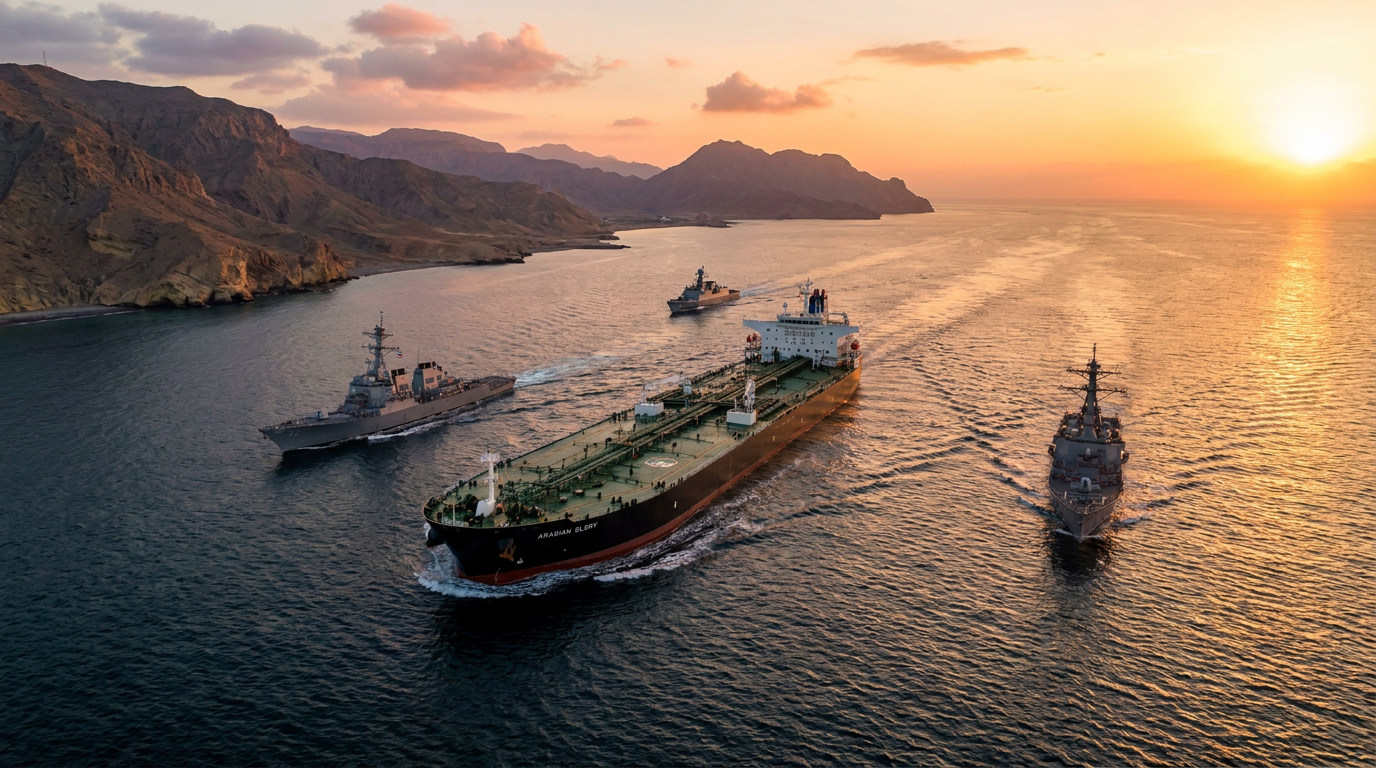
For weeks, the strait has been the epicenter of a tense military standoff. Following the collapse of earlier talks, the U.S. Navy initiated a blockade to prevent ships from transiting through Iranian ports, while Iran targeted commercial vessels and deployed attack drones. The proposed agreement mandates a return to normal shipping volumes within 30 days, a move that would immediately stabilize global supply chains and lower energy costs for importing nations.[9][10]

The role of international mediators has been crucial in bridging the gap between the warring parties. Pakistan's Prime Minister Shehbaz Sharif, whose government has hosted direct talks between U.S. Vice President JD Vance and Iranian officials, confirmed that negotiators have agreed upon a text and are working to finalize the details. Qatari diplomats have also been instrumental in narrowing the differences over sanctions relief and maritime security.[2][6]
The ultimate success of the agreement will hinge on its verification mechanisms. The Trump administration has described the deal as a performance-based framework, meaning economic incentives will only be phased in as Tehran turns over nuclear material and demonstrates a verifiable commitment to regional stability. This phased approach is designed to prevent Iran from reaping financial benefits while delaying its nuclear obligations.[2]
As the weekend approaches, diplomatic teams are racing to finalize the paperwork for a potential signing ceremony in Europe. While the broad contours of a historic settlement are visible, the conflicting narratives emerging from Washington, Tehran, and Jerusalem highlight the fragility of the moment. The coming days will determine whether the 2026 war ends in a lasting diplomatic resolution or collapses back into regional conflict.[2][8]
How we got here
Feb 28, 2026
The U.S. and Israel launch Operation Epic Fury, initiating the war with strikes on Iranian targets.
April 7-8, 2026
A temporary two-week ceasefire is brokered by Pakistan, pausing direct military confrontation.
May 2026
Ceasefire violations escalate as the U.S. blockades the Strait of Hormuz and Iran targets commercial vessels.
June 11, 2026
President Trump announces that a final peace agreement is nearing completion.
Viewpoints in depth
U.S. Administration's view
The White House views the deal as a historic victory that neutralizes Iran's nuclear threat while stabilizing the global economy.
President Trump and his administration argue that the proposed performance-based framework ensures Iran will only receive economic relief after proving compliance. By securing an indefinite commitment against nuclear weapons procurement—rather than the 10- to 20-year sunsets of previous deals—the U.S. believes it has achieved its primary strategic objective while successfully reopening the vital Strait of Hormuz without a prolonged ground war.
Iranian Leadership's view
Tehran frames the negotiations as a hard-fought defense of its sovereignty and economic rights.
Iranian officials insist they have not surrendered their right to domestic, civilian uranium enrichment, viewing it as a non-negotiable matter of national sovereignty. Furthermore, Tehran remains deeply distrustful of U.S. promises, which is why it is demanding upfront financial relief—such as a line of credit against its frozen assets—before fully lifting its blockade on maritime trade.
Israeli Government's view
Israel remains highly skeptical of any diplomatic arrangement that leaves Iranian nuclear infrastructure intact.
Prime Minister Benjamin Netanyahu and his cabinet argue that promises and memorandums are insufficient to guarantee Israeli security. They demand the physical removal of enriched material and the dismantling of enrichment facilities, fearing that a deal might simply provide Tehran with the financial resources to fund proxy militias like Hezbollah while secretly advancing its nuclear capabilities.
What we don't know
- Whether Iran will ultimately agree to physically dismantle its uranium enrichment infrastructure.
- How the proposed line of credit against Iran's frozen assets will be structured and monitored.
- If Israel will accept the final terms of the agreement or resume independent military operations.
- Whether the ceasefire will formally require a halt to the ongoing conflict in Lebanon.
Key terms
- Memorandum of Understanding (MoU)
- A formal agreement between two or more parties that outlines the terms and details of an understanding, often serving as the foundation for a final binding treaty.
- Strait of Hormuz
- A narrow, strategically vital waterway between the Persian Gulf and the Gulf of Oman through which approximately 20% of the world's oil consumption passes.
- Uranium Enrichment
- The process of increasing the percentage of Uranium-235 isotopes, which can be used to generate civilian nuclear power at low levels or build nuclear weapons at high levels.
- Operation Epic Fury
- The U.S. code name for the joint military strikes with Israel against Iranian targets that began the war in February 2026.
Frequently asked
Will this deal lower global gas prices?
Yes, global oil prices have already dropped by more than 3% in anticipation of the deal, which mandates reopening the Strait of Hormuz to commercial shipping within 30 days.
Is Iran giving up its nuclear program?
The U.S. claims the deal includes an indefinite commitment from Iran to never develop nuclear weapons, but Iran insists it will maintain its right to civilian nuclear power and uranium enrichment.
Does this agreement end the fighting in Lebanon?
Iran has demanded that the ceasefire include a halt to Israeli operations in Lebanon, but U.S. and Israeli officials maintain that the two conflicts are separate.
Sources
Source coverage
10 outlets
4 viewpoints surfaced










[1]AxiosIranian Leadership
Trump claims Iran deal reached, Tehran says no "final decision"
Read on Axios →[2]TimeU.S. Administration
The United States and Iran May Be Close to a Deal to Pause the War
Read on Time →[3]Fox NewsU.S. Administration
Trump says Iran deal is nearly complete and could be signed in Europe within days
Read on Fox News →[4]The GuardianGlobal Markets & Mediators
Donald Trump says US and Iran on verge of peace agreement
Read on The Guardian →[5]CBS NewsIsraeli Government
Netanyahu spoke with Trump about proposed peace deal
Read on CBS News →[6]AP NewsGlobal Markets & Mediators
Parties agree on 'final' text of a peace deal, Pakistan says
Read on AP News →[7]China DailyGlobal Markets & Mediators
Iran, Israel cease fire as deal looms
Read on China Daily →[8]SBS NewsGlobal Markets & Mediators
Agreement to end the conflict between the US, Iran, and Israel inches closer
Read on SBS News →[9]RFE/RLIranian Leadership
US Official Says 'High-Stakes' Iran Deal Nearly Finalized
Read on RFE/RL →[10]BritannicaGlobal Markets & Mediators
2026 Iran war
Read on Britannica →
More in news politics
See all 146 stories →AI Regulation
U.S. Blocks Foreign Access to Anthropic's Advanced AI Models in Escalating National Security Dispute
6 sources
Media Literacy
Fact-Checking the 'Prebunking' Strategy: Can Psychological Inoculation Stop Misinformation?
7 sources

AI Export Controls
U.S. Blocks Foreign Access to Anthropic's Advanced AI Models Over Security Concerns
7 sources
AI Policy
Trump Administration Blocks Foreign Access to Anthropic's Most Advanced AI Models
8 sources
Every angle. Every day.
Get news politics stories with full source coverage and perspective breakdowns delivered to your inbox.