
The Science of Pilates: How Low-Impact Resistance Training Reshapes the Body and Mind
Clinical research reveals that Pilates goes far beyond aesthetic fitness, actively retraining the nervous system, stabilizing the spine, and significantly reducing symptoms of anxiety and depression.
By Factlen Editorial Team
- Clinical Physiotherapists
- Focus on the biomechanical advantages of Pilates for injury rehabilitation and deep core stabilization.
- Neuroscience & Mental Health Researchers
- Examine the impact of mindful movement and controlled breathing on the autonomic nervous system.
- Fitness Industry Analysts
- Track the commercial explosion and consumer demand for low-impact, high-yield exercise formats.
- Integrative Movement Specialists
- Focus on bridging the gap between mindful movement, biomechanics, and overall physical longevity.
What's not represented
- · Male athletic populations
- · Public health policymakers
Why this matters
Understanding the biomechanics of Pilates allows individuals to train smarter, protecting their joints from premature wear while utilizing movement as a scientifically validated tool to regulate stress and improve mental health.
Key points
- Pilates specifically targets deep anticipatory stabilizers, such as the transverse abdominis, which protect the spine.
- Clinical studies confirm Pilates is highly effective for managing chronic lower back pain and osteoarthritis.
- The method's lateral breathing techniques stimulate the vagus nerve, actively reducing cortisol and anxiety.
- Reformer springs mimic the natural concentric and eccentric contractions of human muscles better than static weights.
- Pilates improves static and dynamic balance, making it a premier fall-prevention strategy for older adults.
For the third consecutive year, Pilates has dominated the global fitness industry, outpacing high-intensity interval training, cycling, and traditional weightlifting. According to recent data from ClassPass, Pilates remains the most booked workout worldwide, with tens of millions of reservations and a staggering year-over-year growth rate for both mat and reformer classes. But beneath the aesthetic appeal, the boutique studio lighting, and the celebrity endorsements lies a century-old discipline that modern biomechanics and neuroscience are finally beginning to fully understand. The surge in popularity is not merely a passing social media trend; it is driven by a growing body of clinical evidence proving that the method fundamentally alters how the human body moves, stabilizes, and processes stress. As researchers look closer at the physiological impacts of controlled movement, Pilates is transitioning from a niche fitness offering to a frontline tool in preventative medicine and physical rehabilitation.[5][8]
The core mechanism of Pilates is entirely different from traditional resistance training. While standard gym workouts often focus on isolating superficial muscles to build visible mass—such as the rectus abdominis or the biceps—Pilates targets the body's deep, internal architecture. Specifically, it trains the "anticipatory stabilizers," which are the muscles that must engage before any outward movement occurs to protect the spine and joints. Electromyography (EMG) studies reveal that Pilates uniquely activates the transverse abdominis, a deep corset-like muscle that wraps around the torso, as well as the multifidus, a series of small muscles that connect and stabilize individual vertebrae. By prioritizing these hidden structures, the method builds a foundation of strength that supports every other physical activity a person might undertake.[6][7]
These deep stabilizing muscles are biologically designed to fire milliseconds before the arms or legs move, effectively bracing the spine against incoming physical loads. However, in modern populations characterized by prolonged sitting and sedentary lifestyles, this critical neuromuscular timing is often delayed or entirely dormant. When the deep core fails to activate in time, the body compensates by relying on superficial muscles to do the job of stabilizers, leading to excessive tension, joint wear, and eventual injury. Clinical physiotherapists utilize Pilates precisely because it retrains this brain-to-muscle communication, restoring the natural protective mechanisms of the spine and ensuring that the body moves with optimal mechanical efficiency.[6]

The clinical efficacy of this neuromuscular retraining is particularly evident in the treatment of chronic pain, which affects millions of adults globally. A comprehensive review published in the Archives of Physical Medicine and Rehabilitation concluded that Pilates is highly effective in managing chronic lower back pain and osteoarthritis, often matching or exceeding the outcomes of standard medical care and minimal intervention. By strengthening the pelvic floor, diaphragm, and deep spinal muscles in unison, the practice creates a pressurized cylinder of support that decompresses the lower back. This internal support system allows the joints to articulate freely without the grinding or impingement that typically causes chronic discomfort.[3][6]
Beyond core stabilization, the practice fundamentally alters overall biomechanics and joint health. By focusing on controlled, precise movements rather than momentum or heavy loading, Pilates corrects muscular imbalances where dominant muscles overwork and weaker ones atrophy. Research published in the Journal of Bodywork and Movement Therapies demonstrates that regular practice significantly enhances postural control and reduces spinal stress. For modern desk workers suffering from "tech neck" and hunched shoulders, Pilates systematically lengthens tight pectoral muscles while strengthening the weakened upper back. This targeted approach effectively reverses the structural damage of forward-head posture, leading to a taller, more aligned skeletal frame that is less prone to degenerative joint disease.[2][8]
While the physical transformations associated with Pilates are well-documented, the mental health benefits are where recent scientific literature has seen the most profound discoveries. A comprehensive meta-analysis published by the National Institutes of Health evaluated the psychological impact of Pilates across various populations, finding "significant, large, heterogeneous reductions" in depressive and anxiety symptoms. The researchers noted that the mental health improvements were comparable to, and sometimes exceeded, those seen in traditional aerobic exercise. This psychological shift is not merely a byproduct of physical exertion; it is deeply rooted in the specific breathing techniques and mindful focus required to perform the movements correctly.[1][8]
The researchers noted that the mental health improvements were comparable to, and sometimes exceeded, those seen in traditional aerobic exercise.
The mechanism behind these mental health benefits lies within the autonomic nervous system. The deliberate, lateral breathing required in Pilates—expanding the ribcage laterally while keeping the deep core engaged—directly stimulates the vagus nerve. This stimulation actively shifts the body from a sympathetic "fight or flight" state, which is often chronically activated by modern daily stressors, to a parasympathetic "rest and digest" state. Researchers publishing in the MDPI Healthcare journal documented that this mindful movement not only lowers circulating cortisol levels but actively improves stress-risk behaviors and somatization, which are the physical manifestations of psychological distress. By forcing the practitioner to focus entirely on the present moment and the precise alignment of their body, Pilates acts as a moving meditation that clears the mind and regulates the nervous system.[4][8]

The modality of practice—specifically the choice between Mat Pilates and Reformer Pilates—also offers different biomechanical advantages that sports scientists and physical therapists are continuing to explore. Mat Pilates relies entirely on gravity and the practitioner's own body weight, demanding exceptionally high levels of internal body control, spatial awareness, and raw core strength to execute the movements smoothly. Because there is no external equipment to assist or guide the limbs, the central nervous system must work overtime to stabilize the body against the downward pull of gravity. This makes mat work a highly effective tool for building foundational neuromuscular control and teaching the body how to move efficiently through space without relying on momentum.[8]
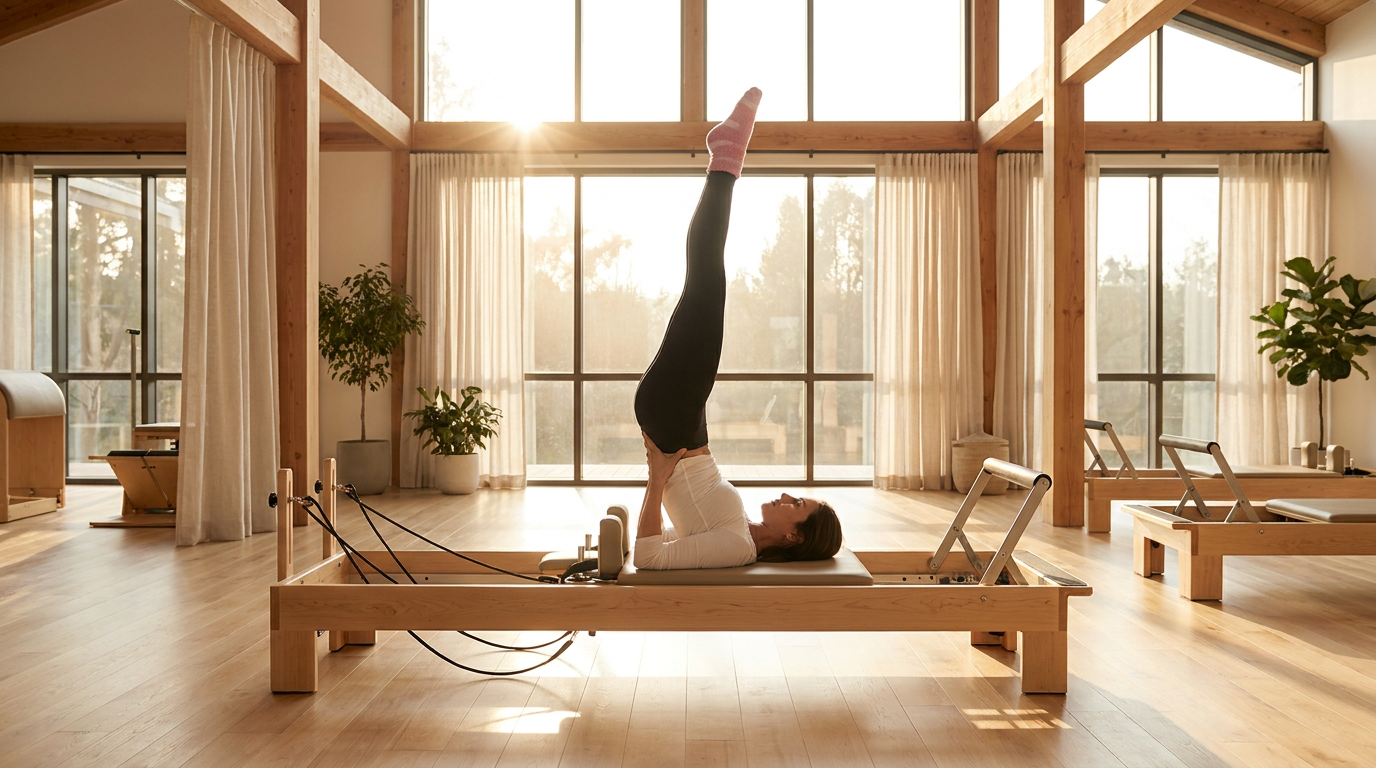
Conversely, the Reformer—a specialized sliding carriage equipped with a system of springs, ropes, and pulleys—provides both assistance and variable resistance. The springs on a Reformer mimic the concentric and eccentric contractions of human muscles much more closely than the static iron weights used in traditional gyms. As the spring extends, the resistance increases, challenging the muscle at its longest and most vulnerable point, which is exactly where most muscle tears occur. This unique resistance profile builds resilient muscle fibers and increases joint mobility without subjecting the skeletal system to the heavy impact or sheer forces that often lead to athletic injuries. The Reformer also provides proprioceptive feedback, helping users find their optimal alignment more easily.[8]
Despite the overwhelming clinical support for the method, researchers note several gaps in the current scientific literature that require further investigation. Most clinical trials and biomechanical studies on Pilates have utilized overwhelmingly female sample sizes, leaving a significant lack of robust data on how the practice affects male biomechanics, hormone profiles, and functional body composition. While the physiological principles of core stabilization, joint mobility, and vagal nerve stimulation apply universally to human anatomy, the scientific community needs more diverse, large-scale randomized controlled trials to fully map the method's efficacy across different demographics, age groups, and elite athletic backgrounds. Until these studies are conducted, some of the broader claims about metabolic impacts remain cautiously optimistic rather than definitively proven.[4][8]

Additionally, the commercial explosion of Pilates has introduced variables that complicate scientific standardization and clinical outcomes. Because the term 'Pilates' was ruled a generic fitness term by a United States federal court in 2000 and cannot be strictly trademarked, there is a wide variance in instructor certification, equipment quality, and class structure across the global industry. A scientifically validated clinical Pilates session led by a licensed physical therapist looks vastly different from a high-tempo, fitness-focused hybrid class at a commercial gym. This lack of standardization means that the profound clinical benefits observed in controlled academic studies—such as precise deep core activation and nervous system regulation—may not always translate perfectly to the average consumer's experience in a crowded boutique studio.[8]
Another critical area of ongoing research is the impact of Pilates on bone density and the aging process. Weight-bearing exercises are essential for combating the natural decline in bone mass that leads to osteopenia and osteoporosis, particularly in post-menopausal women. While traditional heavy weightlifting is often considered the gold standard for bone remodeling, recent studies suggest that the variable resistance provided by Pilates springs and targeted bodyweight exercises also stimulates osteoblast activity—the cells responsible for bone formation. Furthermore, by drastically improving static and dynamic balance through enhanced core stability, Pilates serves as a premier fall-prevention strategy for older adults, directly addressing one of the leading causes of catastrophic bone fractures and mobility loss in the elderly population.[8]
Ultimately, the modern scientific consensus confirms what Joseph Pilates intuitively claimed when he developed the method in the early twentieth century: physical fitness is the first requisite of happiness. By bridging the gap between rigorous resistance training and mindful, breath-led movement, Pilates offers a scientifically validated path to physical longevity, injury resilience, and mental clarity. As the global fitness industry continues to pivot away from punishing, high-impact workouts toward sustainable, evidence-based practices, the science of Pilates stands as a blueprint for the future of human movement. It teaches us how we can train smarter, protect our joints from premature degradation, and cultivate a profoundly deeper connection between the brain and the body for decades to come.[8]
How we got here
1920s
Joseph Pilates develops 'Contrology,' a method of physical and mental conditioning initially used to rehabilitate bedridden soldiers.
2000
A US federal court rules that 'Pilates' is a generic term for a type of exercise, leading to widespread commercial expansion.
2015–2019
Clinical biomechanics research surges, validating the method's efficacy for chronic pain management using EMG technology.
2025
ClassPass data reveals Pilates as the most booked fitness class globally, with triple-digit year-over-year growth for mat formats.
2026
Modern neuroscience increasingly focuses on the method's impact on the autonomic nervous system, validating its role in reducing clinical anxiety.
Viewpoints in depth
Clinical Physiotherapists
Focus on the biomechanical advantages of Pilates for injury rehabilitation and deep core stabilization.
Physical therapists view Pilates not as a fitness trend, but as a precise neuromuscular intervention. They emphasize that chronic pain, particularly in the lower back, often stems from delayed activation of anticipatory stabilizers like the transverse abdominis. By using Pilates to retrain the brain-to-muscle connection, physiotherapists can help patients build an internal support system that decompresses the spine and corrects postural imbalances caused by sedentary lifestyles.
Neuroscience & Mental Health Researchers
Examine the impact of mindful movement and controlled breathing on the autonomic nervous system.
For neuroscientists, the value of Pilates lies in its ability to actively regulate the nervous system. The deliberate, lateral breathing required during practice directly stimulates the vagus nerve, shifting the body out of a chronic 'fight or flight' stress response. Researchers point to significant reductions in cortisol levels and clinical improvements in anxiety and depression as evidence that Pilates functions as a moving meditation, bridging the gap between physical exertion and psychological therapy.
Fitness Industry Analysts
Track the commercial explosion and consumer demand for low-impact, high-yield exercise formats.
Industry analysts observe that the modern consumer is shifting away from punishing, high-intensity workouts that risk joint degradation, moving instead toward sustainable longevity practices. The triple-digit growth in Pilates bookings reflects a broader market demand for workouts that deliver measurable strength and mobility improvements without the burnout. Analysts predict that hybrid models combining clinical precision with boutique studio experiences will continue to dominate the fitness landscape.
What we don't know
- How Pilates affects the functional body composition and hormone profiles of male populations, as most clinical trials have relied on female cohorts.
- The long-term metabolic impacts of Pilates compared to traditional heavy resistance training in older adults.
- How the wide variance in commercial instructor certification affects the clinical outcomes observed in controlled academic studies.
Key terms
- Transverse Abdominis
- The deepest layer of abdominal muscles that wraps around the torso like a corset, acting as the body's internal weight belt.
- Multifidus
- A series of small, deep muscles attached to the spinal column that stabilize individual vertebrae during movement.
- Anticipatory Stabilizers
- Deep core muscles that the brain automatically activates milliseconds before limb movement to protect the joints and spine.
- Vagus Nerve
- A primary component of the parasympathetic nervous system that regulates heart rate, digestion, and stress responses.
- Electromyography (EMG)
- A diagnostic procedure that evaluates the health and activation levels of muscles and the nerve cells that control them.
Frequently asked
Is Pilates better than traditional weightlifting?
They serve different physiological purposes. Pilates excels at core stabilization, joint mobility, and neuromuscular timing, while traditional weightlifting is superior for absolute strength and maximal muscle hypertrophy.
Can Pilates help with chronic lower back pain?
Yes. Clinical studies show that by strengthening the deep core muscles like the transverse abdominis and multifidus, Pilates decompresses the spine and significantly reduces chronic lower back pain.
What is the difference between Mat and Reformer Pilates?
Mat Pilates uses body weight and gravity for resistance, requiring high internal control. The Reformer uses a sliding carriage with springs and pulleys to provide variable resistance and support.
Does Pilates improve mental health?
Research indicates that the controlled breathing and mindful movement in Pilates stimulate the vagus nerve, lowering cortisol levels and significantly reducing symptoms of anxiety and depression.
Sources
Source coverage
8 outlets
4 viewpoints surfaced







[1]National Institutes of HealthNeuroscience & Mental Health Researchers
Meta-analysis of Pilates effects on mental health outcomes
Read on National Institutes of Health →[2]Journal of Bodywork and Movement TherapiesClinical Physiotherapists
Pilates enhances postural control and reduces spinal stress
Read on Journal of Bodywork and Movement Therapies →[3]Archives of Physical Medicine and RehabilitationClinical Physiotherapists
Effectiveness of Pilates in managing chronic pain conditions
Read on Archives of Physical Medicine and Rehabilitation →[4]MDPI HealthcareNeuroscience & Mental Health Researchers
Effects of Pilates on psychological symptoms and stress-related disorders
Read on MDPI Healthcare →[5]ClassPassFitness Industry Analysts
Global Fitness Trends: Pilates remains most booked workout
Read on ClassPass →[6]First Pilates Clinical ReviewClinical Physiotherapists
The Science Behind Pilates: Why It Actually Works
Read on First Pilates Clinical Review →[7]ResearchGateClinical Physiotherapists
Biomechanical analysis of the trunk and pelvis during Pilates method exercises
Read on ResearchGate →[8]Factlen Editorial TeamIntegrative Movement Specialists
Synthesis by Factlen editorial team
Read on Factlen Editorial Team →
Every angle. Every day.
Get fitness stories with full source coverage and perspective breakdowns delivered to your inbox.