
U.S. and Iran Hold High-Stakes Ceasefire Talks in Switzerland Amid Threats and Walkouts
Delegations from the U.S. and Iran are meeting in Switzerland to implement a fragile 60-day ceasefire, navigating disputes over frozen assets, the Strait of Hormuz, and ongoing fighting in Lebanon.
By Factlen Editorial Team
- U.S. Administration
- Argues that Iran must halt proxy attacks and dilute its nuclear stockpile before receiving any sanctions relief or access to frozen funds.
- Iranian Leadership
- Demands immediate unfreezing of assets and an end to Israeli strikes in Lebanon, refusing to negotiate under the threat of military force.
- Regional Mediators
- Focuses on preventing a broader regional war and global economic crisis by maintaining communication lines and establishing de-confliction mechanisms.
What's not represented
- · Israeli Government
- · Lebanese Civilians
- · Global Shipping Companies
Why this matters
The success or failure of these talks will directly determine the stability of the Middle East and the price of global energy, as the Strait of Hormuz controls a fifth of the world's oil supply.
Key points
- U.S. and Iranian delegations are meeting in Switzerland to implement a 60-day ceasefire agreement.
- Iranian negotiators briefly walked out after U.S. President Donald Trump threatened military strikes and tolls on the Strait of Hormuz.
- Iran is demanding immediate access to billions in frozen assets, while the U.S. insists relief is tied to strict compliance.
- Mediators from Qatar and Pakistan helped establish a 'de-confliction cell' to address ongoing violence in Lebanon.
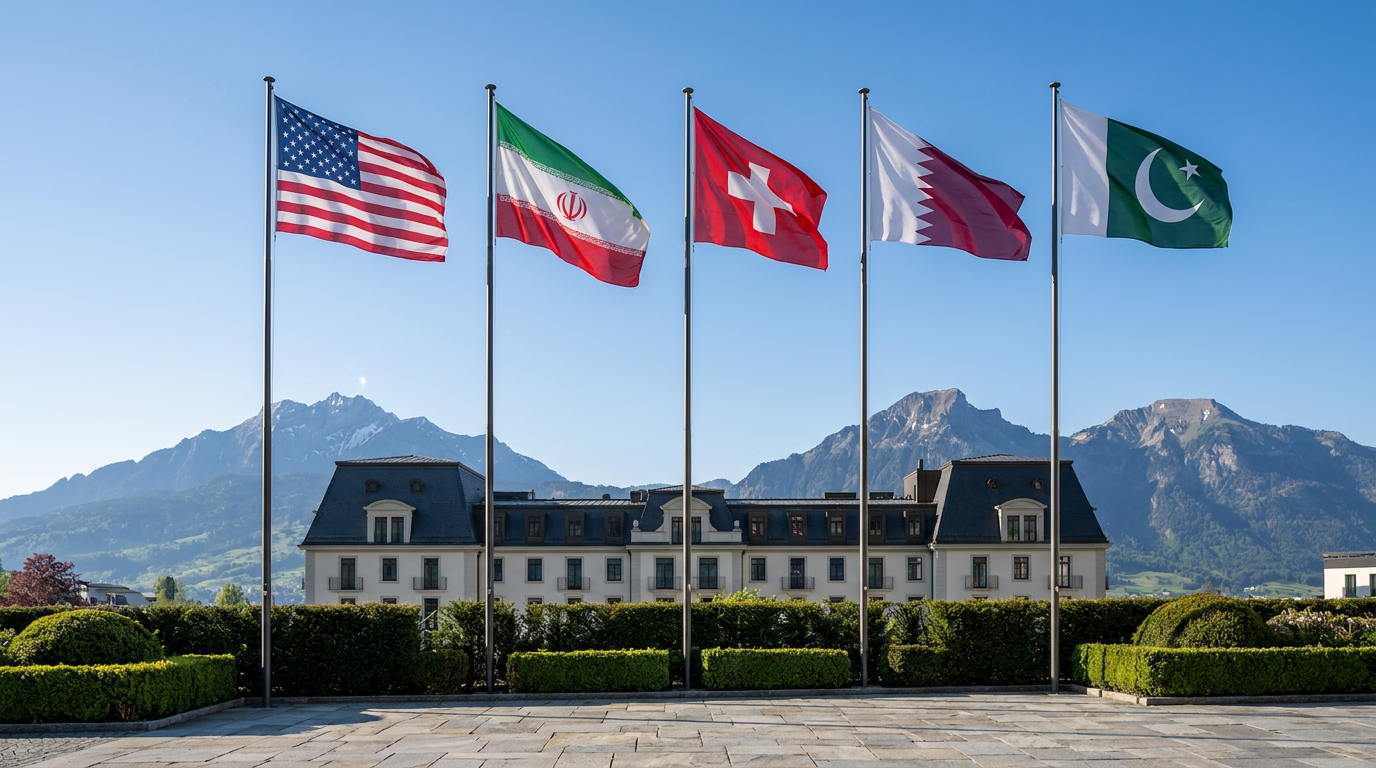
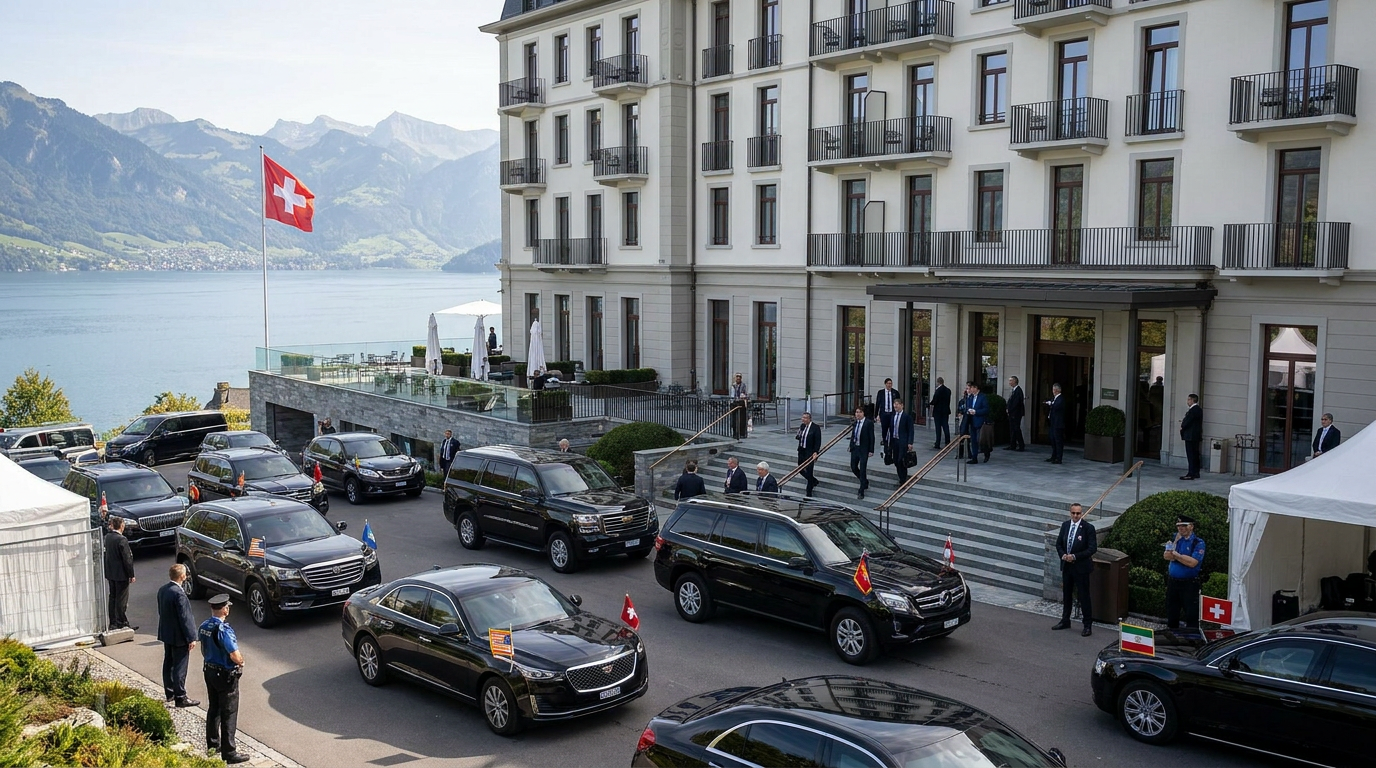
The serene Bürgenstock resort overlooking Switzerland's Lake Lucerne has become the staging ground for one of the most volatile diplomatic summits in modern history. Delegations from the United States and Iran, mediated by Qatar and Pakistan, are attempting to implement a fragile 60-day Memorandum of Understanding (MoU) designed to halt a sprawling regional war. The talks, which began Sunday, aim to resolve deeply entrenched disputes over Iran's nuclear program, billions in frozen assets, and the free flow of global energy.[3][4][6]
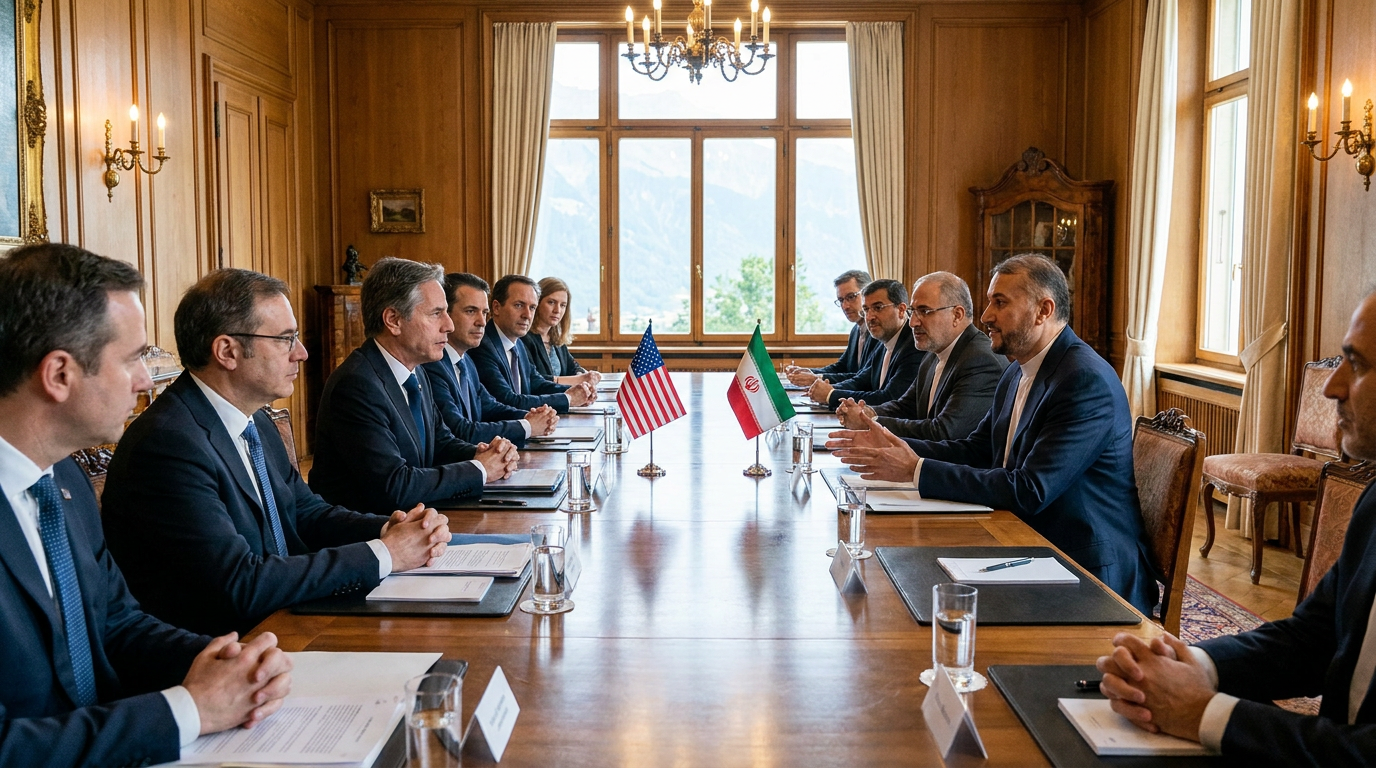
The negotiations nearly collapsed before they began. The Iranian delegation, led by Parliament Speaker Mohammad Bagher Ghalibaf and Foreign Minister Abbas Araghchi, briefly walked out in protest after U.S. President Donald Trump issued a barrage of threats on social media. Trump threatened to bomb Iran and even "kidnap" the Iranian negotiating team if Tehran did not immediately reopen the Strait of Hormuz, a critical maritime chokepoint.[1][2][7]
Iranian state media declared the talks had entered a "difficult phase" due to the "insulting message," prompting the delegation to retreat and consult with Qatari mediators. Ghalibaf publicly rebuked the threats, stating that Iran's armed forces were prepared to respond and that the U.S. was demonstrating "desperation." Despite the diplomatic rupture, mediators managed to salvage the summit, and a quadrilateral 80-minute session eventually took place.[1][2][7]
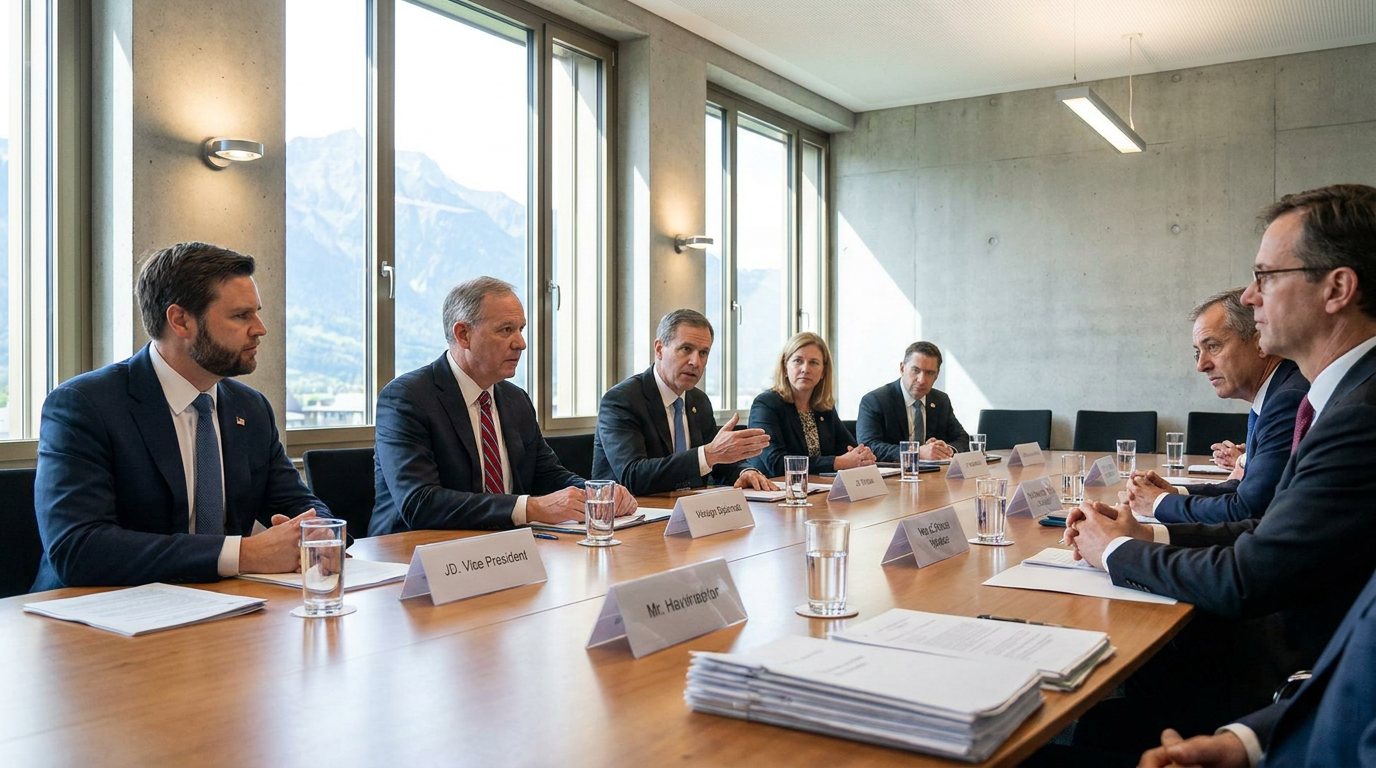
The U.S. delegation, led by Vice President JD Vance, Special Envoy Steve Witkoff, and Jared Kushner, attempted to project a starkly different tone from the White House. Vance expressed hope that the two nations could "turn over a new leaf" and permanently alter Middle Eastern relations. This "good cop, bad cop" dynamic—combining Vance's diplomatic overtures with Trump's aggressive public ultimatums—has defined the early stages of the 60-day window.[1][2][3]

The immediate catalyst for the crisis is the Strait of Hormuz, a narrow waterway through which roughly a fifth of the world's oil and gas supplies flow. Iran announced it had closed the strait in response to ongoing Israeli military operations in Lebanon, demanding that commercial vessels obtain Iranian permission and insurance to pass. The blockade previously triggered a global energy crisis and a U.S. naval blockade of Iranian ports.[3][4][6]
In response to the closure, Trump threatened to impose U.S. tolls on vessels navigating the strait if a final deal is not reached within 60 days, claiming the funds would serve as payment for America acting as the "Guardian Angel" of the Middle East. The MoU explicitly calls for toll-free travel during the 60-day ceasefire period, and Iranian negotiators pointed out that Trump's threats violated the non-aggression pact embedded in the agreement.[1][4][6]
Beyond maritime security, the unfreezing of Iranian assets remains a highly contested mechanism of the deal. The MoU paves the way for Iran to tap into billions of dollars currently frozen overseas and allows Tehran to sell its oil freely. However, the exact timeline and conditions for this financial relief have sparked conflicting narratives in Washington and Tehran, threatening to derail the technical discussions.[4][5][6]
Beyond maritime security, the unfreezing of Iranian assets remains a highly contested mechanism of the deal.
Iranian Parliament Speaker Ghalibaf announced that the framework includes a $300 billion investment package allocated for reconstruction and compensation for damages. Iranian state television also reported that draft wording had been reached regarding "temporary sanctions waivers for oil and petroleum derivatives." This framing suggests an immediate economic windfall for the Islamic Republic, a narrative heavily promoted to the Iranian domestic audience.[4][5]

U.S. officials have forcefully pushed back against these claims. In background briefings, senior U.S. officials clarified that the agreement does not commit Washington to any immediate economic concessions. Instead, access to the frozen assets and any reconstruction funds is strictly tied to "demonstrable good behavior" and Iran's measurable compliance with the broader framework, ensuring the U.S. retains its economic leverage.[5]
The most immediate threat to the MoU's survival is the ongoing conflict in Lebanon. Israel and the Iranian-backed militant group Hezbollah have engaged in fierce fighting, with Israeli strikes targeting southern Lebanon and the Bekaa valley. Iran has insisted that the U.S. must pressure Israel into a comprehensive ceasefire in Lebanon, warning that the entire MoU will be jeopardized if the military operations do not end.[3][4]
Trump, conversely, demanded that Iran immediately stop its "highly paid proxies" in Lebanon from causing trouble, threatening to hit Iran "very hard again, just like we did last week, only harder" if Hezbollah's attacks continue. To manage this volatile front, Qatar and Pakistan announced that the U.S. and Iran agreed to establish a "de-confliction cell" with the Lebanese government to ensure adherence to the termination of military operations.[1][2][7]
The ultimate goal of the U.S. administration remains the containment of Iran's nuclear program. The interim agreement reportedly calls for Iran to dilute its stockpile of highly enriched uranium, which is believed to be housed in subterranean facilities targeted by U.S. strikes earlier in the conflict. Washington views these nuclear concessions as the absolute cornerstone of any permanent peace treaty.[2][4]

However, Iran is leveraging its nuclear program as a bargaining chip. The Iranian delegation has indicated a desire to postpone talks regarding future inspections of its nuclear sites by the UN nuclear watchdog, Rafael Grossi, until the disputes over sanctions and frozen assets are fully resolved. This sequencing dispute highlights the deep mistrust between the two adversaries and the fragility of the diplomatic process.[1]
The domestic political pressures on both sides are immense. Ghalibaf and the Iranian negotiators face intense scrutiny from hardliners in Tehran, compelling them to publicly resist U.S. pressure and secure tangible economic relief. Meanwhile, the Trump administration is working to reassure global markets and American consumers that the conflict will not cause a sustained spike in gasoline prices ahead of the peak summer travel season.[1][4][5]
As the summit transitions into technical talks expected to last throughout the week, the mediators face a daunting task. The establishment of a direct "communication line" to avoid maritime incidents in the Strait of Hormuz represents a modest but vital step toward de-escalation. Whether this fragile framework can survive the 60-day window—and the unpredictable rhetoric of the leaders involved—will determine the trajectory of the Middle East.[1][2][6]
How we got here
Feb 2026
Regional war erupts following U.S.-Israeli strikes on Iranian targets.
Mid-June 2026
U.S. and Iran sign a Memorandum of Understanding to establish a 60-day ceasefire.
June 20, 2026
Iran announces the closure of the Strait of Hormuz in response to Israeli strikes in Lebanon.
June 21, 2026
Iranian negotiators briefly walk out of Swiss talks after U.S. President Trump threatens military strikes.
June 22, 2026
Technical talks resume with the establishment of a Lebanon de-confliction cell.
Viewpoints in depth
The U.S. Administration's View
Washington views the negotiations as a mechanism to permanently dismantle Iran's nuclear ambitions and secure global shipping lanes.
The U.S. approach is characterized by a dual-track strategy: intense military and economic pressure combined with diplomatic off-ramps. By threatening severe military strikes and tolls on the Strait of Hormuz, the administration aims to force Iranian compliance. Simultaneously, negotiators like Vice President JD Vance are offering the prospect of normalized relations and sanctions relief, provided Iran dilutes its highly enriched uranium and permanently ceases support for proxy militias like Hezbollah.
The Iranian Leadership's View
Tehran views the talks as an opportunity to secure vital economic relief while refusing to capitulate to U.S. military threats.
For Iran, the primary objective is the immediate lifting of oil sanctions and access to billions in frozen assets to stabilize its domestic economy. Iranian leaders, facing intense pressure from hardline factions at home, cannot appear to be negotiating from a position of weakness. Consequently, they use the closure of the Strait of Hormuz and the advancement of their nuclear program as leverage, insisting that the U.S. must first demonstrate goodwill by reining in Israeli military operations in Lebanon.
The Mediators' View
Qatar, Pakistan, and Switzerland are focused on pragmatic de-escalation to prevent a global economic depression.
The mediating nations are less concerned with the ideological victories of either side and more focused on the catastrophic global consequences of a failed summit. A permanent closure of the Strait of Hormuz would trigger an unprecedented energy crisis, while a full-scale regional war would destabilize the entire Middle East. Their efforts are concentrated on establishing technical communication lines, such as the Lebanon de-confliction cell, to manage daily crises and keep both parties at the negotiating table.
What we don't know
- Whether the newly established 'de-confliction cell' can successfully halt the ongoing military exchanges between Israel and Hezbollah in Lebanon.
- The exact mechanisms and timeline the U.S. will use to verify Iran's compliance before unfreezing any overseas assets.
- How global oil markets will react if the 60-day window expires without a permanent agreement on the Strait of Hormuz.
Key terms
- Memorandum of Understanding (MoU)
- A formal agreement outlining the framework for a 60-day ceasefire and negotiations between the U.S. and Iran.
- Strait of Hormuz
- A critical maritime chokepoint between the Persian Gulf and the Gulf of Oman, through which a fifth of the world's oil passes.
- Highly Enriched Uranium
- Uranium that has been processed to a purity level capable of being used in nuclear weapons, a primary concern of U.S. negotiators.
- De-confliction cell
- A dedicated communication channel established to prevent accidental military clashes between opposing forces in Lebanon.
Frequently asked
Why are the U.S. and Iran meeting in Switzerland?
Delegations are meeting at the Bürgenstock resort to implement a 60-day ceasefire agreement and negotiate terms regarding Iran's nuclear program, frozen assets, and regional security.
Why did the Iranian delegation walk out of the talks?
Iranian negotiators temporarily left the table in protest after U.S. President Donald Trump posted social media threats to bomb Iran and kidnap the delegation.
Will Iran get immediate access to its frozen money?
No. While Iranian officials claim a $300 billion reconstruction package is imminent, U.S. officials state that access to frozen funds is strictly tied to Iran's compliance with the agreement.
How does the war in Lebanon affect the deal?
Ongoing clashes between Israel and Hezbollah threaten the ceasefire. Iran demands the U.S. pressure Israel to stop its strikes, while the U.S. demands Iran rein in its proxies.
Sources
Source coverage
7 outlets
3 viewpoints surfaced







[1]The GuardianRegional Mediators
US-Iran talks in Switzerland enter 'difficult phase' after Trump threats
Read on The Guardian →[2]The Washington PostU.S. Administration
JD Vance holds peace talks with Iran as Trump threatens strikes over Hormuz
Read on The Washington Post →[3]Al JazeeraIranian Leadership
US-Iran talks in Switzerland: Is Lebanon top of agenda; who is attending?
Read on Al Jazeera →[4]PBSU.S. Administration
U.S. and Iran to talk Sunday in Switzerland as Tehran says it closed Strait of Hormuz again
Read on PBS →[5]Iran InternationalIranian Leadership
US says Iran won't get funds upfront under MoU
Read on Iran International →[6]SwissinfoRegional Mediators
US, Iran Begin Talks in Switzerland Amid Trump Threats
Read on Swissinfo →[7]The HinduRegional Mediators
Iran-U.S. peace talks in Switzerland stretch into second day
Read on The Hindu →
More in news politics
See all 6 stories →US-Iran Relations
US and Iran Open High-Stakes Peace Talks in Switzerland Amid Strait of Hormuz Crisis
7 sources
Colombia Election
Right-Wing Outsider Abelardo de la Espriella Wins Colombian Presidency in Historic Squeaker
7 sources

Strait of Hormuz
US and Iran Open High-Stakes Talks in Switzerland as Tehran Closes Strait of Hormuz
6 sources
Information Science
The Science of Fact-Checking: What Actually Reduces Political Misinformation in 2026
6 sources

Every angle. Every day.
Get news politics stories with full source coverage and perspective breakdowns delivered to your inbox.