
AI Memory Breakthrough 'TurboQuant' Open-Sourced, Enabling Advanced Models to Run on Everyday Devices
A new open-source implementation of a highly efficient AI algorithm cuts memory requirements by up to 80%, allowing powerful AI models to run locally on smartphones and laptops. The release marks a major milestone in democratizing artificial intelligence and reducing reliance on energy-intensive cloud data centers.
By Factlen Editorial Team

- Open-Source Developers
- Value the democratization of AI, allowing them to build powerful, privacy-first applications without paying API gatekeepers.
- Privacy & Efficiency Advocates
- Champion local AI models as the ultimate solution to data sovereignty and reducing the staggering energy demands of massive AI data centers.
- Enterprise Cloud Providers
- Emphasize that while local inference is growing, the massive compute required for training frontier models still necessitates centralized cloud infrastructure.
What's not represented
- · Hardware Manufacturers
- · Cybersecurity Regulators
Why this matters
By shrinking the massive memory requirements of advanced AI, this breakthrough allows powerful models to run directly on your smartphone or laptop. This means you can use cutting-edge AI with complete privacy, zero subscription fees, and no internet connection, fundamentally shifting control away from major cloud providers.
Key points
- Tether's AI Research Group has open-sourced TurboQuant, a breakthrough algorithm that compresses AI memory requirements.
- The technology reduces the VRAM needed to run advanced AI models by up to 5x without sacrificing reasoning capabilities.
- This allows frontier-tier AI models to run locally on consumer laptops and smartphones rather than relying on cloud servers.
- Local inference ensures complete data privacy, as sensitive information never leaves the user's physical device.
- The shift to edge computing could significantly reduce the massive energy consumption of centralized AI data centers.
For the past three years, the artificial intelligence revolution has been tethered to massive, centralized data centers. But in early June 2026, a critical breakthrough quietly decentralized that power. Tether's AI Research Group released a production-ready, open-source implementation of "TurboQuant," an algorithm originally conceptualized by Google, fundamentally altering the hardware requirements for advanced AI.[1]
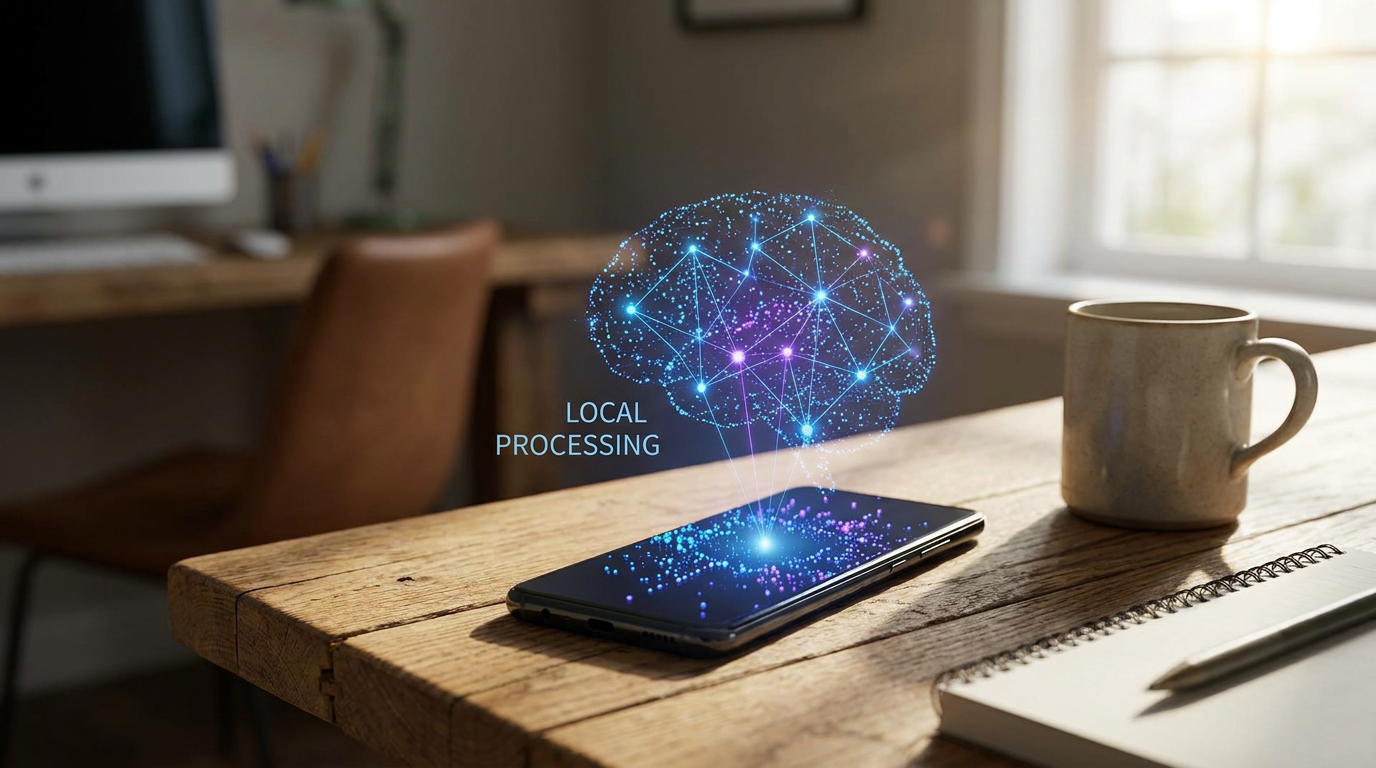
The open-source release tackles the single largest bottleneck in local AI deployment: memory consumption. By compressing the neural network's memory footprint, TurboQuant reduces the RAM and VRAM required to run frontier-tier models by up to a factor of five. This allows highly capable AI systems to run smoothly on standard laptops, consumer-grade graphics cards, and even modern smartphones.[1]
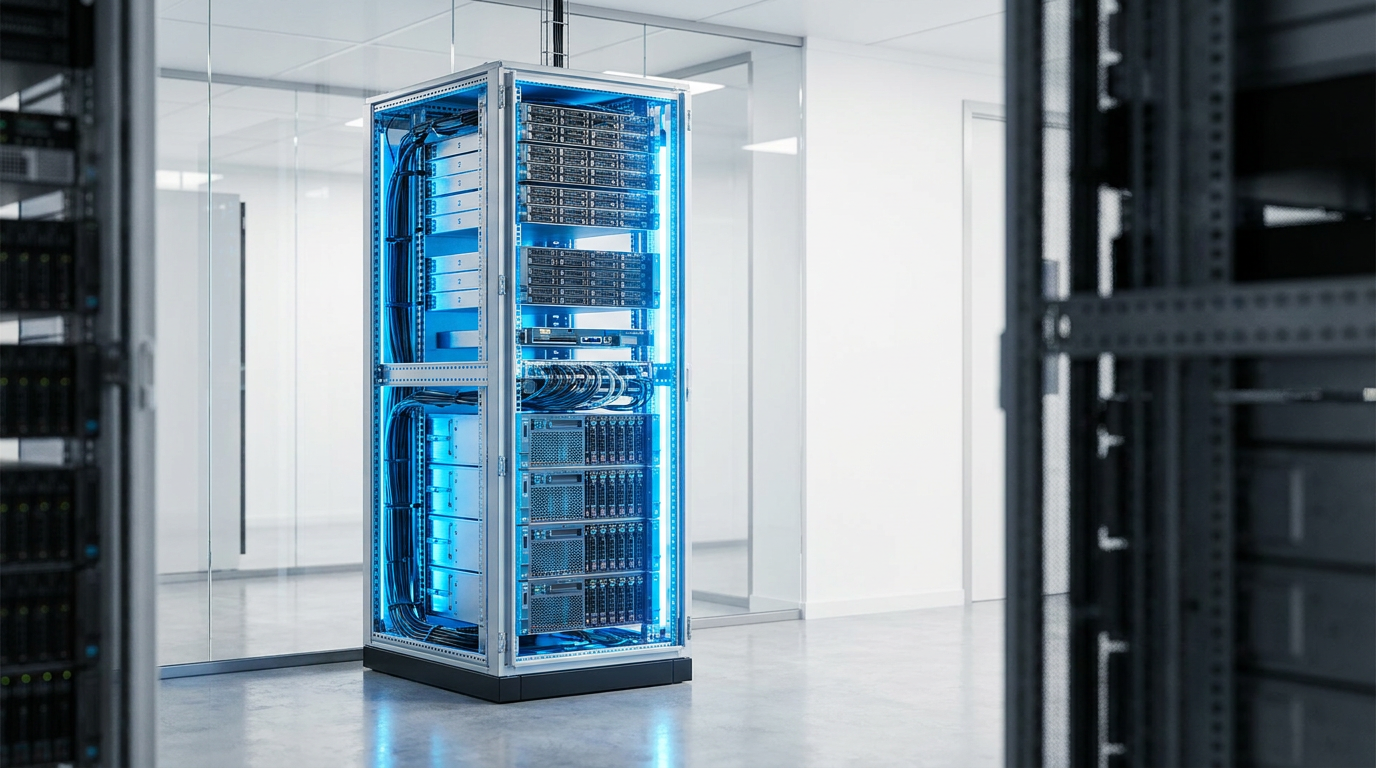
Historically, the size of an AI model's "weights"—the billions of parameters that dictate its behavior—required specialized hardware. A standard 70-billion parameter model previously demanded multiple high-end GPUs simply to load into memory, pricing out independent developers and small businesses.[5]

TurboQuant changes this calculus through an advanced quantization pipeline. Quantization is the process of reducing the precision of the numbers used to represent a model's weights—for instance, moving from 16-bit floating-point numbers to 4-bit or even 2-bit integers. While previous quantization methods often severely degraded a model's reasoning capabilities, TurboQuant preserves the model's fidelity while drastically shrinking its physical size.[1]
The technology has been integrated into QVAC Fabric, a popular local AI engine, and shipped as part of a new software development kit. This means developers do not need to build the complex compression architecture from scratch; they can simply deploy the optimized models directly into their applications.[1]
The implications for data privacy are immediate and profound. When AI models run locally on a user's device, sensitive information—such as proprietary corporate codebases, personal financial records, or private medical data—never leaves the machine. This offline capability removes the primary security barrier that has prevented many highly regulated industries from adopting generative AI.[1]
Beyond privacy, the shift toward local inference addresses a looming environmental crisis. As of 2026, AI systems and the data centers that house them consume staggering amounts of electricity, accounting for over 10 percent of total electricity production in the United States.[6]
Beyond privacy, the shift toward local inference addresses a looming environmental crisis.
The energy hunger of centralized AI has raised serious concerns among environmental advocates, with demand projected to double by the end of the decade. By shifting the computational load from massive server farms to the edge devices people already own, the overall strain on the power grid can be significantly mitigated.[6]

This memory breakthrough arrives alongside a massive wave of open-source model releases in June 2026 that are reshaping the competitive landscape. Models like MiniMax M3 and DeepSeek V4 have demonstrated that open-weight architectures can rival, and in some cases surpass, the proprietary models guarded by major tech conglomerates.[2][3][5]
MiniMax M3, for example, recently launched with a one-million-token context window and native multi-modal capabilities, allowing it to process massive codebases or hours of video entirely locally. When paired with memory-compression algorithms like TurboQuant, these models transform everyday computers into autonomous agentic platforms.[2][3]
Industry analysts note that this represents a philosophical pivot in AI development. The prevailing strategy of 2023 and 2024 was a race for scale—building increasingly gargantuan models that required billions of dollars in compute to train and run. Now, the focus has shifted toward smarter systems over bigger systems.[4]
Smaller, highly optimized, domain-specific models are proving more reliable for enterprise use cases than massive generalist models. A legal firm, for instance, does not need an AI that can write poetry or generate recipes; it needs a highly accurate, locally hosted model trained specifically on legal reasoning.[4]

For consumers, this decentralization promises a new generation of "agentic" applications. Smartphones equipped with these compressed models can act as true digital assistants, organizing files, drafting complex correspondence, and interacting with other apps without draining the battery in hours or requiring a constant internet connection.[2][6]
Despite these advancements in inference—the process of running a trained model—the initial training phase of frontier AI still requires massive centralized compute. The capital expenditure required to train a state-of-the-art model from scratch remains in the hundreds of millions of dollars, ensuring that major cloud providers will retain a critical role in the ecosystem.[5]
However, the democratization of deployment fundamentally shifts the balance of power. Developers are no longer restricted to traditional API pipelines or beholden to the pricing structures of a few dominant tech companies.[2]
As open-source frameworks continue to mature, the barrier to entry for building sophisticated AI tools will only drop further. The release of TurboQuant is not just a technical milestone; it is a declaration that the future of artificial intelligence will not be confined to the cloud, but distributed across the devices in our pockets and on our desks.
How we got here
2023–2024
The AI industry focuses on massive scale, building gargantuan models that require billions of dollars in cloud compute to run.
Late 2025
Researchers begin proving that smaller, highly optimized models can match the performance of larger models in specific domains.
April 2026
DeepSeek V4 launches, proving that open-weight models can rival proprietary frontier models at a fraction of the cost.
June 2026
Tether's AI Research Group open-sources TurboQuant, slashing memory requirements by 5x and bringing frontier AI to consumer devices.
Viewpoints in depth
The Open-Source Developer View
Local AI breaks the monopoly of major cloud providers.
For independent developers and startups, the release of TurboQuant is a massive equalizer. Previously, building an application that required frontier-level reasoning meant paying continuous API fees to a handful of major tech conglomerates. By compressing models to fit on consumer hardware, developers can now build, test, and deploy sophisticated AI agents entirely for free. This community views local inference as the only sustainable path forward for an open internet, ensuring that foundational AI capabilities remain a public good rather than a rented service.
The Enterprise Cloud View
Centralized infrastructure remains essential for training and scale.
While acknowledging the breakthroughs in local inference, analysts focused on enterprise-scale AI caution against declaring the death of the cloud. Compressing a model to run on a laptop is a massive achievement, but training that model in the first place still requires hundreds of millions of dollars in specialized compute clusters. Furthermore, for multinational corporations deploying AI to thousands of employees simultaneously, centralized cloud infrastructure remains the most reliable way to ensure security compliance, version control, and seamless updates across a global workforce.
The Environmental View
Edge computing is necessary to avert an AI-driven energy crisis.
Sustainability researchers view the shift toward local AI as a critical environmental necessity. With AI data centers already consuming over 10 percent of the United States' electricity production, the current trajectory of cloud-based AI is widely considered unsustainable. By offloading the computational burden of daily AI tasks—like drafting emails or organizing files—to the edge devices that users already have powered on, the tech industry can dramatically reduce the need to build new, energy-intensive server farms and cooling facilities.
What we don't know
- Whether hardware manufacturers will begin designing consumer chips specifically optimized for quantized, local AI models.
- How quickly major enterprise software vendors will pivot from cloud-based AI APIs to local-first integrations.
- The long-term impact of local AI on the revenue models of major cloud infrastructure providers.
Key terms
- Quantization
- The process of compressing an AI model by reducing the precision of its numerical weights, saving memory and compute power.
- Inference
- The phase where a trained AI model is actually used to generate responses, make decisions, or process data.
- Open-weight model
- An AI model whose underlying architecture and trained parameters are publicly available for developers to download and modify.
- VRAM (Video RAM)
- Specialized memory on a graphics card used to quickly store and access the massive datasets required for AI processing.
Frequently asked
What does TurboQuant actually do?
It compresses the memory footprint of AI models by up to 80%, allowing them to run on consumer devices without losing their reasoning capabilities.
Why is local AI better than cloud AI?
Local AI ensures complete data privacy because information never leaves your device. It also works offline and avoids expensive API subscription fees.
Will this replace massive AI data centers?
Not entirely. While running models (inference) can now happen locally, training new frontier models still requires the massive computational power of centralized data centers.
Sources
Source coverage
6 outlets
3 viewpoints surfaced






[1]Open Source For UOpen-Source Developers
Tether's AI Research Group open-sources TurboQuant memory breakthrough
Read on Open Source For U →[2]DevFlokersOpen-Source Developers
The open-source AI updates of June 2026 demonstrate a significant shift
Read on DevFlokers →[3]AIFloxiumOpen-Source Developers
Best Open Source AI Models to Try in June 2026: Complete Guide
Read on AIFloxium →[4]Mean CEOPrivacy & Efficiency Advocates
2026 AI and tech trends analysis: Smaller open models winning
Read on Mean CEO →[5]Business EngineerEnterprise Cloud Providers
Is open source dying at the top frontier of AI?
Read on Business Engineer →[6]ScienceDailyPrivacy & Efficiency Advocates
AI Breakthrough Cuts Energy Use by 100x
Read on ScienceDaily →

Every angle. Every day.
Get ai stories with full source coverage and perspective breakdowns delivered to your inbox.