
How Enhanced Geothermal Systems Are Unlocking 24/7 Clean Energy Anywhere
Advances in drilling technology borrowed from the oil and gas industry are unlocking 'enhanced geothermal systems' that can generate continuous clean power anywhere. With the first commercial-scale plant coming online in 2026, the technology is rapidly transitioning from a scientific pilot to a bankable infrastructure asset.
By Factlen Editorial Team
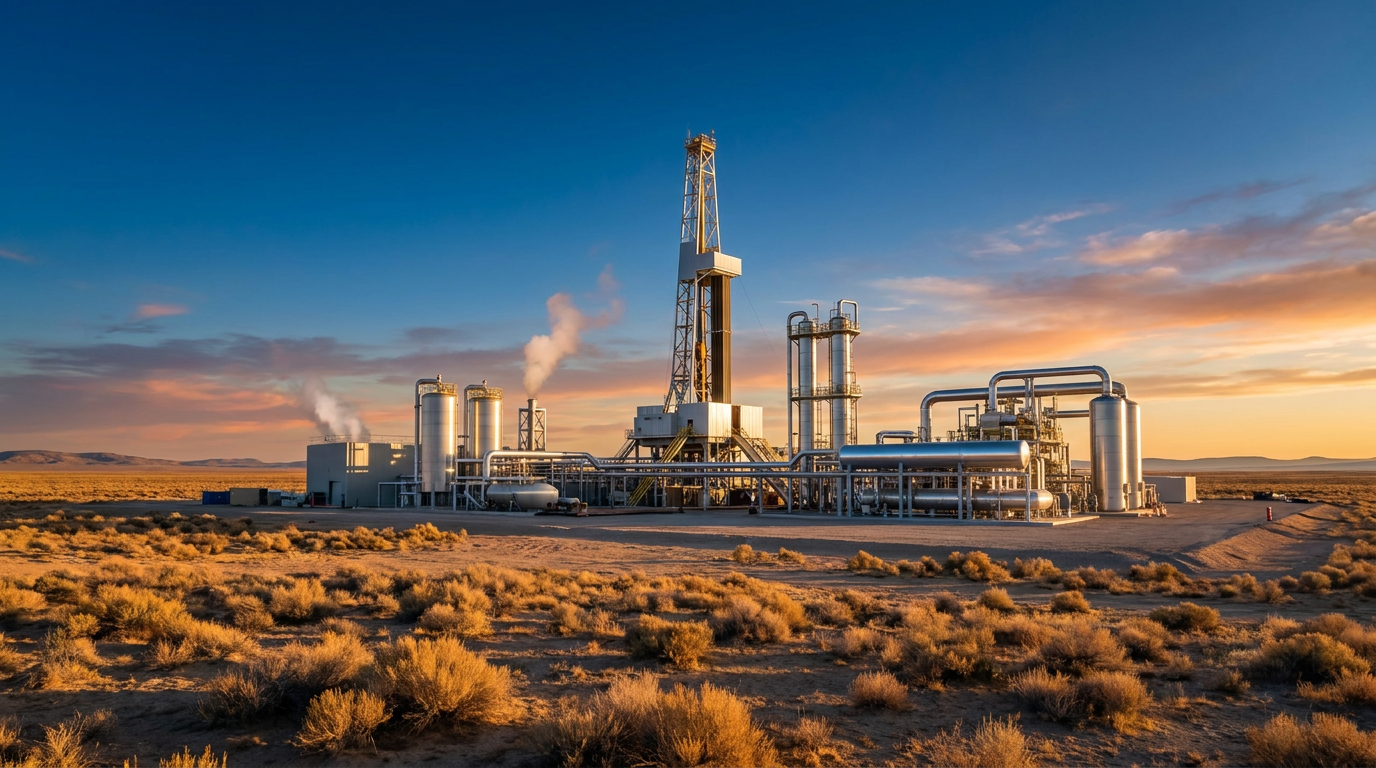
- Geothermal Developers
- Argue that EGS is the critical missing link for a fully decarbonized grid.
- Energy Economists
- Emphasize that high upfront capital costs remain a severe barrier to scale.
- Environmental Watchdogs
- Support clean energy but urge strict oversight of subsurface fracturing.
What's not represented
- · Local communities living near proposed EGS sites
- · Fossil fuel workers transitioning to the geothermal sector
Why this matters
Solar and wind power are cheap but dependent on the weather, leaving a critical gap in the clean energy transition. Enhanced geothermal systems promise to fill that void by providing carbon-free, 24/7 electricity almost anywhere on Earth, potentially unlocking a massive new energy source that could power tens of millions of homes.
Key points
- Enhanced Geothermal Systems (EGS) use advanced drilling to create artificial underground reservoirs, allowing geothermal power to be generated outside of traditional volcanic hotspots.
- The first large-scale commercial EGS plant, Fervo Energy's Cape Station in Utah, is scheduled to begin operations in June 2026 with an initial 28 MW capacity.
- The technology relies heavily on horizontal drilling and hydraulic stimulation techniques adapted from the shale oil and gas industry.
- The U.S. Department of Energy estimates that next-generation geothermal could expand domestic capacity to 90 gigawatts by 2050, a twentyfold increase.
- High upfront capital costs for deep-rock drilling and the need to manage induced seismicity remain the primary hurdles to widespread commercialization.
The energy transition has a stubborn blind spot. While solar panels and wind turbines are being deployed at record speeds, their output remains fundamentally tied to the weather. When the sun sets and the wind stalls, grid operators must scramble to replace that lost generation, typically relying on natural gas peaker plants or massive, expensive battery arrays. The holy grail of the clean energy transition has long been a source of power that is both entirely carbon-free and capable of running twenty-four hours a day, seven days a week.[4][6]
Traditional geothermal energy has provided this kind of steady baseload power for decades, but it comes with a severe geographic catch. Conventional geothermal plants require a rare geological trifecta: extreme underground heat, naturally occurring water, and highly permeable rock formations that allow that water to circulate. Because these conditions typically only exist near tectonic plate boundaries or volcanic hotspots—such as in Iceland, California, or Nevada—geothermal energy currently accounts for just 0.2 percent of the United States' total electricity capacity.[1][2]
A breakthrough technology known as Enhanced Geothermal Systems (EGS) is now poised to shatter those geographic limitations. Instead of hunting for naturally occurring underground aquifers, EGS engineers create their own. By drilling thousands of feet into hot, dry, and impermeable crystalline rock, developers can inject high-pressure fluid to create a network of artificial fractures. Cool water is pumped down an injection well, heated to extreme temperatures as it circulates through the newly fractured rock, and drawn back up a production well to spin electricity-generating turbines at the surface.[2][7]

This concept has existed in academic theory for decades, but it is finally crossing the threshold into commercial reality. The clearest signal of this inflection point is unfolding in the arid landscape of southwest Utah, where Fervo Energy is constructing Cape Station. Scheduled to begin operations in June 2026, the facility will be the first large-scale commercial EGS power plant in the United States. It will launch with an initial capacity of 28 megawatts, with plans to expand into a massive facility capable of powering hundreds of thousands of homes.[1][5]
The sudden viability of EGS owes a massive debt to an unlikely source: the fossil fuel industry. The shale oil and gas boom of the 2010s drove rapid advancements in horizontal drilling and hydraulic stimulation. Geothermal pioneers have adapted these exact techniques to navigate hard crystalline rock at extreme depths and temperatures. The learning curve has been remarkably steep; Fervo Energy reported a 70 percent reduction in drilling times between its initial pilot project in Nevada and its commercial wells in Utah, fundamentally altering the economic math of geothermal development.[4][7]
Wall Street and major infrastructure lenders are beginning to recognize this shift. In early 2026, Fervo secured $421 million in financing to fund the construction of Cape Station. The funding package, coordinated by major global banks, represents one of the largest recent capital injections into the geothermal sector. Financial analysts note that securing non-recourse debt—a type of financing typically reserved for proven, low-risk infrastructure—demonstrates that EGS is transitioning from a speculative science experiment into a highly bankable asset class.[4][8]
Wall Street and major infrastructure lenders are beginning to recognize this shift.
The potential scale of this technology is staggering. A recent "Pathways to Commercial Liftoff" report published by the U.S. Department of Energy estimates that next-generation geothermal technologies could expand domestic capacity to 90 gigawatts by 2050. Other models suggest the ceiling could be as high as 150 gigawatts. To put that in perspective, achieving 90 gigawatts would represent a twentyfold increase over current geothermal production, providing enough firm, flexible power to supply up to 20 percent of the nation's electricity needs.[1][3]

Reaching that scale requires solving complex subsurface mysteries. Because developers cannot physically see the rock formations they are fracturing thousands of feet underground, financial risk remains high. To mitigate this, researchers from the Lawrence Berkeley National Laboratory recently completed a landmark seven-month seismic monitoring campaign at the Cape Station site. Operating at depths of nearly 7,000 feet and temperatures reaching 338 degrees Fahrenheit, the team gathered the longest continuous dataset of an engineered geothermal reservoir ever recorded.[6]
This high-resolution data is critical for understanding exactly how fractures propagate through hot rock and how reservoirs will perform over decades of continuous use. By reducing the technical uncertainty of what happens miles beneath the surface, developers can offer more accurate production forecasts to investors. Improved modeling also allows engineers to optimize the flow of fluids, ensuring that the artificial reservoirs extract heat efficiently without cooling the surrounding rock too quickly.[6][8]
While EGS relies on fracturing rock, another next-generation approach is advancing in parallel: closed-loop geothermal systems, sometimes called Advanced Geothermal Systems (AGS). Instead of injecting fluid into the rock itself, closed-loop systems circulate a working fluid through a sealed network of underground pipes. Acting like a massive subterranean radiator, the system absorbs heat through conduction without requiring any induced permeability. While still in earlier stages of deployment, closed-loop designs offer an alternative for regions where fracturing is technically difficult or socially opposed.[2][5]
Despite the immense momentum, the geothermal industry faces significant headwinds before it can achieve widespread commercialization. The most daunting barrier is upfront capital cost. Drilling deep into hard rock is incredibly expensive, often accounting for more than half of a project's total expenditure. While the cost of the electricity generated is highly competitive over a plant's multi-decade lifespan, securing the initial billions required to drill exploratory and production wells remains a bottleneck that deters risk-averse investors.[1][7]

Public perception and regulatory hurdles also pose distinct challenges. Because EGS utilizes hydraulic stimulation, it frequently draws comparisons to oil and gas fracking, raising local concerns about water usage and groundwater protection. Furthermore, the process of fracturing deep rock carries the inherent risk of induced seismicity—minor earthquakes triggered by fluid injection. While developers employ strict monitoring protocols to manage and mitigate seismic activity, securing permits and maintaining community trust requires intense, transparent engagement.[1][8]
To accelerate deployment, the Department of Energy is heavily subsidizing pilot projects and research initiatives, recognizing that early-stage government support is vital for driving costs down the learning curve. Federal programs are actively funding demonstrations across diverse geographic locations to prove that EGS can work in various geological settings, not just the heat-rich American West. Policymakers are increasingly viewing geothermal not as a competitor to wind and solar, but as the essential stabilizing force that makes a fully renewable grid possible.[2][7]
As the first commercial electrons flow from facilities like Cape Station in 2026, the energy sector will be watching closely. If these early commercial plants can prove long-term reliability and continue to drive down drilling costs, enhanced geothermal systems could fundamentally redraw the map of global energy production. By unlocking the virtually limitless heat trapped beneath our feet, the world may finally have a scalable, carbon-free engine capable of powering the future without interruption.[3][4]
How we got here
2010s
The shale oil and gas boom drives rapid advancements in horizontal drilling and hydraulic fracturing.
2023
Fervo Energy successfully completes Project Red, a commercial pilot demonstrating the viability of EGS.
March 2026
Fervo secures $421 million in financing, signaling Wall Street's growing confidence in geothermal technology.
April 2026
Researchers achieve a milestone in continuous high-temperature seismic monitoring at the Cape Station site.
June 2026
Cape Station is scheduled to begin operations as the first large-scale commercial EGS plant in the US.
Viewpoints in depth
Geothermal Developers
Argue that EGS is the critical missing link for a fully decarbonized grid.
Companies like Fervo Energy and Eavor maintain that while wind and solar are cheap, their intermittency requires massive overbuilding and expensive battery storage. They argue that by adapting proven oil and gas drilling techniques, geothermal can rapidly scale to provide the 24/7 baseload power necessary to replace coal and natural gas plants, ultimately lowering the total systemic cost of the energy transition.
Energy Economists
Emphasize that high upfront capital costs remain a severe barrier to scale.
Financial analysts and energy economists point out that while the long-term operational costs of geothermal are low, the initial price tag for drilling deep exploratory and production wells is prohibitive. They argue that until the industry can consistently prove reservoir longevity and further reduce drilling times, EGS will remain heavily dependent on government subsidies, loan guarantees, and premium power purchase agreements to attract risk-averse institutional capital.
Environmental Watchdogs
Support clean energy but urge strict oversight of subsurface fracturing.
Environmental and community advocacy groups generally support the transition away from fossil fuels but remain cautious about the mechanics of Enhanced Geothermal Systems. Because EGS relies on high-pressure fluid injection to fracture rock, these groups highlight the risks of induced seismicity (human-caused earthquakes) and potential groundwater impacts. They advocate for intense regulatory scrutiny, transparent seismic monitoring, and robust community engagement before large-scale projects are permitted near populated areas.
What we don't know
- How quickly the industry can drive down the steep upfront capital costs of deep-rock drilling without heavy government subsidies.
- Whether artificial underground reservoirs will maintain their heat and fluid flow rates over multi-decade lifespans.
- How public perception and regulatory permitting will evolve as EGS projects expand closer to populated areas.
Key terms
- Enhanced Geothermal Systems (EGS)
- A technology that creates artificial underground reservoirs in hot, dry rock by injecting fluid to generate permeability for heat extraction.
- Baseload Power
- The minimum amount of electric power needed to be supplied to the electrical grid at any given time, requiring continuous, 24/7 generation.
- Hydraulic Stimulation
- A technique adapted from the oil and gas industry that uses high-pressure fluid to create or widen fractures in underground rock.
- Closed-Loop Geothermal
- An alternative next-generation system that circulates fluid through sealed underground pipes, acting like a massive subterranean radiator without fracturing rock.
- Induced Seismicity
- Minor earthquakes or tremors caused by human activity, such as injecting fluids deep underground.
Frequently asked
Can enhanced geothermal be built anywhere?
Theoretically, yes. By drilling deep enough, hot rock can be found almost anywhere on Earth, though it is currently most economical in regions where the heat is closer to the surface.
Is the fracturing used in EGS safe?
EGS uses a variation of hydraulic fracturing called hydro-shearing, which uses lower pressures and no proppants like sand. However, managing the risk of induced seismicity (minor earthquakes) remains a strict regulatory focus.
How much power will the first commercial plant generate?
Fervo Energy's Cape Station in Utah is scheduled to begin operating in June 2026 with an initial 28 megawatts, eventually expanding to hundreds of megawatts.
Why is geothermal better than solar or wind?
Geothermal is not necessarily better, but it is complementary. Unlike solar and wind, which depend on the weather, geothermal provides 'baseload' power—meaning it runs continuously, 24 hours a day, 7 days a week.
Sources
Source coverage
8 outlets
3 viewpoints surfaced








[1]U.S. Energy Information AdministrationEnergy Economists
First large-scale commercial enhanced geothermal system power generator under construction
Read on U.S. Energy Information Administration →[2]U.S. Department of Energy
Enhanced Geothermal Systems (EGS)
Read on U.S. Department of Energy →[3]Princeton UniversityEnergy Economists
Enhanced geothermal systems: An underground tech surfaces as a serious clean energy contender
Read on Princeton University →[4]Carbon CreditsGeothermal Developers
Fervo Energy's $421M Breakthrough and The Rise of Geothermal Power for Clean Electricity
Read on Carbon Credits →[5]Energi MediaGeothermal Developers
New drilling technologies could dramatically expand geothermal electricity production
Read on Energi Media →[6]Highways TodayEnvironmental Watchdogs
Continuous seismic monitoring achieved in extreme heat at Cape Station geothermal site
Read on Highways Today →[7]Information Technology and Innovation FoundationEnergy Economists
Enhanced Geothermal Systems: Transitioning from R&D to Active Deployment
Read on Information Technology and Innovation Foundation →[8]Factlen Editorial TeamEnvironmental Watchdogs
Synthesis by Factlen editorial team
Read on Factlen Editorial Team →
Every angle. Every day.
Get meta stories with full source coverage and perspective breakdowns delivered to your inbox.