
The Rise of Psychobiotics: How Gut Bacteria Are Shaping the Future of Mental Health
Emerging research in nutritional psychiatry reveals that specific strains of gut bacteria, known as psychobiotics, can actively reduce stress and improve mood via the gut-brain axis.
By Factlen Editorial Team
- Nutritional Psychiatrists
- Advocate for integrating dietary interventions as a core pillar of mental health treatment.
- Microbiome Researchers
- Focus on isolating specific bacterial strains and mapping their exact mechanistic pathways.
- Whole-Food Advocates
- Argue that complex food matrices are vastly superior to isolated probiotic supplements.
- Clinical Skeptics
- Caution against overstating the current efficacy of psychobiotics in clinical settings.
What's not represented
- · Traditional Indigenous Dietitians
- · Gastroenterologists treating severe clinical dysbiosis
Why this matters
Understanding the gut-brain connection empowers individuals to use diet as a tangible, daily tool for managing stress, brain fog, and emotional well-being, shifting mental health care from a purely neurological focus to a whole-body approach.
Key points
- Psychobiotics are specific strains of gut bacteria that can positively influence mental health and cognitive function.
- The gut and brain communicate constantly via the vagus nerve, neurotransmitters, and the immune system.
- Gut microbes produce an estimated 90% of the body's serotonin, a key neurotransmitter for mood regulation.
- Nutritional psychiatrists increasingly recommend whole fermented foods over isolated supplements for delivering psychobiotics.
The sensation of having "butterflies in the stomach" before a big presentation or making a "gut-wrenching" decision are phrases deeply embedded in our language. For centuries, humans have intuitively understood that our emotions and our digestive tracts are intimately linked. However, it is only in the last decade that the biological mechanisms behind these linguistic quirks have come into sharp, scientific focus.[6]
Enter the era of "nutritional psychiatry." For decades, mental health treatment has focused almost exclusively on the brain, utilizing therapies and pharmaceuticals designed to alter neurochemistry from the neck up. Now, researchers are looking lower down. The emerging star of this field is the "psychobiotic"—a term for live bacteria or prebiotic fibers that, when ingested, confer a measurable mental health benefit.[4][5]
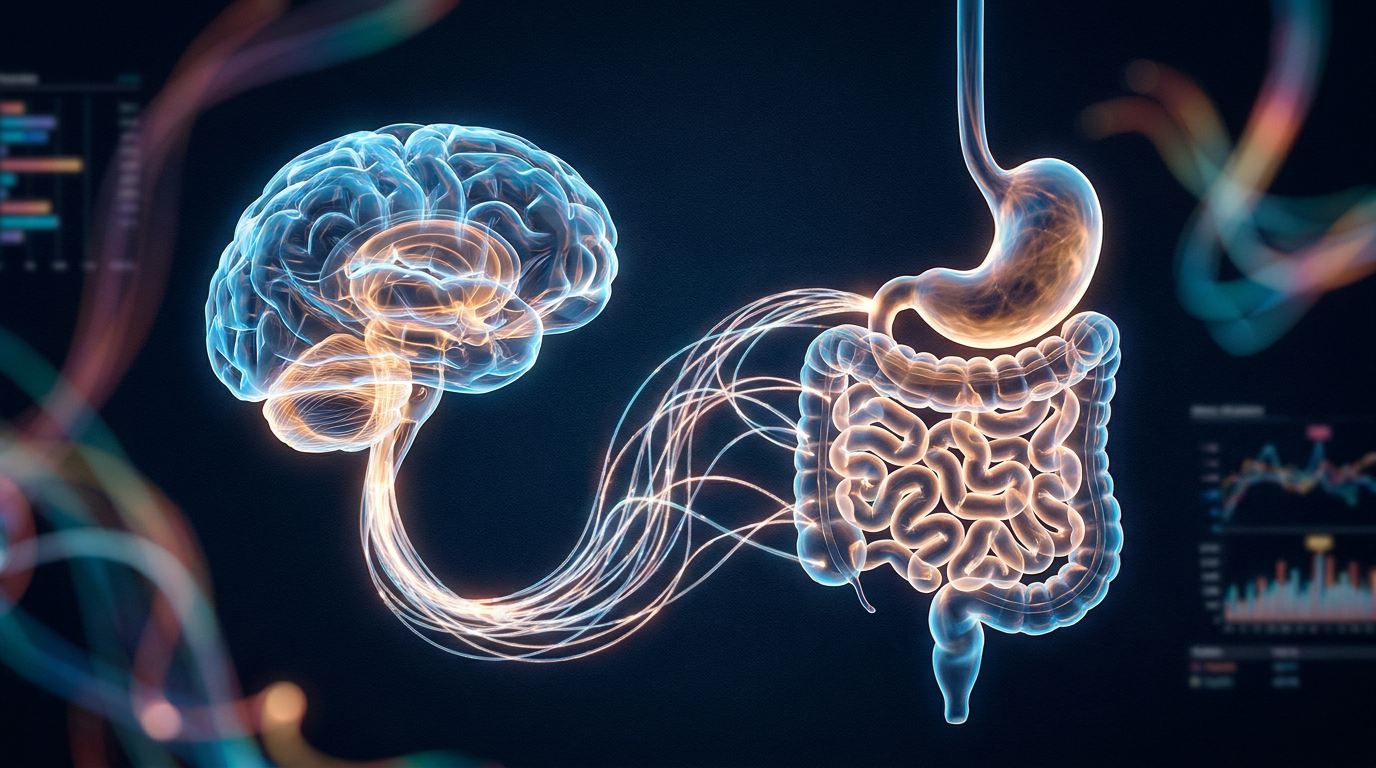
To understand how psychobiotics work, one must first understand the hardware they operate on: the enteric nervous system (ENS). Often dubbed the body's "second brain," the ENS consists of an incredibly complex network of over 100 million neurons lining the entire gastrointestinal tract, capable of operating independently of the brain and spinal cord.[3]
The primary information superhighway connecting this second brain to the primary one in your skull is the vagus nerve. This thick bundle of neural fibers acts as a bidirectional text thread, constantly firing signals from the gut to the brain and vice versa, ensuring the two systems are always in sync regarding the body's physiological state.[1][3]

But the communication across this axis isn't just electrical; it is highly chemical. The gut microbiome—the trillions of bacteria, fungi, and viruses residing in the digestive tract—acts as an active, dynamic endocrine organ that profoundly influences systemic health.[2]
These microscopic residents manufacture a staggering amount of the body's essential neurotransmitters. For instance, an estimated 90% of the body's serotonin, a chemical crucial for mood regulation and happiness, is produced in the digestive tract. Gut microbes also produce gamma-aminobutyric acid (GABA), a neurotransmitter that calms the nervous system and actively reduces anxiety.[1][5]
Psychobiotics influence this complex system through several distinct pathways. First, specific strains of bacteria, such as Lactobacillus rhamnosus and Bifidobacterium longum, have been shown in clinical settings to actively modulate these neuroactive metabolites, supporting mental endurance, improving processing speed, and reducing the sensation of brain fog.[4][5]
Psychobiotics influence this complex system through several distinct pathways.
Second, beneficial gut bacteria produce short-chain fatty acids (SCFAs), particularly butyrate, as a byproduct of fermenting dietary fiber. SCFAs are crucial for maintaining the integrity of the intestinal lining, preventing the phenomenon commonly known as "leaky gut."[2]

When the gut barrier is compromised, inflammatory markers can escape into the bloodstream and eventually cross the blood-brain barrier. This resulting neuroinflammation is increasingly recognized by psychiatrists as a root biological cause of depressive symptoms and chronic anxiety. By producing SCFAs, psychobiotics help extinguish this slow-burning inflammatory fire.[1][2]
Third, psychobiotics help regulate the hypothalamic-pituitary-adrenal (HPA) axis, which serves as the body's primary stress response system. Clinical trials have demonstrated that certain targeted probiotic blends can significantly reduce blood levels of cortisol, the notorious stress hormone, in human participants facing acute stressors.[1][3]
While the supplement industry has rushed to bottle these specific bacterial strains, many researchers and nutritional psychiatrists argue that pills are not the optimal delivery mechanism. Isolated probiotic capsules often struggle to survive the harsh, highly acidic environment of the human stomach, meaning the bacteria may be dead before they ever reach the lower intestine.[3][6]
Instead, the scientific focus is increasingly shifting toward traditional fermented foods as the ultimate psychobiotic delivery system. Foods like kefir, kimchi, sauerkraut, and kombucha provide diverse, live microbial communities encased in a protective matrix of prebiotics and bioactive compounds that ensure their survival and efficacy.[3][4]

The clinical results of these whole-food dietary interventions are compelling. In a recent large-scale study conducted by the nutritional science company ZOE, over 6,000 participants were asked to consume three portions of fermented foods daily for just two weeks. Remarkably, 47% of the participants reported noticeable, self-documented improvements in their daily mood.[3]
However, the burgeoning field of nutritional psychiatry is not without its caveats. The human microbiome is as unique as a fingerprint. A specific strain of Bifidobacterium that successfully alleviates anxiety in one individual might have absolutely zero effect on another, simply because their baseline microbial ecosystems are entirely different.[3][6]
Furthermore, many clinical trials in this space are open-label, meaning participants know they are receiving a psychobiotic intervention, which inevitably introduces a significant placebo effect. Researchers caution that diet and psychobiotics should be viewed as scalable, empowering adjuncts to traditional mental health care, not wholesale replacements for necessary psychiatric medication.[1][3]

Ultimately, the rise of psychobiotics represents a profound paradigm shift in how we view mental health. It moves the conversation away from a purely neurological deficit and toward a holistic, whole-body ecosystem. By consciously feeding the microbes in our gut, we are discovering that we may very well be treating the mind.[2][6]
How we got here
2013
The term 'psychobiotic' is first coined by researchers Ted Dinan and John Cryan to describe microbes with mental health benefits.
2020
A surge in clinical trials begins linking specific bacterial strains to reduced cortisol and anxiety in human subjects.
2024
Major systemic reviews confirm the modest but significant antidepressant effects of targeted microbiota interventions.
2026
Nutritional psychiatry increasingly prioritizes whole fermented foods over isolated supplements as the optimal delivery mechanism for psychobiotics.
Viewpoints in depth
Nutritional Psychiatrists
Advocate for integrating dietary interventions as a core pillar of mental health treatment.
This camp views the gut-brain axis as a fundamental biological system that has been neglected by traditional psychiatry. They argue that Western diets, characterized by ultra-processed foods and low fiber, are a primary driver of the modern mental health crisis. By prescribing specific dietary patterns—such as increased fiber and fermented foods—they aim to treat the root causes of neuroinflammation rather than merely managing symptoms with pharmaceuticals.
Microbiome Researchers
Focus on isolating specific bacterial strains and mapping their exact mechanistic pathways.
Researchers in this space are less concerned with broad dietary advice and more focused on precision biology. They seek to identify exactly which strains (like specific variants of Lactobacillus rhamnosus) produce which neuroactive metabolites. Their ultimate goal is to develop highly targeted, pharmaceutical-grade psychobiotic therapies that can reliably modulate neurotransmitter synthesis and the HPA axis without the variability of whole foods.
Whole-Food Advocates
Argue that complex food matrices are vastly superior to isolated probiotic supplements.
This perspective emphasizes that bacteria do not operate in isolation. They argue that dropping a single strain of bacteria into the gut via a capsule is often ineffective because the microbes lack the necessary prebiotic fuel and protective environment to survive. Instead, they champion traditional fermented foods, which provide a diverse ecosystem of microbes alongside the exact fibers and polyphenols needed to sustain them in the digestive tract.
Clinical Skeptics
Caution against overstating the current efficacy of psychobiotics in clinical settings.
While acknowledging the fascinating science of the gut-brain axis, skeptics warn that the supplement industry has outpaced the clinical evidence. They point out that many human trials are small, open-label, and subject to significant placebo effects. Furthermore, because individual microbiomes vary so drastically, they argue that 'precision nutrition' is still in its infancy and cannot yet reliably replace standard psychiatric care for severe disorders.
What we don't know
- Because every individual's microbiome is highly unique, scientists cannot yet predict exactly which bacterial strains will benefit which specific patients.
- The long-term psychological impacts of sustained psychobiotic diets over multiple years remain understudied compared to short-term interventions.
- It is still unclear exactly how much of the mood-boosting effect in open-label dietary trials is driven by biological changes versus the psychological placebo effect of taking proactive health steps.
Key terms
- Psychobiotics
- Live microorganisms or prebiotic fibers that provide mental health benefits by modulating the gut microbiome.
- Microbiota-Gut-Brain Axis
- The bidirectional communication network linking the intestinal ecosystem to the central nervous system via neural, immune, and endocrine pathways.
- Enteric Nervous System (ENS)
- A complex network of over 100 million neurons lining the gastrointestinal tract, often referred to as the body's 'second brain'.
- Short-Chain Fatty Acids (SCFAs)
- Beneficial compounds, such as butyrate, produced when gut bacteria ferment dietary fiber, which help reduce systemic inflammation.
- Vagus Nerve
- A major cranial nerve that serves as the primary neural information superhighway transmitting signals between the gut and the brain.
Frequently asked
What exactly is a psychobiotic?
A psychobiotic is a specific strain of live bacteria (a probiotic) or a prebiotic fiber that, when ingested, confers a measurable mental health benefit by interacting with the gut-brain axis.
Can I just take a probiotic pill to improve my mood?
While some targeted supplements show promise, many researchers recommend fermented foods instead. Pills often struggle to survive stomach acid, whereas foods like kefir and kimchi provide a protective matrix and a wider diversity of microbes.
How long does it take for diet to change the microbiome?
Research indicates that significant shifts in the gut microbiome can occur in as little as two weeks when introducing consistent dietary interventions, such as increasing fermented food intake.
Does this replace traditional therapy or medication?
No. Nutritional psychiatry views psychobiotics and dietary changes as scalable, complementary adjuncts to traditional mental health care, not as replacements for prescribed psychiatric medications.
Sources
Source coverage
6 outlets
4 viewpoints surfaced






[1]Frontiers in MicrobiologyMicrobiome Researchers
The psychobiotic prism: refraction of gut microenvironmental shifts into specific psychiatric phenotypes
Read on Frontiers in Microbiology →[2]NutrientsNutritional Psychiatrists
Diet and Microbiota–Gut–Brain Axis: A Novel Nutritional Therapy
Read on Nutrients →[3]ZOEWhole-Food Advocates
Psychobiotics: Can probiotics improve your mood?
Read on ZOE →[4]Psychology TodayMicrobiome Researchers
Psychobiotics get real
Read on Psychology Today →[5]NDTVNutritional Psychiatrists
What Are Psychobiotics? The Next-Gen Gut Supplements Doctors Are Using To Treat Brain Fog And Stress
Read on NDTV →[6]Factlen Editorial TeamClinical Skeptics
Synthesis by Factlen editorial team
Read on Factlen Editorial Team →

Every angle. Every day.
Get food drink stories with full source coverage and perspective breakdowns delivered to your inbox.