
The Rise of PIWI Grapes: How Fungus-Resistant Vines Are Reshaping Sustainable Wine
A new generation of disease-resistant grape varieties is allowing winemakers to cut pesticide use by up to 80% without sacrificing classic flavor profiles.
By Factlen Editorial Team
- Viticultural Innovators
- Argue that disease-resistant genetics are the only viable path to truly sustainable, low-chemical winemaking in a warming climate.
- Oenological Researchers
- Focus on empirical data, demonstrating through chemical analysis and blind tastings that modern PIWIs achieve sensory parity with classic grapes.
- Traditionalists & Skeptics
- Express caution about abandoning centuries-old varietal names and worry about consumer willingness to embrace unfamiliar grapes.
What's not represented
- · Conventional agrochemical manufacturers
- · Everyday wine consumers unaware of the breeding process
Why this matters
Traditional winemaking relies heavily on chemical fungicides to keep vines alive, carrying a steep environmental cost. This new wave of naturally resistant grapes offers a blueprint for a cleaner, more sustainable agricultural future that protects both the soil and the climate.
Key points
- PIWI grapes are a new generation of vines bred to naturally resist fungal diseases like powdery mildew.
- They are created by crossing classic European vines with rugged wild species, retaining over 85% of their traditional genetics.
- Cultivating PIWI varieties allows winemakers to reduce chemical fungicide spraying by up to 80-90%.
- Blind tastings show that wine professionals cannot reliably distinguish PIWI wines from traditional varieties.
- The European Union recently permitted the use of these disease-resistant grapes in Protected Designation of Origin (PDO) wines.
The romantic image of winemaking—sun-drenched slopes, ancient vines, and pristine grapes—often obscures a chemical reality. To keep the world's most famous grapevines alive, viticulturists must wage a constant, intensive war against microscopic pathogens.[1]
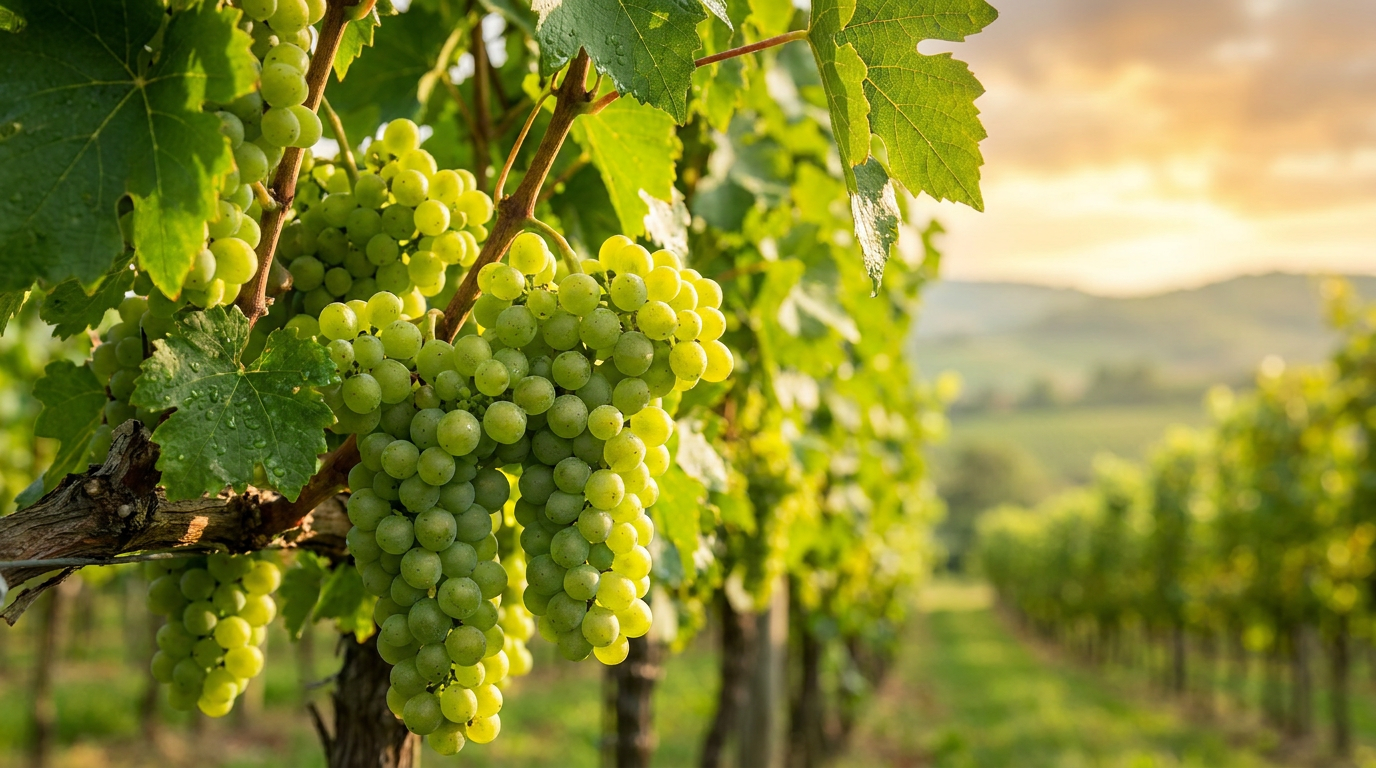
The vast majority of the wine we drink comes from a single species: Vitis vinifera. While this European species produces the complex flavors of Chardonnay, Merlot, and Pinot Noir, it is highly susceptible to fungal diseases like powdery and downy mildew. As climate change brings more erratic weather and unseasonal humidity to traditional wine regions, the pressure from these pathogens has only intensified.[2][3]
Defending these classic vines requires heavy intervention. Conventional vineyards often require frequent applications of chemical fungicides—sometimes up to 15 tractor passes per season. This intensive spraying carries a steep environmental cost, contributing to soil compaction, diesel emissions, and chemical runoff that disrupts local biodiversity.[1][4]
In response, a quiet agricultural revolution is taking root across Europe, driven by a new category of vines known as PIWI grapes. The term is a German abbreviation for Pilzwiderstandsfähige Rebsorten, which translates to fungus-resistant grape varieties. By fundamentally altering the DNA of the vineyard, these vines offer a biological solution to a chemical problem.[4][5][6]

The concept of crossing European vines with rugged, disease-resistant wild species from North America and Asia is not new. Following the devastating phylloxera epidemic in the 19th century, breeders experimented with interspecific hybrids. However, those early attempts inherited an undesirable, musky flavor profile—often described as "foxy"—which led to strict bans on using hybrids for quality European wine.[1][4]
Today's PIWI grapes are entirely different, thanks to a breakthrough technique called marker-assisted selection. Instead of waiting years for a crossbred vine to mature and bear fruit, modern geneticists can scan the DNA of a seedling to confirm the presence of specific resistance genes immediately.[3][6]
This precision allows breeders to perform multiple back-crossings with classic Vitis vinifera vines. The resulting modern PIWI varieties—such as Souvignier Gris, Floreal, and Cabernet Blanc—boast over 85% Vitis vinifera genetics. They retain the elegant, complex flavor profiles of European noble grapes while inheriting the robust immune systems of their wild ancestors.[1][3]
This precision allows breeders to perform multiple back-crossings with classic Vitis vinifera vines.
The environmental impact of this genetic resilience is staggering. Because PIWI vines possess an intrinsic defense mechanism against mildew, they require drastically less chemical protection. Viticultural researchers have documented that PIWI vineyards can reduce fungicide applications by 80% to 90% compared to conventional Vitis vinifera plots.[1][6]

This reduction triggers a cascade of ecological benefits. Fewer sprays mean fewer tractor passes through the vineyard, which directly lowers the carbon footprint of the winemaking process. It also reduces soil compaction, allowing root systems to thrive and improving the soil's ability to retain water during droughts.[1][6]
Furthermore, the absence of broad-spectrum fungicides allows the vineyard ecosystem to recover. Beneficial insects, natural yeasts, and complex soil microbiomes flourish in PIWI vineyards, creating a more resilient and biodynamic agricultural environment.[4]
Beyond sustainability, PIWI grapes offer a compelling economic proposition for farmers. Fungicides are expensive, and the labor and diesel required to apply them represent a significant portion of a vineyard's operating budget. By cutting these costs by up to 80%, PIWI vines provide a financial buffer for winegrowers navigating the unpredictable yields caused by climate volatility.[1][2]
Despite the clear agronomic advantages, the wine industry's ultimate test happens in the glass. For years, skeptics assumed that any hybrid grape would inherently produce inferior wine. However, recent empirical data is shattering that stigma.[3][5]

In a comprehensive study conducted in France's Occitanie region, researchers organized blind tastings with 96 wine industry professionals. The panel evaluated commercial wines made from traditional Vitis vinifera alongside those made from PIWI varieties. The results were definitive: the experts could not detect any notable difference in quality or sensory profile between the two groups.[3]
Recognizing this leap in quality, regulatory bodies are beginning to adapt. In a landmark decision, the European Union recently updated its agricultural regulations to permit the use of disease-resistant hybrid cultivars in Protected Designation of Origin (PDO) wines. This institutional green light has paved the way for wider adoption across historic appellations.[5][6]
Plantings are now accelerating. In France, PIWI acreage has grown to roughly 2,600 hectares, dominated by white varieties like Souvignier Gris and Floreal. In Austria, PIWI vines now account for over 2% of the total area under vine, with strong demand in regions prioritizing organic viticulture.[4][5]

The primary hurdle remaining is consumer acceptance. The wine market is deeply traditional, and consumers are accustomed to buying familiar names like Sauvignon Blanc or Pinot Noir. Convincing buyers to take a chance on unfamiliar labels like Muscaris or Satin Noir requires focused education and marketing from retailers and sommeliers.[1][2]
There is also an evolutionary caveat: fungi are highly adaptable. Agricultural scientists warn that if PIWI vines are mismanaged, pathogens could eventually mutate to bypass their genetic resistance. Nevertheless, as extreme weather accelerates, PIWI grapes represent a vital evolution, proving that the future of sustainable wine relies on embracing the science of the vine itself.[2][4]
How we got here
Mid-19th Century
European vineyards are devastated by the phylloxera epidemic, prompting the first experiments with American-European hybrid vines.
1970s
German and Swiss breeders begin systematically crossing vines to eliminate the undesirable 'foxy' flavors of early hybrids.
1988
PIWI International is founded to promote the development and cultivation of fungus-resistant grape varieties.
2021
The European Union officially permits the use of PIWI grape varieties in Protected Designation of Origin (PDO) wines.
2024–2026
PIWI plantings accelerate across Europe, with varieties like Souvignier Gris and Floreal gaining significant acreage in France and Austria.
Viewpoints in depth
Viticultural Innovators
Argue that disease-resistant genetics are the only viable path to truly sustainable, low-chemical winemaking in a warming climate.
Proponents of PIWI grapes view them as an existential necessity for the wine industry. As climate change brings more erratic weather patterns, the traditional reliance on heavy chemical spraying is becoming ecologically and economically unsustainable. This camp argues that by embedding resistance directly into the vine's DNA, viticulturists can drastically lower their carbon footprint, restore soil biodiversity, and protect farm workers from chemical exposure, all while maintaining high yields.
Oenological Researchers
Focus on empirical data, demonstrating through chemical analysis and blind tastings that modern PIWIs achieve sensory parity with classic grapes.
For the scientific community, the conversation around PIWI grapes has moved past theoretical potential and into empirical proof. Researchers emphasize that modern marker-assisted breeding has successfully isolated the resistance genes without dragging along the undesirable flavor compounds of early hybrids. By pointing to rigorous blind-tasting studies—where industry professionals routinely fail to distinguish PIWI wines from traditional Vitis vinifera—they argue that the quality debate is effectively settled.
Traditionalists & Skeptics
Express caution about abandoning centuries-old varietal names and worry about consumer willingness to embrace unfamiliar grapes.
While acknowledging the environmental benefits, traditionalists worry about the market realities of introducing new grape varieties. The global wine market is deeply anchored in familiar names like Chardonnay, Sauvignon Blanc, and Pinot Noir. Skeptics argue that consumers may be hesitant to purchase a bottle labeled 'Cabernet Blanc' or 'Souvignier Gris,' fearing that the educational hurdle required to sell these wines could offset the agricultural savings gained in the vineyard.
What we don't know
- Whether mainstream consumers will eventually embrace and recognize new PIWI varietal names on wine labels.
- How quickly fungal pathogens might evolve to bypass the genetic resistance bred into current PIWI varieties.
Key terms
- PIWI
- A German abbreviation for fungus-resistant grape varieties, created by crossing European and wild vines.
- Vitis vinifera
- The classic European grapevine species responsible for almost all well-known wine varieties, such as Chardonnay and Cabernet Sauvignon.
- Powdery mildew
- A widespread fungal disease that attacks grapevines, traditionally requiring heavy chemical spraying to control.
- Marker-assisted selection
- A modern breeding technique that uses DNA markers to identify desired traits, like disease resistance, in seedlings before they mature.
- Interspecific hybrid
- A plant created by crossing two different species, such as a European grapevine and an American wild vine.
Frequently asked
What does PIWI stand for?
PIWI is a German abbreviation for 'Pilzwiderstandsfähige Rebsorten', which translates to fungus-resistant grape varieties.
Do PIWI wines taste different?
Modern PIWIs are bred to mimic classic flavor profiles. In blind tastings, wine industry professionals frequently cannot distinguish them from traditional European varieties.
Are PIWI grapes genetically modified (GMO)?
No. They are created through traditional cross-breeding techniques, though modern DNA marker analysis is used to quickly identify which seedlings successfully inherited the resistance genes.
Why are they better for the environment?
Because they naturally resist mildew, they require up to 80% less pesticide spraying. This reduces chemical runoff, protects soil health, and lowers tractor emissions.
Sources
Source coverage
6 outlets
3 viewpoints surfaced






[1]Wine EnthusiastViticultural Innovators
Are Hybrid and PiWi Grapes Climate Saviors?
Read on Wine Enthusiast →[2]The Drinks BusinessTraditionalists & Skeptics
Hybrid grapes could save wine from climate change
Read on The Drinks Business →[3]OENO OneOenological Researchers
Receptiveness of the wine industry to fungus-resistant grape varieties in the south of France
Read on OENO One →[4]Austrian WineViticultural Innovators
Fungus-resistant grape varieties - piwi
Read on Austrian Wine →[5]BKWine MagazineTraditionalists & Skeptics
Fungus-resistant grape varieties are (slowly) gaining ground in France
Read on BKWine Magazine →[6]Factlen Editorial TeamOenological Researchers
Synthesis by Factlen editorial team
Read on Factlen Editorial Team →
More in food drink
See all 37 stories →Flavor Science
The Science of Umami: How to Engineer Deep Savory Flavor in Plant-Based Cooking
6 sources

Cocktail Science
The Science of Clarified Milk Punch: How Curdled Milk Makes Crystal-Clear Cocktails
6 sources
Tea Chemistry
The Chemistry of Tea: How Processing and L-Theanine Alter the Health and Cognitive Effects of Camellia Sinensis
7 sources
Restaurant Tech
The 60-Second Drive-Thru: How AI and Automation Are Rewiring Fast Food
6 sources

Every angle. Every day.
Get food drink stories with full source coverage and perspective breakdowns delivered to your inbox.