
The Physics of the Badminton Smash: How a 5-Gram Shuttlecock Outpaces a Formula 1 Car
At 565 km/h, the badminton smash is the fastest action in all of sports. Sports scientists and aerodynamicists are mapping the complex kinetic chain and fluid dynamics that make it possible.
By Factlen Editorial Team
- Sports Biomechanists
- Focus on optimizing the kinetic chain—specifically shoulder internal rotation and forearm pronation—to maximize racket head speed while preventing joint injuries.
- Aerodynamics Researchers
- Study the shuttlecock as a unique 'bluff body,' analyzing how its high drag coefficient and parachute trajectory affect deceleration and gameplay.
- Equipment Manufacturers
- Utilize physics and material science to design stiffer, lighter carbon-fiber rackets and synthetic shuttlecocks that mimic the aerodynamic properties of natural feathers.
What's not represented
- · Professional players discussing the physical toll and training required to execute repetitive jump smashes.
Why this matters
Understanding the biomechanics of the badminton smash not only highlights the peak of human athletic capability, but also informs injury prevention and advancements in sports engineering and aerodynamics.
Key points
- India's Satwiksairaj Rankireddy holds the world record for the fastest badminton smash at 565 km/h.
- The shuttlecock is the fastest projectile in sports, outpacing Formula 1 cars and golf drives.
- Power is generated through a full-body kinetic chain, primarily relying on shoulder rotation and forearm pronation, not a 'wrist snap.'
- The shuttlecock's unique conical shape gives it a massive drag coefficient, causing it to decelerate rapidly.
- A smash loses approximately half of its initial velocity within the first meter of flight.
When discussing the fastest objects in sports, the mind naturally drifts to the roar of engines or the crack of a baseball bat. A Formula 1 car tops out around 397 km/h (247 mph). A professional tennis serve maxes out at roughly 263 km/h (163 mph), and a golf drive hovers near 349 km/h (217 mph). Yet, the undisputed king of speed in the sporting world is a five-gram cone of goose feathers and cork: the badminton shuttlecock.[3]
In April 2023, Indian badminton star Satwiksairaj Rankireddy stepped onto a court at the Yonex factory in Saitama, Japan, and executed a forehand jump smash that was clocked by ultra-high-speed cameras at an astonishing 565 km/h (351 mph). This shattered a decade-old Guinness World Record of 493 km/h held by Malaysia's Tan Boon Heong. On the women's side, Malaysia's Pearly Tan holds the record with a blistering 438 km/h strike.[2][3]

These numbers often invite disbelief. How can a human being, wielding a racket that weighs less than a smartphone, accelerate a projectile to speeds that rival commercial aviation? The answer lies at the intersection of complex human biomechanics, material science, and the highly unusual fluid dynamics of the shuttlecock itself.[1][6]
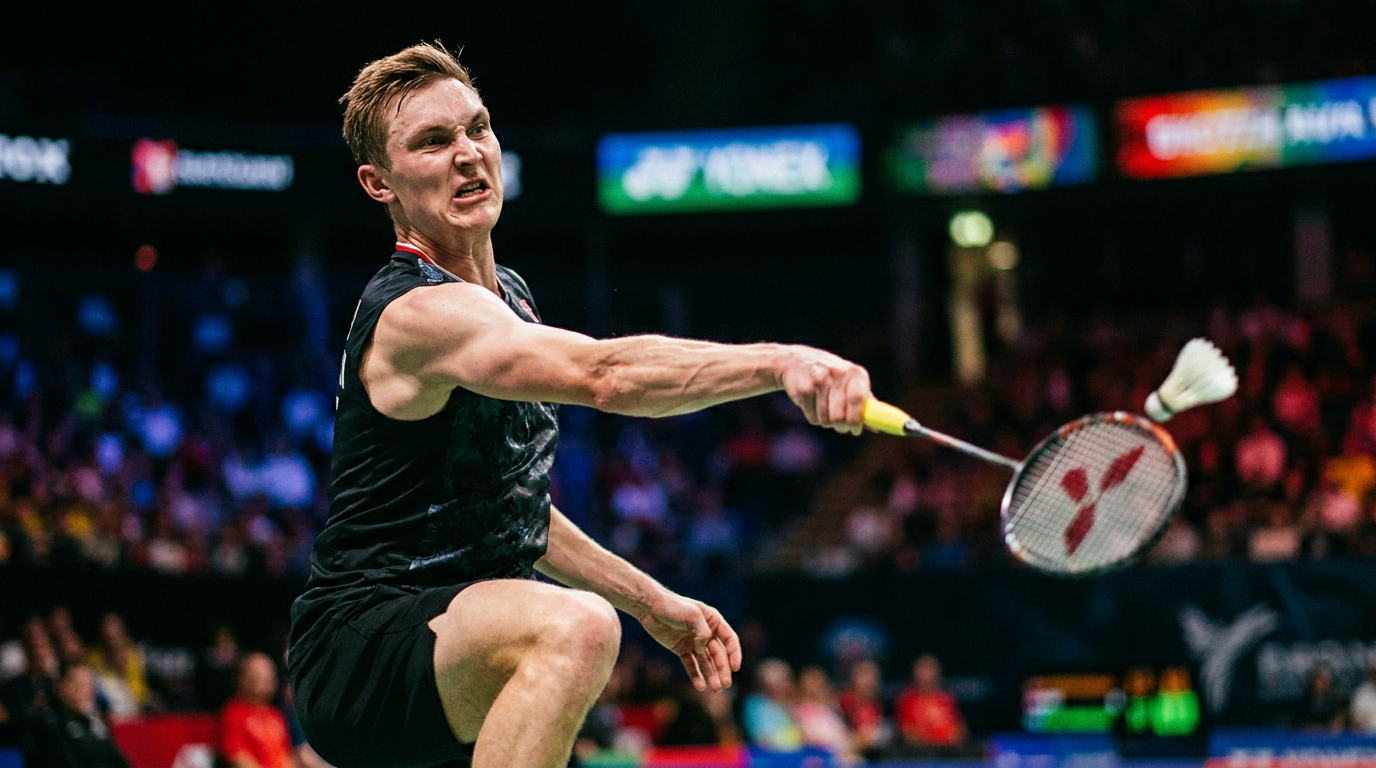
To understand the smash, one must first dismantle a persistent myth: the idea that the power comes primarily from a "wrist snap." For decades, amateur coaches instructed players to flick their wrists to generate speed. However, modern biomechanical analysis using 3D motion capture has proven this entirely false. The wrist actually contributes very little to the final velocity; instead, the power is generated through a full-body "kinetic chain."[4][7]
The kinetic chain begins from the ground up. A world-class jump smash starts with an explosive leg drive, utilizing a stretch-shortening cycle—a plyometric muscle action where the muscles act like loaded springs. As the player leaps into the air, they arch their back, creating what sports scientists call "pelvis-thorax separation" or the X-factor. This twisting of the core stores immense elastic energy.[4][7]
As the player reaches the apex of their jump, the stored energy is violently unleashed upwards. The torso untwists, transferring momentum to the shoulder. Here, the true engines of the badminton smash take over: shoulder internal rotation and radio-ulnar pronation. In simpler terms, the upper arm rotates inward at the shoulder joint, and the forearm twists rapidly, much like turning a doorknob at lightning speed.[4]
Biomechanical studies attribute over 50% of the racket head's final velocity directly to this shoulder rotation and forearm pronation. The arm acts as a multi-jointed lever. From a physics standpoint, at any given angular velocity, a longer lever generates higher speed at its tip. This is why elite players strike the shuttlecock with their arm fully extended, maximizing the radius of the swing to achieve peak racket head speed just before impact.[4][7]

Biomechanical studies attribute over 50% of the racket head's final velocity directly to this shoulder rotation and forearm pronation.
When the racket face meets the shuttlecock, material science takes the baton. Modern rackets are constructed from high-modulus carbon graphite, designed to be incredibly stiff yet lightweight. The strings, tensioned anywhere from 28 to 32 pounds for professionals, act as a trampoline. The impact lasts for merely a few milliseconds, during which the shuttlecock's cork base compresses violently against the string bed before rebounding with nearly perfect elastic energy transfer.[1][7]
Once the shuttlecock leaves the racket, it enters a realm of aerodynamics unlike any other sports projectile. A traditional shuttlecock consists of 16 goose feathers embedded into a cork base, weighing between 4.74 and 5.50 grams. Aerodynamicists classify it as a "bluff body"—an object whose shape causes the airflow to separate, creating a massive low-pressure wake behind it.[5][6]
Because of this open conical shape, the shuttlecock has an exceptionally high drag coefficient, typically ranging between 0.55 and 0.70. For comparison, a smooth sphere like a golf ball has a drag coefficient of roughly 0.25 to 0.30. This massive air resistance means that the shuttlecock decelerates faster than any other ball in sports.[5]
In fact, a shuttlecock loses approximately half of its initial velocity within the first 20 to 80 centimeters of flight. A smash that leaves the racket at 500 km/h will slow down to roughly 100 km/h by the time it crosses the net and reaches the defending player. This rapid deceleration is what makes badminton playable; if the shuttlecock maintained its initial speed, human reflexes would be entirely incapable of returning it.[5][6]

This high drag also dictates the shuttlecock's unique flight path. While a tennis ball or baseball follows a relatively symmetrical parabolic arc, the shuttlecock follows a "parachute trajectory." It travels fast and flat initially, then drops almost vertically as air resistance overcomes its forward momentum. This steep angle of descent is exactly what makes a well-executed smash so lethal—it forces the defender to dig the shuttle out from near their feet.[5]
Interestingly, the aerodynamics change depending on the materials used. Natural feather shuttlecocks exhibit a unique behavior: at extremely high speeds, the feathers compress inward slightly, reducing the diameter of the cone and temporarily lowering the drag coefficient. This allows the smash to retain its lethal speed for a fraction of a second longer. Synthetic nylon shuttlecocks, often used by amateurs, tend to deform differently under high-speed pressure, resulting in a slightly different deceleration curve.[5]

The pursuit of the perfect smash continues to drive innovation. Equipment manufacturers constantly tweak the moment of inertia and shaft stiffness of rackets to eke out an extra 1-2% of energy transfer. Meanwhile, sports scientists use wearable sensors and dual Euler angle analysis to help players optimize their shoulder elevation and elbow extension, ensuring maximum power while minimizing the risk of rotator cuff injuries.[4][7]
Ultimately, the 565 km/h badminton smash is a masterpiece of physics. It requires the explosive power of a sprinter, the rotational mechanics of a baseball pitcher, and the aerodynamic profile of a parachute, all converging in a fraction of a second. It stands as a testament to human biomechanical efficiency, proving that sometimes, the lightest objects can be driven the hardest.[1][2][6]
Viewpoints in depth
Sports Biomechanists
Focus on optimizing the kinetic chain to maximize power and prevent injury.
For sports scientists and biomechanists, the badminton smash is a puzzle of energy transfer. Researchers use 3D motion capture and dual Euler angle analysis to track how energy moves from the ground up. They have debunked the long-held myth of the 'wrist snap,' proving instead that over 50% of racket head speed comes from shoulder internal rotation and radio-ulnar pronation. By mapping this kinetic chain, biomechanists help coaches refine player technique—such as optimizing the 'X-factor' of torso rotation—to increase smash velocity while reducing the risk of severe shoulder and elbow injuries.
Aerodynamics Researchers
Study the fluid dynamics of the shuttlecock to understand its unique flight trajectory.
Aerodynamicists view the shuttlecock as a fascinating anomaly. Unlike spherical balls, the shuttlecock is a 'bluff body' that generates a massive low-pressure wake, resulting in a drag coefficient between 0.55 and 0.70. Researchers study how this high drag causes the projectile to lose half its speed almost immediately after impact, creating a 'parachute trajectory' rather than a standard parabolic arc. They also analyze how natural feathers compress at high speeds to temporarily reduce drag, a complex fluid dynamic behavior that synthetic nylon alternatives still struggle to perfectly replicate.
Equipment Manufacturers
Leverage physics to build stiffer, lighter rackets that maximize energy transfer.
For the engineers designing badminton gear, the goal is to minimize energy loss during the milliseconds of impact. Manufacturers experiment with high-modulus carbon graphite to alter the racket's moment of inertia and shaft stiffness. By fine-tuning the 'trampoline effect' of the string bed—which is often tensioned to over 30 pounds for elite players—engineers ensure that the immense kinetic energy generated by the player's body is efficiently transferred into the 5-gram cork base of the shuttlecock, pushing the boundaries of how fast the sport can be played.
What we don't know
- Whether advancements in racket technology and sports science will eventually push the smash speed past the 600 km/h threshold.
- How perfectly synthetic shuttlecocks can be engineered to mimic the exact high-speed drag reduction seen in natural goose feathers.
Key terms
- Kinetic Chain
- The sequence of body movements—from the legs, through the core, to the arm—that transfers energy and momentum to the racket.
- Radio-ulnar Pronation
- The rapid inward twisting motion of the forearm, which acts as a primary generator of racket head speed during a smash.
- Bluff Body
- An aerodynamic term for an object whose shape causes airflow to separate around it, creating a large wake and high drag resistance.
- Drag Coefficient
- A dimensionless number used by physicists to quantify the drag or resistance of an object in a fluid environment, like air.
- Stretch-Shortening Cycle
- A plyometric muscle action where an active muscle lengthening is immediately followed by an active muscle shortening, acting like a loaded spring.
Frequently asked
What is the fastest badminton smash ever recorded?
The Guinness World Record for the fastest male badminton hit is 565 km/h (351 mph), set by India's Satwiksairaj Rankireddy in April 2023. The female record is 438 km/h, held by Malaysia's Pearly Tan.
Does the power of a smash come from the wrist?
No. Biomechanical studies show that the wrist contributes very little to the final speed. Over 50% of the power comes from shoulder internal rotation and forearm pronation, driven by the body's kinetic chain.
Why does a shuttlecock slow down so quickly?
A shuttlecock has an open conical shape that makes it a 'bluff body' with a very high aerodynamic drag coefficient (0.55 to 0.70). This massive air resistance causes it to lose half its speed in the first meter of flight.
How heavy is a standard badminton shuttlecock?
An official feather shuttlecock weighs between 4.74 and 5.50 grams and is made of 16 goose feathers embedded into a cork base.
Sources
Source coverage
7 outlets
3 viewpoints surfaced






[1]Factlen Editorial TeamEquipment Manufacturers
Synthesis by Factlen editorial team
Read on Factlen Editorial Team →[2]Guinness World Records
Fastest badminton hit (male)
Read on Guinness World Records →[3]Olympics
Fastest badminton smash: Satwiksairaj Rankireddy breaks decade-old record with 565km/h hit
Read on Olympics →[4]Sports EngineeringSports Biomechanists
Using dual Euler angles for the analysis of arm movement during the badminton smash
Read on Sports Engineering →[5]World BadmintonAerodynamics Researchers
Aerodynamic properties of badminton shuttlecock
Read on World Badminton →[6]New Journal of PhysicsAerodynamics Researchers
The physics of badminton
Read on New Journal of Physics →[7]Scientific ReportsSports Biomechanists
Effects of racket moment of inertia on racket head speed, impact location and shuttlecock speed during the badminton smash
Read on Scientific Reports →

More in sports
See all 337 stories →Pro Volleyball Boom
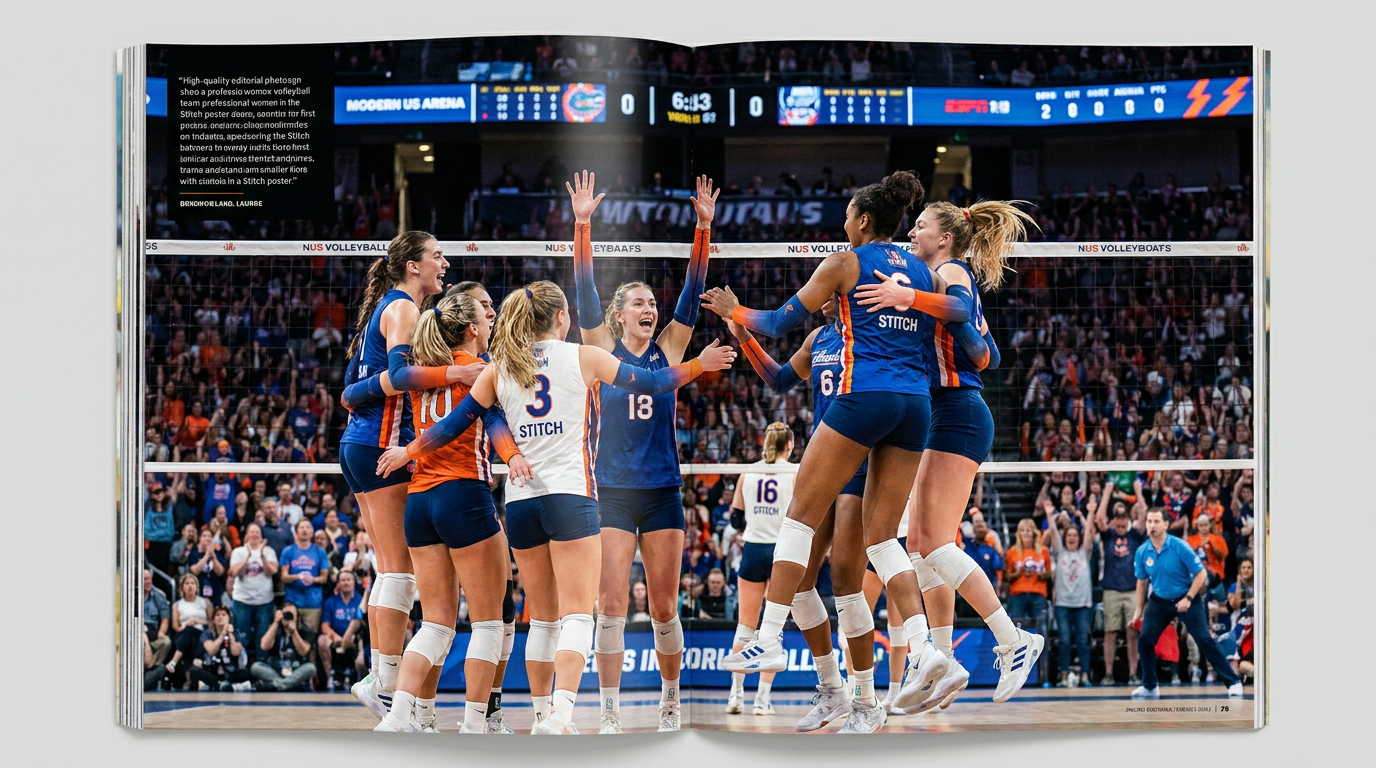
The $100M Turf War Building America's First Sustainable Pro Volleyball Ecosystem
6 sources
Adaptive Gaming
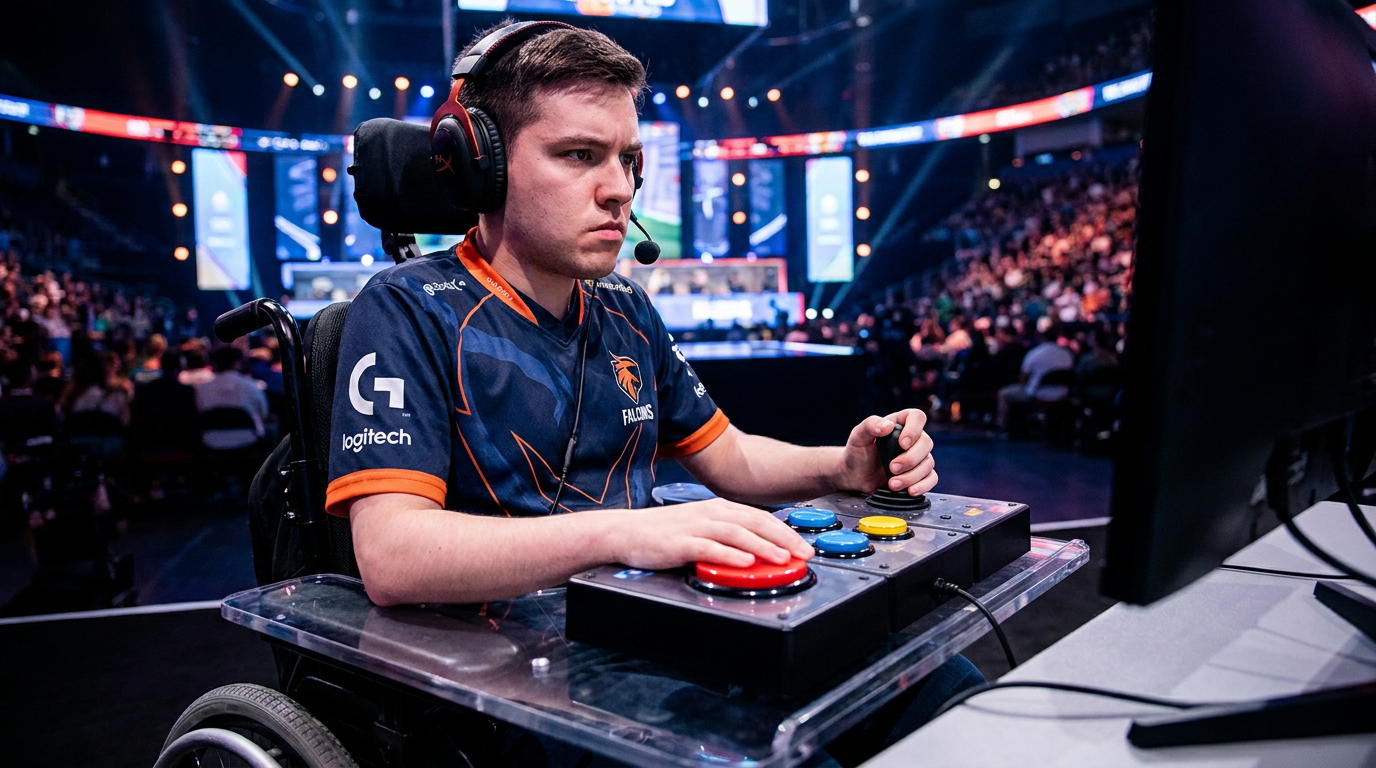
How Adaptive Tech and Modular Design Are Leveling the Esports Playing Field
7 sources
Sports Tech
How Artificial Intelligence is Revolutionizing Soccer Scouting and Player Recruitment
8 sources

Fighter Safety
How Impact-Sensing Smart Gloves Are Changing the Science of Boxing Safety
7 sources
Every angle. Every day.
Get sports stories with full source coverage and perspective breakdowns delivered to your inbox.