
The Evidence on Office-to-Residential Conversions: What the Data Actually Shows
As the pipeline of office-to-apartment conversions hits a record 90,300 units in 2026, architectural and economic data reveal the true potential—and strict limitations—of adaptive reuse.
By Factlen Editorial Team
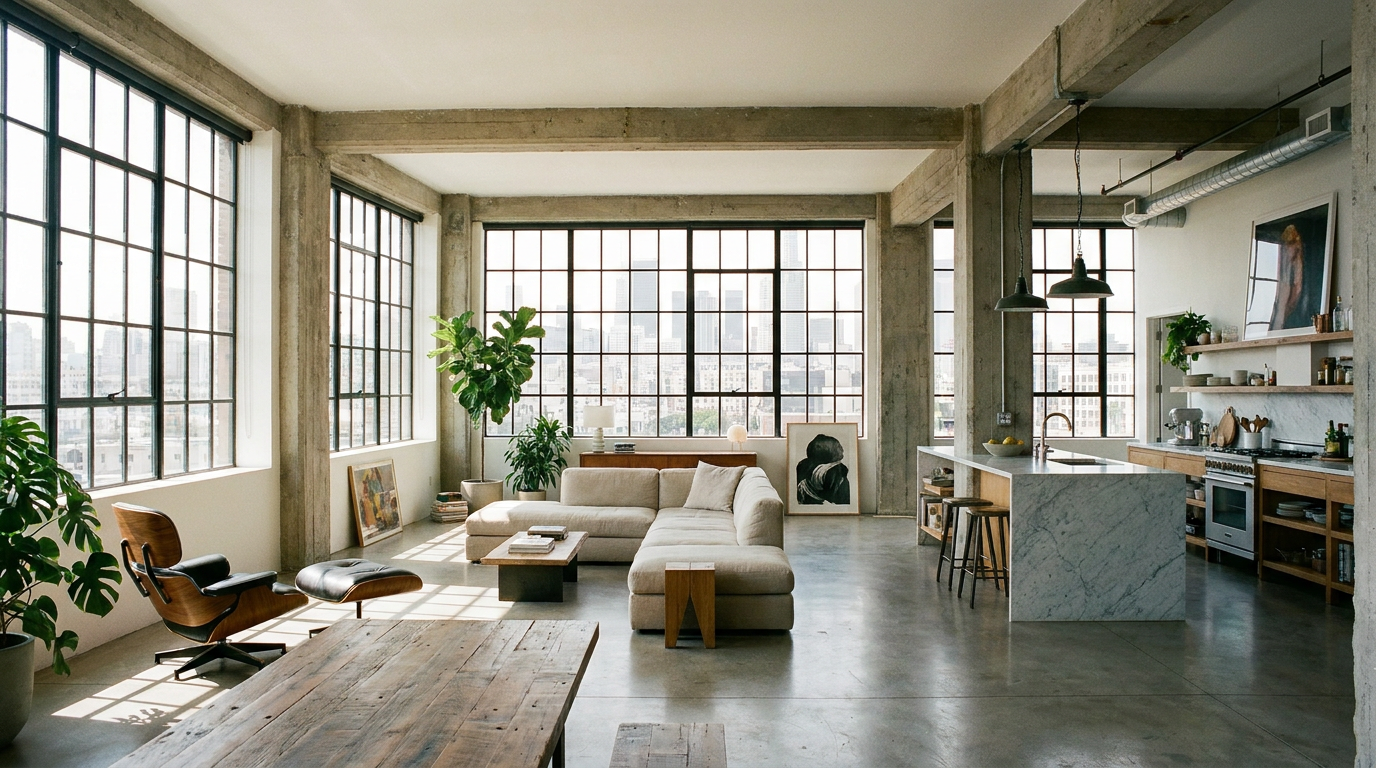
- Urban Planners & Architects
- Focuses on the physical viability, sustainability, and design challenges of repurposing commercial structures.
- Real Estate Economists
- Analyzes the financial feasibility, asset valuations, and supply-demand dynamics of the commercial market.
- Policy & Housing Advocates
- Views conversions as an opportunity to mandate affordable housing and revitalize downtown ecosystems.
What's not represented
- · Local Downtown Small Businesses
- · Construction Labor Unions
Why this matters
As remote work permanently alters downtown landscapes, understanding the reality of office conversions helps residents, investors, and voters evaluate how their cities will solve the dual crises of empty real estate and unaffordable housing.
Key points
- Office conversions and demolitions outpaced new office supply in 2025 for the first time on record.
- The conversion pipeline has surged to 90,300 apartment units underway in early 2026.
- Only 11% of downtown office buildings are physically suitable for conversion due to floor plate and plumbing constraints.
- Adaptive reuse produces 50% to 75% fewer carbon emissions than ground-up construction.
- Conversions are a niche strategy that could yield 400,000 units, far short of the 4.3 million unit national deficit.
- Municipal tax incentives are increasingly required to bridge the financial gap for developers.
The post-pandemic era left American cities grappling with a dual crisis: millions of square feet of vacant commercial real estate and a severe shortage of affordable housing. The seemingly obvious solution—converting empty cubicles into apartments—has captivated urban planners and developers alike. But as the trend matures into 2026, the industry is moving past the initial hype to rigorously evaluate the data.[9]
The sheer scale of the shift is now visible in the macroeconomic data. For the first time since tracking began, the amount of U.S. office space slated for demolition or conversion in 2025—23.3 million square feet—far outpaced the 12.7 million square feet of new office supply expected to come online. This crossing of the lines marks a structural stabilization in the commercial market, driven heavily by adaptive reuse.[2]
The pipeline for these projects has swelled dramatically. At the start of 2026, there were 90,300 apartment units in the process of being converted from office spaces, representing a 28% year-over-year increase and nearly four times the volume seen in 2022. Major metropolitan areas like New York, Washington D.C., and Los Angeles are leading the charge, transforming aging towers into luxury and mixed-income housing.[5][7]

However, the central claim that any empty office can easily become an apartment is not supported by the architectural evidence. The physical reality of commercial real estate presents severe constraints that limit the scope of the movement.[9]
A comprehensive study by the National Bureau of Economic Research (NBER) evaluated the downtown districts of the 105 largest U.S. cities and found that only 11% of office buildings are physically suitable for residential conversion. The primary hurdles are deep floor plates that leave the core of the building devoid of natural light, and centralized plumbing systems that are difficult to distribute to individual apartment units.[1]
To navigate these physical constraints, architecture firms have turned to data. Gensler developed a proprietary algorithm that evaluates 150 different aspects of a building's layout and design—from site context to envelope and servicing—to determine its viability in a matter of days. The tool revealed that older Class C buildings, often viewed as obsolete due to their 12-foot floor-to-floor heights, actually translate perfectly into residential spaces with standard eight-foot ceilings and ample infrastructure room.[4][8]

A second major claim is that adaptive reuse is inherently cheaper and faster than ground-up construction. The evidence here is strong, but highly conditional on the acquisition price of the asset.[9]
On the construction side, the timeline advantages are clear. Projects that utilize existing structural frames can see construction periods reduced by up to 50% compared to equivalent new builds. Yet, the financial feasibility often hinges on the building's valuation. The NBER model indicates that conversions generally only pencil out for developers if the obsolete office buildings change hands at their new, significantly reduced fair market values, rather than their pre-pandemic peaks.[1][4]
On the construction side, the timeline advantages are clear.
A third claim frequently touted by politicians is that office conversions will solve the national housing crisis. The data suggests this is an overstatement; the strategy is highly effective but ultimately limited in scale.[9]
The Brookings Institution characterizes office-to-residential conversion as a "niche production strategy" that cannot match the sheer scale of the housing deficit on its own. Even if every physically suitable office building identified by the NBER were converted, it would add approximately 400,000 new apartments to the national housing stock. While substantial, this represents less than a tenth of the estimated 4.3 million additional units the U.S. needs to build by 2035 to meet demand.[1][3][7]

Where the evidence is overwhelmingly positive, however, is in the environmental impact of these projects. The claim that adaptive reuse is a massive climate win is strongly supported by emissions data.[9]
The NBER's analysis of converting "brown" offices to "green" apartments found that rehabilitating existing structures produces 50% to 75% fewer carbon emissions than demolishing and rebuilding from scratch. By preserving the embodied carbon in the concrete and steel of the original buildings, these conversions offer a highly sustainable path to urban density.[1]
Bridging the financial gap to make these sustainable projects a reality increasingly relies on government intervention. Because the costs of retrofitting HVAC systems and cutting new light wells are immense, municipal incentives are often the deciding factor.[6]
Cities that recognize the value of adaptive reuse are stepping in with targeted financial tools. New York City offers significant tax exemptions for conversions that include at least 25% affordable units, while Boston provides up to a 75% tax abatement for projects meeting specific area median income thresholds. Chicago has also approved hundreds of millions in tax increment financing to spur downtown residential projects.[6]

Beyond finances, zoning and permitting remain significant hurdles. Commercial buildings must be rezoned for residential use, a process that can stall development for years. To combat this, cities are streamlining approval processes and adopting programs like Manhattan's "City of Yes" and Washington D.C.'s "Office to Anything" initiatives to cut red tape.[2][6]
These policy shifts also carry profound demographic implications. The Brookings Institution notes that when paired with affordable housing mandates, office conversions in resource-rich downtowns offer a viable pathway to affirmatively further fair housing, integrating neighborhoods that have historically been commercially segregated.[3]
Ultimately, the evidence paints a nuanced picture of the office-to-residential pipeline. It is not a universal remedy for the housing shortage or the commercial real estate slump, as the architectural and financial filters are too narrow.[9]
Yet, for the 11% of buildings where the algorithm aligns with market realities, adaptive reuse is a triumph of urban engineering. It transforms stranded assets into vibrant, low-carbon communities, proving that the most sustainable and efficient building is often the one that is already standing.[1][4][9]
How we got here
Pre-2020
Office construction outpaces demolitions and conversions by a massive margin, with minimal adaptive reuse.
2020-2022
Pandemic-era remote work empties downtowns, sparking early speculation about converting stranded commercial assets.
August 2023
The NBER publishes its landmark study revealing that only 11% of downtown office buildings are physically suitable for conversion.
Early 2024
Architecture firms like Gensler deploy proprietary algorithms to rapidly assess building viability, accelerating the planning phase.
2025
For the first time, the amount of U.S. office space slated for conversion or demolition outpaces new office supply.
Early 2026
The conversion pipeline surges to over 90,000 units underway, heavily supported by new municipal tax incentives.
Viewpoints in depth
Urban Planners & Architects
Focuses on the physical viability, sustainability, and design challenges of repurposing commercial structures.
This camp emphasizes that the primary barrier to conversion is architectural rather than purely economic. They point to the deep floor plates and centralized plumbing of modern office towers as structural disqualifiers for residential use. However, they champion algorithmic assessment tools to identify older, Class C buildings that are perfectly suited for adaptive reuse, highlighting the massive embodied carbon savings of preserving existing steel and concrete.
Real Estate Economists
Analyzes the financial feasibility, asset valuations, and supply-demand dynamics of the commercial market.
Economists argue that conversions only pencil out when commercial property values capitulate. They note that the cost of retrofitting is often too high if the building is purchased at pre-pandemic prices. This camp views adaptive reuse not as a charity endeavor, but as a necessary market correction that removes obsolete supply from the office sector, helping to stabilize vacancy rates while capitalizing on the high demand and rising rents of the multifamily housing market.
Policy & Housing Advocates
Views conversions as an opportunity to mandate affordable housing and revitalize downtown ecosystems.
For policy advocates, the focus is on leveraging municipal incentives to ensure conversions benefit the broader community. They argue that if cities are going to offer tax abatements and streamlined zoning to developers, those projects must include a significant percentage of affordable units. This camp sees adaptive reuse as a unique mechanism to affirmatively further fair housing by introducing mixed-income residents into transit-rich, high-opportunity downtown corridors.
What we don't know
- Whether interest rates and construction costs will stabilize enough to keep the current conversion pipeline financially viable.
- How the influx of full-time residents will alter the retail and service ecosystems of traditionally commercial downtowns.
Key terms
- Adaptive Reuse
- The process of repurposing an existing building for a use other than what it was originally designed for.
- Floor Plate
- The total leasable square footage of a single floor in a commercial building, which dictates how far the core is from the windows.
- Class C Office Space
- Older commercial buildings with fewer amenities and outdated infrastructure, which often make the best candidates for residential conversion.
- Embodied Carbon
- The greenhouse gas emissions associated with the manufacturing, transportation, and installation of building materials.
- Tax Increment Financing (TIF)
- A public financing method used as a subsidy for redevelopment, infrastructure, and other community-improvement projects.
- Affirmatively Furthering Fair Housing
- A legal requirement for local governments to take meaningful actions to overcome patterns of segregation and foster inclusive communities.
Frequently asked
Can any empty office building be turned into an apartment?
No. Research shows that only about 11% of downtown office buildings are physically suitable, largely due to deep floor plates that prevent natural light from reaching the interior.
Do office conversions save money compared to building from scratch?
Conversions can reduce construction time by up to 50%, but they are only financially viable if the developer can purchase the empty office building at a significantly reduced market value.
Will converting offices solve the housing shortage?
While helpful, it is a niche strategy. Converting all suitable office buildings would yield about 400,000 apartments, which is a fraction of the 4.3 million units the U.S. needs.
Why are cities giving tax breaks to developers for these projects?
The cost of retrofitting plumbing and HVAC systems is immense. Cities offer tax incentives to bridge this financial gap, usually in exchange for the developer including affordable housing units.
Sources
Source coverage
9 outlets
3 viewpoints surfaced









[1]National Bureau of Economic ResearchReal Estate Economists
Converting Brown Offices to Green Apartments
Read on National Bureau of Economic Research →[2]CBREReal Estate Economists
U.S. Office Conversions and Demolitions Outpace New Supply
Read on CBRE →[3]Brookings InstitutionPolicy & Housing Advocates
Simulating the demographic outcomes of hypothetical office-to-residential conversion
Read on Brookings Institution →[4]GenslerUrban Planners & Architects
How an Algorithm is Assessing Office-to-Residential Conversions
Read on Gensler →[5]RentCafeReal Estate Economists
Adaptive Reuse Report: Office-to-Apartment Conversions Surge
Read on RentCafe →[6]JPMorgan ChasePolicy & Housing Advocates
What to know about office-to-residential conversion
Read on JPMorgan Chase →[7]Multifamily ExecutiveReal Estate Economists
The Nation's Office-to-Apartment Conversion Pipeline Continues to Grow
Read on Multifamily Executive →[8]The Real DealUrban Planners & Architects
Gensler’s algorithm democratizes office conversions
Read on The Real Deal →[9]Factlen Editorial Team
Synthesis by Factlen editorial team
Read on Factlen Editorial Team →
Every angle. Every day.
Get real estate stories with full source coverage and perspective breakdowns delivered to your inbox.