
The Backyard Boom: Why ADUs Are 2026's Highest-ROI Real Estate Investment
Fueled by new financing rules and sweeping zoning reforms, Accessory Dwelling Units (ADUs) have evolved from niche backyard projects into mainstream, high-yield real estate assets.
By Factlen Editorial Team
- Real Estate Investors
- Investors focused on maximizing yield through density and rental income.
- Homeowners & Families
- Homeowners utilizing ADUs to offset the high costs of elder care and housing.
- Urban Planners
- Policymakers focused on solving the housing shortage through infill development and streamlined zoning.
- Appraisers & Lenders
- Financial professionals cautious about overvaluing new construction without local data.
What's not represented
- · First-time renters seeking affordable housing
- · Neighborhood associations concerned about density
Why this matters
With traditional home prices and interest rates remaining elevated, building an ADU has become the most accessible way for everyday homeowners to generate passive income, offset their mortgage, or affordably house aging parents.
Key points
- Fannie Mae now allows buyers to use projected ADU rental income to qualify for a mortgage.
- New 2026 laws enforce strict 15-day permitting timelines and punish cities that delay approvals.
- Properties with ADUs appreciate at a faster annual rate (9.3%) than standard single-family homes.
- Multigenerational living is driving demand as families use ADUs to offset expensive elder care costs.
- The 'valuation gap' remains a hurdle, as immediate appraisals often lag behind upfront construction costs.
The era of the easy second-home investment is largely over, constrained by elevated interest rates and stubbornly low housing inventory. But in 2026, real estate capital is flowing rapidly into a completely different asset class: the American backyard. Homeowners and investors alike are realizing that the most lucrative real estate opportunity might already be sitting on the land they own, requiring no new property acquisition at all.[8]
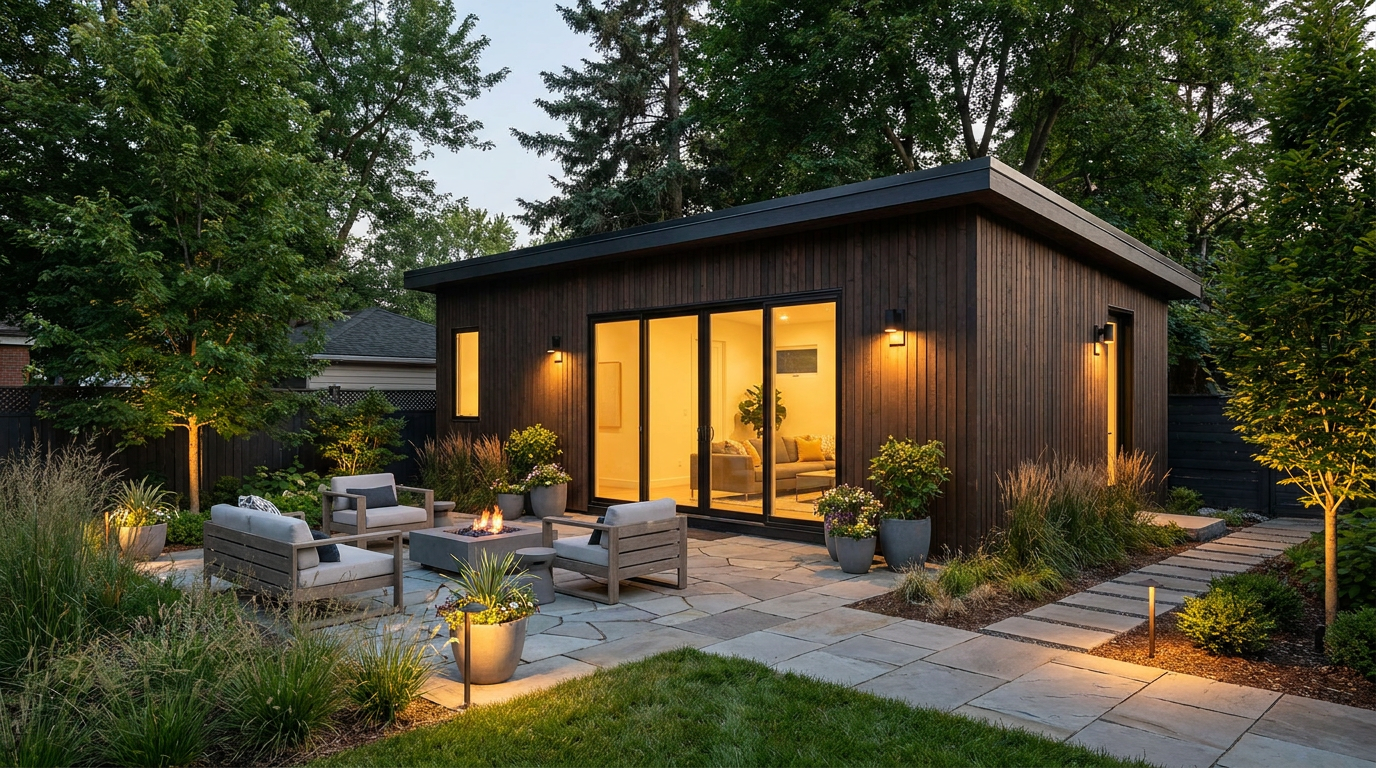
Accessory Dwelling Units (ADUs)—commonly known as granny flats, casitas, or backyard cottages—have transitioned from niche architectural projects to the gold standard of modern "house hacking." Federal lending institutions define an ADU as an independent living area on the same parcel as a primary dwelling, complete with its own kitchen, bathroom, and sleeping facilities. Today, these secondary units are fundamentally reshaping how buyers approach homeownership, turning traditional single-family lots into income-generating multi-unit properties.[7]
The catalyst for this 2026 boom is not just a shift in consumer demand; it is a fundamental transformation in how these units are financed. In March 2026, Fannie Mae implemented a landmark policy update that dramatically altered the purchasing power of everyday buyers. The new guidelines allow homebuyers to count projected ADU rental income toward their qualifying income when applying for a mortgage on a primary residence.[1][7]
Specifically, lenders can now include this projected rental income up to 30 percent of the borrower’s total qualifying income. This is a monumental shift because it allows a buyer looking at a home with an existing or proposed ADU to leverage that unit’s income potential before they ever sign a lease with a tenant. It effectively lowers the barrier to entry for properties that would otherwise stretch a buyer's debt-to-income ratio too far.[1]

Legislative tailwinds are also supercharging the market, with California acting as the aggressive blueprint for the rest of the country. A wave of new state laws taking effect between 2025 and 2026 has systematically dismantled local zoning resistance. Historically, municipalities used red tape, parking requirements, and endless permitting delays to block backyard development, but state-level mandates have stripped away those localized roadblocks.[4]
Most notably, Assembly Bill 1033 now allows homeowners to subdivide their property and sell an ADU as a separate condominium, transforming a rental asset into a liquid pathway for homeownership. Meanwhile, the sweeping SB 543, which took effect in January 2026, enforces strict 15-day permitting completeness rules. Local agencies that intentionally delay, obstruct, or fail to comply with state ADU standards now face automatic legal consequences, shifting the regulatory environment from mere guidance to strict enforcement.[4]
But what is the actual return on investment for an ADU in the current economic climate? The financial math breaks down into three distinct categories: property value appreciation, immediate rental yield, and long-term cost savings. When evaluated holistically, the numbers explain why builders and contractors are struggling to keep up with homeowner demand.[8]
On the valuation front, data from the Federal Housing Finance Agency (FHFA) indicates that properties with ADUs appreciate significantly faster than those without. On average, adding a permitted ADU increases a property's total value by 20 to 35 percent. Furthermore, properties with ADUs have historically recorded an annualized appreciation growth rate of 9.3 percent, outpacing the 7.7 percent growth rate seen in standard single-family homes.[2][5]

On the valuation front, data from the Federal Housing Finance Agency (FHFA) indicates that properties with ADUs appreciate significantly faster than those without.
Rental yields offer an even more compelling narrative for cash-flow investors. In high-demand coastal markets and urban centers, a $200,000 detached unit can easily generate upwards of $2,500 to $3,000 in monthly rent. When factoring in loan paydown, tax benefits, and property appreciation, these units frequently achieve annualized cash-on-cash returns of 8 to 12 percent over a ten-year hold period, making them highly competitive with traditional stock market returns.[5][6]
However, the market is not without its friction points, and investors must navigate these carefully. The most significant hurdle for homeowners in 2026 is the "Valuation Gap"—a real estate paradox where the upfront cost to construct the unit outpaces the immediate appraised value assigned by a bank. This gap can complicate cash-out refinancing strategies for investors looking to quickly pull their capital back out of the project.[3]
Because appraisers rely heavily on local comparable sales, neighborhoods with few existing ADUs may not yield appraisals that fully reflect the $150,000 to $300,000 construction costs. If a local market lacks recent sales data for homes with permitted secondary units, the appraiser is forced to be conservative. This dynamic requires investors to take a long-term wealth-building view rather than expecting an immediate, dollar-for-dollar "flip" profit upon completion.[3]

Beyond pure rental income, the ADU boom is being heavily driven by the financial realities of the "sandwich generation." Multigenerational living has evolved from a cultural preference into a primary financial strategy to combat the exorbitant, inflation-driven costs of elder care and childcare. For many families, the return on investment is not measured in rent checks, but in massive monthly cost avoidance.[3][7]
Building an ADU for an aging parent replaces a permanent, escalating monthly expense—often exceeding $5,000 a month for assisted living facilities—with a tangible, appreciating asset on the family's balance sheet. It provides a vital middle ground that keeps family members close while preserving personal privacy and independence, fundamentally altering a household's long-term financial trajectory.[3]
To meet this surging, multi-faceted demand, the construction industry has pivoted aggressively toward modular and prefabricated designs. These tech-enabled building methods have stabilized construction costs at roughly $280 to $420 per square foot after years of volatility. By building the units in climate-controlled factories, developers are drastically reducing on-site build times, minimizing neighborhood disruption, and ensuring tighter quality control.[4][5]

Investors must also calibrate their expectations as rental markets begin to normalize after years of unprecedented growth. In cities like San Diego, a 15 percent surge in apartment inventory in early 2026 has slightly cooled peak pandemic-era rent prices. Landlords who previously held units off the market have listed them, providing the first significant inventory relief for renters since 2019.[6]
Yet, ADUs remain largely insulated from broader multifamily market volatility. They offer renters a highly desirable, neighborhood-centric living experience without shared hallways, corporate management, or massive parking garages. This premium residential feel ensures that well-designed backyard units maintain high occupancy rates and command premium pricing even when large apartment complexes are forced to offer concessions.[6]
Ultimately, the rise of the Accessory Dwelling Unit represents a permanent structural shift in American real estate. By unlocking the "density play" on single-family lots, everyday homeowners are no longer just passive consumers of housing—they are becoming active micro-developers. They are solving the housing shortage in their own backyards while simultaneously securing their financial futures.[8]
As zoning laws continue to relax nationwide, financing mechanisms mature, and construction technology improves, the barrier to entry will only continue to fall. For those willing to navigate the initial permitting and construction phases, the backyard will remain the most accessible, resilient, and lucrative frontier for property investors in 2026 and beyond.[8]
How we got here
2019–2023
California and other states begin passing foundational laws forcing local municipalities to allow ADUs in single-family zones.
January 2025
California's AB 976 takes effect, permanently removing owner-occupancy requirements for standard ADUs.
October 2025
AB 462 streamlines the Coastal Development Permit process, accelerating ADU approvals in coastal and disaster zones.
January 2026
SB 543 goes into effect, enforcing strict 15-day permitting completeness rules and punishing cities that delay ADU approvals.
March 2026
Fannie Mae updates its lending guidelines, allowing buyers to use projected ADU rental income to qualify for a mortgage.
Viewpoints in depth
Cash-Flow Investors
Investors focused on maximizing yield through density and rental income.
For real estate investors, the ADU is a pure 'density play.' By adding a secondary unit to an existing parcel, they bypass the high acquisition costs and elevated interest rates associated with buying a completely new property. Their primary focus is on cash-on-cash return, leveraging the high demand for private, residential-style rentals to achieve 8% to 12% annualized yields. They view the recent Fannie Mae financing changes and California's condo-conversion laws as the ultimate green light to scale this strategy.
Multigenerational Families
Homeowners utilizing ADUs to offset the high costs of elder care and housing.
For the 'sandwich generation,' the ROI of an ADU is calculated in cost avoidance rather than rental income. Faced with assisted living costs that can easily exceed $60,000 a year, families are building backyard units to keep aging parents close while maintaining privacy. This demographic views the ADU not as a speculative investment, but as a necessary structural adaptation to the rising cost of living, turning a sunk monthly expense into an appreciating family asset.
Traditional Appraisers
Financial professionals cautious about overvaluing new construction without local data.
Appraisers and conservative lenders represent the friction point in the ADU boom. Bound by strict valuation guidelines, they rely on comparable sales (comps) to determine a property's worth. In neighborhoods where ADUs are still rare, appraisers often cannot justify adding the full $250,000 construction cost to the home's appraised value. They argue that until the secondary market fully prices in these units, the 'valuation gap' remains a legitimate risk for homeowners looking to quickly refinance or sell.
What we don't know
- Whether other states will adopt California's aggressive condo-conversion laws for ADUs.
- How long the 'valuation gap' will persist as more ADUs enter the secondary housing market.
Key terms
- Accessory Dwelling Unit (ADU)
- A secondary, independent living area on the same lot as a primary single-family home, featuring its own kitchen, bathroom, and entrance.
- House Hacking
- A real estate investment strategy where a homeowner generates rental income from their primary residence to offset the mortgage and living expenses.
- Cash-on-Cash Return
- A metric used by investors to measure the annual pre-tax cash flow of a property relative to the amount of cash initially invested.
- Valuation Gap
- The discrepancy between the actual cost to construct an improvement (like an ADU) and the value an appraiser assigns to it based on local comparable sales.
- Junior ADU (JADU)
- A smaller secondary unit, typically under 500 square feet, created entirely within the existing footprint of a single-family home.
Frequently asked
How much does it cost to build an ADU in 2026?
Construction costs typically range from $80,000 for a garage conversion to over $350,000 for a large, custom detached unit, depending on the market and materials.
Can I use future ADU rent to qualify for a mortgage?
Yes. As of March 2026, Fannie Mae allows homebuyers to count up to 30% of projected ADU rental income toward their qualifying income for a primary residence.
Can I sell my ADU separately from my main house?
In certain jurisdictions, yes. California's AB 1033 allows homeowners to subdivide their property and sell an ADU as a separate condominium, though local municipalities must opt-in.
What is the 'valuation gap' when building an ADU?
The valuation gap occurs when the immediate appraised value of a newly built ADU is lower than its construction cost, often because appraisers lack local comparable sales data to justify the full price.
Sources
Source coverage
8 outlets
4 viewpoints surfaced







[1]Fannie MaeAppraisers & Lenders
Selling Guide Announcement: ADU Rental Income Policies
Read on Fannie Mae →[2]Federal Housing Finance AgencyAppraisers & Lenders
The Impact of Accessory Dwelling Units on Property Values
Read on Federal Housing Finance Agency →[3]Perry Real Estate CollegeHomeowners & Families
The Valuation Gap: Understanding Contributory Value of ADUs
Read on Perry Real Estate College →[4]AutonomousUrban Planners
New California ADU Laws in 2026: The Complete Guide
Read on Autonomous →[5]Better Place Design BuildReal Estate Investors
What is the Return on Investment (ROI) for an ADU in 2026?
Read on Better Place Design Build →[6]Pacific Beach Builder
San Diego Rental Inventory Surges 15% - First Significant Market Relief Since 2019
Read on Pacific Beach Builder →[7]For Pete's Sake Real EstateReal Estate Investors
The ADU Boom and Modern House Hacking
Read on For Pete's Sake Real Estate →[8]Factlen Editorial Team
Synthesis by Factlen editorial team
Read on Factlen Editorial Team →
Every angle. Every day.
Get real estate stories with full source coverage and perspective breakdowns delivered to your inbox.