
The Evidence is In: How 'Missing Middle' Zoning Reforms Are Successfully Lowering Rent and Home Prices
Five years of empirical data from early-adopter cities like Minneapolis and Austin proves that legalizing duplexes, triplexes, and smaller lots directly curbs housing inflation.
By Factlen Editorial Team
- YIMBY Advocates & Urban Planners
- Argue that artificial supply constraints are the primary driver of the housing crisis and champion upzoning as the solution.
- Neighborhood Preservationists
- Express concern over the loss of neighborhood character, infrastructure strain, and the potential for upzoning to incentivize teardowns.
- Housing Equity Researchers
- Emphasize that while market-rate supply lowers median rents, targeted subsidies are still required to house the lowest-income populations.
What's not represented
- · Corporate Institutional Landlords
- · First-Time Homebuyers in Unreformed Markets
Why this matters
For years, the debate over how to solve the housing affordability crisis relied on theoretical economic models. Now, definitive data from early-adopter cities proves that legalizing 'missing middle' housing directly halts skyrocketing rents and home prices, offering a proven blueprint for communities nationwide.
Key points
- Minneapolis's 2040 Plan successfully kept home and rental prices up to 34% lower than projected counterfactuals over five years.
- Austin added 120,000 new housing units between 2015 and 2024, representing a 30% increase in total stock.
- The massive supply increase in Austin drove a 7% drop in large-apartment rents and an 11% drop in older, non-luxury buildings.
- Reducing minimum lot sizes has proven highly effective at incentivizing the construction of smaller, more affordable starter homes.
- While upzoning stabilizes middle-class housing costs, experts agree that subsidies remain necessary for extremely low-income renters.
Throughout the early 2020s, the American housing market was defined by a severe affordability crisis, driven by decades of underbuilding and restrictive local laws. In response, a growing coalition of urban planners and policymakers began advocating for a controversial solution: dismantling single-family-only zoning. By 2026, the theoretical debates over this approach have largely concluded, replaced by a robust body of empirical evidence from early-adopter cities.[1]
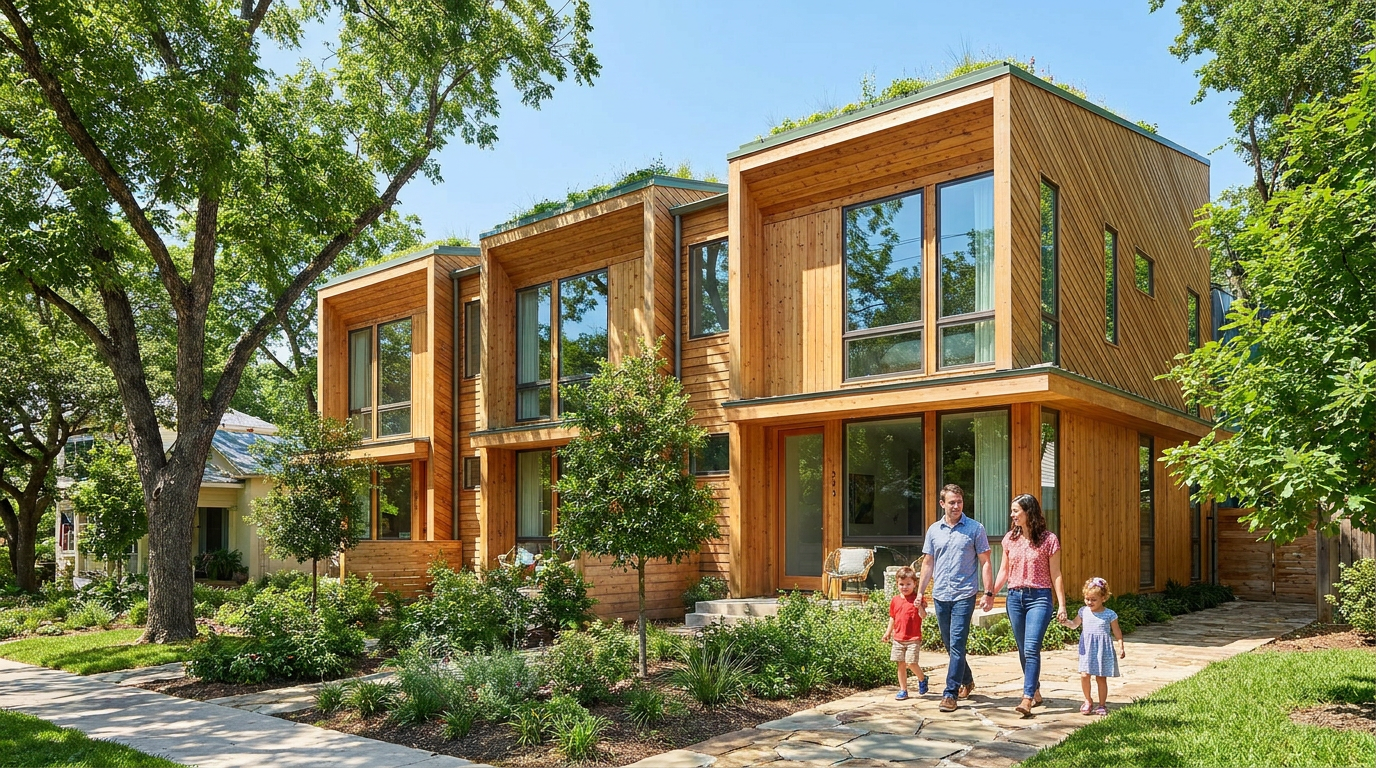
The central strategy evaluated in this evidence pack is the legalization of "missing middle" housing. This term refers to low-density multifamily structures—such as duplexes, triplexes, townhomes, and accessory dwelling units (ADUs)—that bridge the gap between detached single-family homes and mid-rise apartment complexes. For decades, these structures were functionally illegal to build on the vast majority of residential land in North America.[1][7]
The first major claim evaluated by housing economists is whether eliminating single-family zoning actually curbs rent and home price growth. For years, skeptics argued that upzoning would simply increase land values and enrich developers without passing savings down to renters or prospective homebuyers. However, the data now strongly suggests otherwise.[1][2]
The most definitive evidence comes from Minneapolis, which in December 2018 became the first major U.S. city to eliminate single-family zoning through its landmark 2040 Plan. The policy, which officially took effect in 2020, allowed for the construction of triplexes on residential lots citywide and eliminated mandatory parking minimums.[2][3]
A comprehensive 2025 study published in the GLO Discussion Paper Series utilized a synthetic control approach to measure the exact impact of the Minneapolis reform. By comparing the city to an artificially constructed "synthetic Minneapolis" made up of similar metro areas that did not reform their zoning, researchers isolated the policy's effect over a five-year period.[2]
The results were striking. The study found that five years post-implementation, home prices in Minneapolis were 16% to 34% lower than they would have been without the reform. Similarly, rental prices were 17.5% to 34% lower than the counterfactual model. Placebo tests confirmed these housing cost trajectories were the lowest among 83 donor cities evaluated.[2]

Corroborating this, a 2026 paper published on SSRN examined the reform through the lens of macroeconomic inflation. The research demonstrated that following the 2040 Plan, Minneapolis rent growth slowed by up to 1.8 percentage points relative to Midwest controls. This localized supply reform successfully attenuated upstream cost pressures, keeping the city's overall inflation rate significantly below the national average for non-tradable services.[3]
A second critical claim is that aggressive, localized supply expansion forces landlords to lower rents across the board, even in older buildings. While Minneapolis provides the best data on the elimination of single-family zoning, Austin, Texas, serves as the premier case study for the sheer volume of missing middle and high-density supply.[1][4]
Beginning in 2015, Austin enacted a sustained package of reforms, including targeted rezoning, massive reductions in parking requirements, and the liberalization of ADU construction. This culminated in the city's recent HOME-1 and HOME-2 initiatives, which allowed up to three units on single-family lots and drastically cut minimum lot sizes.[5][6]
This culminated in the city's recent HOME-1 and HOME-2 initiatives, which allowed up to three units on single-family lots and drastically cut minimum lot sizes.
The cumulative effect of these policies was a historic construction boom. Between 2015 and 2024, Austin grew its housing stock by 120,000 units. This represented a 30% increase in total housing supply, a rate that more than tripled the overall U.S. growth average of 9% during the same period.[5]
This flood of new inventory broke the back of local rent inflation. According to data highlighted by The Pew Charitable Trusts, rents in Austin apartment buildings with 50 or more units dropped by 7% from 2023 to 2024—the steepest decline recorded in any large U.S. metropolitan area. Crucially, this "filtering" effect reached the bottom of the market: rents in older, non-luxury buildings with low-income renters fell by approximately 11%.[4][5]

The third claim central to the missing middle thesis is that lot size reductions can rapidly scale housing inventory without fundamentally altering a neighborhood's skyline. By making it legal to build on smaller parcels of land, cities can incentivize the creation of starter homes rather than massive luxury estates.[1][7]
Austin's HOME-2 initiative, implemented in August 2024, reduced the minimum single-family lot size from 5,750 square feet to just 1,800 square feet. This regulatory shift fundamentally altered the financial calculus for homebuilders, making gentle density more profitable than building single large structures.[6]
Data from the Texas Public Policy Foundation reveals the immediate impact of this shift. Prior to the reforms, teardowns of modest bungalows almost exclusively resulted in one-for-one replacements with larger, more expensive "McMansions." Following the HOME initiatives, hundreds of these teardowns instead produced smaller, more affordable duplexes and triplexes, shrinking the median lot size for new completions from 7,800 square feet down to roughly 2,800 square feet for a three-unit project.[6]

Housing advocates at Enterprise Community Partners note that unlocking this low-density multifamily housing is highly scalable. Because these structures utilize existing residential infrastructure and can be built by small-scale developers, they offer a faster path to market than complex high-rise projects, provided that local lending products adapt to finance them.[7]
Despite these overwhelming successes, researchers emphasize transparent uncertainty regarding the exact mechanisms driving these price reductions. The relationship between zoning changes and immediate housing affordability is more complex than a simple count of new units.[1][2]
For instance, the Gu & Munro study found that the immediate price drop in Minneapolis was not triggered by a massive, overnight construction boom. Instead, the observed reductions appeared to stem from a softening of housing demand. By signaling that future supply would not be artificially constrained, the city altered market expectations, reducing the speculative premium that buyers and investors were willing to pay for land.[2]
Similarly, economists note that Austin's dramatic rent reductions were aided by a cooling in its meteoric population growth. While the 30% increase in housing supply was the primary driver of affordability, it was the combination of this supply boom meeting a stabilizing demand curve that forced landlords to aggressively compete for tenants.[5]

The final, and perhaps most universally agreed-upon claim in the evidence pack, is that zoning reform is necessary but insufficient for solving deep-poverty affordability. While the private market can successfully lower median rents and stabilize middle-class housing costs, it cannot profitably build new units for those at the very bottom of the income spectrum.[1][8]
Research from the National Low Income Housing Coalition and The Pew Charitable Trusts underscores this reality. Their national surveys show broad, bipartisan support for missing middle housing, but they consistently warn that the severe shortage of homes for extremely low-income renters represents a fundamental market failure. For these populations, the cost of construction and maintenance simply exceeds what they can afford to pay in rent.[4][8]
Ultimately, the empirical record from 2020 to 2026 establishes a new consensus. Legalizing missing middle housing and eliminating single-family-only zoning are highly effective tools for halting housing inflation and restoring middle-class affordability. When paired with targeted subsidies for the most vulnerable, these reforms offer a definitive, proven path out of the housing crisis.[1][8]
How we got here
Dec 2018
Minneapolis passes the 2040 Plan, becoming the first major U.S. city to eliminate single-family-only zoning.
Jan 2020
The Minneapolis 2040 Plan officially takes effect, legalizing triplexes citywide.
Dec 2023
Austin city council passes the HOME-1 initiative, allowing up to three homes on most single-family lots.
Aug 2024
Austin implements HOME-2, drastically reducing the minimum lot size required to build a home from 5,750 to 1,800 square feet.
Early 2026
Empirical studies confirm that these zoning reforms successfully decoupled local rent growth from national inflation trends.
Viewpoints in depth
YIMBY Advocates & Urban Planners
Argue that artificial supply constraints are the primary driver of the housing crisis.
This camp, which includes the 'Yes In My Back Yard' movement and many municipal planners, views restrictive zoning as a historical anomaly that artificially inflates land values. They point to the empirical data from Austin and Minneapolis as vindication that the laws of supply and demand apply strictly to housing. By legalizing gentle density, they argue, cities can organically lower costs, reduce carbon footprints through walkable neighborhoods, and dismantle exclusionary zoning practices that have historically segregated communities.
Neighborhood Preservationists
Express concern over the loss of neighborhood character and the strain on local infrastructure.
While often supportive of affordable housing in theory, preservationists argue that blanket upzoning incentivizes developers to tear down perfectly good starter homes to build expensive, lot-filling triplexes. They raise concerns about increased traffic, loss of mature tree canopies, and overburdened municipal infrastructure like sewer systems and street parking. This camp advocates for highly targeted, localized zoning changes rather than citywide mandates, arguing that existing residents should have a say in the physical evolution of their immediate surroundings.
Housing Equity Researchers
Emphasize that market-rate supply alone cannot house the most vulnerable populations.
Organizations like the National Low Income Housing Coalition acknowledge that zoning reform is a necessary prerequisite for a healthy housing market, but they warn against viewing it as a panacea. They highlight that the private market, even without regulatory barriers, cannot profitably build housing for extremely low-income earners. This perspective insists that supply-side reforms must be aggressively paired with demand-side interventions, such as expanded housing choice vouchers, public housing investments, and dedicated affordable housing subsidies.
What we don't know
- Whether the price reductions seen in Minneapolis were driven more by actual new construction or by a psychological shift in market expectations.
- How long it will take for the newly legalized 'missing middle' housing to fully replace aging single-family stock in reformed cities.
- If mid-sized cities without Austin's massive economic engine can replicate its 30% housing stock growth rate.
Key terms
- Missing Middle Housing
- A range of multi-unit or clustered housing types, compatible in scale with single-family homes, that help meet the growing demand for walkable urban living.
- Synthetic Control Method
- A statistical technique used to evaluate the effect of a policy intervention by comparing the actual outcome to an artificially constructed 'synthetic' version of the city that did not adopt the policy.
- Upzoning
- Changing the zoning code to allow for higher-density land use, such as permitting triplexes in neighborhoods previously restricted to single-family homes.
- Accessory Dwelling Unit (ADU)
- A smaller, independent residential dwelling unit located on the same lot as a stand-alone single-family home, often called a granny flat or backyard cottage.
Frequently asked
What exactly is 'missing middle' housing?
It refers to multi-unit housing types that fall between single-family homes and large apartment complexes, such as duplexes, triplexes, townhomes, and courtyard apartments.
Does eliminating single-family zoning mean single-family homes are banned?
No. It simply means it is no longer illegal to build other types of housing, like a duplex or triplex, on those same residential lots. Single-family homes can still be built and maintained.
Did new luxury apartments cause rents to drop in Austin?
Yes, indirectly. Building a massive supply of market-rate apartments absorbed high-income demand, which prevented those wealthier renters from bidding up the prices of older, middle-income housing.
Does zoning reform solve affordability for everyone?
Not entirely. While it lowers median rents and home prices for the middle class, housing equity researchers note that direct government subsidies are still required to house extremely low-income populations.
Sources
Source coverage
8 outlets
3 viewpoints surfaced







[1]Factlen Editorial TeamYIMBY Advocates & Urban Planners
Synthesis by Factlen editorial team
Read on Factlen Editorial Team →[2]GLO Discussion Paper SeriesNeighborhood Preservationists
Zoning Reforms and Housing Affordability: Evidence from the Minneapolis 2040 Plan
Read on GLO Discussion Paper Series →[3]SSRNNeighborhood Preservationists
Land Supply Reform as Inflation Policy: Evidence from the Minneapolis 2040 Zoning Reform
Read on SSRN →[4]The Pew Charitable TrustsHousing Equity Researchers
Local Officials Discuss Land-Use and Permitting Reforms to Boost Housing
Read on The Pew Charitable Trusts →[5]Smart Cities DiveYIMBY Advocates & Urban Planners
Austin's zoning reforms helped pave the way for 120K new homes: report
Read on Smart Cities Dive →[6]Texas Public Policy FoundationYIMBY Advocates & Urban Planners
Austin’s HOME Initiative is Working
Read on Texas Public Policy Foundation →[7]Enterprise Community PartnersYIMBY Advocates & Urban Planners
Unlocking the Potential of Low-Density Multifamily Housing
Read on Enterprise Community Partners →[8]National Low Income Housing CoalitionHousing Equity Researchers
NLIHC and Pew Charitable Trusts Release Brief Showing Widespread Support for State and Local Policies to Allow More Housing
Read on National Low Income Housing Coalition →

Every angle. Every day.
Get real estate stories with full source coverage and perspective breakdowns delivered to your inbox.